Artwork
The Mill
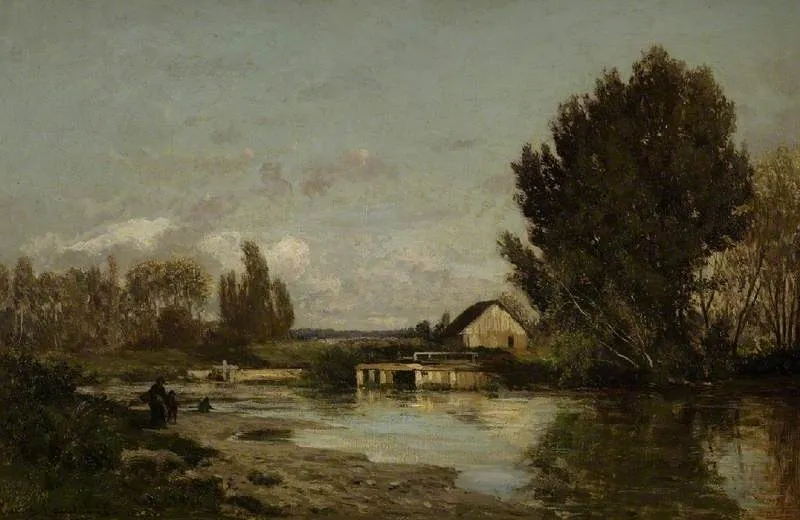
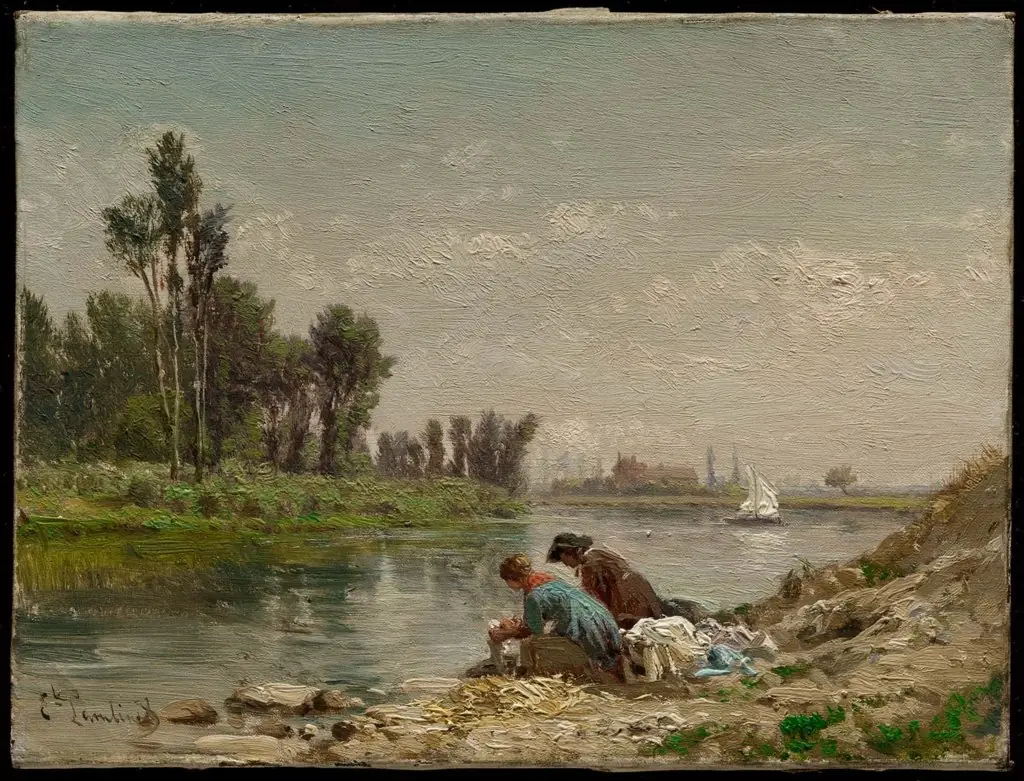
The Mill is an oil painting by Émile Lambinet. It dates from 1856 and is held in the collection of the Fitzwilliam Museum.
About this work
Overview
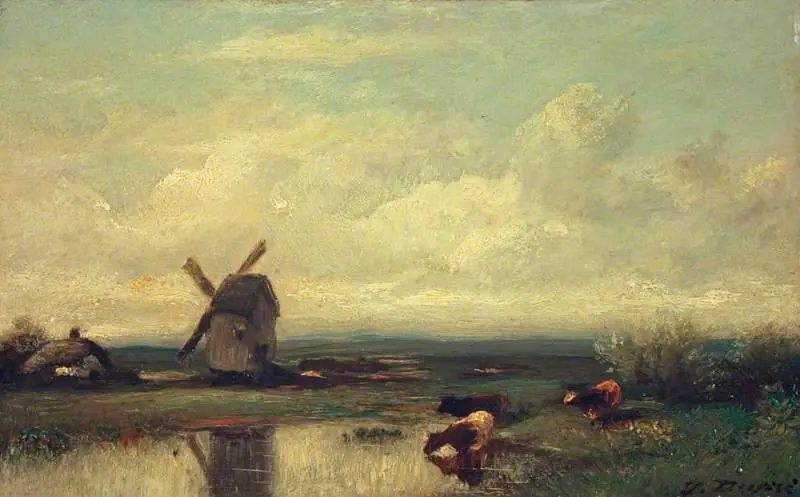
The Mill, an oil painting created by French artist Émile Lambinet around 1856, captures a serene riverside scene featuring a rustic mill. Characterized by loose, expressive brushstrokes, the work conveys a sense of peacefulness and spontaneity.
Subject & Meaning
The painting depicts a tranquil mill setting, likely inspired by Lambinet's surroundings in the Yvelines region. The composition emphasizes natural harmony, with a dirt path, scattered trees, and a gently flowing river reflecting the sky's soft colors.
Technique & Style
Lambinet's use of loose, expressive brushstrokes imbues the painting with a sense of freshness and spontaneity. Subtle interplays of light and shadow on the mill and foliage add depth, reflecting influences from his training under Corot.
History & Provenance
Created during Lambinet's time in the Yvelines region, The Mill is now part of the Fitzwilliam Museum's collection. His training under Horace Vernet and Jean-Baptiste-Camille Corot influenced his approach to rural landscapes.
Context
As a student of Corot, Lambinet's work aligns with the mid-19th-century French interest in capturing everyday rural life and landscapes. The Mill reflects this focus on serene, natural settings.
Legacy
While The Mill showcases Lambinet's skill in conveying idyllic scenes, his overall body of work, often set in Versailles and Bougival, contributes to the broader legacy of French rural landscape painting of his era.
Artist & collection
Artist
Émile Lambinet (1813, Versailles – 1877, Bougival) was a French painter of rural scenes. A student of Horace Vernet then Corot, he spent most of his life in Yvelines, at first in his birthplace of Versailles, then at Bougival from 1860.

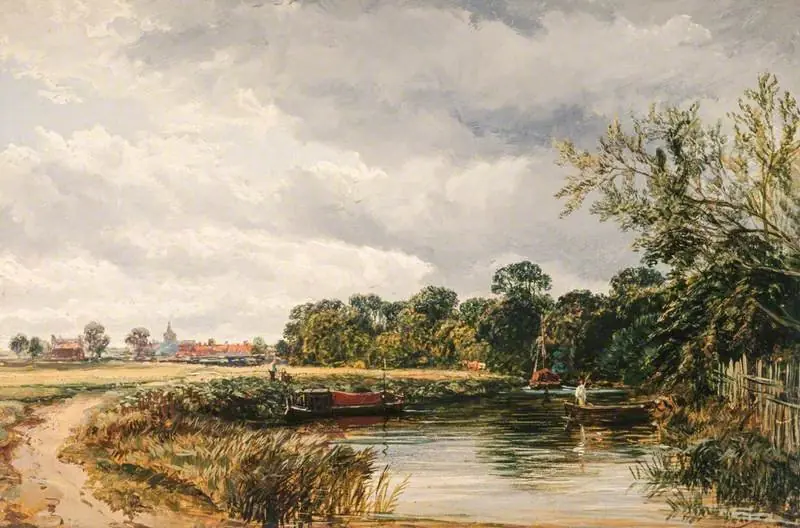 An English Canal Scene
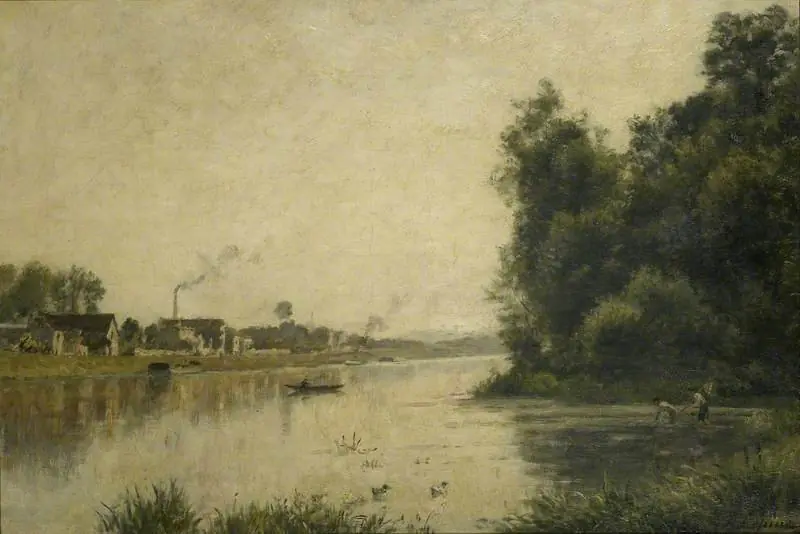 The Seine at La Garenne Saint-Denis
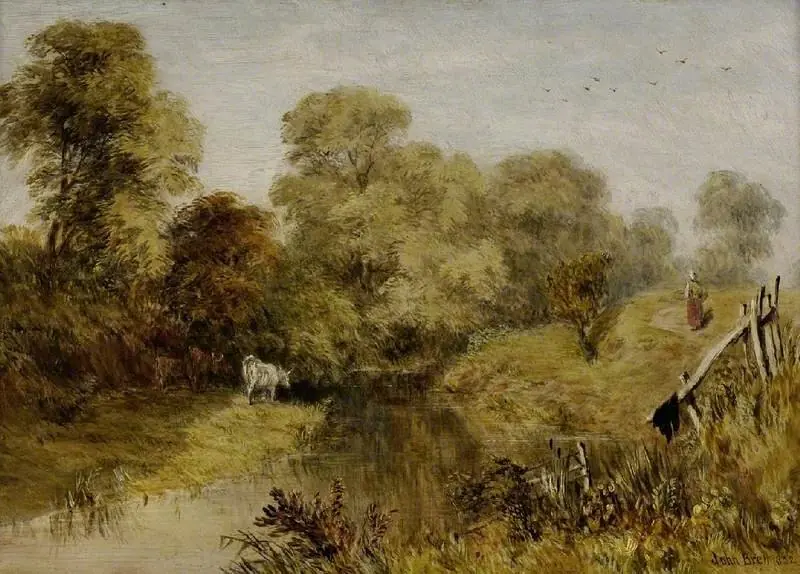 Penshurst (1852)
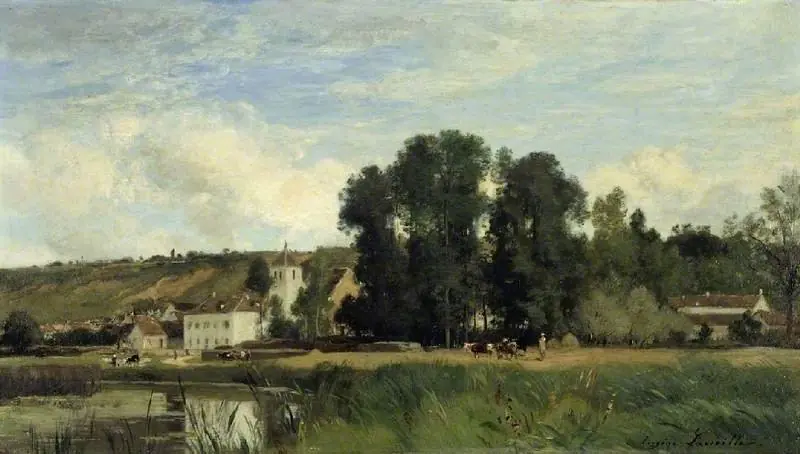 On the banks of the Seine at Lévy, 1884
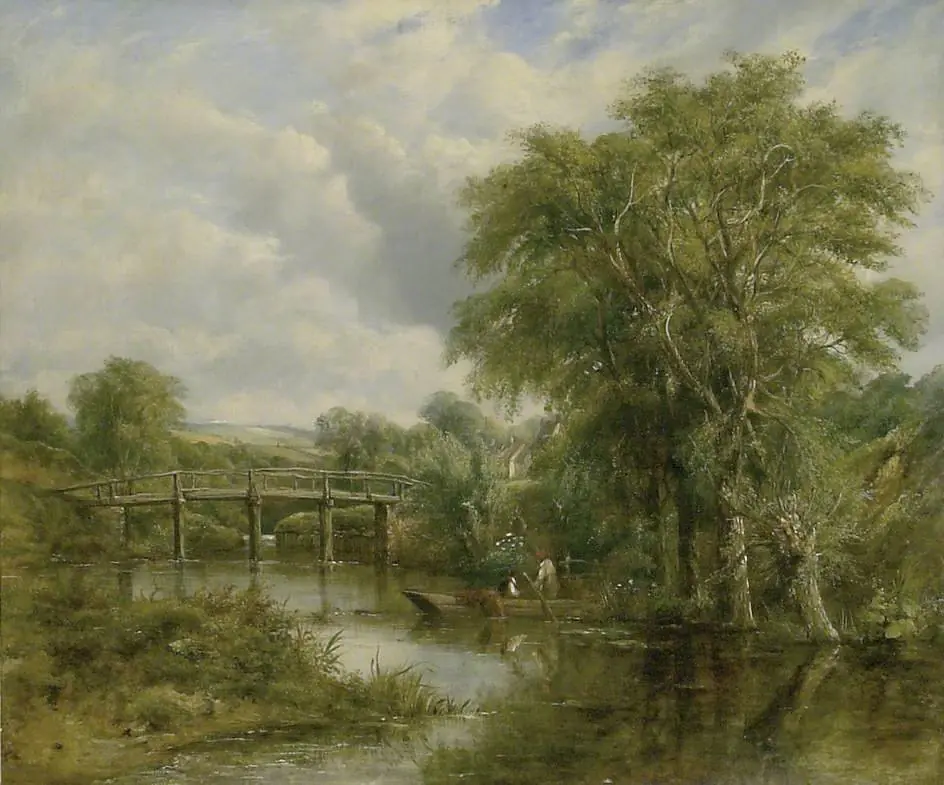 River Landscape
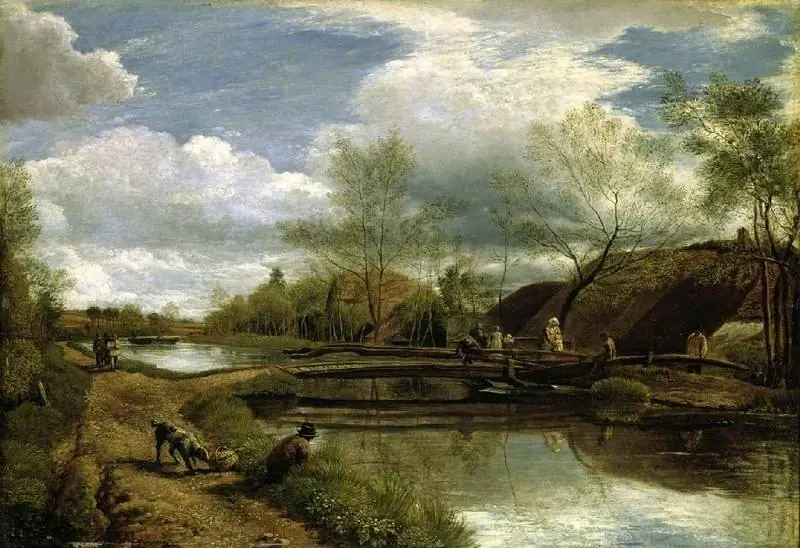 The River Kennet, near Newbury
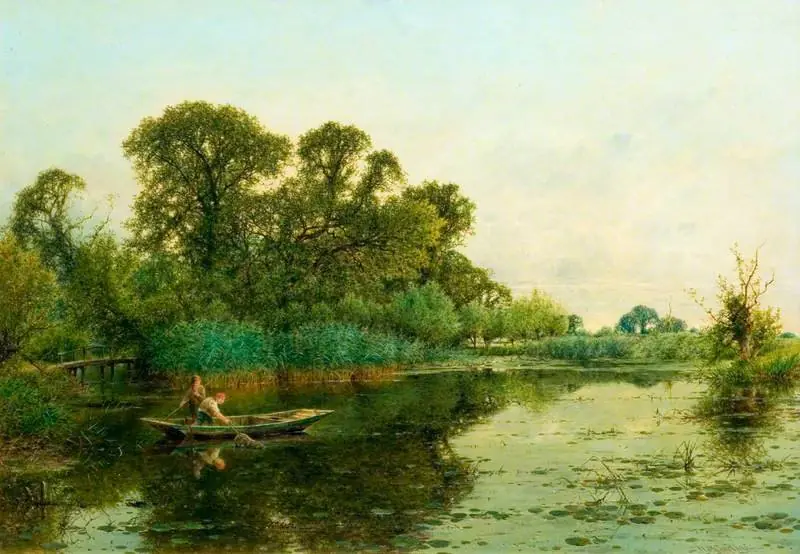 River Scene with Men in a Punt
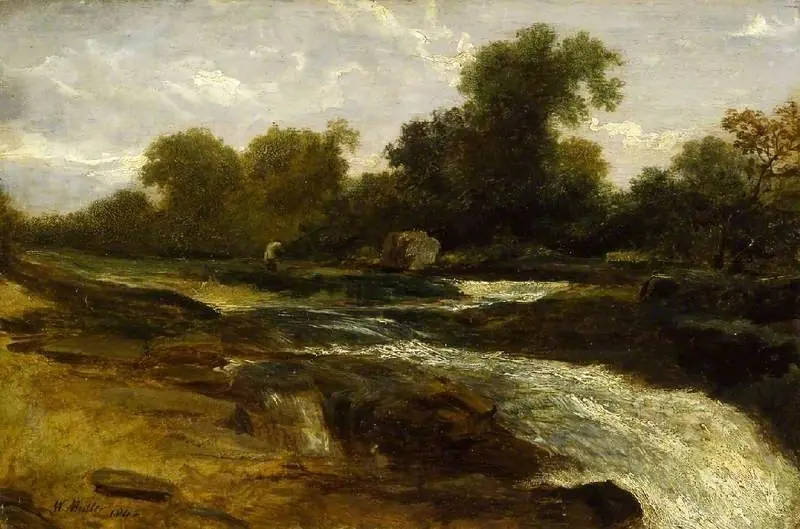 River landscape with an angler
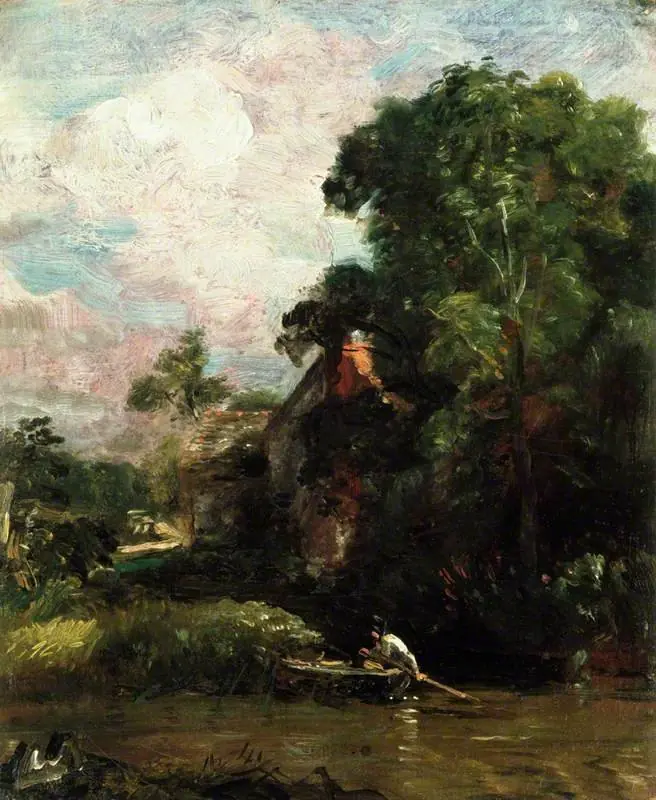 The Valley Farm (sketch)
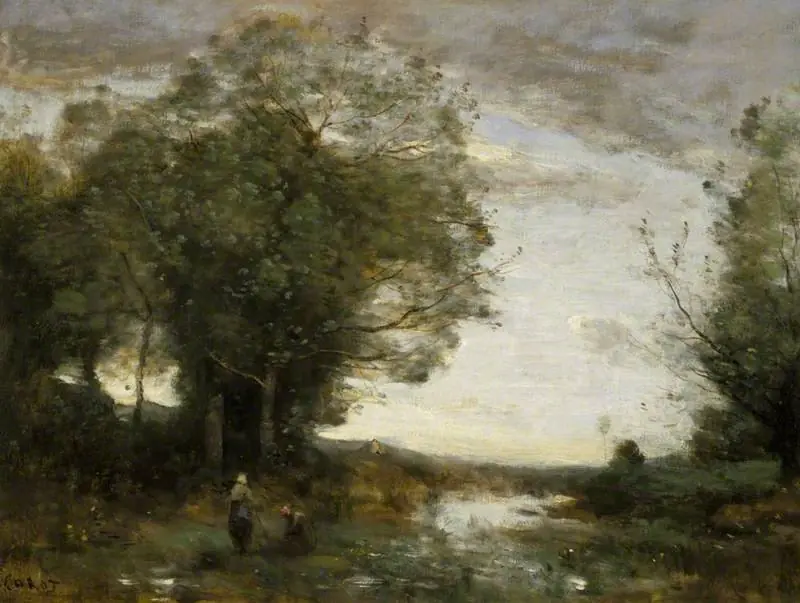 Souvenir of the Environs of La Ferté-sous-Jouarre (Morning)
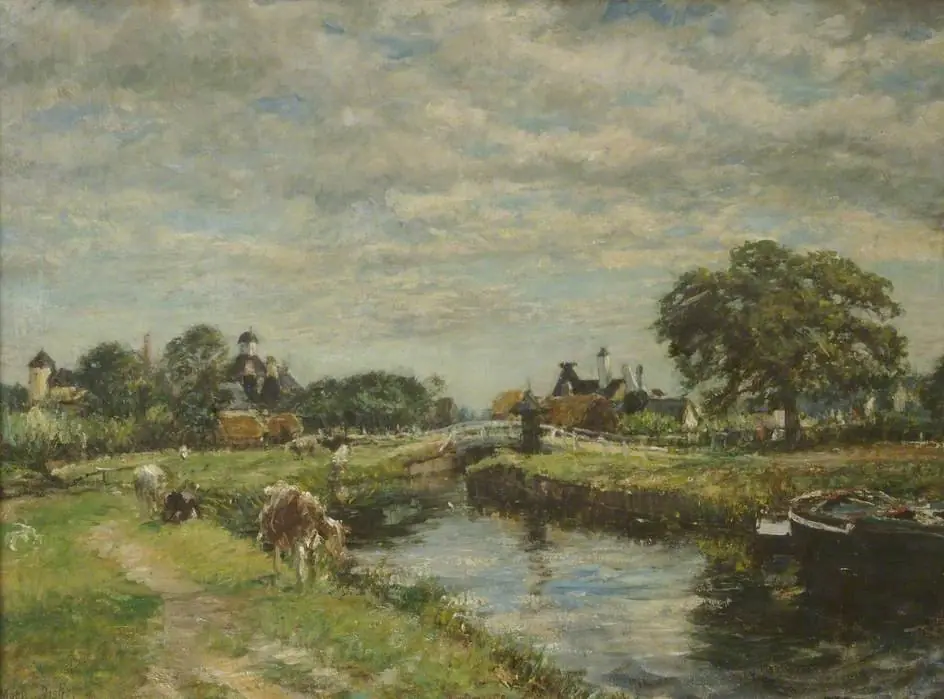 A Normandy Lock
 The Windmill