Artwork
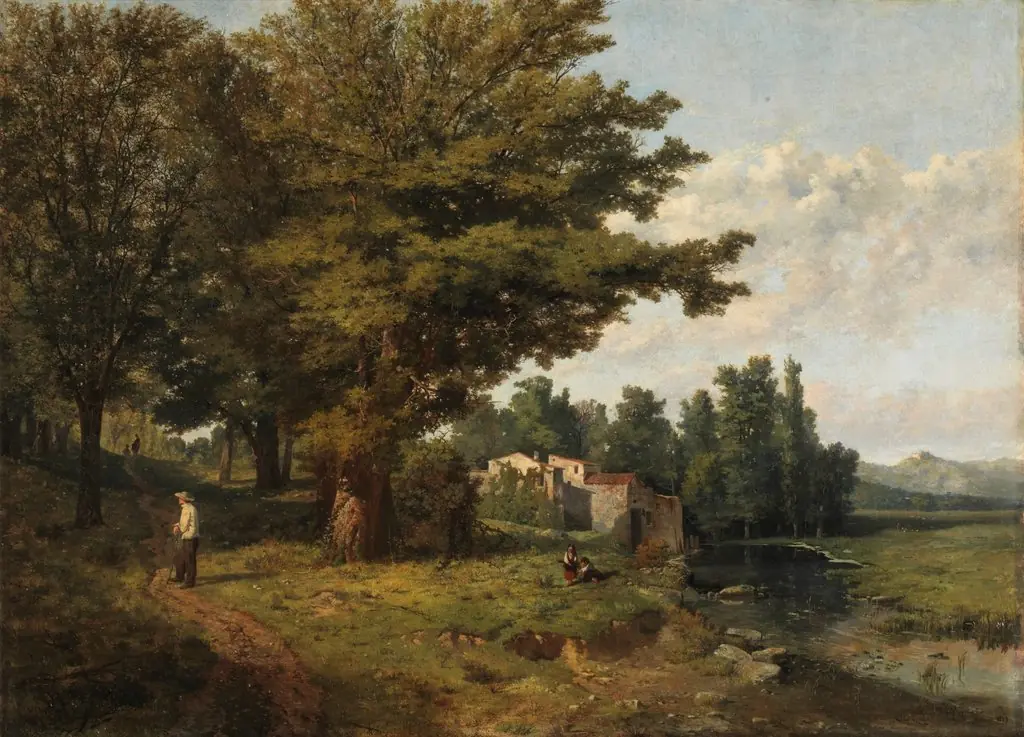
Landscape at Écouen, near Paris
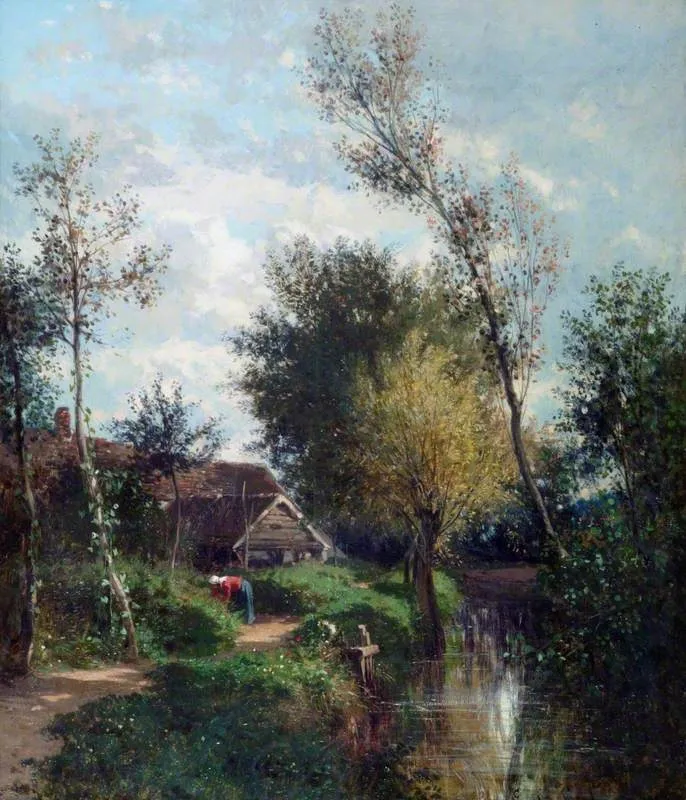
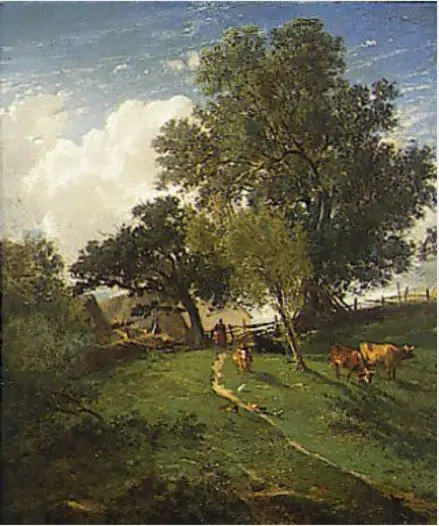
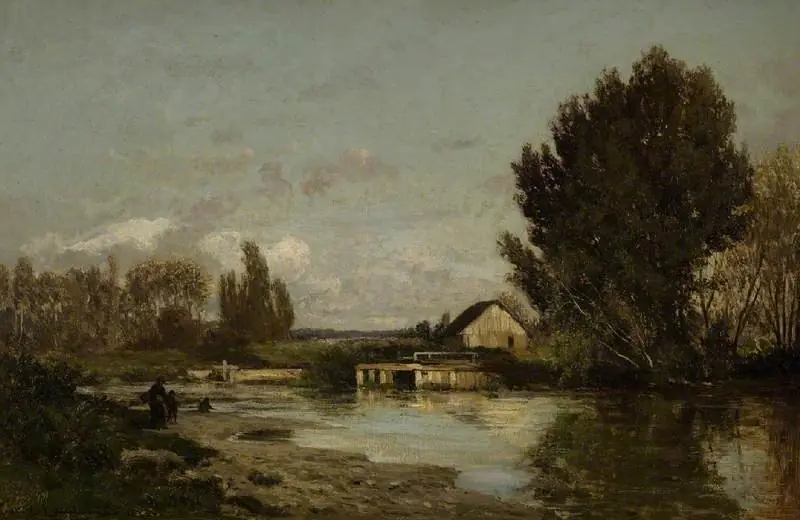
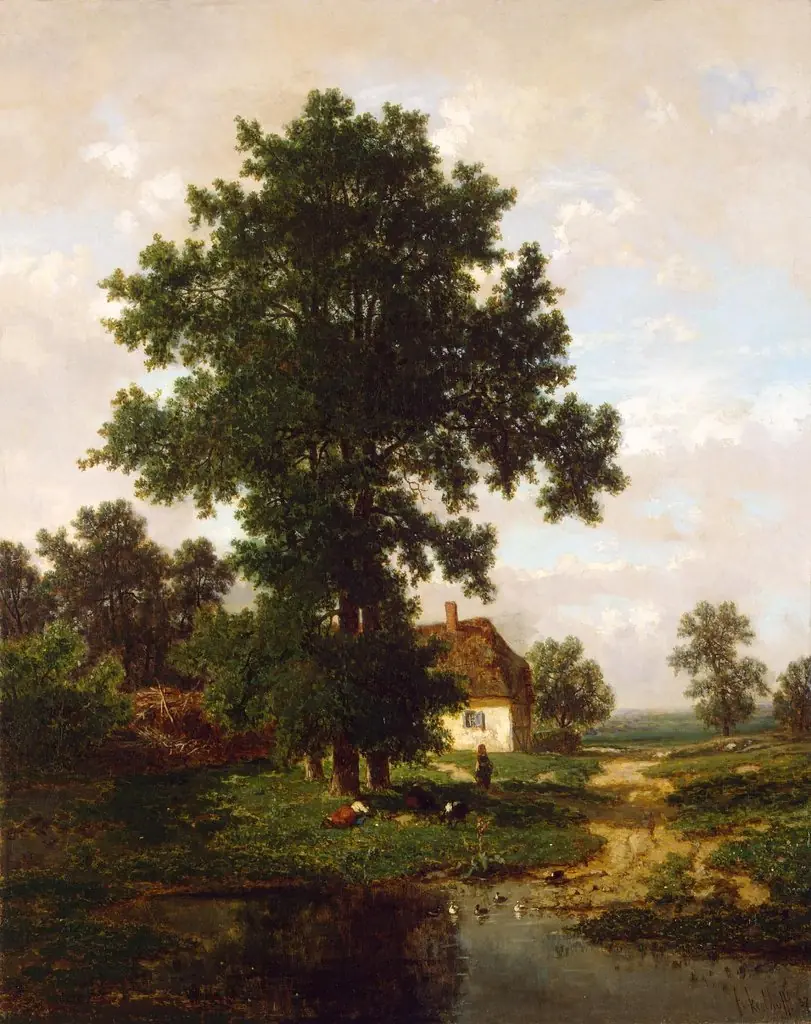
Landscape at Écouen, near Paris is an oil painting by the Barbizon school artist Émile Lambinet. It dates from 1858 and is held in the collection of the Victoria and Albert Museum.
About this work
Overview
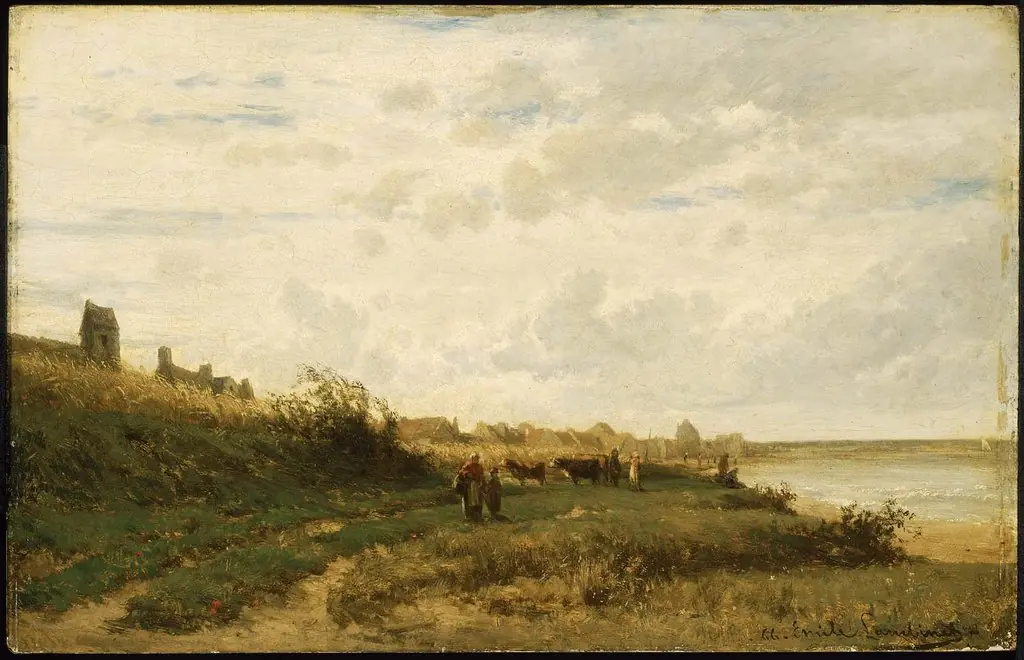
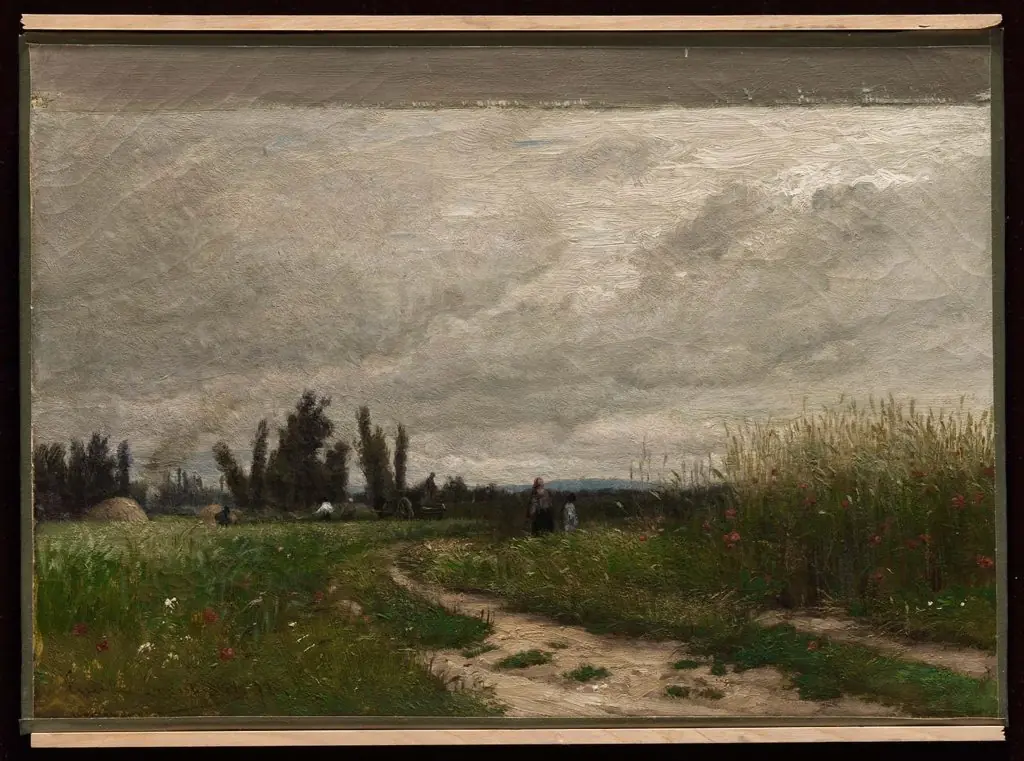
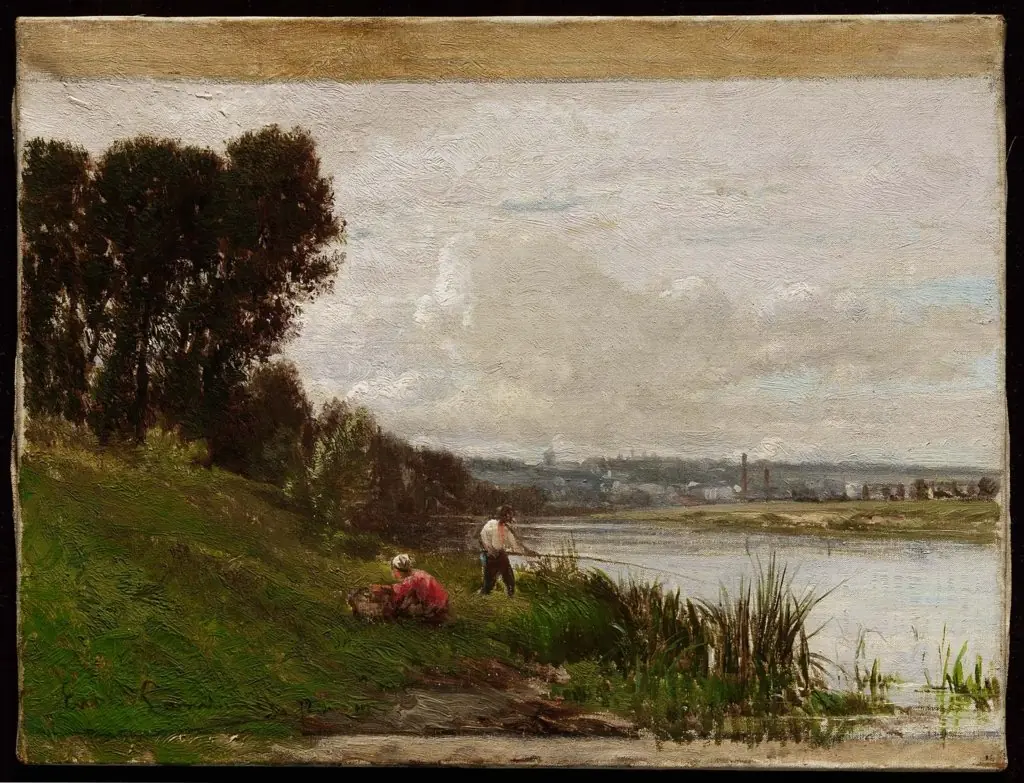
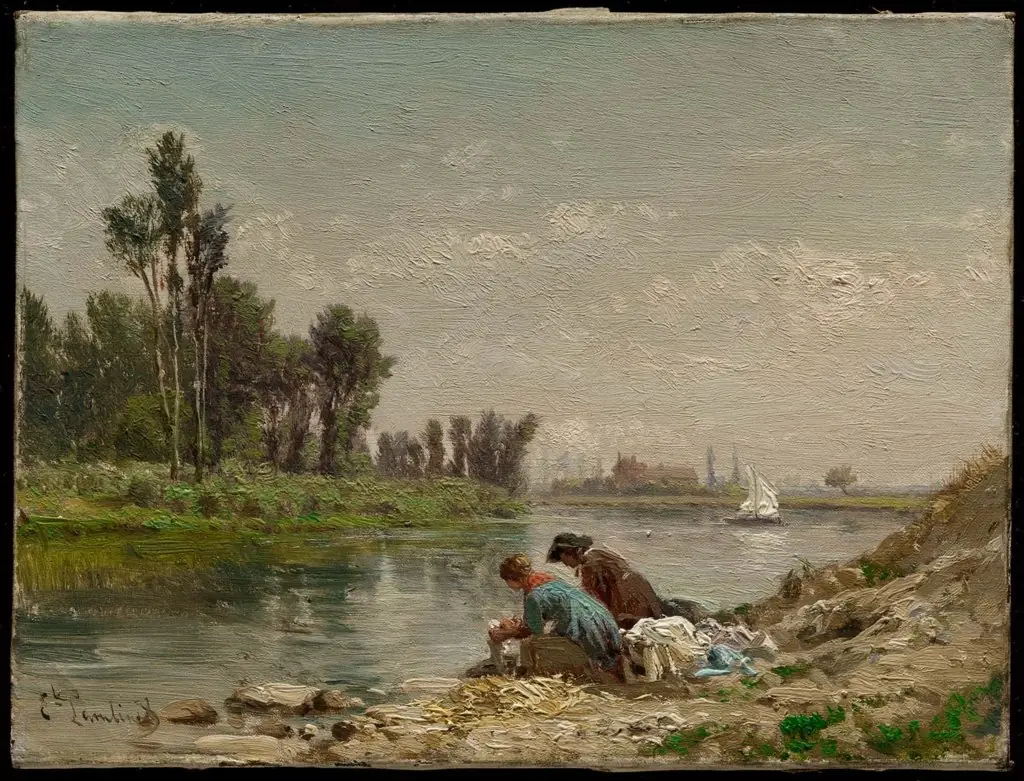
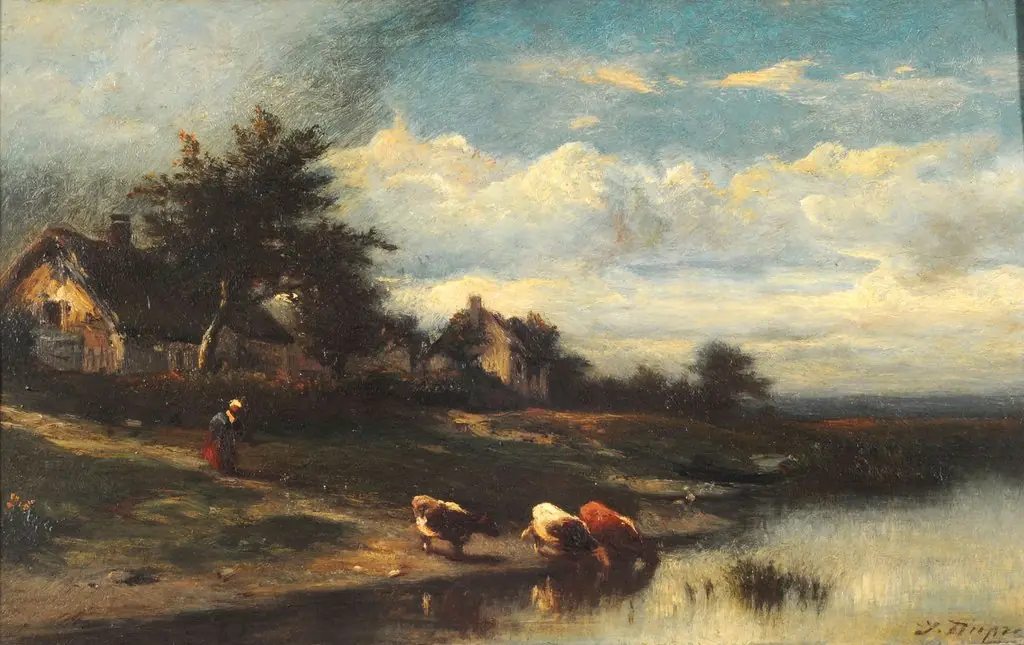
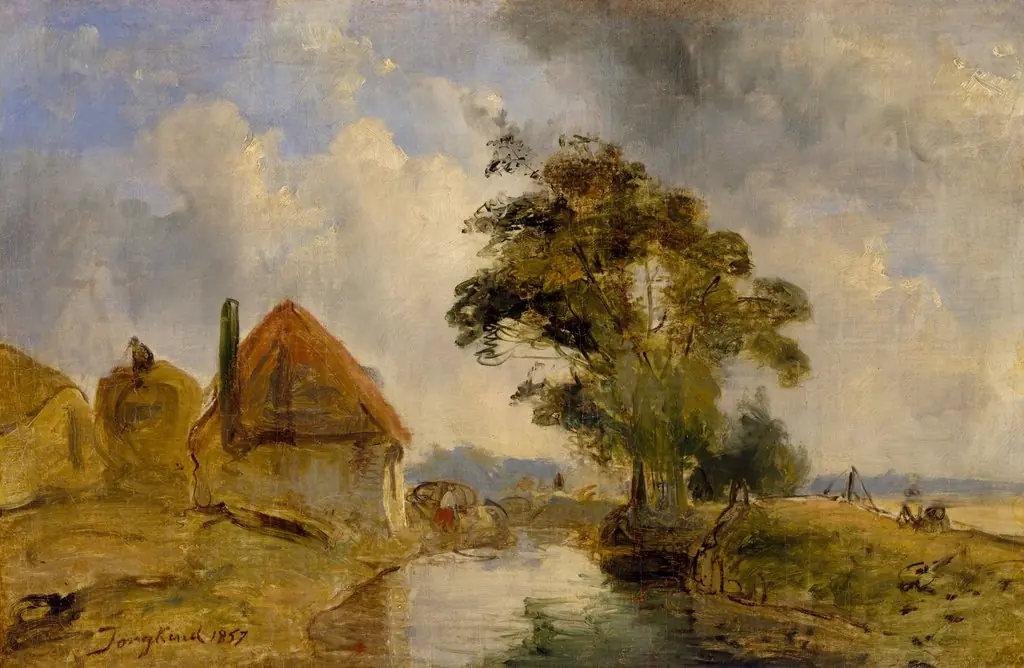
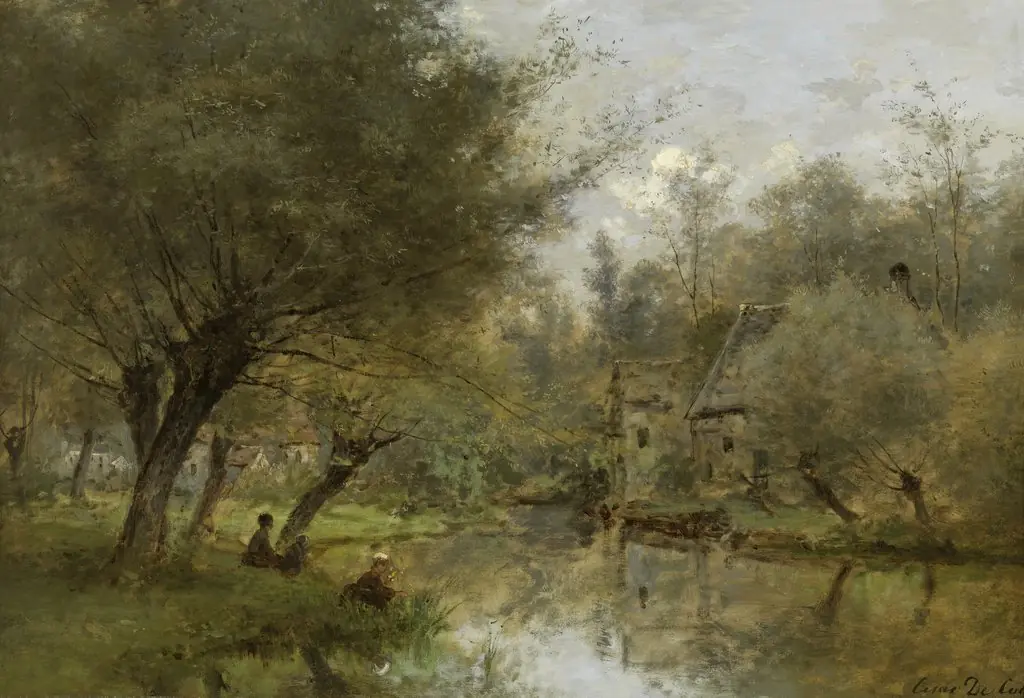
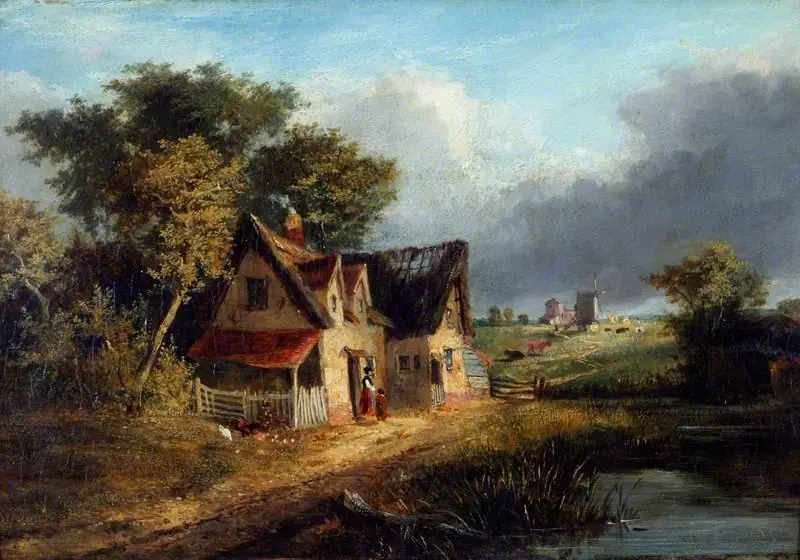
Émile Lambinet’s 1858 oil painting, Landscape at Écouen, near Paris, depicts a tranquil rural scene with a meandering path, trees, a modest house, and a nearby water feature. The composition balances sky, foliage, and distant figures, conveying the quiet atmosphere of the French countryside.
Subject & Meaning
The work presents a typical pastoral view, emphasizing the harmony between human habitation and nature. The winding lane and scattered figures suggest everyday movement through the landscape, while the gentle lighting underscores a sense of calm and continuity in rural life.
Technique & Style
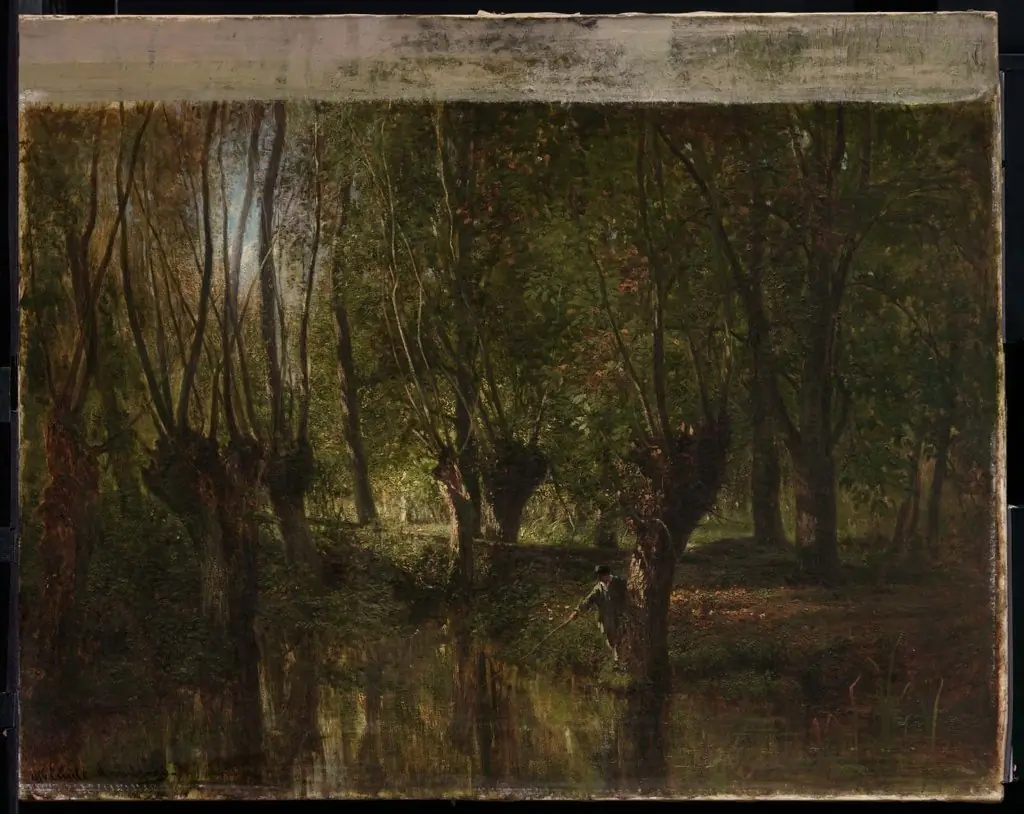
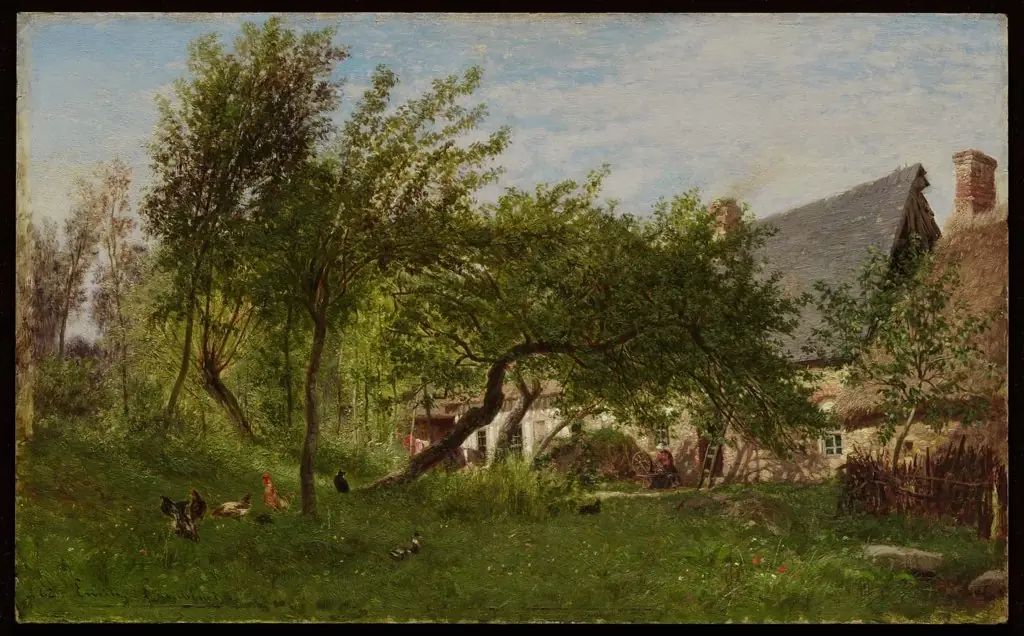
Lambinet employs a palette ranging from deep blues in the sky to earthy greens and browns for vegetation, applying loose, expressive brushwork that conveys texture and atmospheric depth. The handling aligns with the naturalistic approach of the Barbizon School, favoring observation over idealization.
History & Provenance
A pupil of Horace Vernet and later of Jean‑Baptiste‑Camille Corot, Lambinet worked mainly in the Yvelines region, moving from Versailles to Bougival. Landscape at Écouen entered the collection of the Victoria and Albert Museum, where it remains part of the museum’s holdings.
Context
Created during the mid‑nineteenth century, the painting reflects the Barbizon School’s focus on realistic depictions of the French countryside, a movement that responded to industrialization by celebrating unspoiled rural environments. Lambinet’s choice of Écouen, a village north of Paris, situates the work within this broader artistic trend.
Artist & collection
Artist
Émile Lambinet (1813, Versailles – 1877, Bougival) was a French painter of rural scenes. A student of Horace Vernet then Corot, he spent most of his life in Yvelines, at first in his birthplace of Versailles, then at Bougival from 1860.