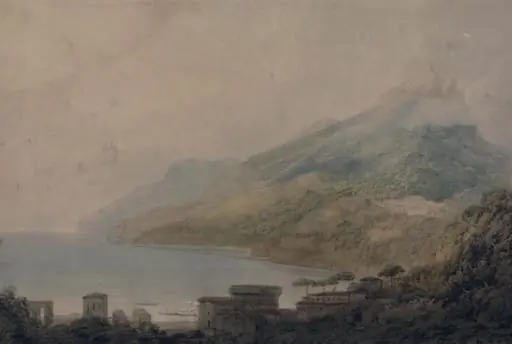
Artwork
Algiers from Kouba
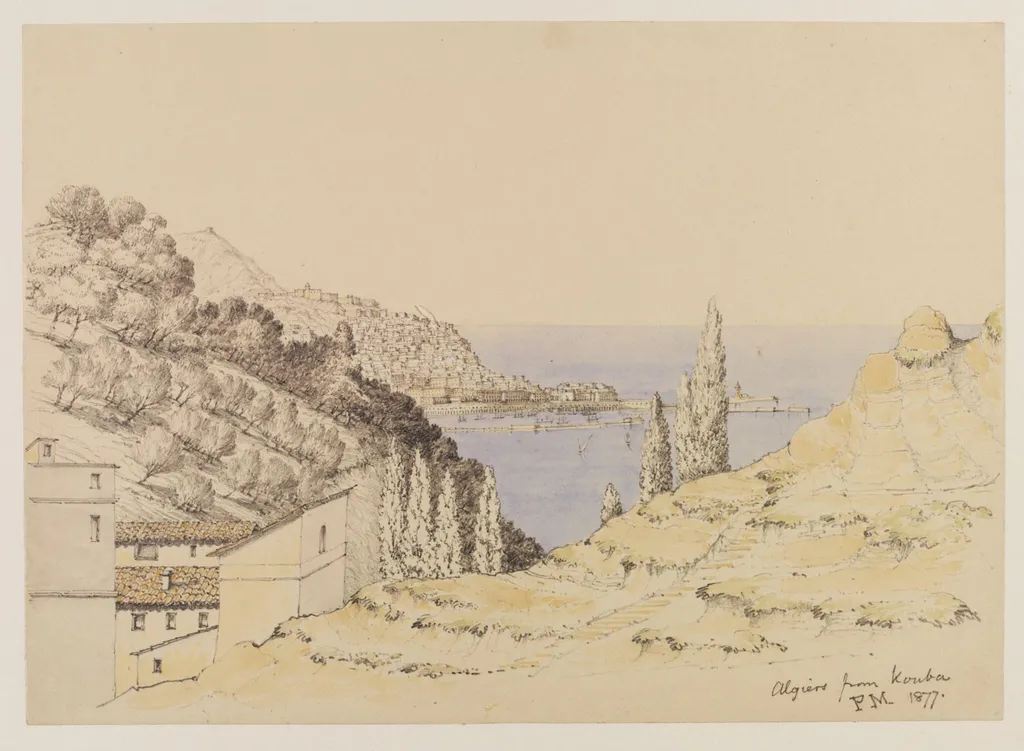
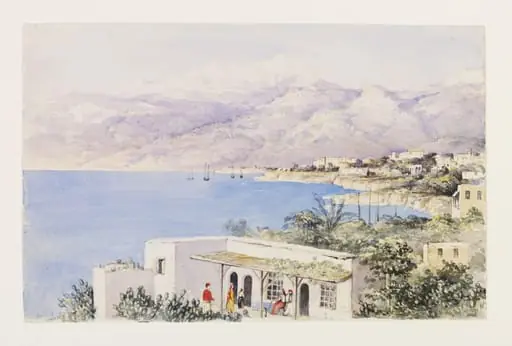
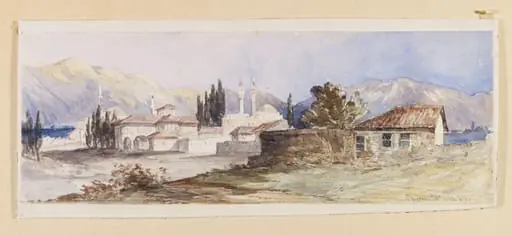
Algiers from Kouba is a watercolor work on paper by the Impressionist artist Peter William Skinner Miles. It dates from 1877 and is held in the collection of the Victoria and Albert Museum.
About this work
Overview
Executed in delicate washes, the piece reflects a restrained, observational approach to landscape, typical of 19th-century British watercolour traditions.
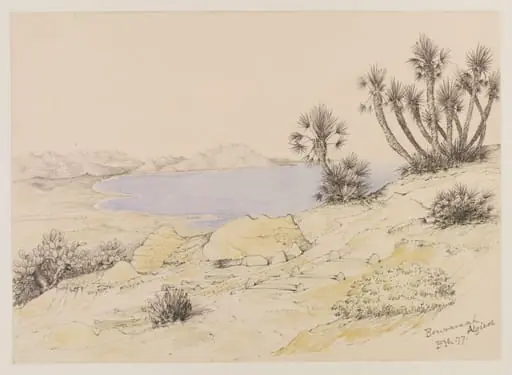
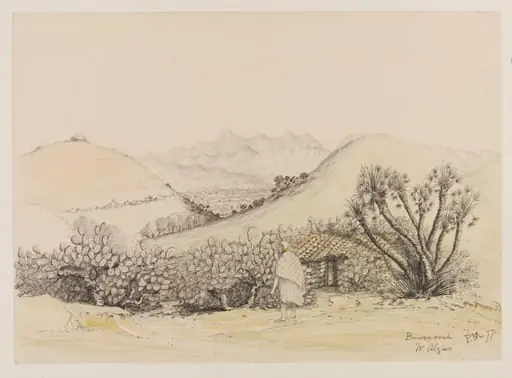
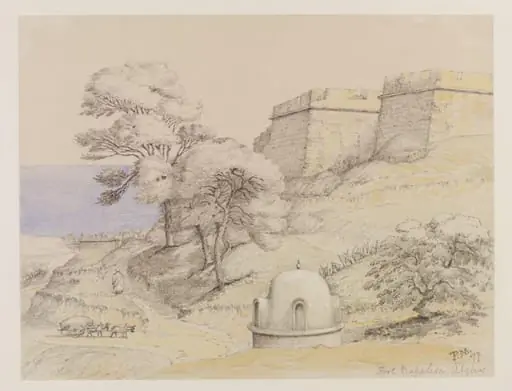
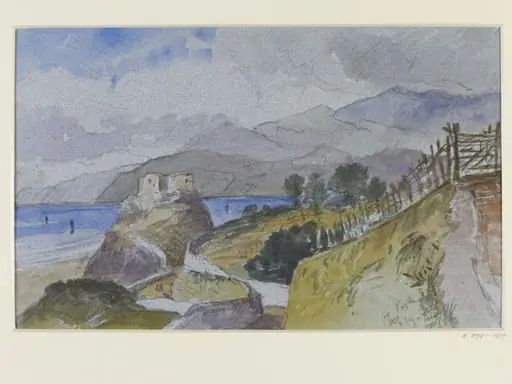
Created in 1877 by Peter William Skinner Miles, this watercolour depicts a view of Algiers as seen from the hillside of Kouba. The work captures a quiet coastal landscape with buildings nestled among trees on the left, a broad expanse of water in the middle ground, and a pale, luminous sky above. Executed in delicate washes, the piece reflects a restrained, observational approach to landscape, typical of 19th-century British watercolour traditions.
Subject & Meaning
The scene presents Algiers from a vantage point overlooking the Mediterranean, emphasizing stillness and spatial harmony. The arrangement of architecture and foliage suggests a lived-in environment, yet the absence of figures or activity enhances a sense of solitude. The composition invites contemplation rather than narrative, focusing on the quiet interplay between land, sea, and sky as a meditation on place.
Technique & Style
Miles employed transparent watercolour washes to build subtle tonal gradations, using minimal detail to suggest form. The buildings and trees are rendered with soft edges and muted pigments, while the water is hinted at through delicate highlights and a faint glaze. Light is used to model depth and atmosphere, not to dramatize, resulting in a calm, atmospheric effect rooted in observational precision rather than expressive brushwork.
History & Provenance
The watercolour was sold at Sotheby's on November 8, 1984, as lot 325, marking its documented appearance in the modern art market. Prior to this, its ownership history is not publicly recorded. Its survival and eventual auction suggest it remained in private collections for over a century, likely kept as a personal record of travel or study rather than as a public commission.
Context
In the late 19th century, British artists frequently traveled to North Africa, drawn by its light, architecture, and exoticism. Miles’s work aligns with a tradition of topographical watercolours produced by amateur and professional artists alike, documenting foreign landscapes with restraint. Unlike the bold brushwork of Impressionism, this piece reflects a more reserved, academic approach to landscape, rooted in British watercolour conventions.
Legacy
Though not widely exhibited or studied, the work stands as an example of 19th-century British watercolour practice focused on quiet observation. Its survival in private hands and eventual auction record indicate its value as a personal artifact of travel and artistic study. It contributes to a broader, less celebrated corpus of colonial-era landscape views made by non-professional artists.
Artist & collection
Artist
Peter Miles carried a tiny wooden paint box across the Mediterranean just to chase the way light hits whitewashed walls.

![Tiberais [sic], by Mary Parker](https://artifactworldgallery.com/img/mary-parker--tiberais-sic--e6f3a288c102ee52-w320.webp)
![Looking towards Leanders Tower and the Sultans New Palace [Dolmabahçe] From Scutari, by Michael Anthony Shrapnel Biddulph](https://artifactworldgallery.com/img/michael-anthony-shrapnel-biddulph--looking-towards-leanders-tower-and-the-sultans-new-palace-do--77513ba4e146ed32-w320.webp)