Artwork
Smyrne
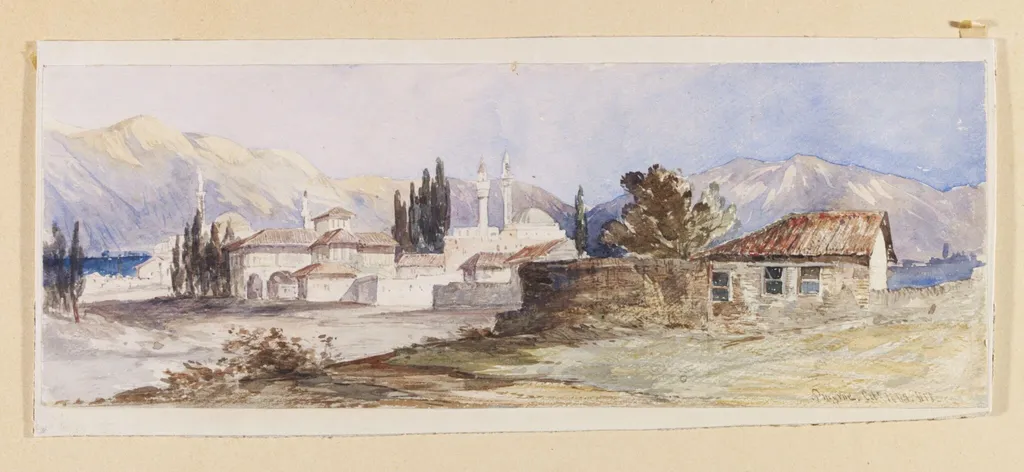
Smyrne is a watercolor work on paper by the British Romanticist artist Harry John Johnson. It dates from 1843 and is held in the collection of the Victoria and Albert Museum.
About this work
Overview
Executed alongside fellow artist William Müller, the work documents a moment in their broader expedition toward Lycia.
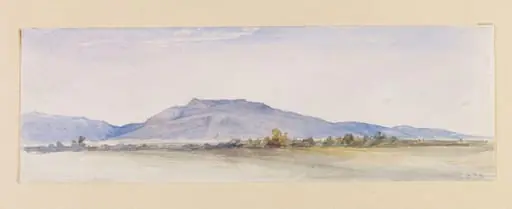
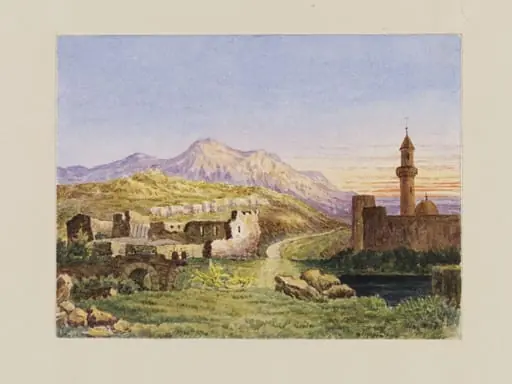
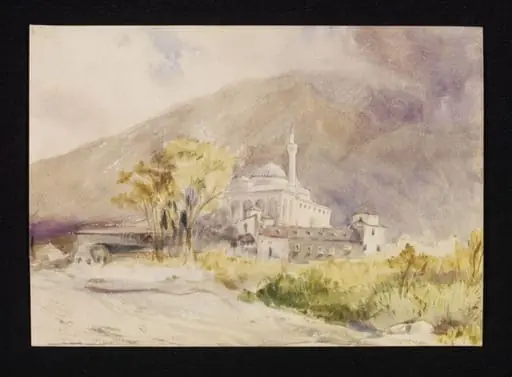
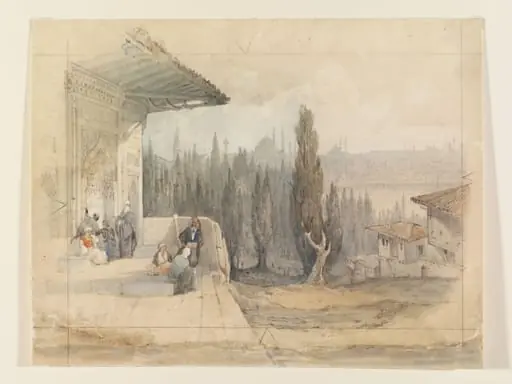
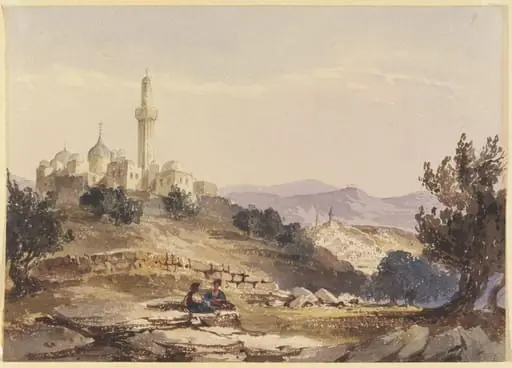
Harry John Johnson's watercolour *Smyrne*, created in October 1843, captures the coastal city now known as İzmir during a journey through the eastern Mediterranean. Executed alongside fellow artist William Müller, the work documents a moment in their broader expedition toward Lycia. The piece is rendered in delicate washes, emphasizing atmospheric tone over detail, and reflects the observational focus of 19th-century topographical travel art.
Subject & Meaning
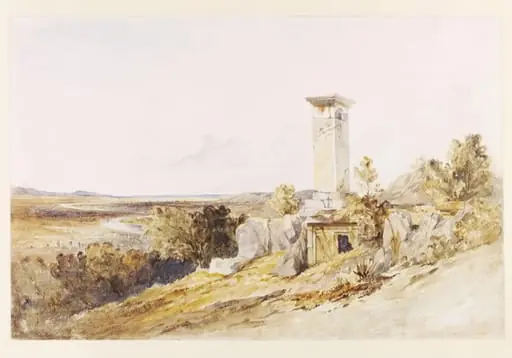
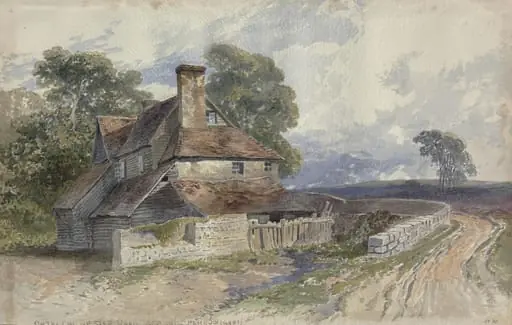
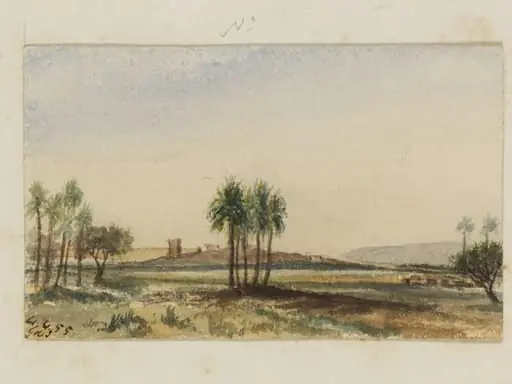
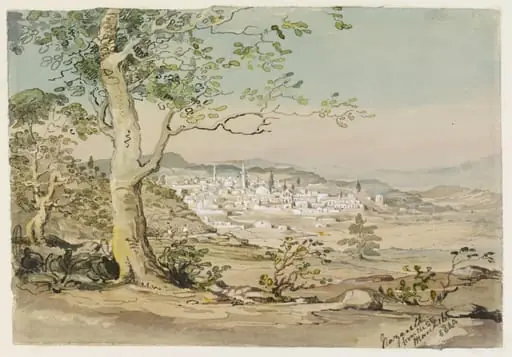
The scene presents a quiet settlement nestled against rugged hills, with a church spire and clustered dwellings suggesting a modest community. A single stone structure with a red-tiled roof anchors the foreground, framed by foliage and open sky. The composition conveys stillness and distance, evoking the transient nature of travel rather than asserting political or cultural narrative. It serves as a personal record of place, not a symbolic statement.
Technique & Style
Johnson employed watercolour with restrained brushwork, layering thin washes to suggest depth and light. Muted earth tones and pale blues dominate, avoiding dramatic contrasts. The soft edges and subtle gradations reflect a preference for atmospheric effect over precise architecture, aligning with the observational traditions of British watercolourists of the period. The technique prioritizes mood over detail, characteristic of travel sketches made on site.
History & Provenance
Created during Johnson and Müller’s 1843 journey through Anatolia, the work remained in private hands until September 1970, when it was acquired by a collector identified as Holder. Prior to this, its documented history is limited, suggesting it was not publicly exhibited or widely reproduced. Its survival as a personal record reflects the common practice of artists preserving sketches from fieldwork rather than seeking immediate public display.
Context
Johnson’s trip occurred during a period of growing European interest in the Ottoman Empire’s ancient and contemporary landscapes. Travelers often documented sites before major archaeological expeditions, such as the one to Xanthus that followed. His watercolour fits within a broader tradition of British artists recording foreign scenery, blending topographical accuracy with a quiet, personal sensibility shaped by Romantic-era aesthetics.
Legacy
Though not widely published or exhibited, *Smyrne* contributes to a modest archive of 19th-century British travel watercolours from Anatolia. Its preservation offers insight into how artists engaged with unfamiliar landscapes—not as exotic spectacle, but as transient, observed moments. The work remains a quiet testament to the practice of sketching as a form of personal and cultural documentation during an era of expanding geographical inquiry.
Artist & collection
Artist
Henry John Johnson, usually known as Harry (10 April 1826 — 31 December 1884) was an English landscape and water colour painter.