Artwork
Abu Simbel
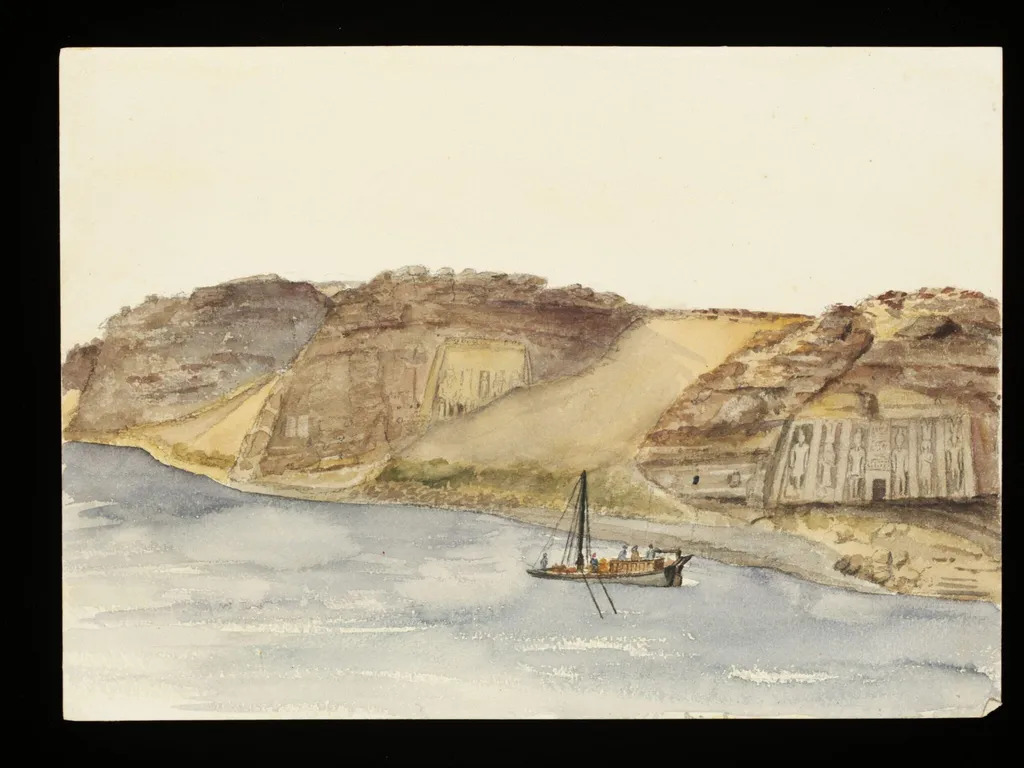
Abu Simbel is a watercolor work on paper by the Impressionist artist George de Sausmarez. It dates from 1855 and is held in the collection of the Victoria and Albert Museum.
About this work
Overview
George de Sausmarez’s watercolour titled “Abu Simbel” is one of a group of forty‑five images that were mounted on thirty‑five separate supports. The collection forms an album that records scenes observed along the Nile in Egypt and Nubia, created during or shortly after a voyage in 1855 that travelled both upriver and downriver.
Subject & Meaning
The picture depicts a sheer limestone cliff rising from the riverbank, its face pierced by the ancient rock‑cut temples of Abu Simbel. A modest boat rests on the calm water near the shore, carrying a few figures, suggesting a moment of everyday travel against the backdrop of monumental architecture.
Technique & Style
Executed in watercolour, the work employs a restrained palette of soft, natural tones. De Sausmarez emphasizes the play of light on the cliff face and the boat, rendering the scene with delicate washes that convey both atmospheric clarity and the texture of stone.
History & Provenance
The album containing this watercolour is bound in a half‑bound crimson Morocco leather cover stamped with the word “EGYPT.” The binding and the dated journey place the work firmly in the mid‑nineteenth‑century European interest in documenting the Nile’s monuments.
Context
Created at a time when Western travelers were increasingly recording Egypt’s ancient sites, the series reflects the broader 19th‑century fascination with antiquities and the Nile’s landscape, serving both as visual record and as a souvenir of the expedition.
Artist & collection
Artist
George de Sausmarez painted watercolors of Egypt’s Nile in the 1850s, recording river scenes and landmarks with quick, transparent washes.

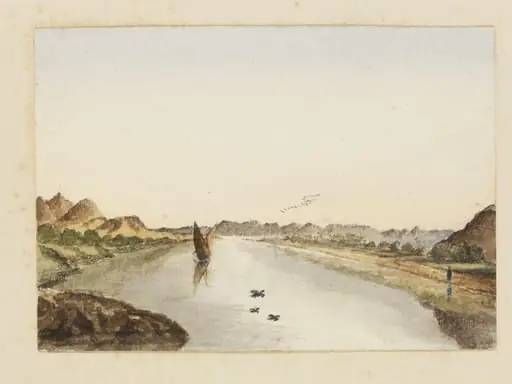 View of the Nile
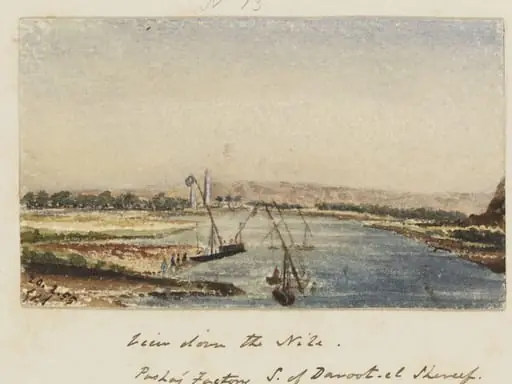 `View down the Nile. Pasha's Factory S.of Daroot-el Shereef. Upper Egypt'
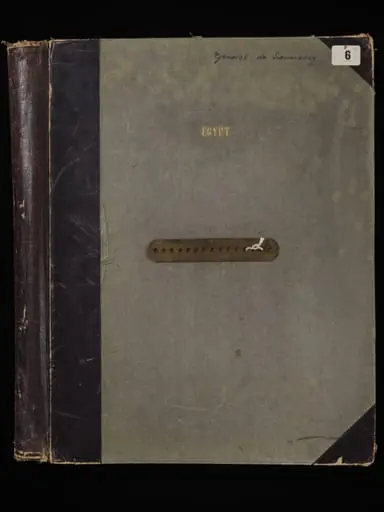 Album
Album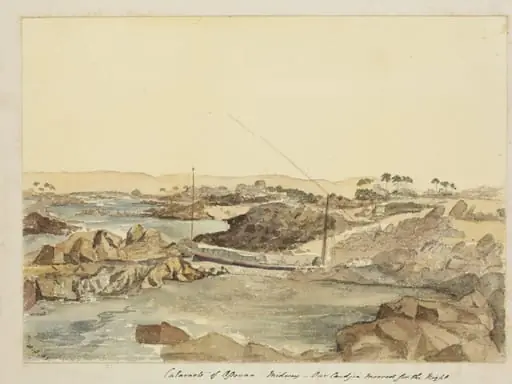 `Cataracts of Assouan. Midway. - Our Candjia Moored for the Night - On the Nile'
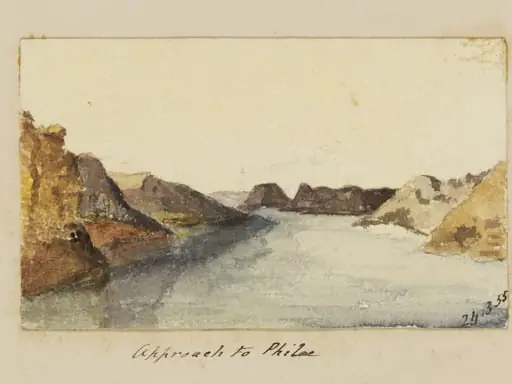 `Approach to Philae'
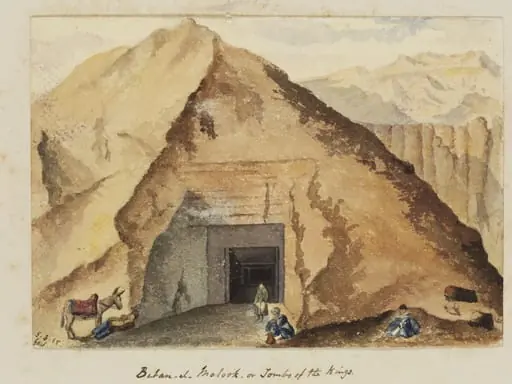 Biban-el-Molook, or Tombs of the Kings. Belzoni's Tomb. Thebes
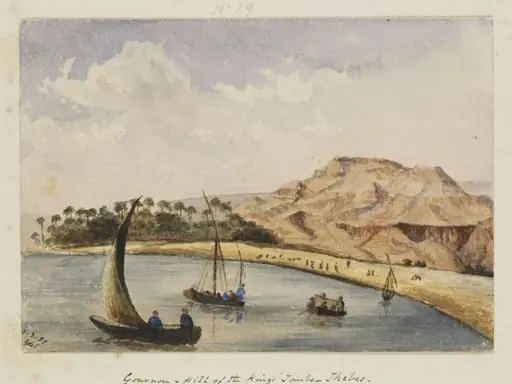 `Gournou & Hill of the Kings' Tombs - Thebes'
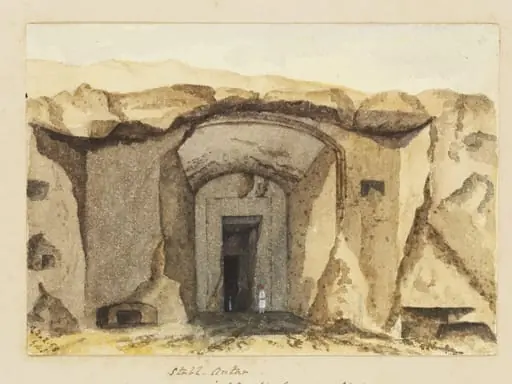 `Stabl-Antar. Ancient Egyptian Cave near Siout. Upper Egypt'
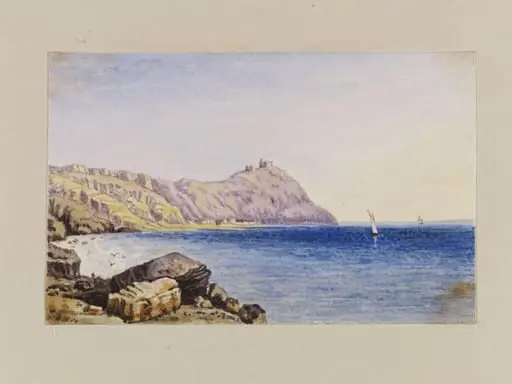 Carmel
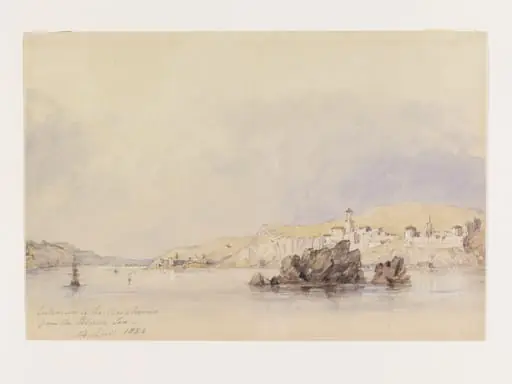 Entrance to the Bosphorus from the Black Sea
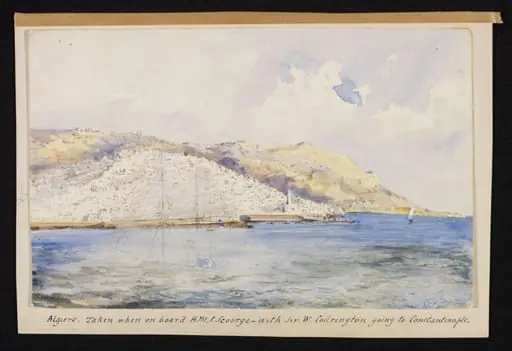 Algiers
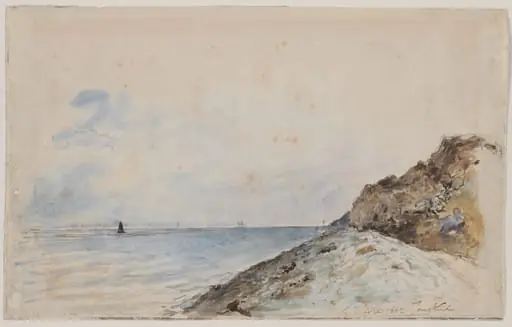 Le Havre
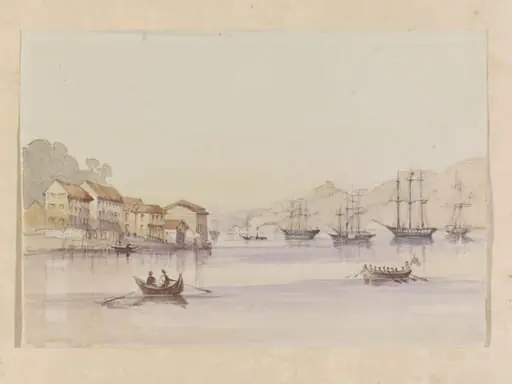 View of the Bosphorus with warships
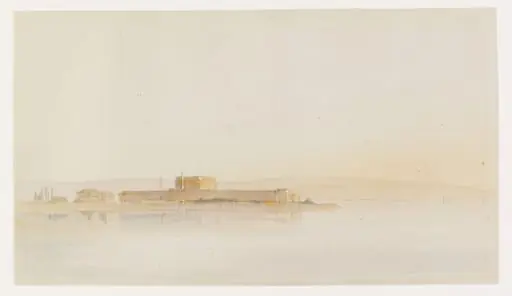 Dardanelles
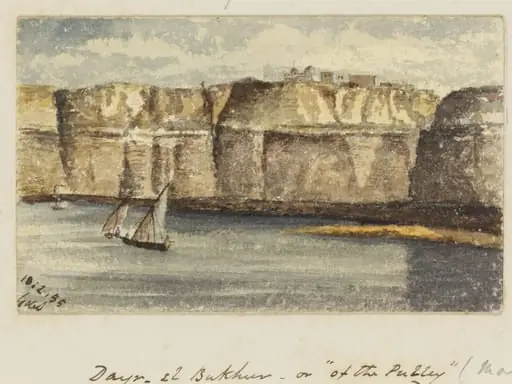 Dayr- El Bukhur - or "of the Pulley" Coptic Convent on Gebel-e-Tayr. Upper Egypt
![Looking towards Leanders Tower and the Sultans New Palace [Dolmabahçe] From Scutari, by Michael Anthony Shrapnel Biddulph](https://artifactworldgallery.com/img/michael-anthony-shrapnel-biddulph--looking-towards-leanders-tower-and-the-sultans-new-palace-do--77513ba4e146ed32-w320.webp) Looking towards Leanders Tower and the Sultans New Palace [Dolmabahçe] From Scutari
Looking towards Leanders Tower and the Sultans New Palace [Dolmabahçe] From Scutari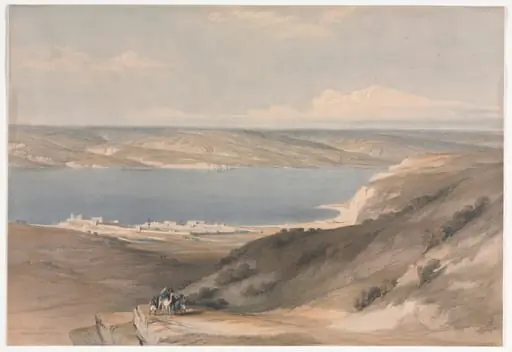 Sea of Galilee at Genezareth looking Towards Bashan
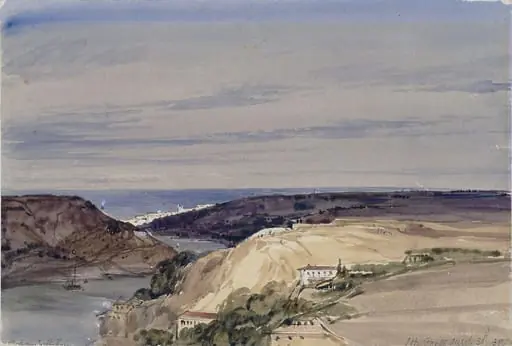 Oporto
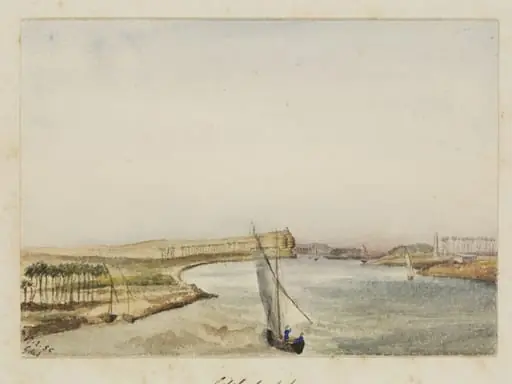 `Gibel-el-dab'