Artwork
View on the Conway
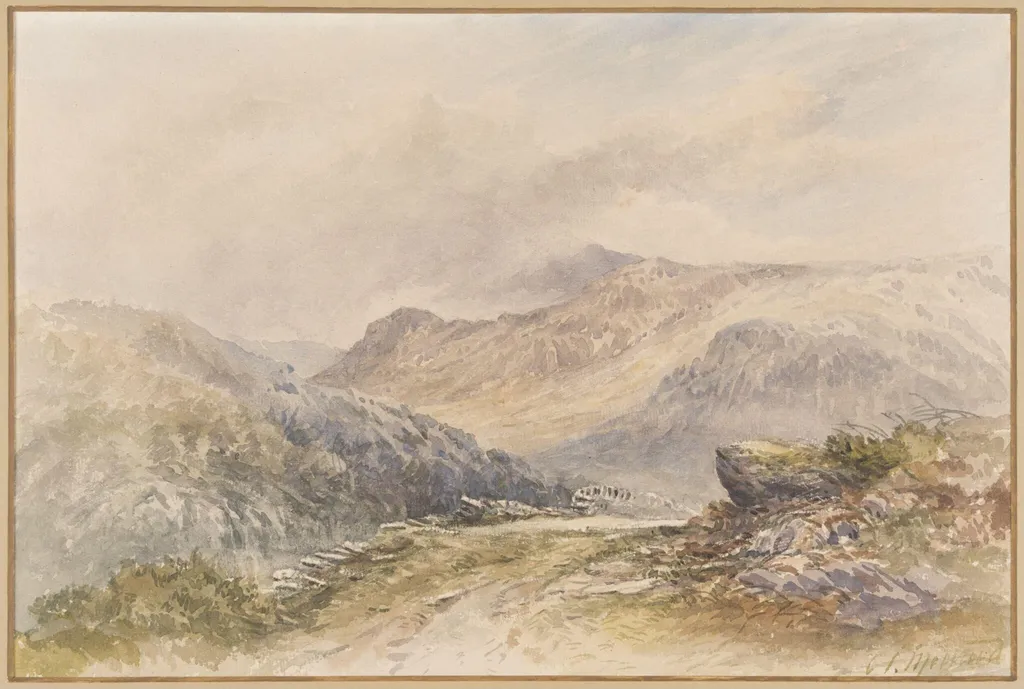
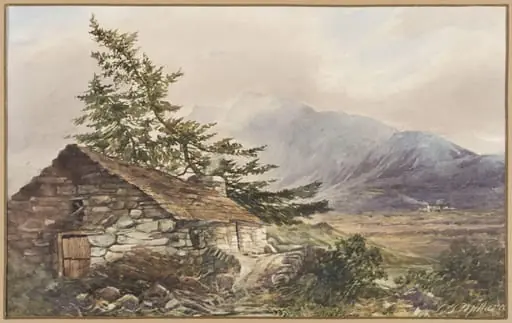
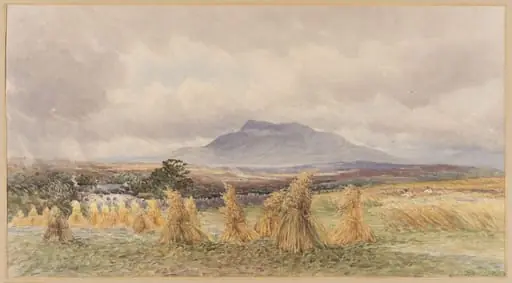
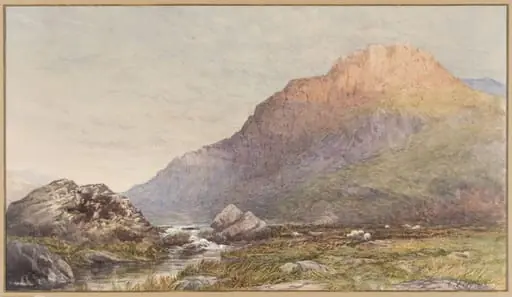
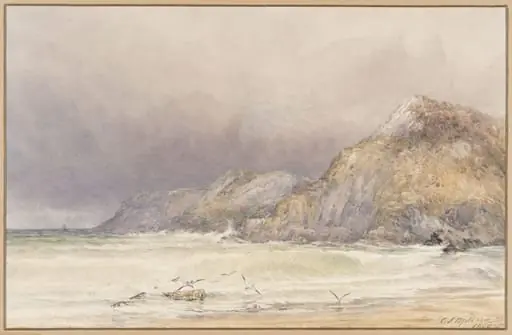
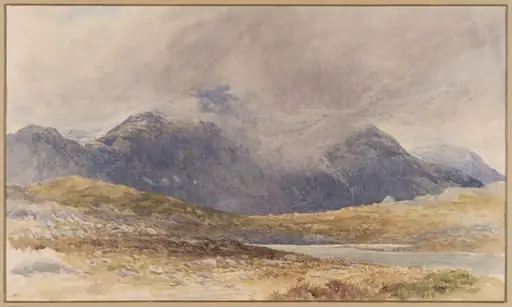
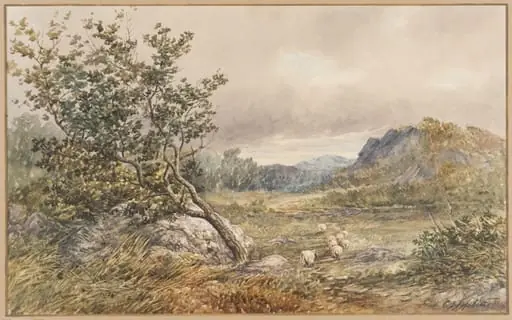
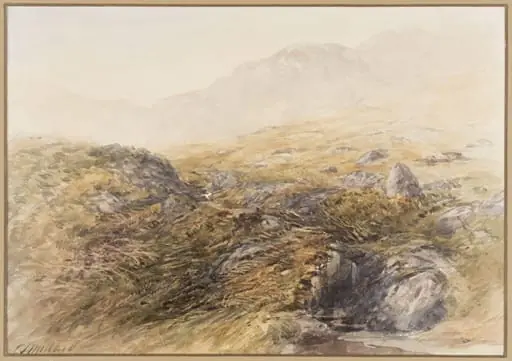
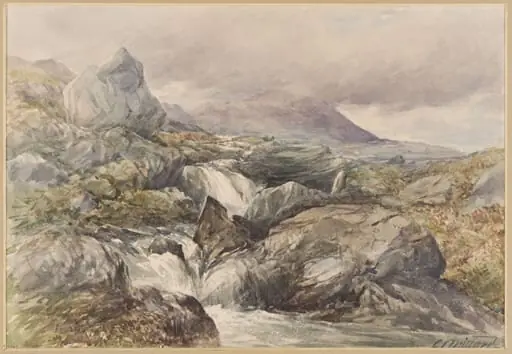
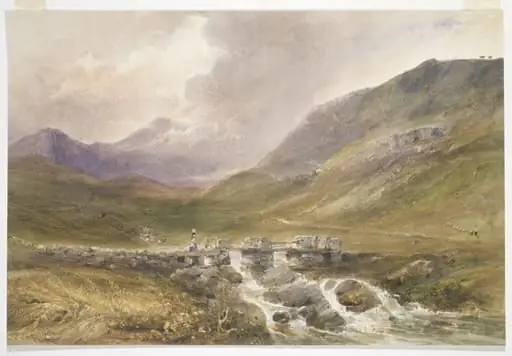
View on the Conway is a watercolor work on paper by the British Romanticist artist Charles Stuart Millard. It dates from 1862 and is held in the collection of the Victoria and Albert Museum. A watercolor landscape captures the Conway River valley in Wales, rendered with delicate washes and minimal detail.
About this work
Overview
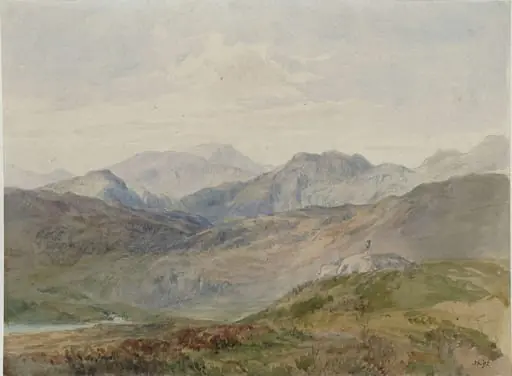
The composition emphasizes atmospheric depth through overlapping ridges and soft transitions between tones, avoiding sharp outlines.
A watercolor landscape captures the Conway River valley in Wales, rendered with delicate washes and minimal detail. The composition emphasizes atmospheric depth through overlapping ridges and soft transitions between tones, avoiding sharp outlines. The medium’s fluidity enhances the sense of moisture and distance, aligning with 18th-century topographical traditions that valued observation over idealization.
Subject & Meaning
The scene presents a quiet, unpopulated valley dominated by natural forms: winding river, rolling hills, and distant peaks. A solitary boat, partially obscured by vegetation, suggests human presence without disrupting the tranquility. The absence of dramatic action or architectural landmarks implies a contemplative engagement with the land, valuing subtlety over spectacle.
Technique & Style
Loose, translucent brushwork allows pigments to bleed and blend on the paper, creating a hazy, luminous effect. Muted hues of pale green, gray, and ochre dominate, mimicking the diffused light of a misty day. The artist avoided hard edges, using wet-on-wet methods to dissolve forms into the surrounding atmosphere, prioritizing mood over precision.
History & Provenance
The work belongs to a tradition of British watercolor drawing popular in the late 1700s, often produced for private collections or as studies for larger projects. While its exact origin is unrecorded, its style aligns with artists who traveled through Wales to document its rugged terrain, contributing to a growing interest in native landscapes during the period.
Context
This piece reflects the era’s shift toward direct observation of nature, influenced by Romantic sensibilities and the rise of tourism in rural Britain. Watercolor, prized for its portability and immediacy, became a favored medium for sketching landscapes en plein air. Such works helped shape perceptions of the Welsh countryside as serene and unspoiled.
Legacy
Though unsigned and undated, the painting exemplifies the quiet aesthetic of British watercolorists who prioritized atmospheric truth over grandeur. Its preservation in institutional collections underscores its role in documenting evolving attitudes toward landscape, influencing later generations who valued naturalism and restraint in depiction.
Artist & collection
Artist
A Welsh landscape painter active in the 1860s, Charles Stuart Millard specialized in watercolours of the Welsh countryside.