Artwork
Llanrhychwyn, near Trefriw, North Wales
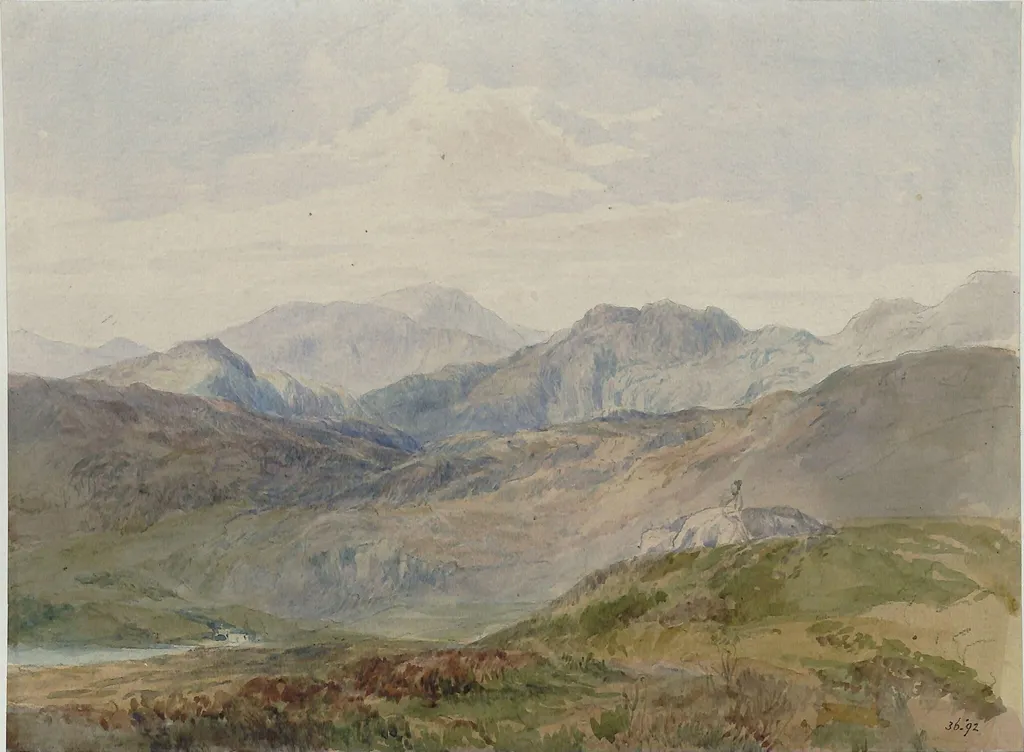
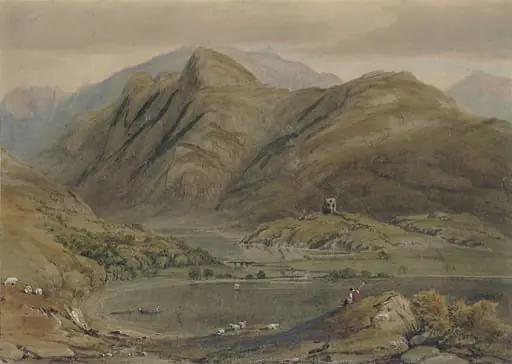
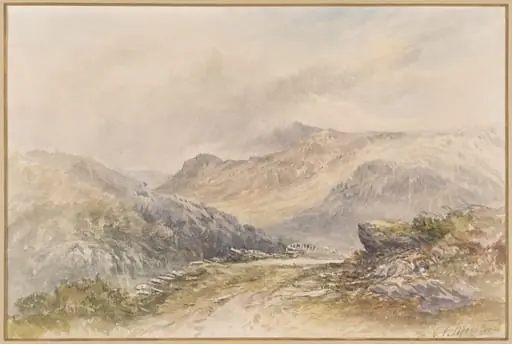
Llanrhychwyn, near Trefriw, North Wales is a watercolor work on paper by the British Romanticist artist Warwick Brookes. It dates from 1840 and is held in the collection of the Victoria and Albert Museum.
About this work
Overview
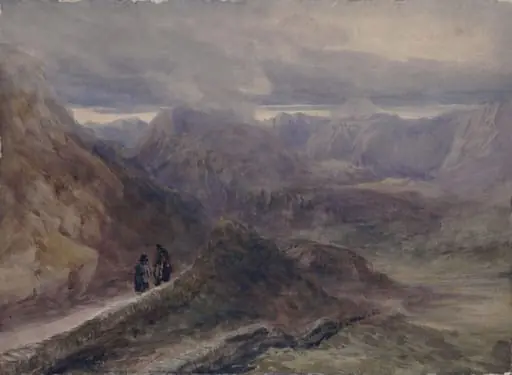
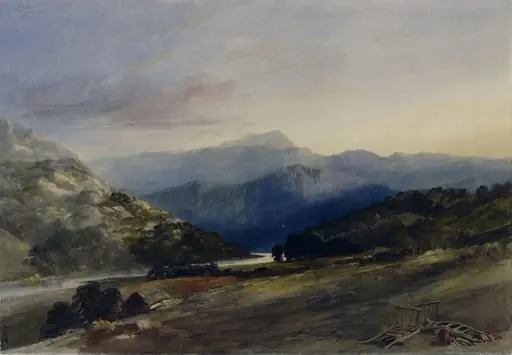
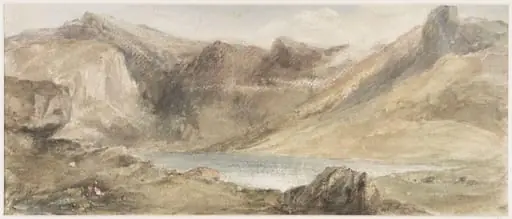
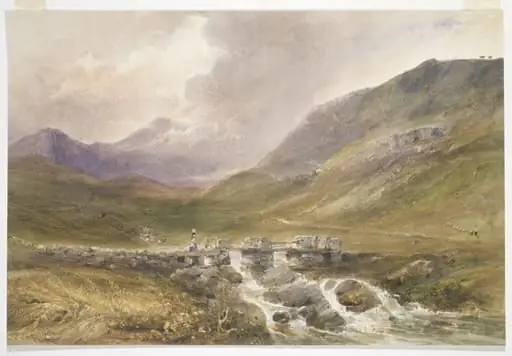
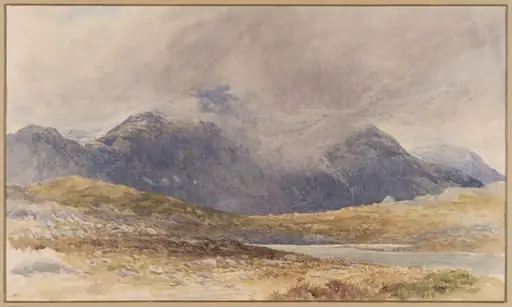
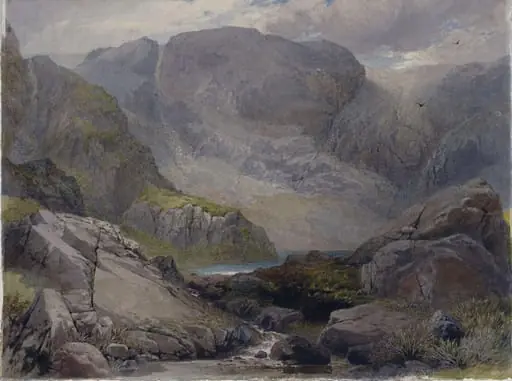
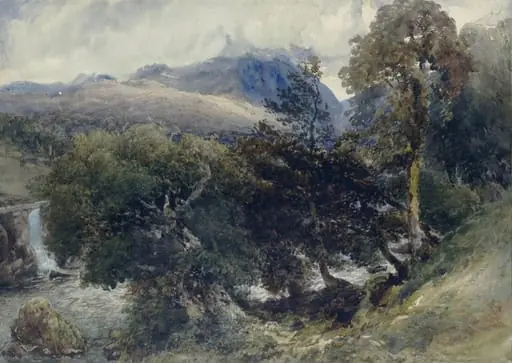
Created in 1840 by Warwick Brookes, this watercolour depicts the Welsh village of Llanrhychwyn, nestled near Trefriw in northern Wales. The work captures a quiet, undisturbed landscape with rolling hills, distant mountains, and a pale sky. Rendered in delicate washes, the piece reflects a restrained palette of muted greens, browns, and greys, emphasizing natural tones over dramatic contrast.
Subject & Meaning
The absence of human figures reinforces a sense of solitude, aligning with 19th-century interests in unspoiled landscapes and the dignity of rural life.
The painting presents a topographical view of a rural Welsh settlement, offering no overt narrative or symbolic elements. Its value lies in its quiet observation of place — the village, its surrounding terrain, and the atmospheric conditions of the moment. The absence of human figures reinforces a sense of solitude, aligning with 19th-century interests in unspoiled landscapes and the dignity of rural life.
Technique & Style
Brookes employed transparent watercolour washes to build subtle gradations of tone, particularly in the distant peaks and rolling hills. Fine brushwork defines textures in the vegetation and rock formations, while the sky remains lightly glazed to suggest openness. The muted colour scheme and precise detail reflect a topographical approach, prioritizing accuracy over expressive flourish.
History & Provenance
The painting is attributed to Warwick Brookes, a lesser-known 19th-century British artist active in Wales. Its origin is tied to the period’s growing interest in documenting regional landscapes, though specific ownership history prior to modern collections remains undocumented. It likely circulated among private patrons or local antiquarians interested in Welsh scenery.
Context
Produced during the height of Romanticism’s influence on British art, the work aligns with a broader trend of sketching rural Britain as a counterpoint to industrialization. While not overtly emotional, its attention to natural form and quiet atmosphere resonates with contemporaries like Turner and Cotman, who sought truth in landscape through careful observation rather than idealization.
Legacy
Though not widely exhibited or reproduced, the painting contributes to a modest but significant body of Welsh topographical watercolours from the early Victorian era. It serves as a visual record of a specific place at a particular time, preserving the appearance of Llanrhychwyn before later modernization. Its quiet precision continues to inform studies of regional British landscape art.
Own this work as a print
Artist & collection