Artwork
William Henry Vining
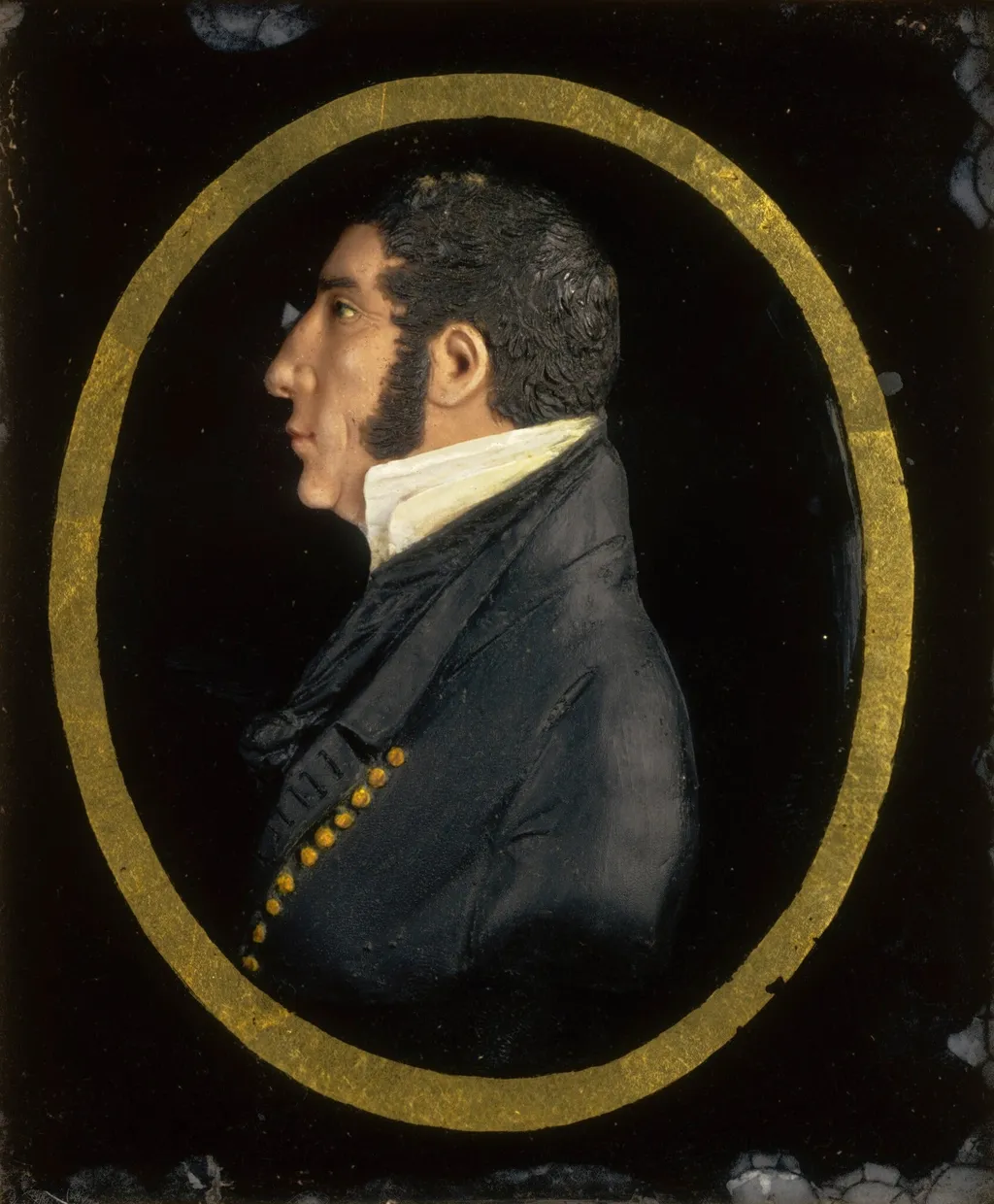
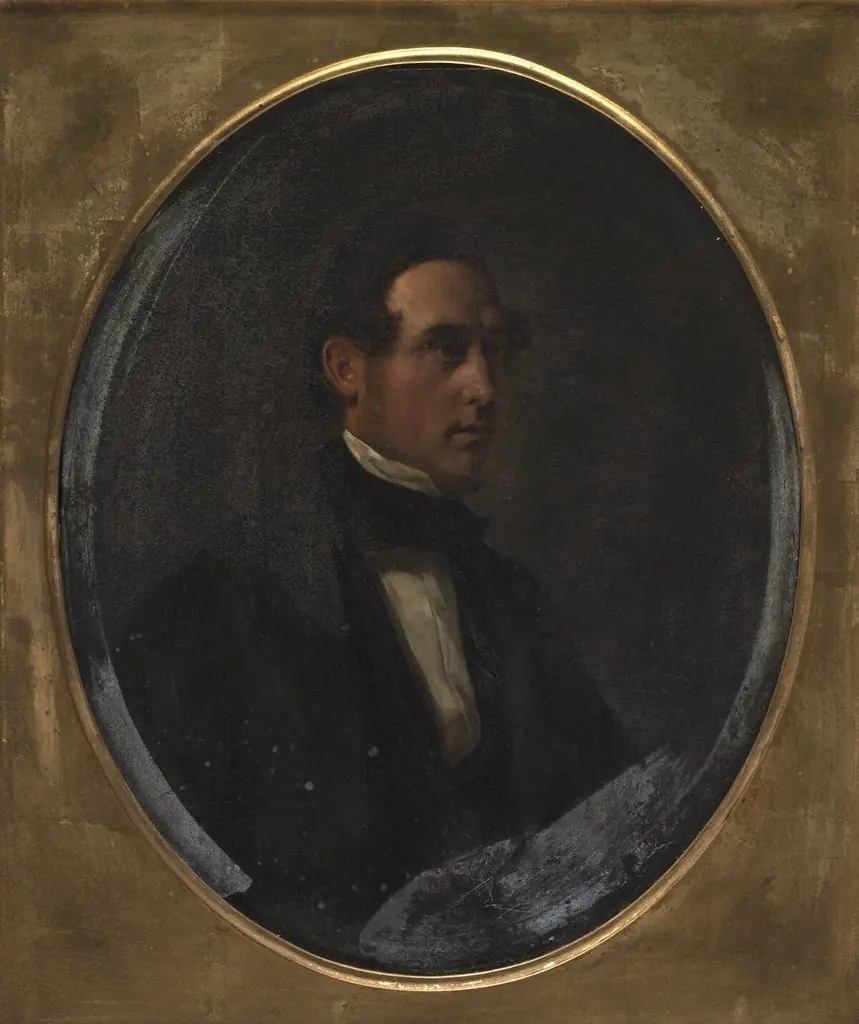
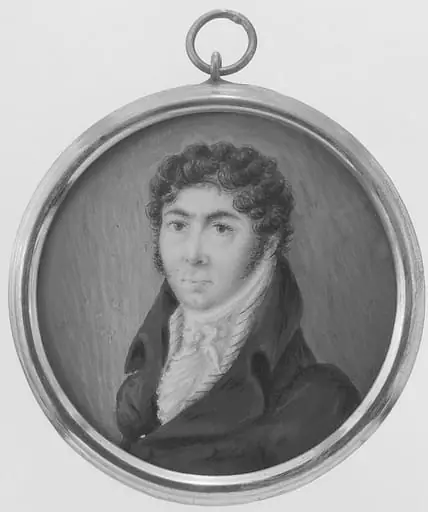
William Henry Vining is a glass painting by the Romanticist artist George M. Miller. It dates from 1810 and is held in the collection of the National Gallery of Art. George M.
About this work
Overview
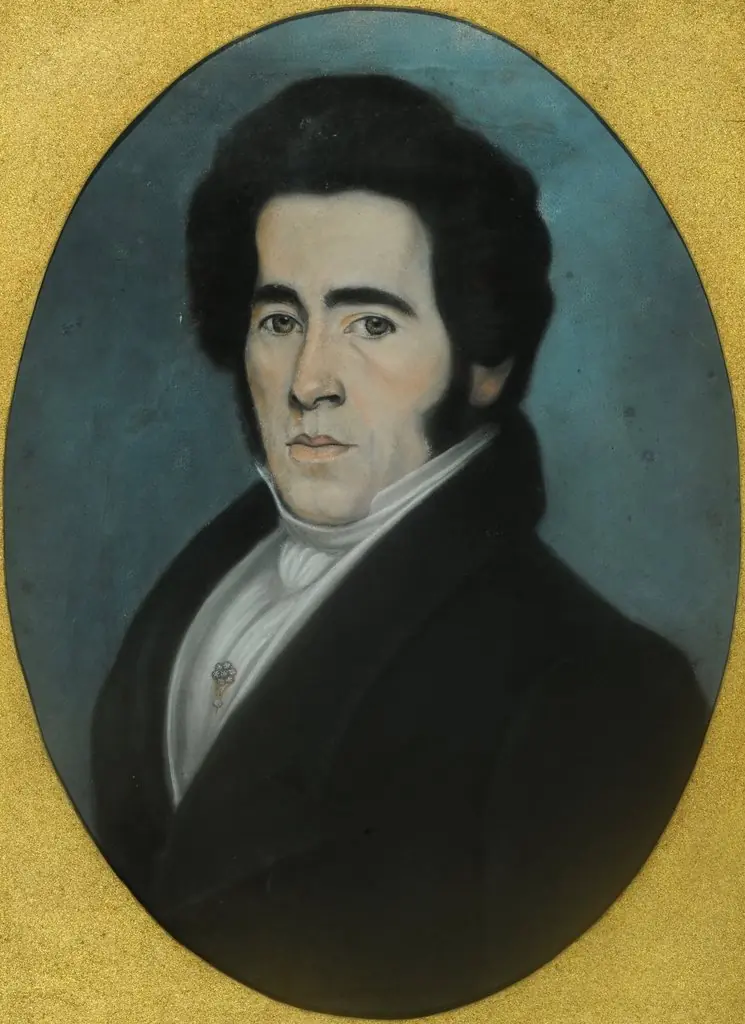
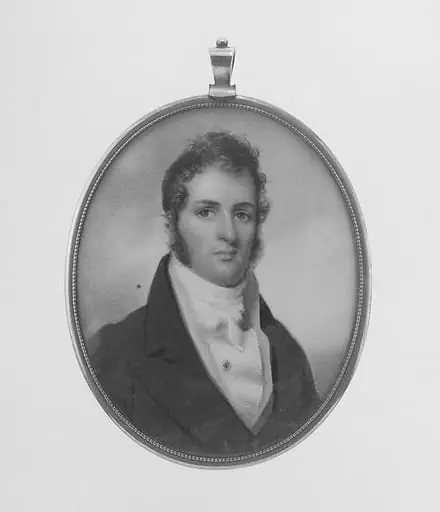
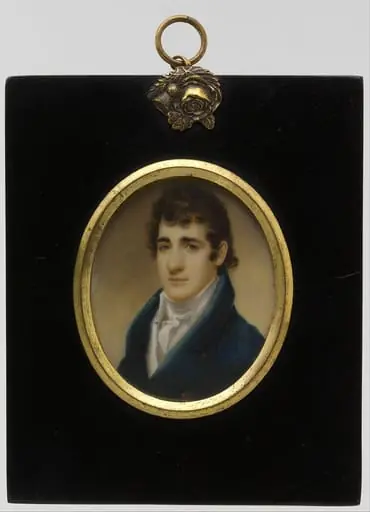
George M. Miller’s portrait, titled William Henry Vining, dates to around 1810. Executed in painted wax on glass, the work depicts a solitary male figure in a dark setting, his attire marked by a black coat with gold‑button detailing. The composition is framed by a luminous gold border that seems to emit a subtle glow, lending the piece an ethereal quality.
Subject & Meaning
The sitter is presented in formal dress, with a white collar visible beneath a high neckline and dark, slightly wavy hair. His posture and direct gaze suggest a dignified presence, while the stark contrast between the illuminated face and the surrounding darkness emphasizes his individuality and perhaps his social standing.
Technique & Style
Miller employed the uncommon medium of painted wax on glass, a material that imparts a soft, slightly fuzzy surface texture. The artist’s handling of light relies on strong chiaroscuro, using pronounced light‑dark contrasts to model the facial features and create a sense of three‑dimensionality within the flat glass plane.
History & Provenance
Created circa 1810, the portrait is attributed to George M. Miller, an early 19th‑century painter whose surviving works are scarce. The piece’s provenance prior to its current location is not documented, reflecting the limited archival record for works in this medium from the period.
Artist & collection