Artwork
Unidentified Man
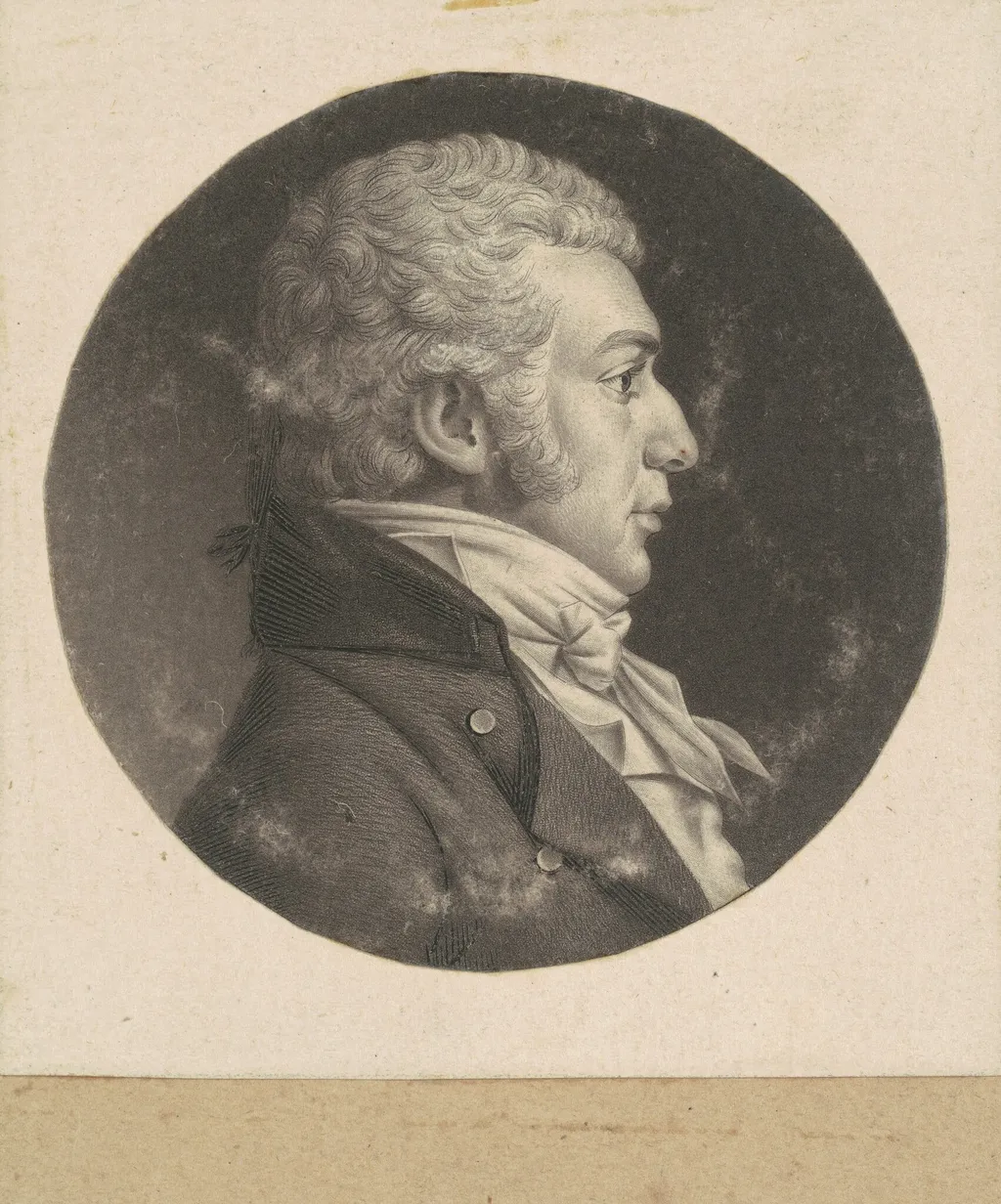
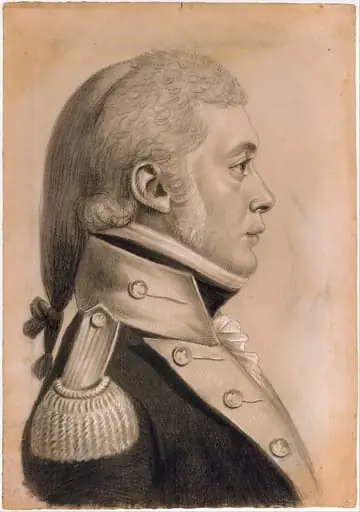
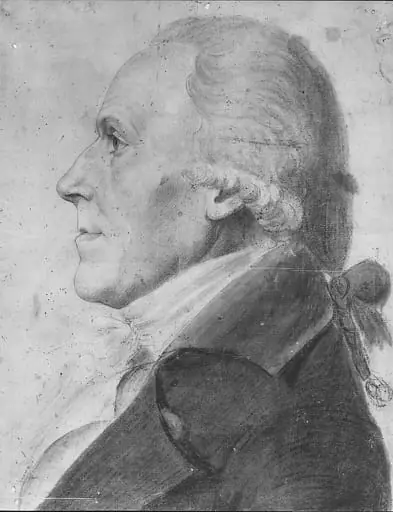
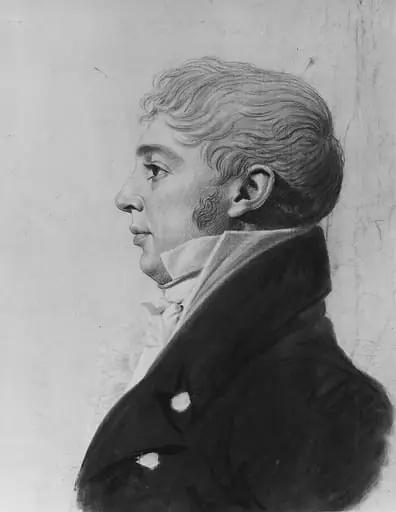
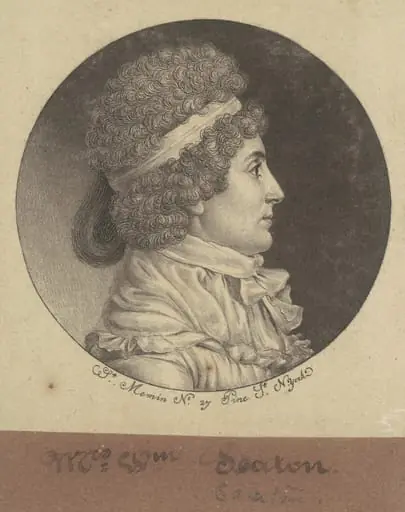
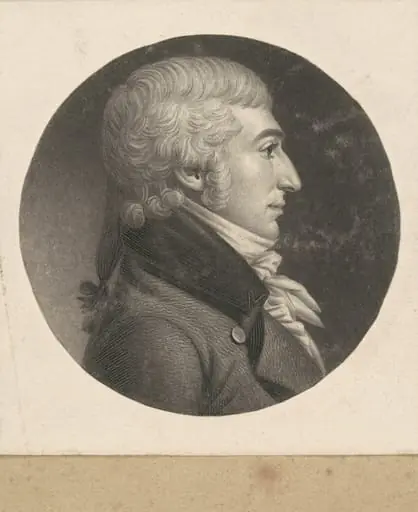
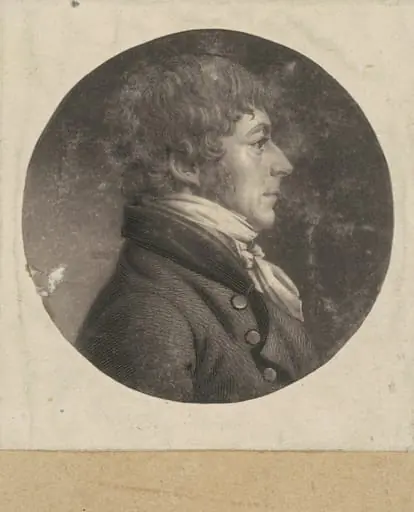
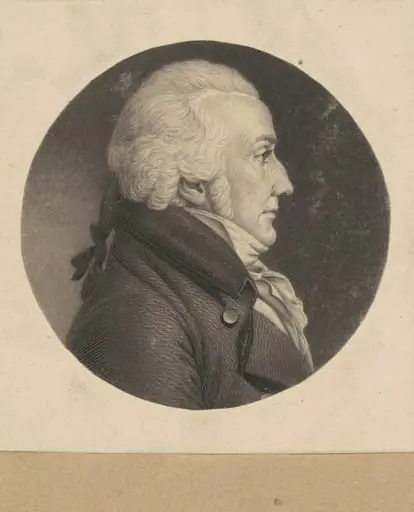
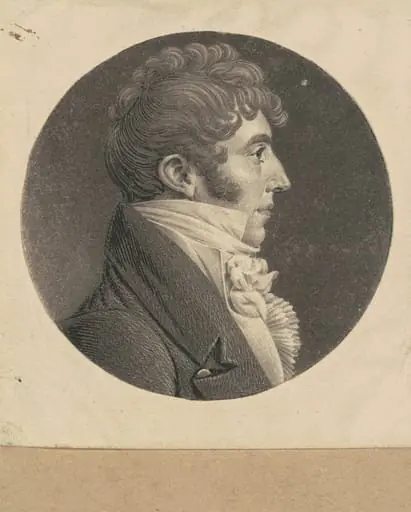
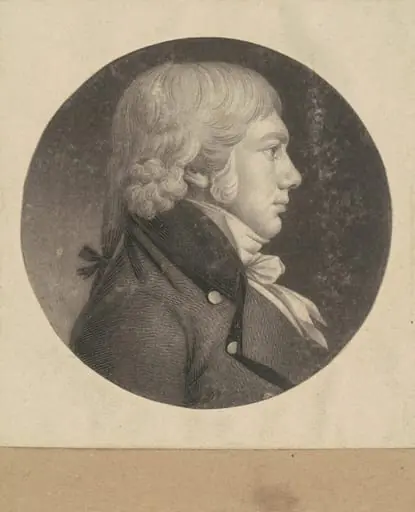
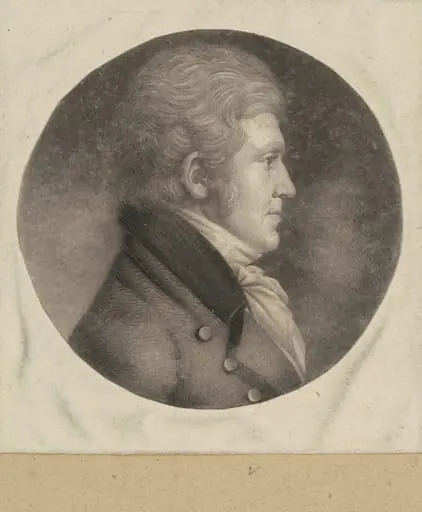
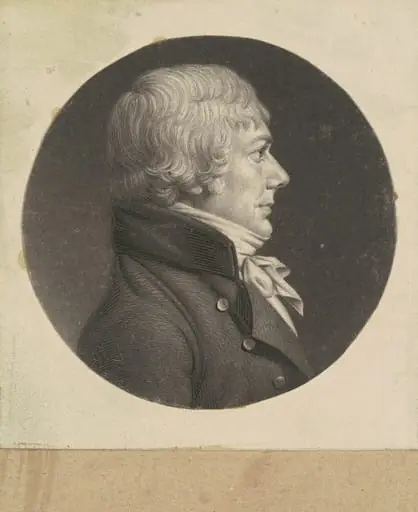
Unidentified Man is an ink print by the Romanticist artist Charles Balthazar Julien Févret de Saint-Mémin. It dates from 1800 and is held in the collection of the National Gallery of Art. This print is a mezzotint and engraving on wove paper, mounted to a brown wove support, depicting a man in profile.
About this work
Overview
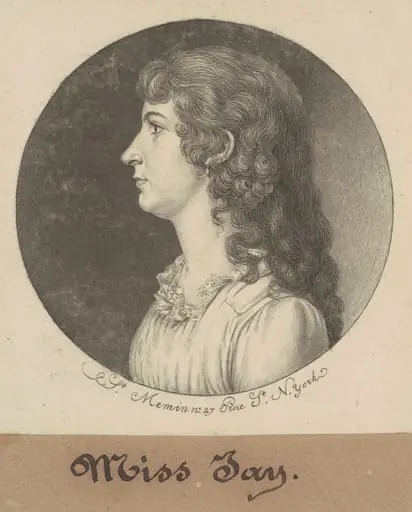
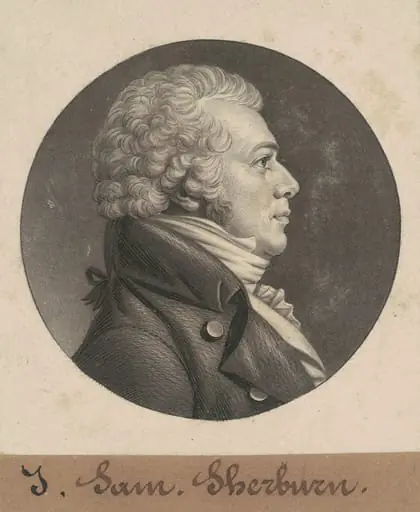
This print is a mezzotint and engraving on wove paper, mounted to a brown wove support, depicting a man in profile. Created around 1800, it belongs to a series of small, circular portraits produced by Charles B. J. Févret de Saint-Mémin. The format suggests intended use in personal albums or compact frames, reflecting a popular 19th-century practice of collecting intimate likenesses.
Subject & Meaning
The sitter remains unidentified, but his dignified posture and refined attire—a dark coat with a light cravat—signal social standing. The profile view, common in portraiture of the era, emphasizes clarity and restraint, avoiding emotional expression. The focus on facial structure rather than background implies a desire to preserve a recognizable, formal likeness rather than narrate a story.
Technique & Style
The composition is tightly cropped, isolating the subject against a neutral ground, typical of his miniature portraiture.
Saint-Mémin employed mezzotint for subtle tonal gradations and engraving for sharp linear detail, combining techniques to render texture and form with precision. The monochrome palette enhances the sculptural quality of the face, while the circular format directs attention inward. The composition is tightly cropped, isolating the subject against a neutral ground, typical of his miniature portraiture.
History & Provenance
The work originates from a series of profile portraits Saint-Mémin produced in the United States during the early 1800s, often commissioned by affluent individuals. These prints were frequently collected in albums as personal mementos. While the specific provenance of this example is unrecorded, its technique and format align with his documented output from that period.
Context
In the early 19th century, profile portraits in small formats gained popularity as affordable alternatives to oil paintings. Saint-Mémin, trained in France and active in America, adapted European engraving traditions to meet American demand for accessible likenesses. His work contributed to a broader cultural trend of personal documentation through print.
Legacy
Saint-Mémin’s profile portraits helped standardize a visual language of American civic and domestic identity during the nation’s formative years. Though largely forgotten today, his prints remain important artifacts of early American print culture, illustrating how technology and taste converged to make portraiture a private, collectible art.
Artist & collection

Artist
Charles Balthazar Julien Févret de Saint-Mémin
Charles Balthazar Julien Févret de Saint-Mémin (French pronunciation: ; 1770–1852) was a French portrait painter and museum director.