Artwork
The farm on the hill
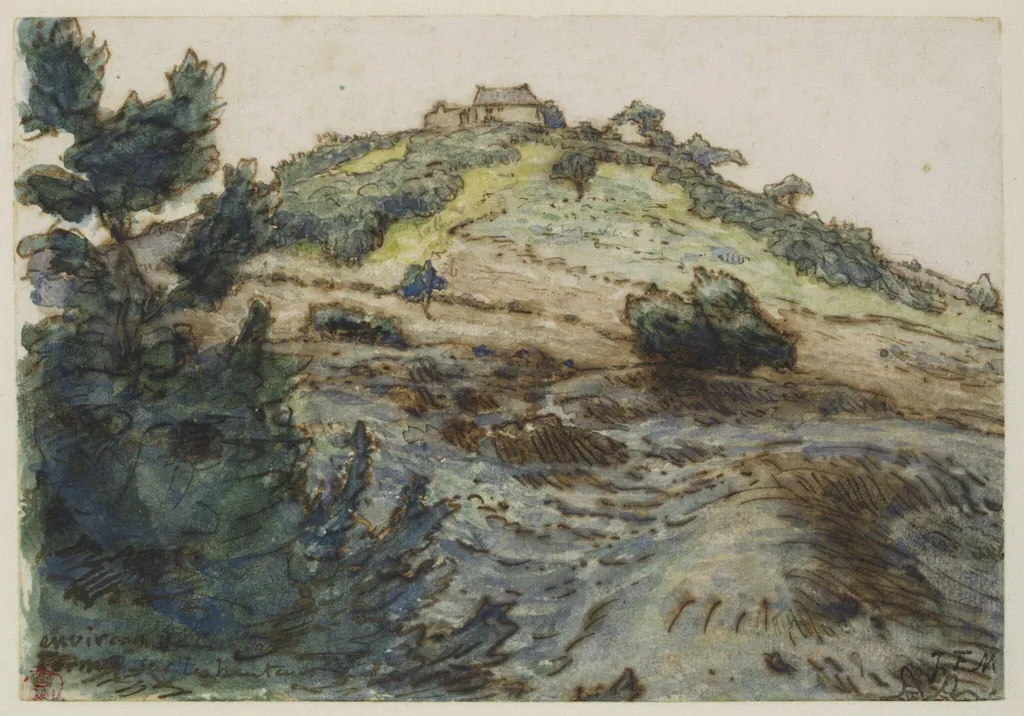
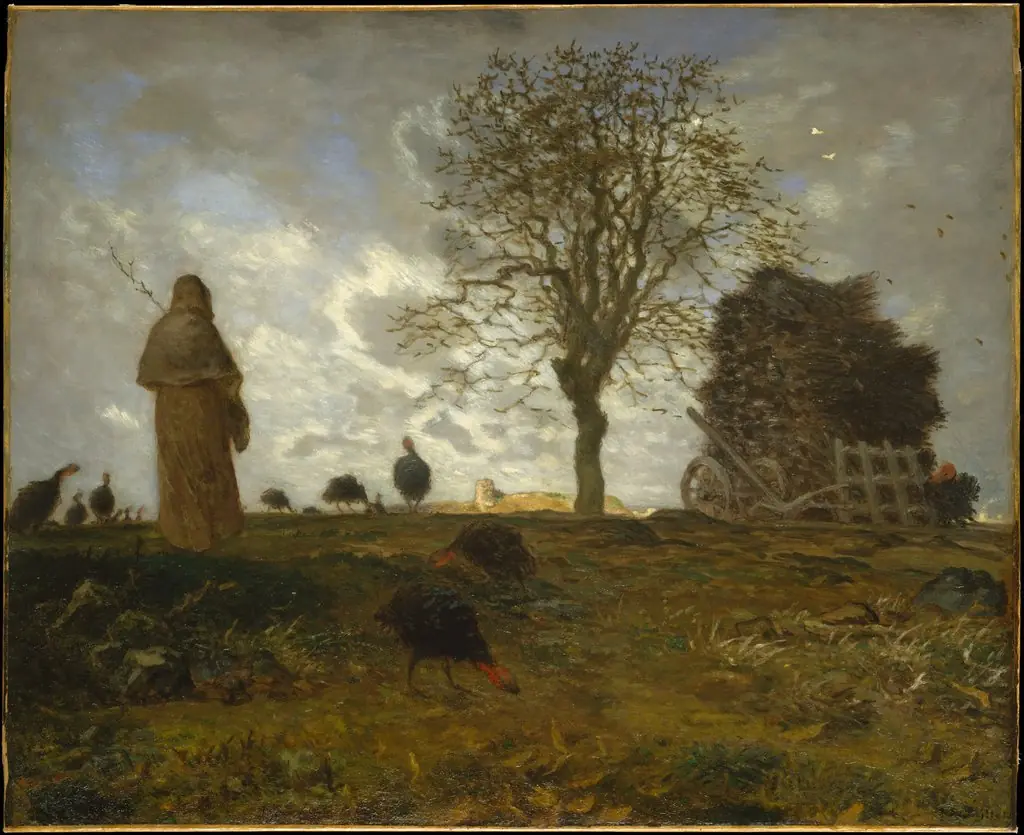
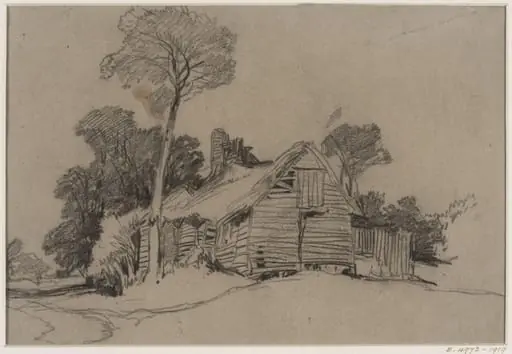
The farm on the hill is a watercolor work on paper by the Barbizon school artist Jean François Millet. It dates from 1867 and is held in the collection of the Victoria and Albert Museum. The work is a modest watercolour depicting a farmhouse perched on a low hill.
About this work
Overview
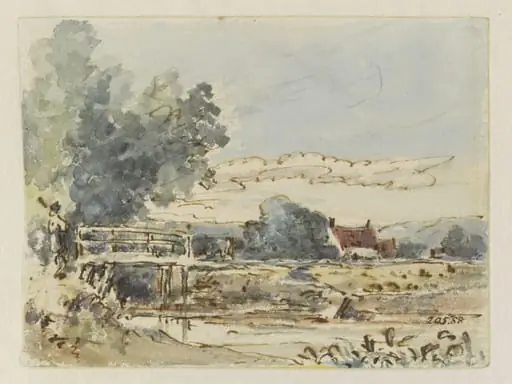
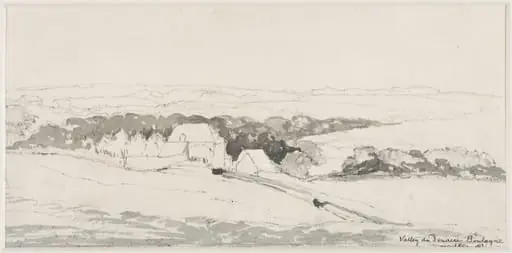
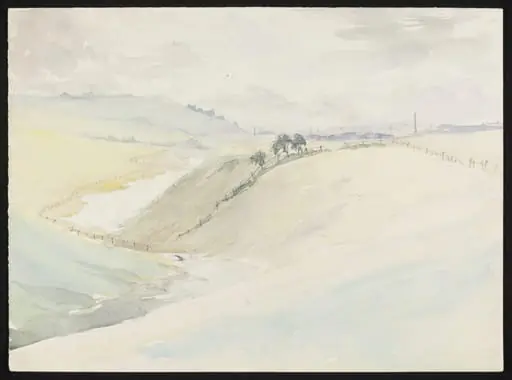
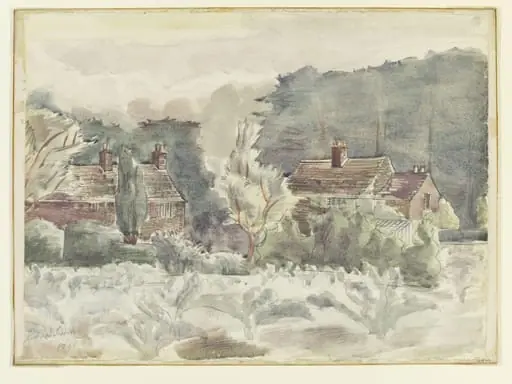
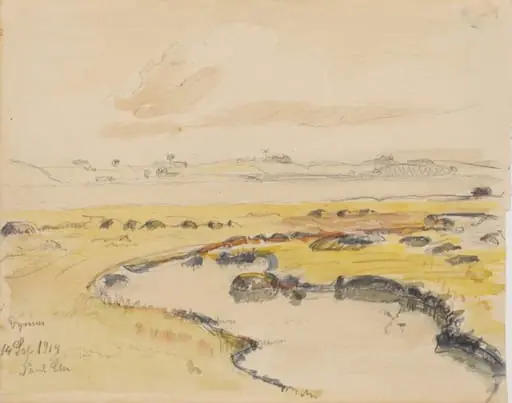
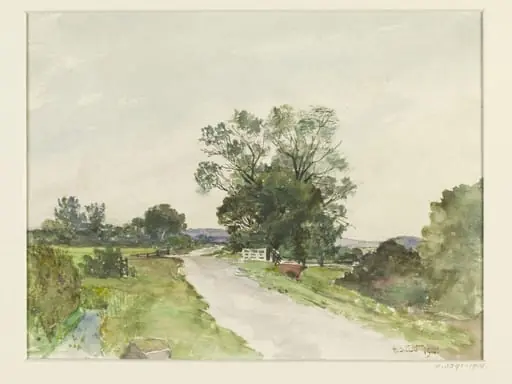
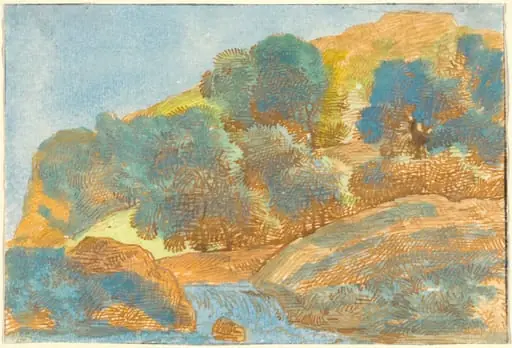
The work is a modest watercolour depicting a farmhouse perched on a low hill. Rendered in subdued hues, the scene conveys a tranquil rural atmosphere without decorative excess. It belongs to a set of four landscape studies held by the Victoria and Albert Museum, illustrating the artist’s consistent interest in everyday countryside settings.
Subject & Meaning
The composition centers on a solitary farmhouse surrounded by gently rolling terrain, suggesting a quiet, self‑contained existence. The restrained palette and soft delineation emphasize the ordinary character of the place, reflecting a broader 19th‑century concern with the dignity of rural life and the quiet dignity of labor.
Technique & Style
Executed with light, economical brushwork, the watercolour employs muted tonalities that give the scene a naturalistic feel. The handling of atmospheric effects—such as the hazy sky and softened outlines—mirrors the approach of the Barbizon School, where observation of nature and fidelity to its visual qualities were paramount.
History & Provenance
Created by French painter Jean‑François Millet, a founding figure of the Barbizon School, the sketch entered the Victoria and Albert Museum’s collection as part of its holdings of 19th‑century European art. It is one of four landscape studies by Millet in the museum, illustrating his sustained engagement with rural subjects throughout his career.
Own this work as a print
Artist & collection
Artist
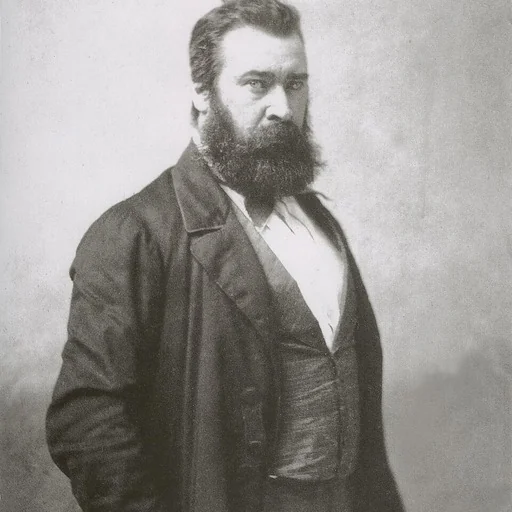
Jean-François Millet (French pronunciation: ; 4 October 1814 – 20 January 1875) was a French painter and one of the founders of the Barbizon school in rural France.