Artwork
The Gleaners (Les Glanenses)
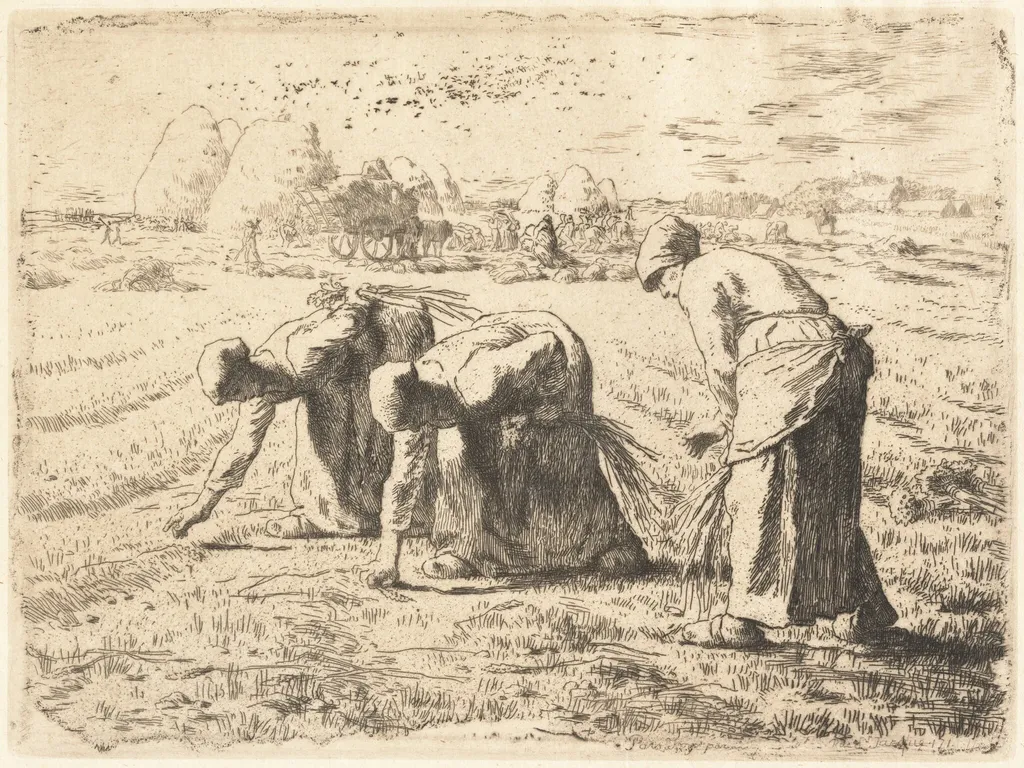
The Gleaners (Les Glanenses) is an ink print by the Impressionist artist Jean François Millet. It dates from 1855 and is held in the collection of the National Gallery of Art. Jean-François Millet produced this etching in 1855 as part of his engagement with rural labor themes.
About this work
Overview
Though primarily recognized for his oil paintings, Millet also explored printmaking to reach broader audiences.
Jean-François Millet produced this etching in 1855 as part of his engagement with rural labor themes. Though primarily recognized for his oil paintings, Millet also explored printmaking to reach broader audiences. This work on laid paper captures the same quiet dignity found in his larger compositions, translating the physicality of peasant life into the intimate scale of etching. It resides today in the National Gallery of Art in Washington.
Subject & Meaning
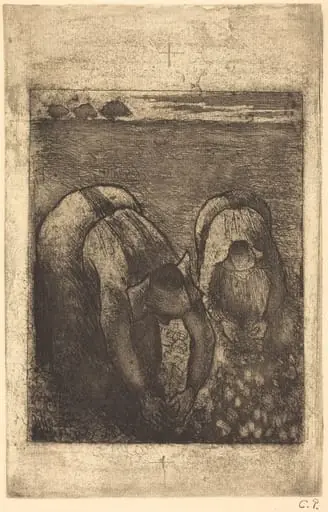
The image depicts three women stooped in a harvested field, collecting stray grains after the main crop has been taken. Their postures convey exhaustion and persistence, reflecting the economic necessity of gleaning—a legal right for the poor to gather what remained after harvest. Millet avoids sentimentality, presenting their labor as unremarkable yet essential, grounding the scene in the rhythms of agrarian survival.
Technique & Style
Millet employed loose, incised lines to model form and texture, using the etching needle to suggest the uneven earth and the weight of the women’s movements. The background is rendered with minimal strokes, hinting at distant hills and a village without detail. The lack of fine finish enhances the rawness of the scene, aligning the medium’s tactile quality with the subject’s physical toil.
History & Provenance
Created in 1855, this etching emerged during Millet’s most active period of rural subject matter, preceding his better-known painting of the same title. It was likely made for private circulation or as a study, reflecting his interest in printmaking as a means to disseminate social observation. The work entered the National Gallery of Art’s collection through established acquisition channels in the 20th century.
Context
In mid-19th-century France, rural poverty and labor rights were increasingly visible amid industrialization. Millet’s focus on gleaners aligned with Realist efforts to depict ordinary life without idealization. While urban audiences often viewed such scenes with curiosity or discomfort, Millet treated them as natural extensions of the land, resisting romantic or moralizing narratives.
Legacy
This etching contributes to Millet’s broader influence on the depiction of labor in modern art. Though less prominent than his painted versions, the print demonstrates his ability to convey emotional depth through minimal means. It informed later artists interested in social realism and the expressive potential of printmaking as a vehicle for quiet, unvarnished observation.
Own this work as a print
Artist & collection
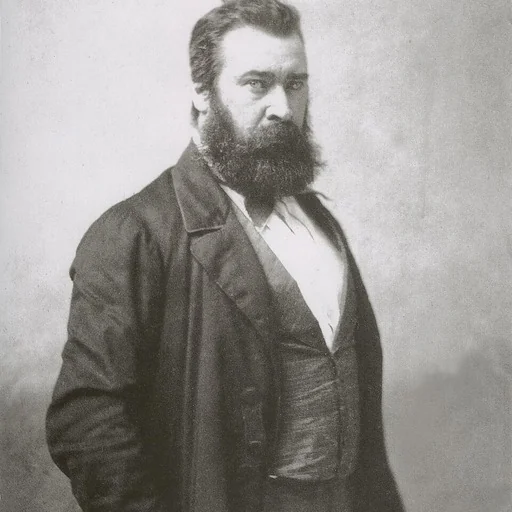
Artist
Jean-François Millet (French pronunciation: ; 4 October 1814 – 20 January 1875) was a French painter and one of the founders of the Barbizon school in rural France.