Artwork
The Large Shepherdess (La grande bergere)
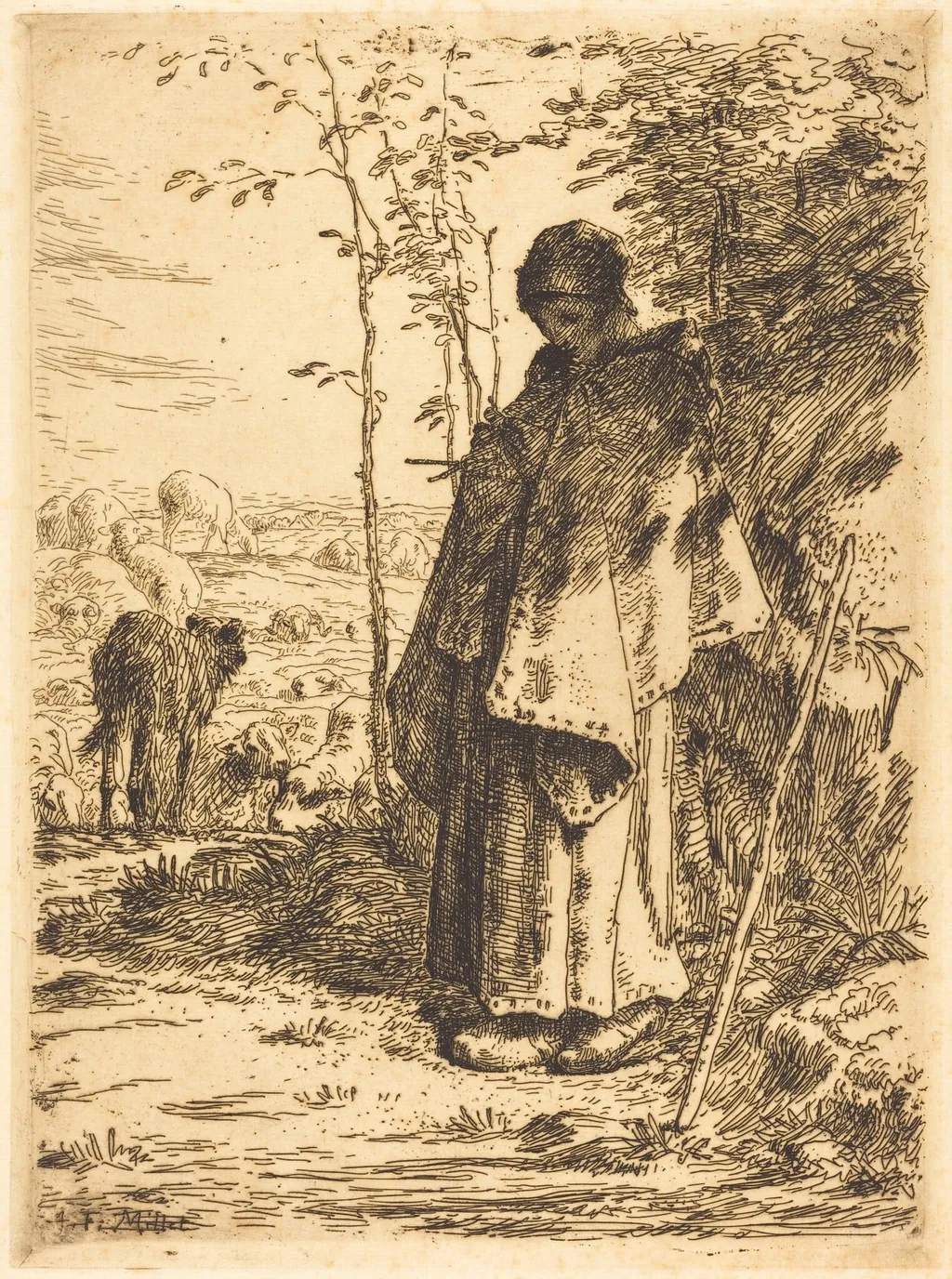
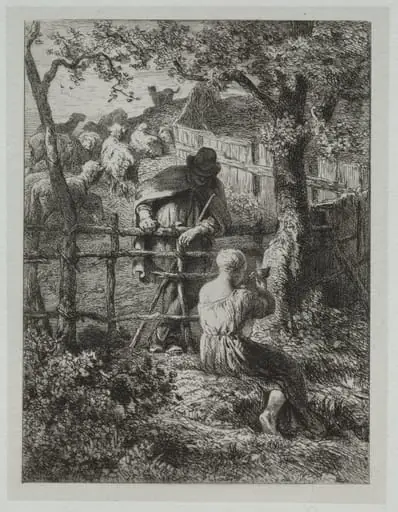
The Large Shepherdess (La grande bergere) is an ink print by the Impressionist artist Jean François Millet. It dates from 1862 and is held in the collection of the National Gallery of Art.
About this work
Overview
The Large Shepherdess (La grande bergere) is an 1862 etching by Jean-François Millet, a leading figure in the Barbizon school and Realism movement. The work typifies Millet's focus on rural life, depicting a female shepherd in a natural setting.
Subject & Meaning
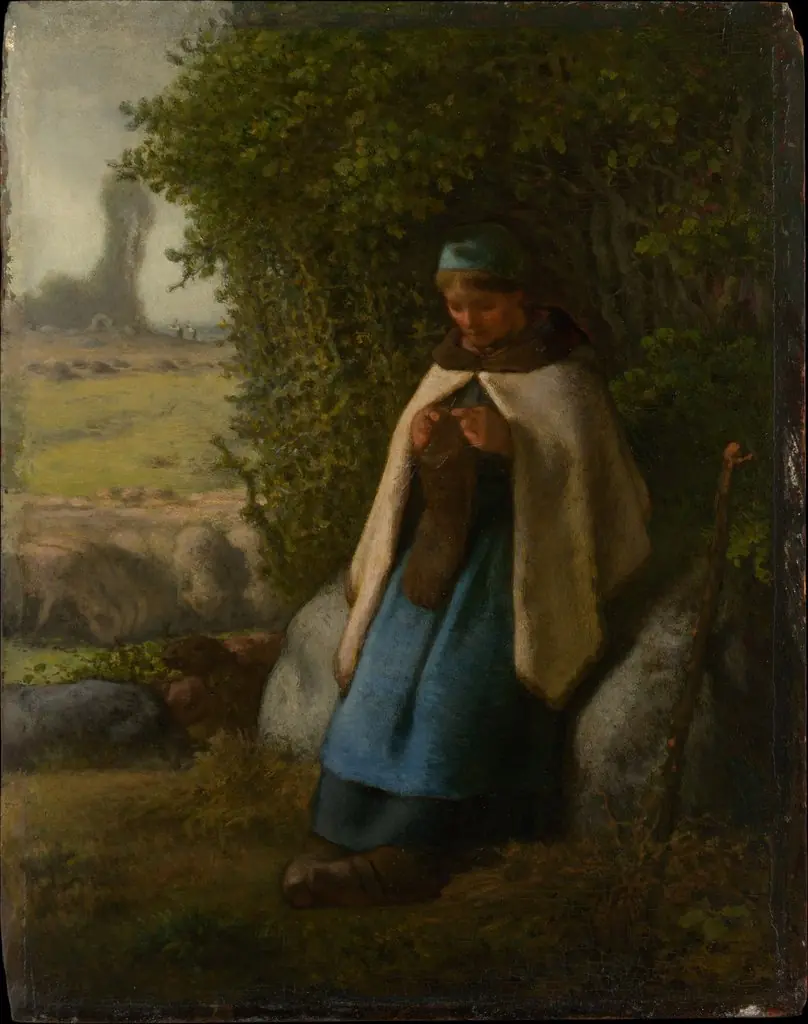
The etching portrays a woman shepherd leaning on a staff amidst tall grass and wild plants, with two indistinct figures receding into the background. The scene reflects Millet's interest in the realities of agricultural labor, a common theme in his oeuvre.
Technique & Style
Characterized by rough, scratchy lines, the etching was created using black lines on a light background, eschewing color in favor of expressive texture and shadow to convey light and movement, showcasing Millet's mastery of the etching medium.
History & Provenance
Created in 1862, The Large Shepherdess represents a midpoint in Millet's career, preceding his later exploration of pure landscapes. The etching technique allowed for the production of multiple prints, though specific provenance details are not provided.
Context
Within the broader art historical context, The Large Shepherdess embodies the Realist movement's emphasis on everyday life and the Barbizon school's appreciation for natural, unromanticized settings, distinguishing it from more idealized depictions of rural life prevalent at the time.
Own this work as a print
Artist & collection
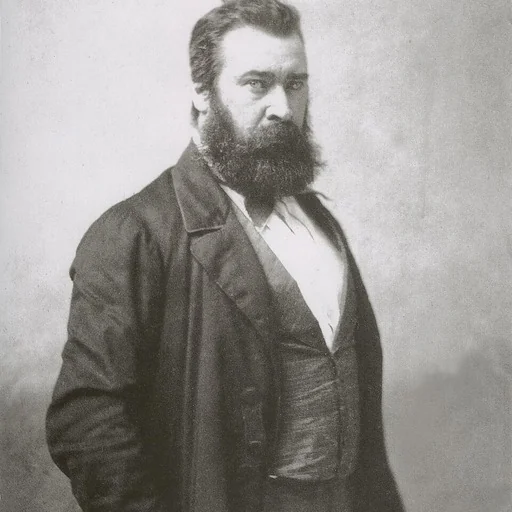
Artist
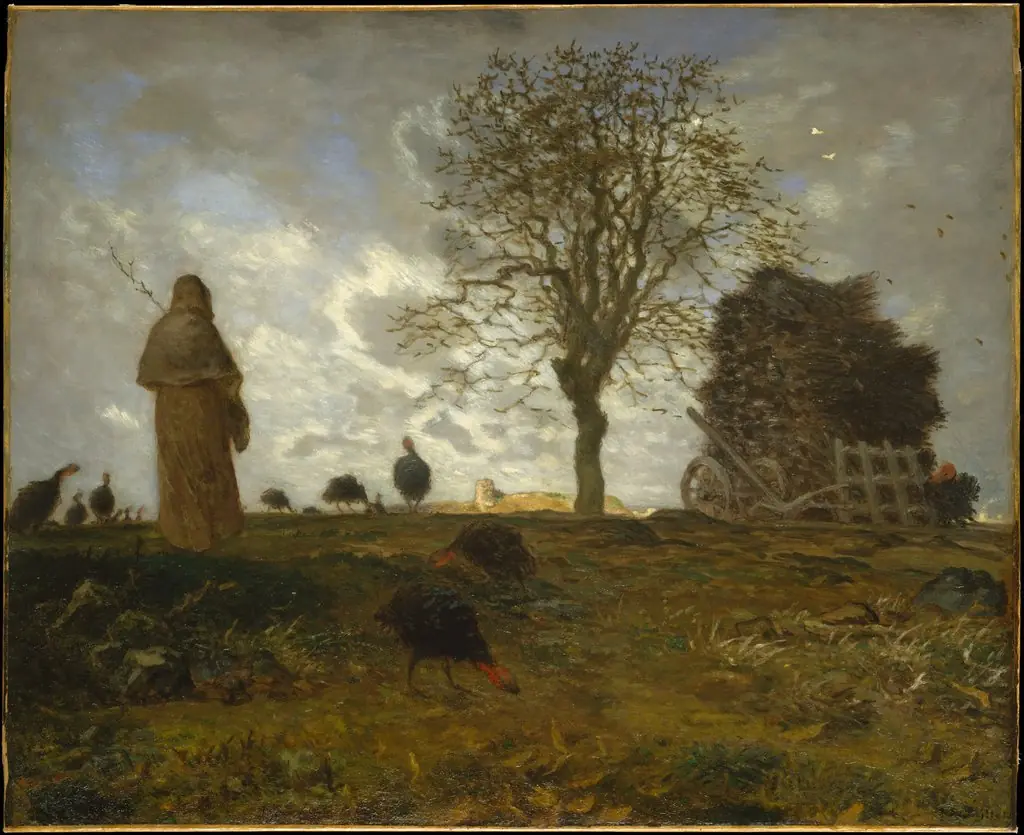
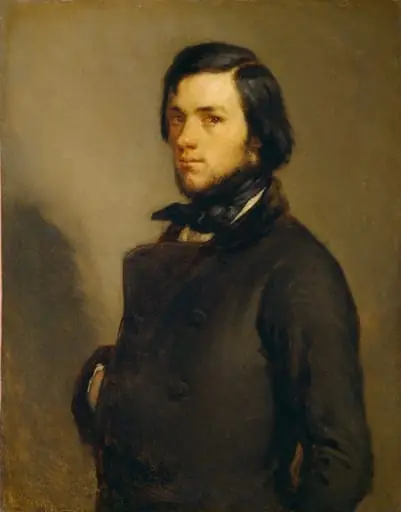
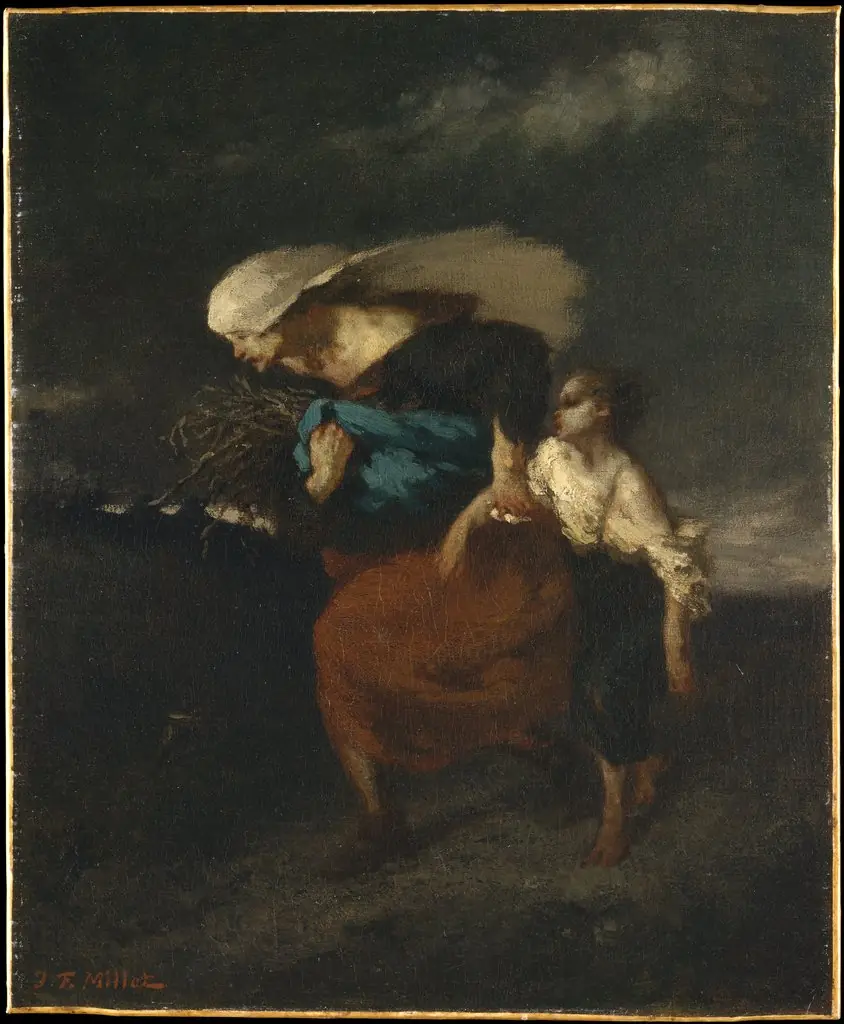
Jean-François Millet (French pronunciation: ; 4 October 1814 – 20 January 1875) was a French painter and one of the founders of the Barbizon school in rural France.