Artwork
La vuelta del entierro
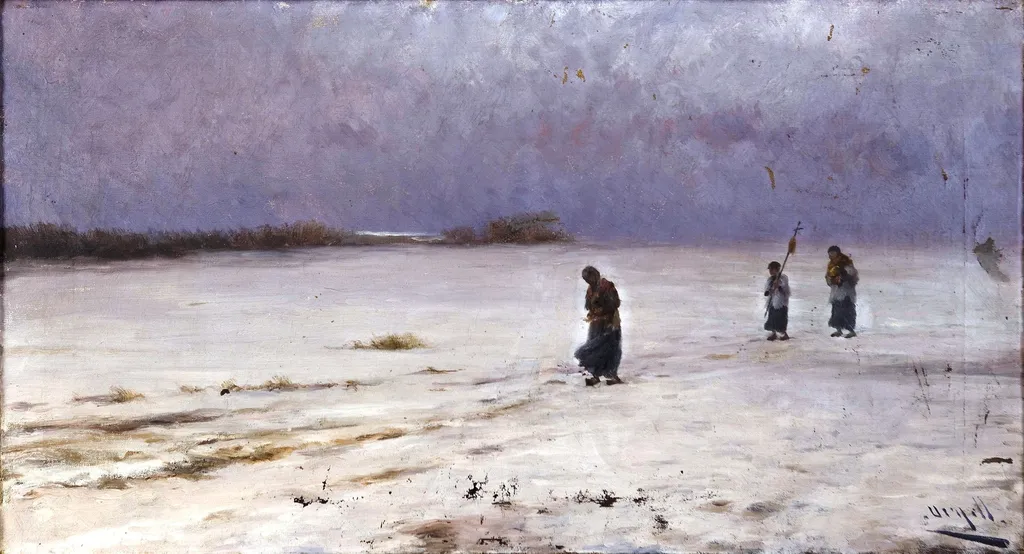
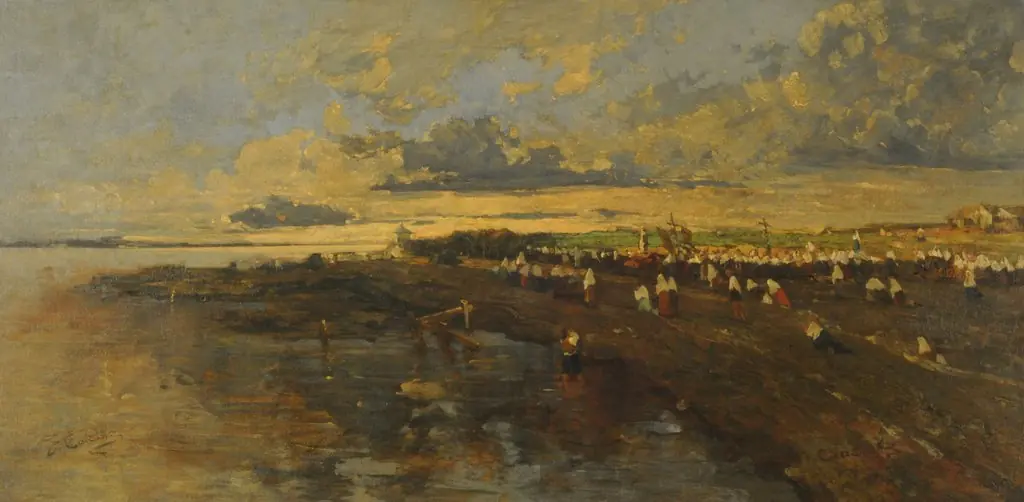
La vuelta del entierro is an oil painting by the Realist artist Modest Urgell. It dates from 1850 and is held in the collection of the Museo del Prado.
About this work
Overview
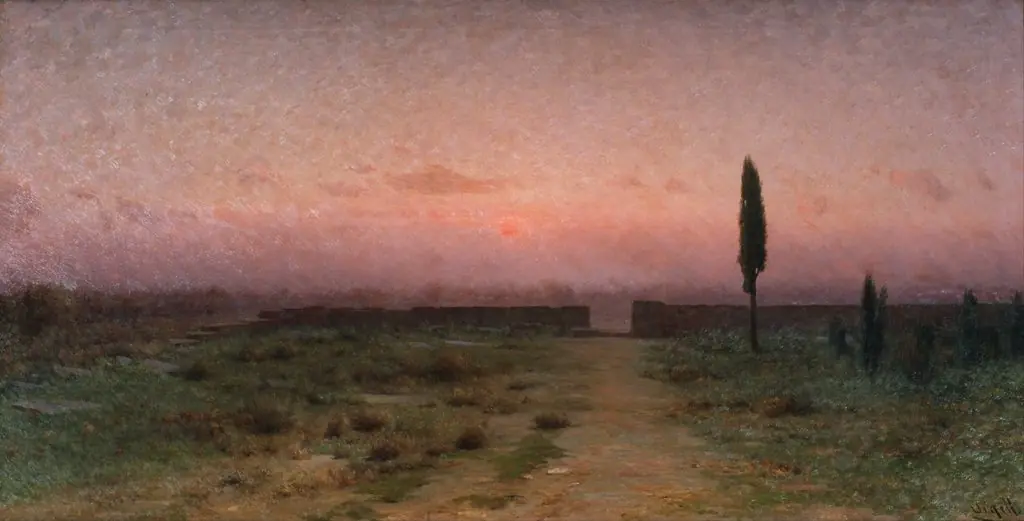
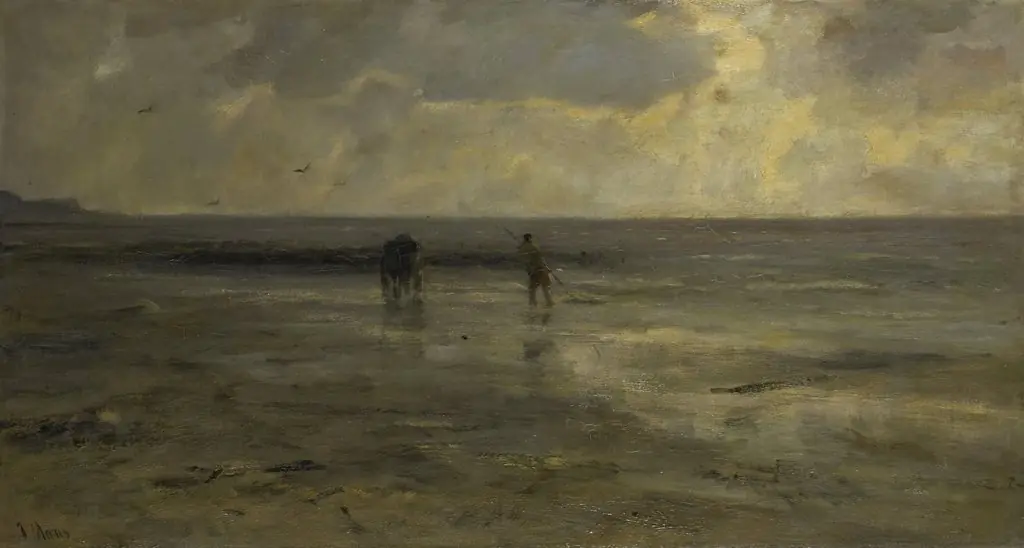
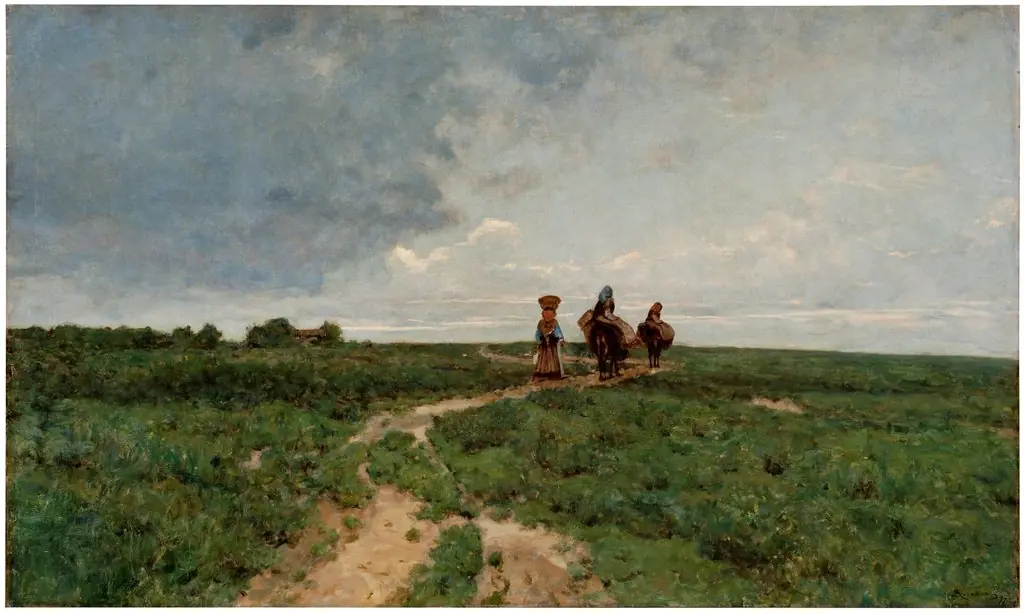
Painted around 1850 by Catalan artist Modest Urgell, known as Katúfol, this oil on canvas depicts a quiet coastal procession. The work belongs to the Realist tradition, focusing on ordinary rural life without idealization. It is held in the Museo del Prado’s collection and reflects Urgell’s interest in everyday scenes drawn from his native Catalonia.
Subject & Meaning
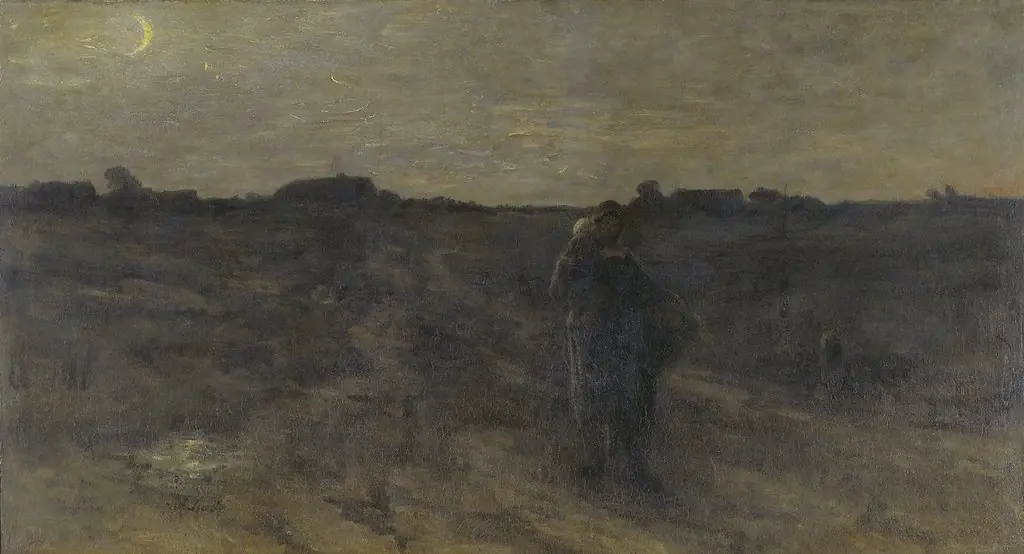
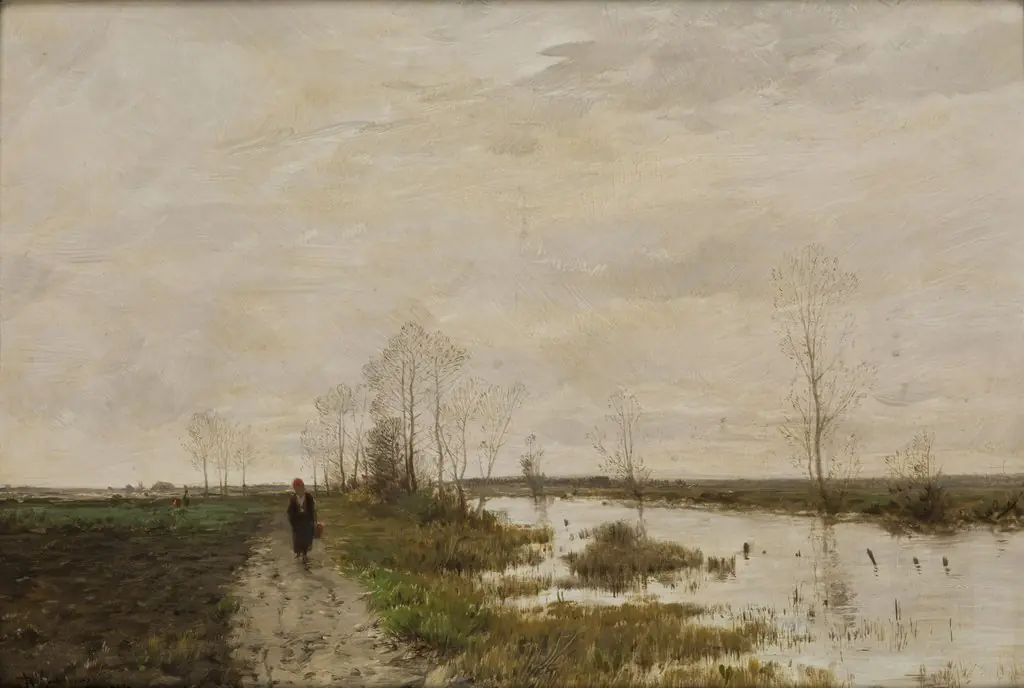
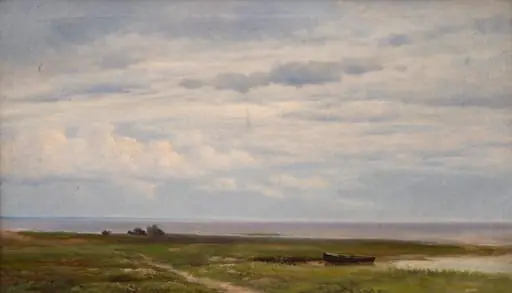
Three figures traverse a barren beach, one carrying a long pole that supports a small crucifix. The scene suggests a funeral procession returning from burial, a common rural practice in 19th-century Spain. The absence of overt emotion and the subdued setting convey a sense of quiet resignation, emphasizing the routine nature of death in peasant communities.
Technique & Style
Urgell employed loose, rapid brushwork to suggest form rather than define it, creating a hazy, atmospheric effect. The palette is restrained—dominated by pale grays, off-whites, and muted earth tones—mirroring the overcast sky and bare landscape. This approach aligns with early Realist tendencies, prioritizing observational truth over decorative detail.
History & Provenance
The painting entered the Museo del Prado’s collection in the 19th century, likely through acquisition or donation following Urgell’s death. Its inclusion in a national museum underscores its recognition as a representative work of Catalan Realism, though it remained less prominent than contemporaneous urban or historical subjects.
Context
In mid-19th century Spain, Realism emerged as artists turned from romanticized narratives toward depictions of daily life. Urgell, influenced by both local traditions and broader European trends, captured the rhythms of rural Catalonia. This painting reflects a regional response to national artistic shifts, emphasizing solitude and labor over spectacle.
Legacy
Though not widely reproduced, the painting contributes to the understanding of Catalan Realism’s quiet, observational character. Urgell’s focus on mundane rituals and natural light influenced later regional painters who sought authenticity over grandeur. The work remains a subtle testament to the dignity of ordinary moments in 19th-century Spanish life.
Artist & collection
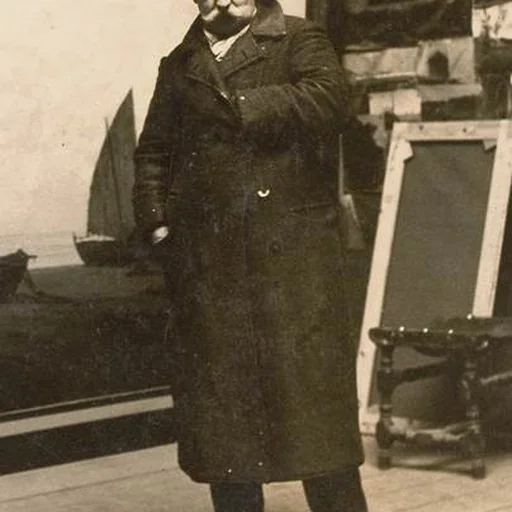
Artist
Modest Urgell i Inglada, also known by the nickname Katúfol (13 June 1839, Barcelona - 3 April 1919, Barcelona) was a Spanish landscape painter and comic playwright. He used his nickname for cartoons and illustrations.