Artwork
'After Dark'
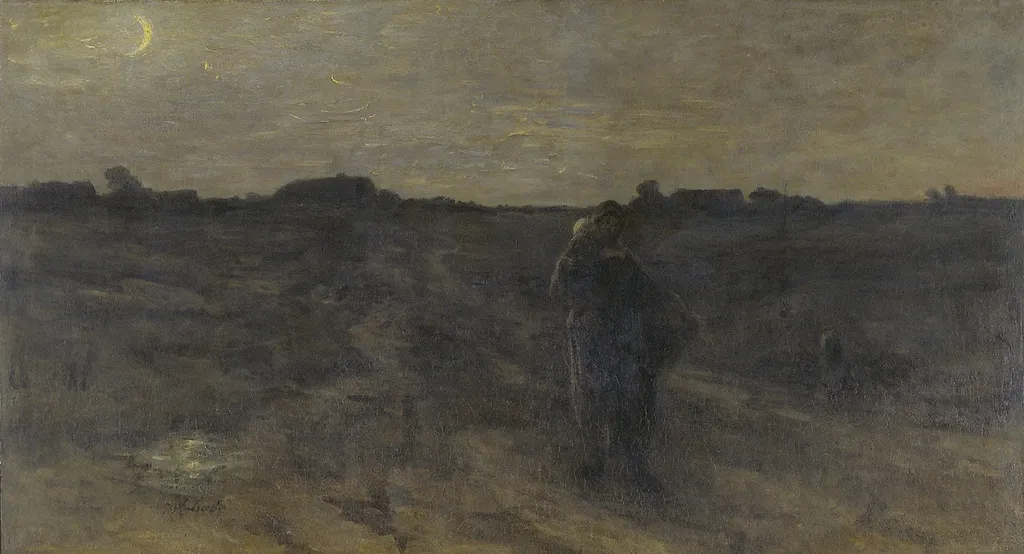
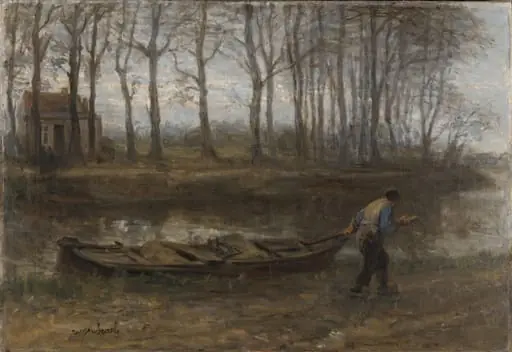
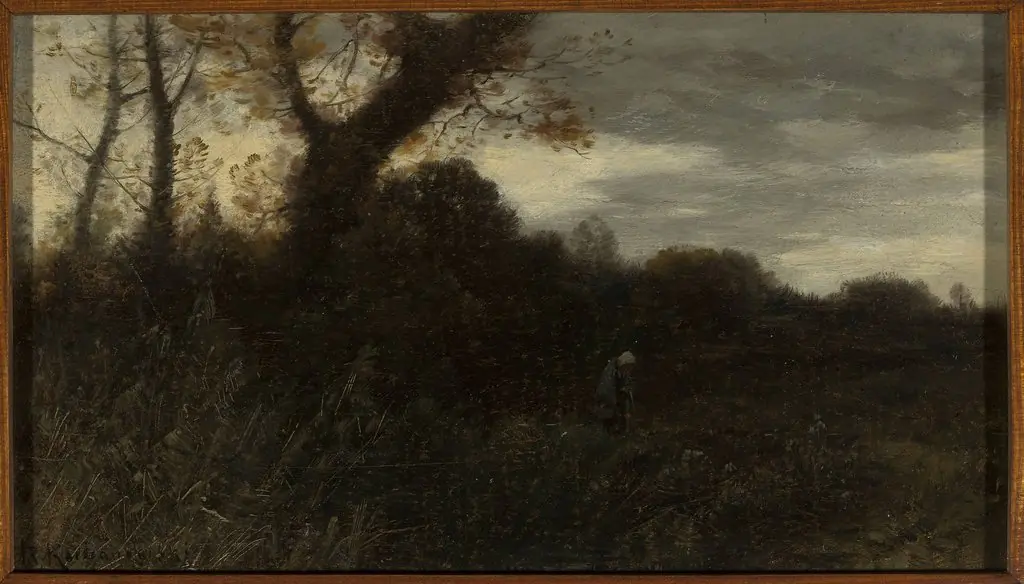
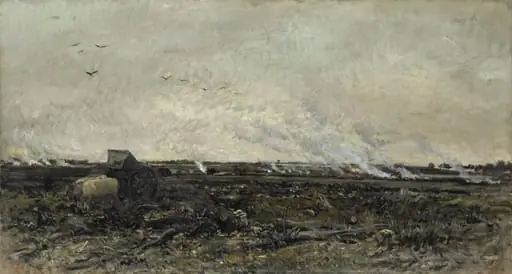
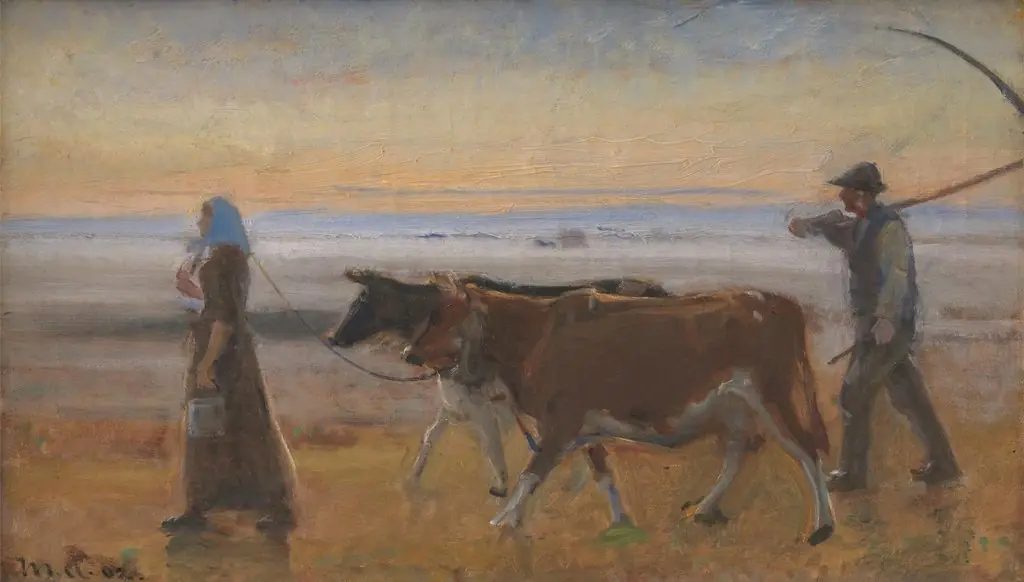
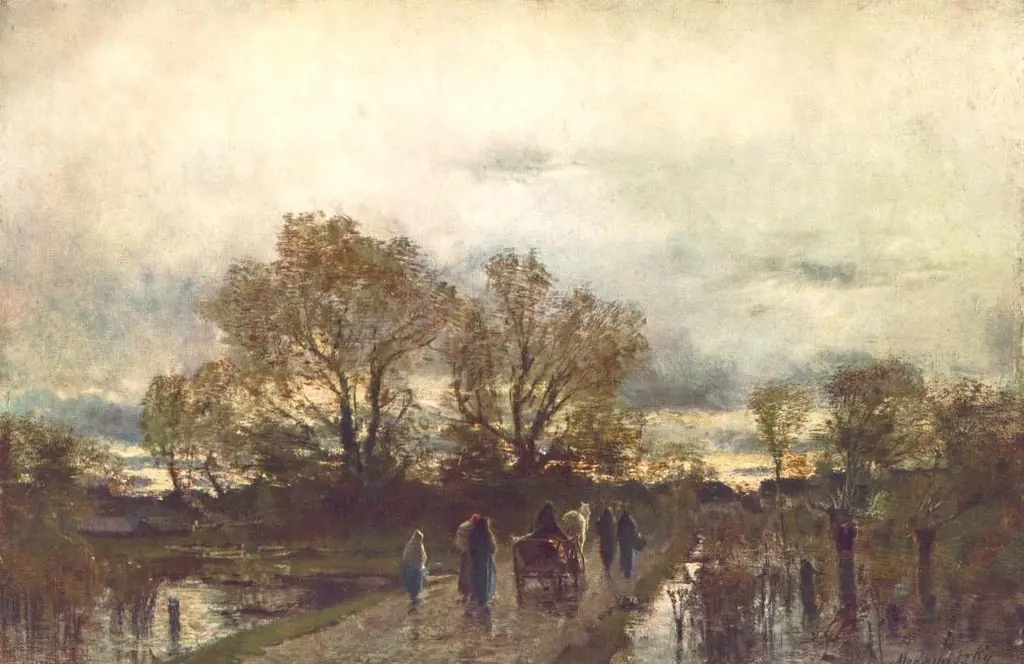
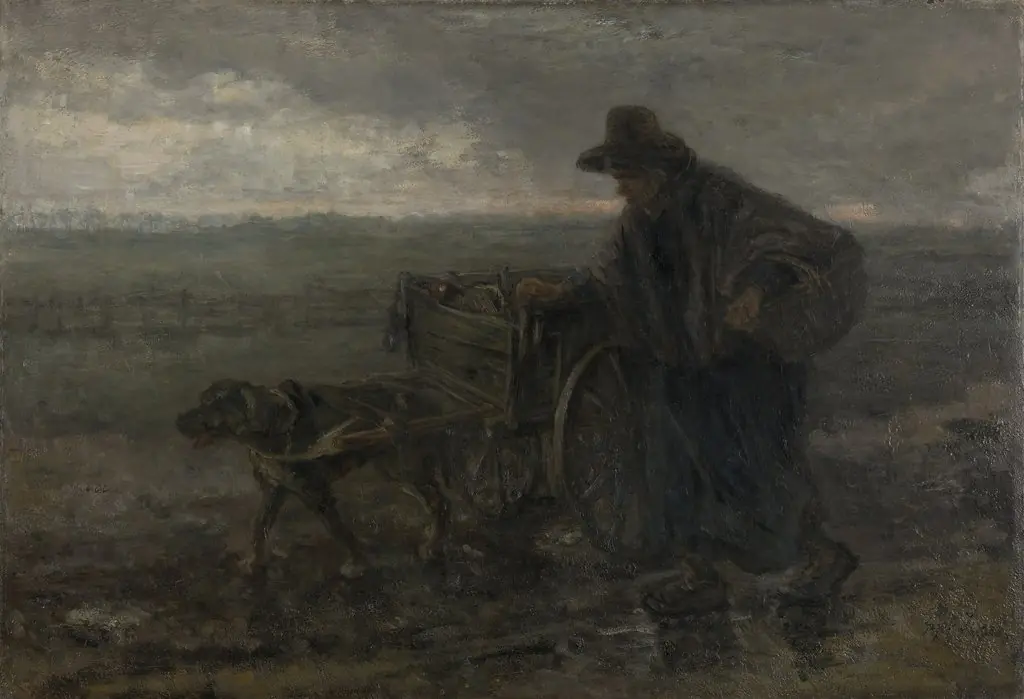
'After Dark' is an oil painting by the Impressionist artist Jozef Israëls. It dates from 1894 and is held in the collection of the Rijksmuseum.
About this work
Overview
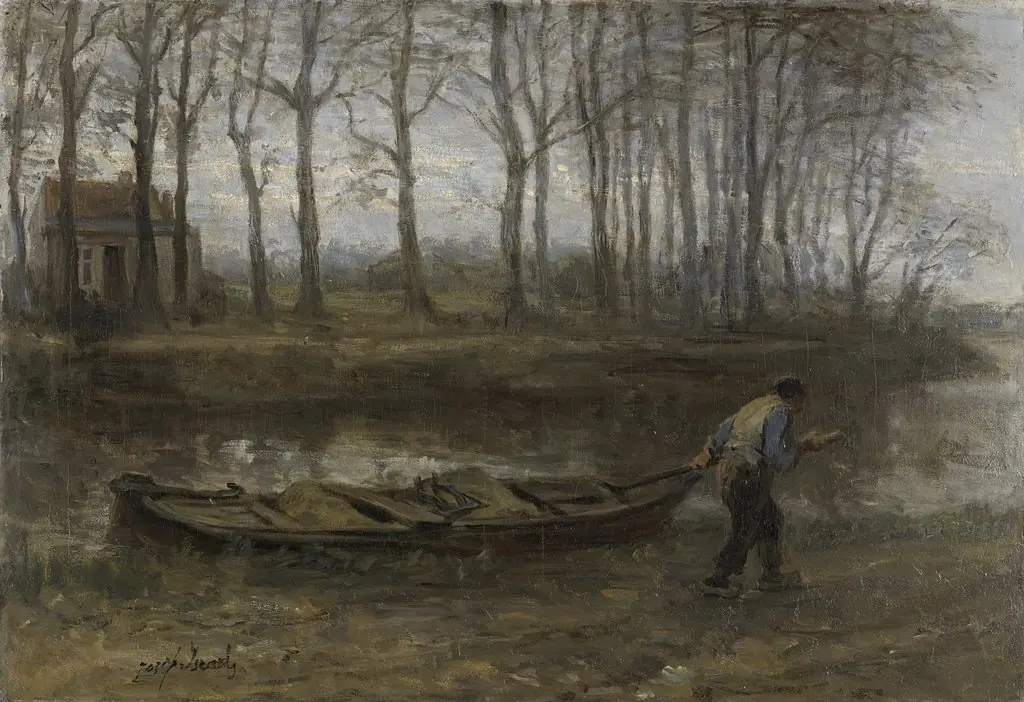
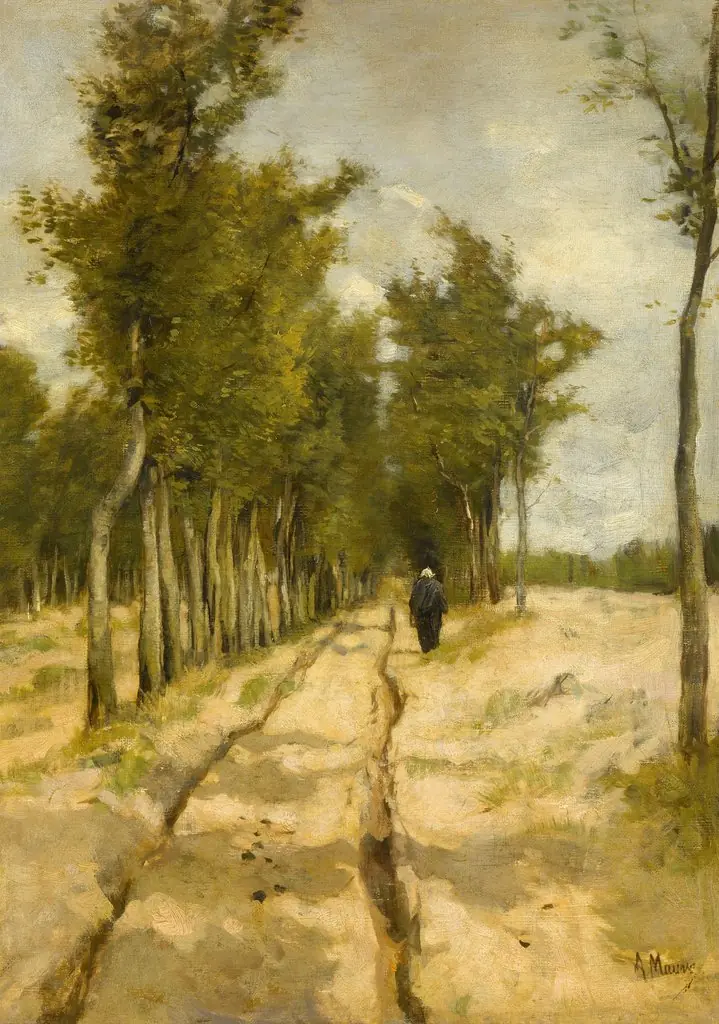
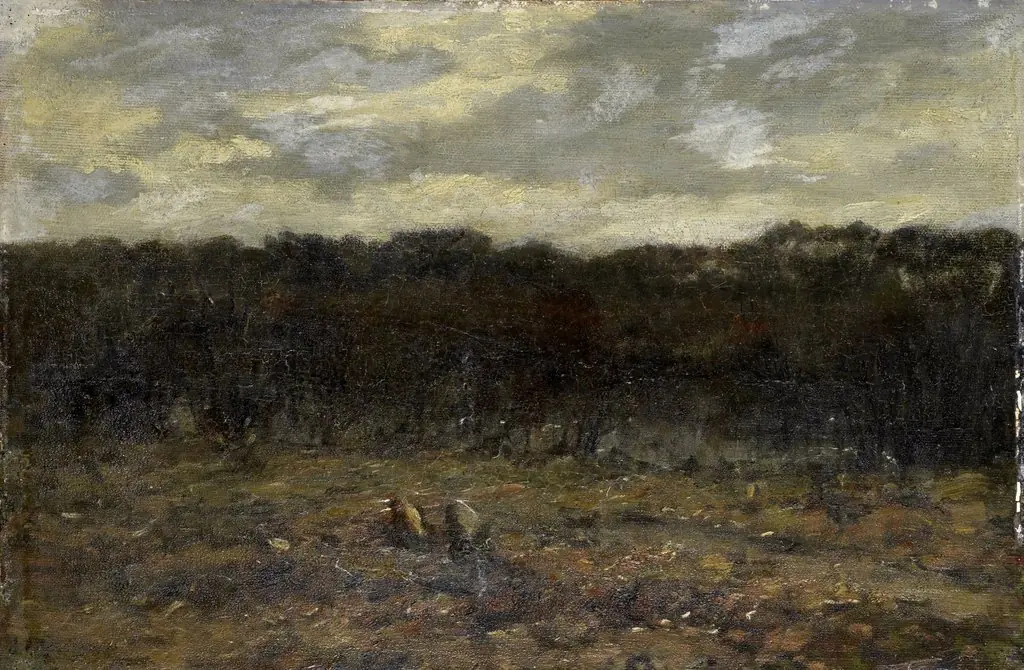
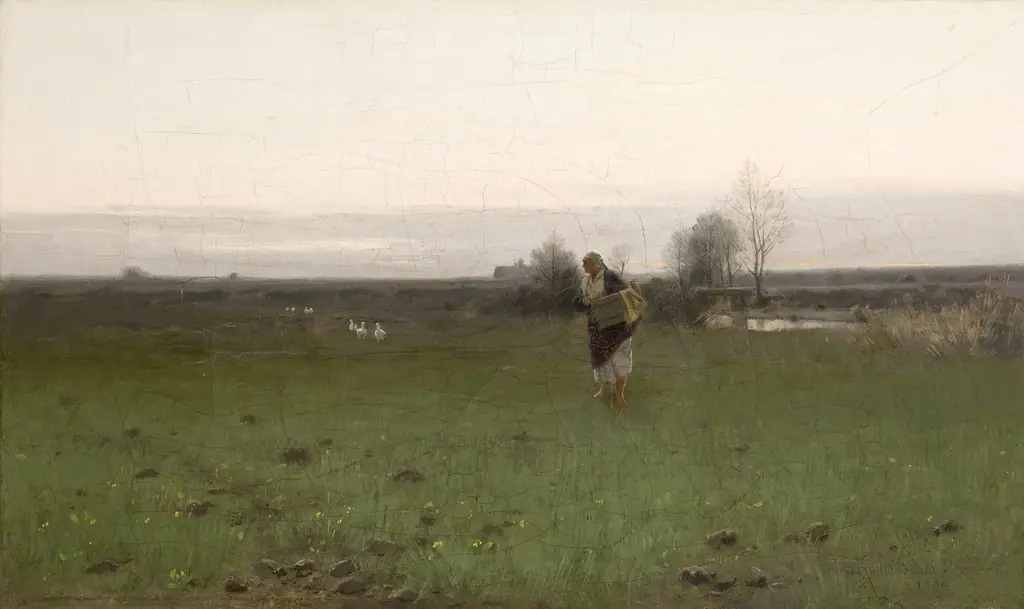
Jozef Israëls created the oil painting *After Dark* in 1894. Executed within the landscape tradition of the Hague School, the work belongs to the broader Impressionist tendency of the period. It is part of the Rijksmuseum’s collection and depicts a solitary figure moving through a dimly lit field at twilight.
Subject & Meaning
The composition centers on a lone individual seen from behind, walking across a muted, open plain as evening settles. A pale yellow sky, faint crescent moon, and a distant line of trees frame the scene, emphasizing the isolation of the figure against an expansive, quiet countryside.
Technique & Style
Israëls applied oil paint with a pronounced impasto, especially in the sky where thick, visible brushstrokes generate a textured, almost tactile surface. The ground is rendered in dark, layered tones that suggest shadow, while the overall palette remains subdued, capturing the fleeting quality of dusk light.
History & Provenance
Painted toward the end of Israëls’s career, *After Dark* entered the Rijksmuseum’s holdings, where it remains on display. The work reflects the artist’s mature period, during which he focused on atmospheric scenes of Dutch rural life.
Context
The painting aligns with the Hague School’s interest in realistic, everyday subjects and the Impressionist fascination with light effects. By portraying a solitary figure at twilight, Israëls contributes to a late‑19th‑century discourse on the relationship between humanity and the natural environment.
Artist & collection
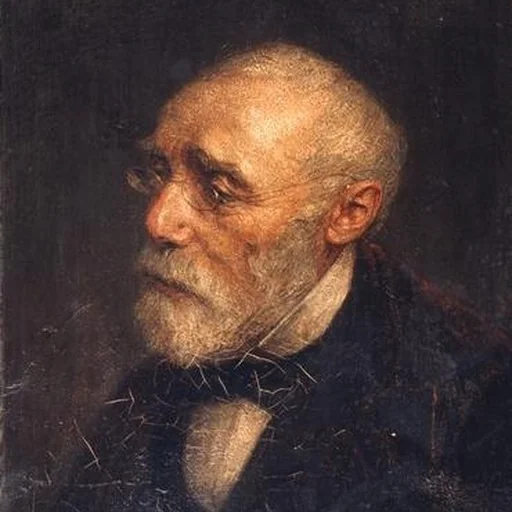
Artist
Jozef Israëls (Dutch pronunciation: ; 27 January 1824 – 12 August 1911) was a Dutch painter.