Artwork
Cioplitorii în piatră
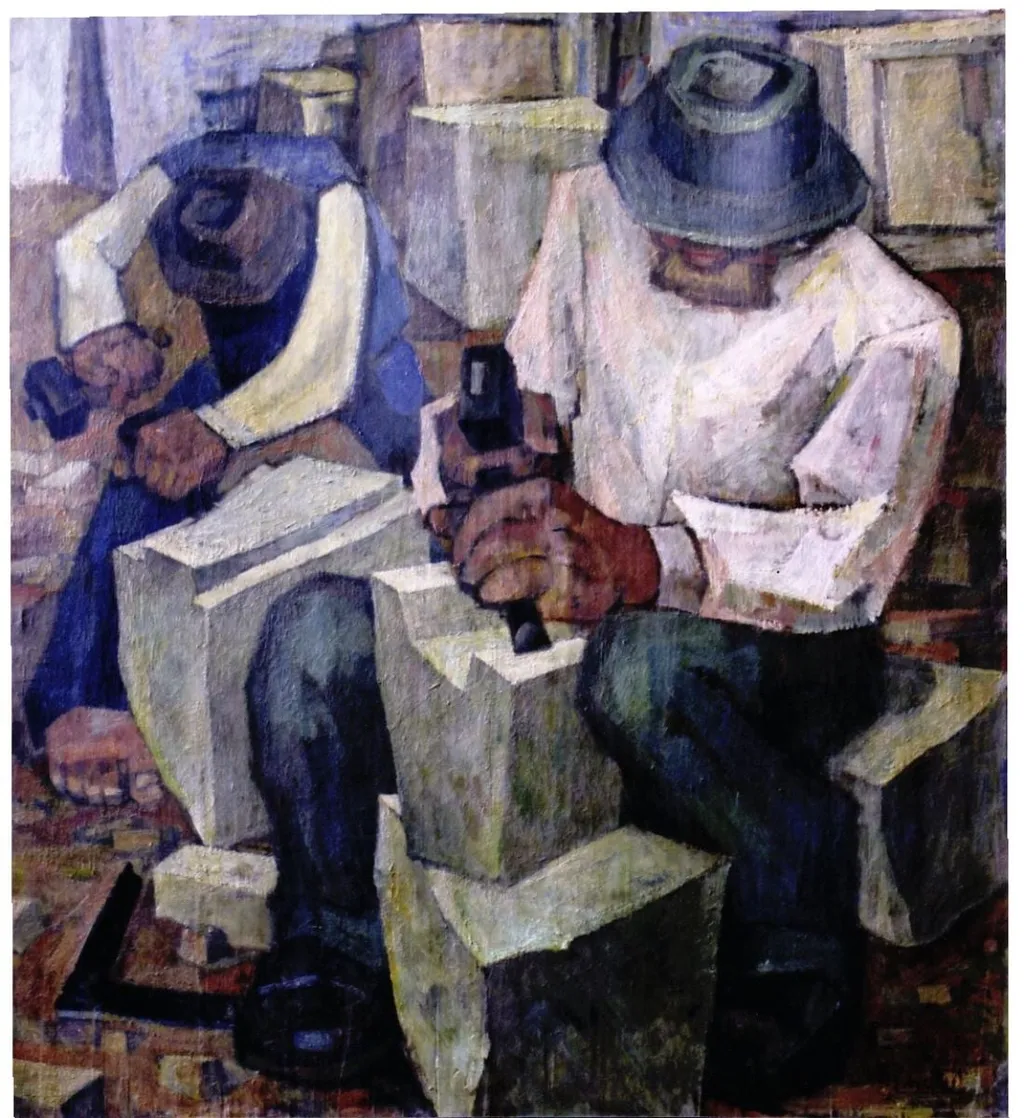
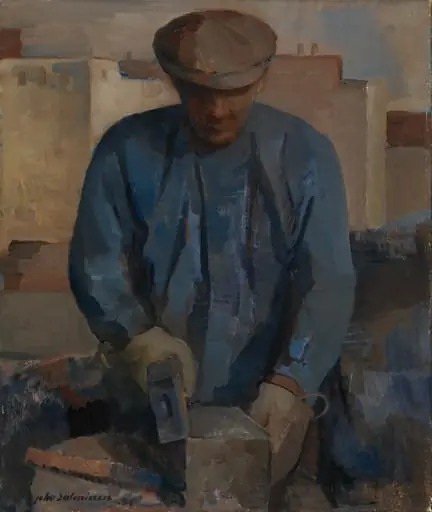
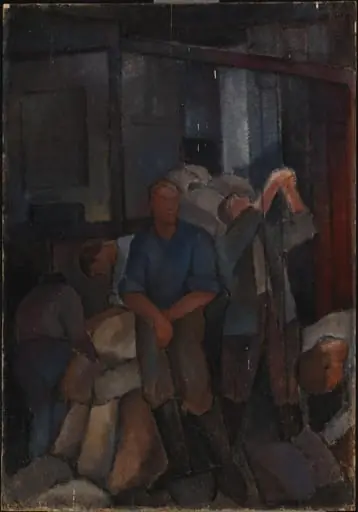
Cioplitorii în piatră is an unspecified painting by Alexandru Mohi. It is held in the collection of the Mureș County Museum - Art Museum. This painting depicts two stoneworkers in a confined, dimly lit workshop.
About this work
Overview
The scene captures a moment of quiet labor, with one figure intensely focused on carving stone while the other rests, tools in hand.
This painting depicts two stoneworkers in a confined, dimly lit workshop. The scene captures a moment of quiet labor, with one figure intensely focused on carving stone while the other rests, tools in hand. The environment is dense with materials—blocks, chisels, hammers—suggesting continuous, physical toil. The composition emphasizes the weight of the work through tight framing and heavy shadows.
Subject & Meaning
The two figures represent the quiet endurance of manual labor. Their postures—bent over versus leaning—suggest alternating states of exertion and respite. Their faces are obscured, shifting focus from individual identity to the universality of work. The absence of narrative or emotion underscores the routine nature of their task, framing labor as an unremarkable, yet essential, part of daily life.
Technique & Style
Thick, textured brushwork mimics the roughness of stone and the grit of the workshop. Paint is applied with heavy impasto, creating a tactile surface that echoes the materials the workers handle. Uneven lighting enhances depth, casting stark shadows that define the figures’ forms and isolate them within the cluttered space. The palette is muted, dominated by earth tones and dark recesses.
History & Provenance
The painting’s origin is tied to a regional tradition of documenting labor in Eastern Europe during the late 19th or early 20th century. It was likely created by an artist familiar with rural or urban artisan communities. Its early ownership remains undocumented, but it entered public collections in the mid-20th century, valued for its unidealized portrayal of working life.
Context
Created during a period of industrial transition, the work reflects a cultural interest in preserving the dignity of traditional crafts. While cities modernized, artists turned to workshops and quarries as subjects of authenticity. This piece aligns with broader movements that rejected romanticism in favor of unembellished depictions of labor, resonating with social realism emerging across Europe.
Legacy
The painting contributes to a visual record of pre-industrial labor practices, offering insight into the physicality of craftsmanship before mechanization. It has influenced later artists interested in the aesthetics of work and materiality. Though not widely exhibited, it remains a quiet reference in studies of regional realism and the representation of manual labor in 20th-century art.
Artist & collection
Artist
Alexandru Mohi’s paintings show stone carvers mid-hammer, their arms blurred in motion.