Artwork
Țesând la război
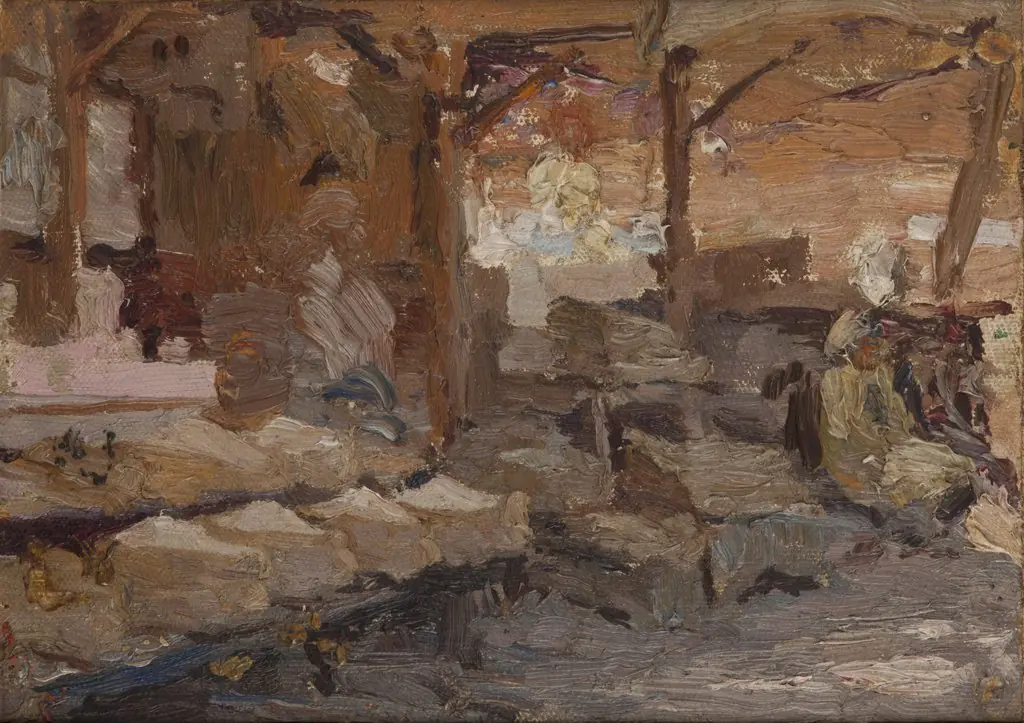
Țesând la război is a print by Stavru Tarasov. It dates from 1949 and is held in the collection of the Gavrilă Simion Eco-Museum Research Institute Tulcea - Art Museum.
About this work
Overview
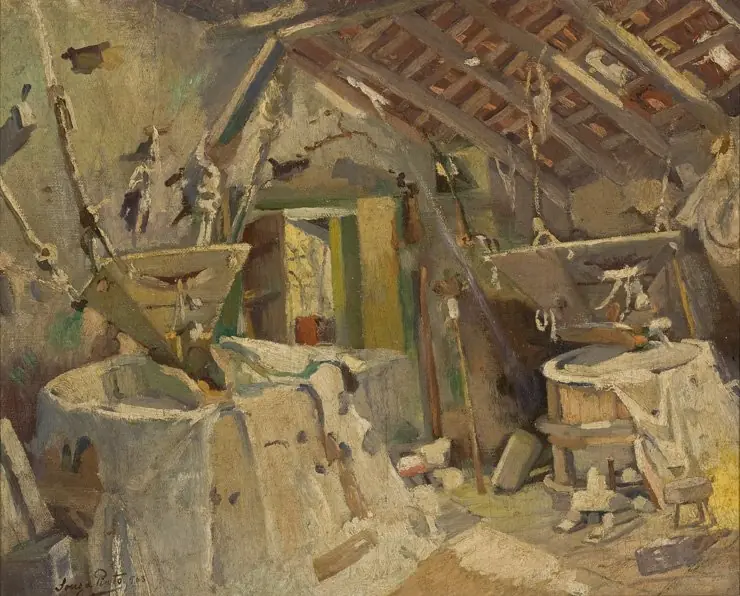
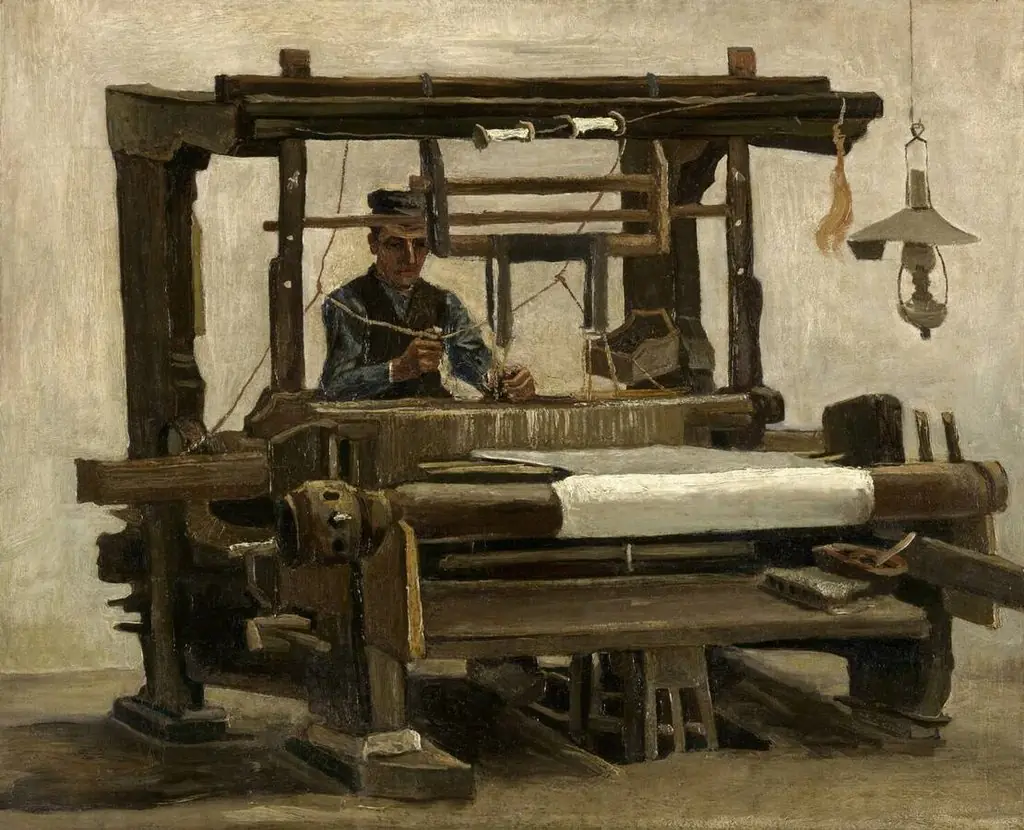
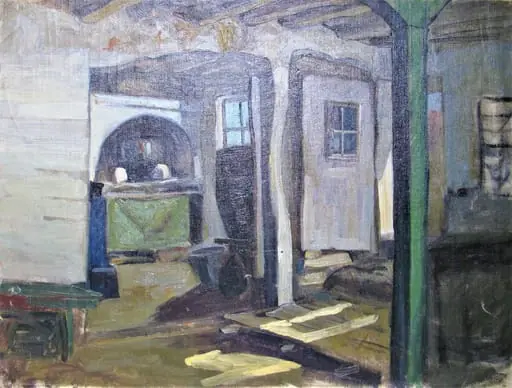
Created around 1949 by Romanian artist Stavru Tarasov, this painting depicts an interior scene centered on a weaving loom. Executed in oil, it captures a quiet domestic moment with a focus on light and texture. The work is part of the collection at the Museum of Ethnography, where it is presented as an example of postwar Romanian rural life rendered through a painterly, expressive style.
Subject & Meaning
The scene portrays a solitary weaver at work, though the figure is absent, leaving only the loom as evidence of labor. The dim, enclosed room suggests intimacy and solitude, while the shaft of sunlight illuminating the threads implies a quiet dignity in everyday tasks. The absence of the weaver invites contemplation on the unseen labor sustaining domestic life in mid-20th century Romania.
Technique & Style
Tarasov employs thick, uneven brushstrokes to build texture across the walls and loom, creating a tactile surface that emphasizes materiality. The contrast between the warm, direct light and the shadowed interior enhances spatial depth. The impasto technique gives weight to the wooden frame and woven threads, grounding the scene in physical reality rather than idealized form.
History & Provenance
It entered the Museum of Ethnography’s collection in the mid-20th century, likely selected for its representation of traditional crafts.
The painting was completed shortly after World War II, during a period when Romanian artists increasingly turned to rural themes under state cultural directives. It entered the Museum of Ethnography’s collection in the mid-20th century, likely selected for its representation of traditional crafts. Its provenance remains tied to Romanian institutional holdings, with no record of private ownership prior to museum acquisition.
Context
In late 1940s Romania, art institutions promoted imagery of peasant life as emblematic of national identity. While official narratives often idealized rural labor, Tarasov’s work avoids sentimentality, focusing instead on the quiet, unglamorous reality of domestic craft. The painting reflects a broader trend among regional artists who sought authenticity in ordinary environments.
Legacy
Though not widely exhibited beyond Romania, the painting remains a quiet reference point in studies of postwar Romanian painting. Its emphasis on texture and light distinguishes it from more propagandistic works of the era. Scholars note its understated realism as an example of how artists navigated state expectations while preserving personal artistic voice.
Artist & collection
Artist
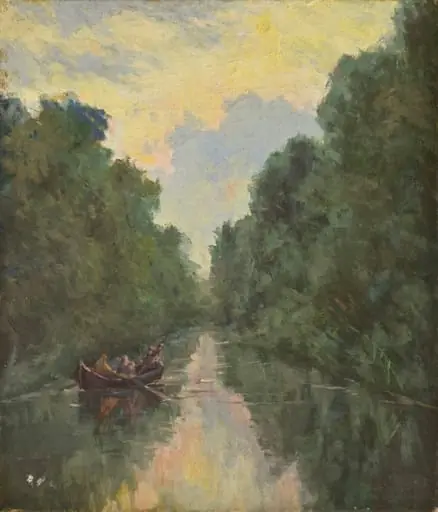
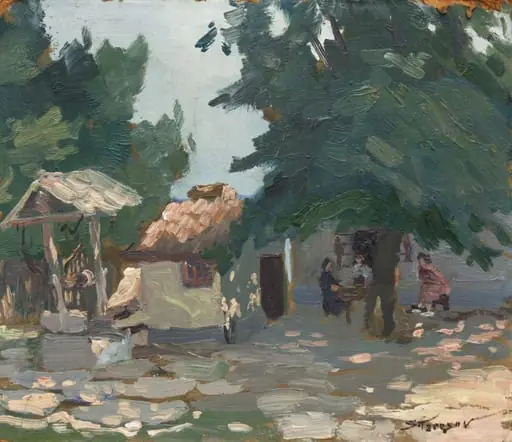
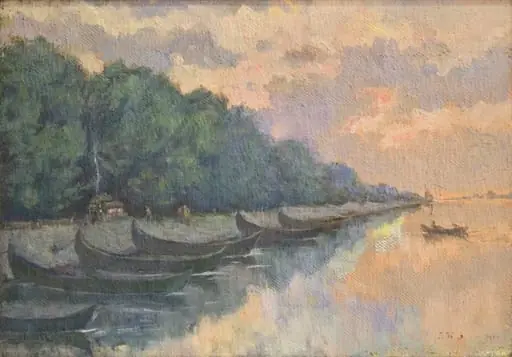
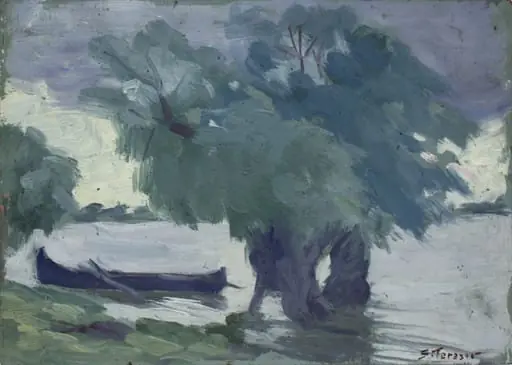
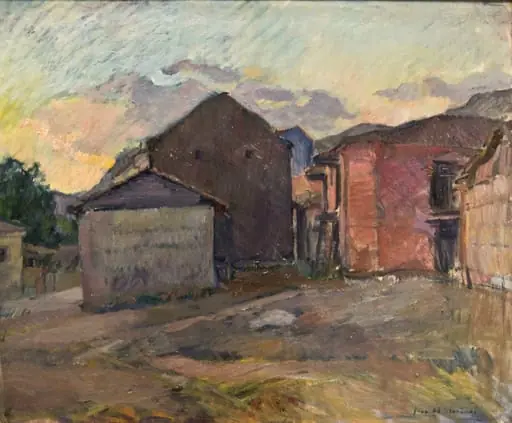
Stavru Tarasov painted everyday scenes in oil and sculpture—villages, riverbanks, and women weaving at looms.
Museum
Gavrilă Simion Eco-Museum Research Institute Tulcea - Art Museum
Continue through works from the same source collection.