Artwork
P-18 (random walk)
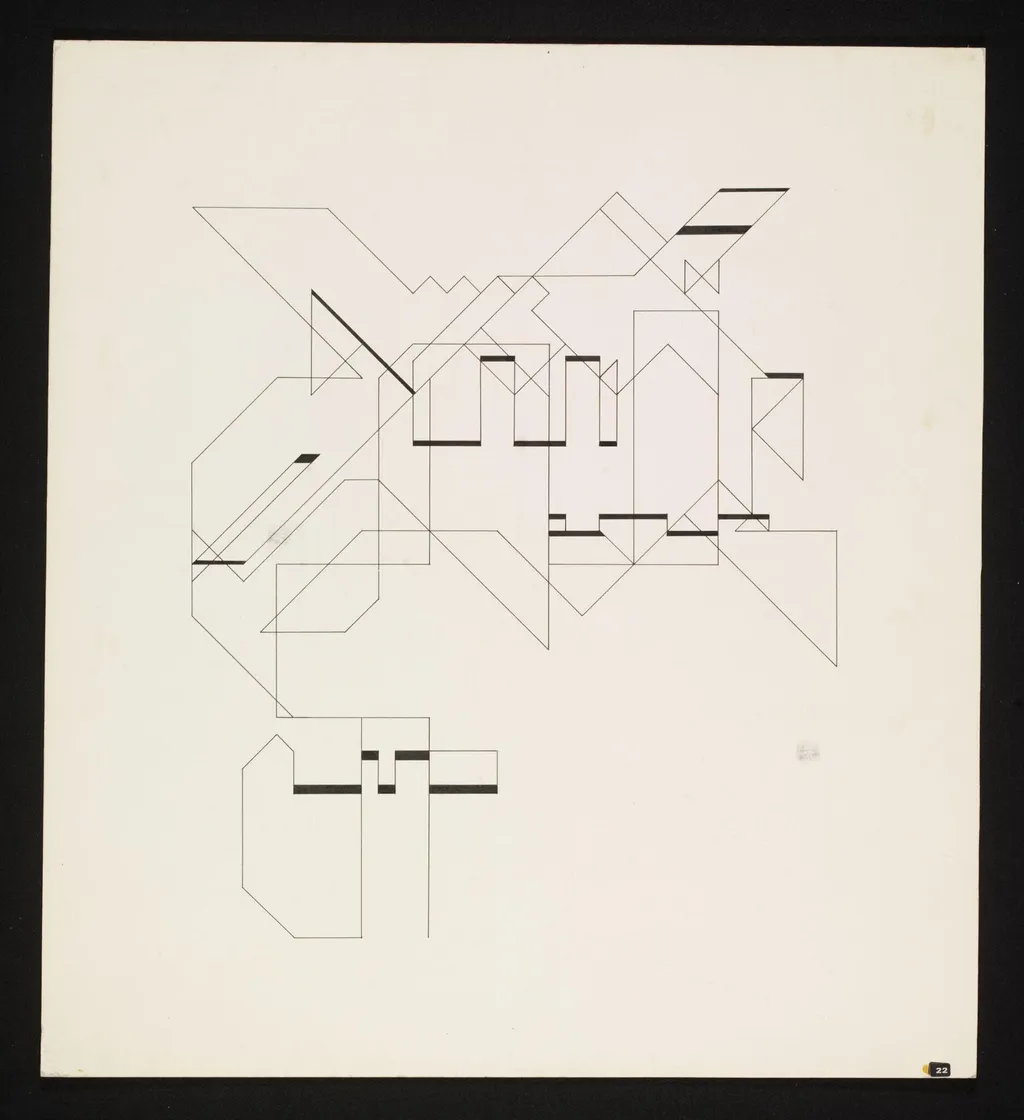
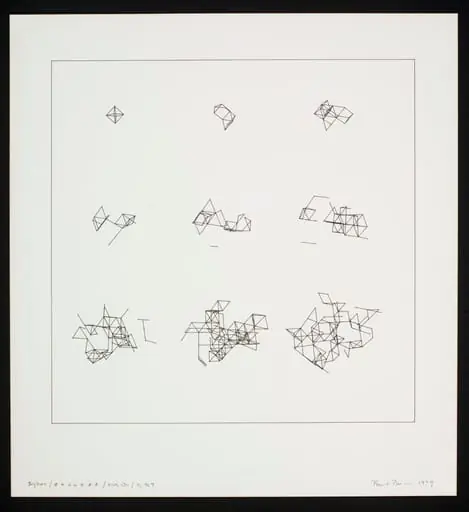
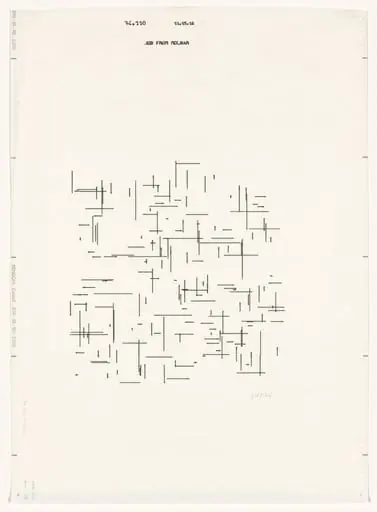
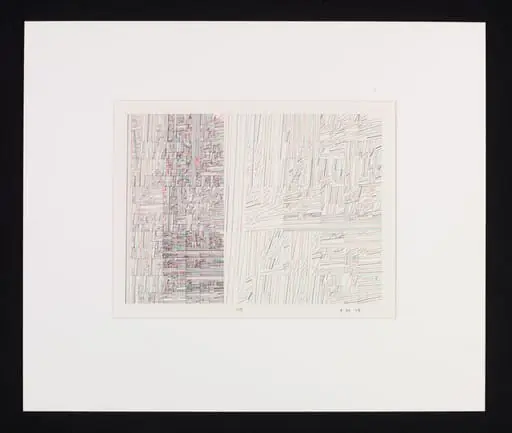
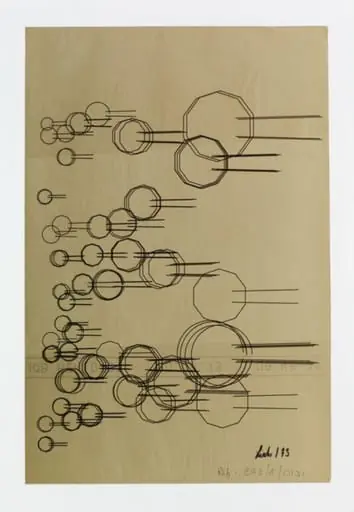
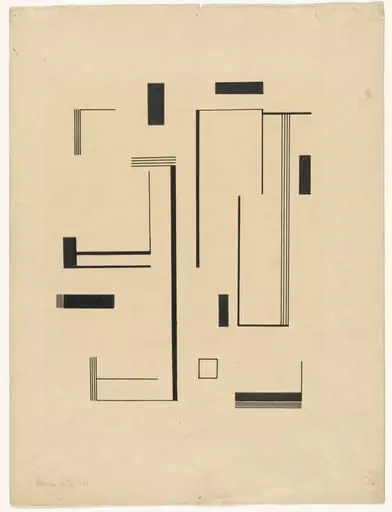
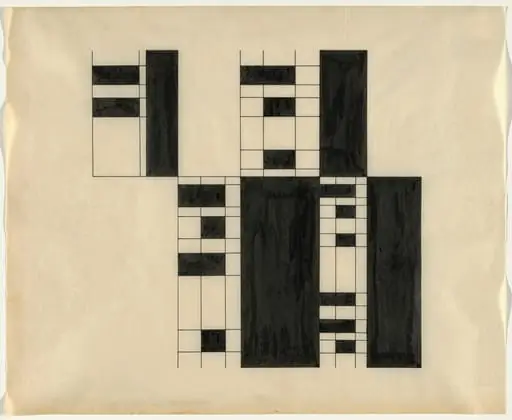
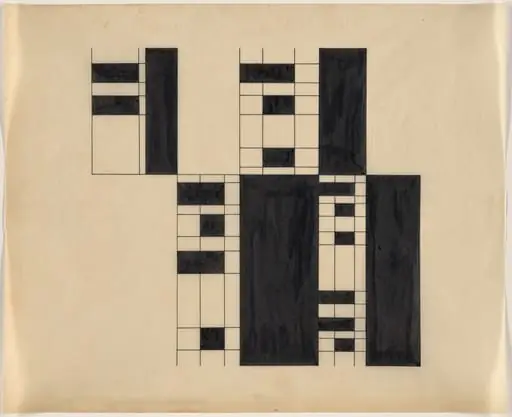
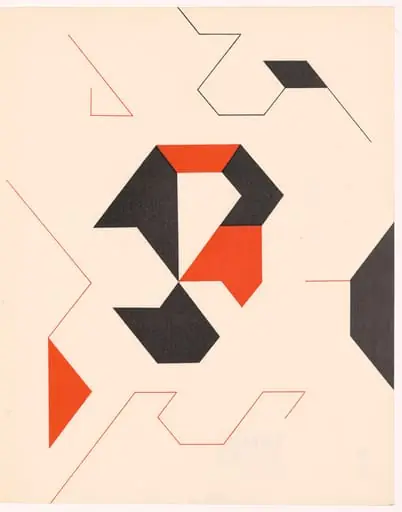
P-18 (random walk) is a drawing by Manfred Mohr. It dates from 1970 and is held in the collection of the Victoria and Albert Museum.
About this work
This is a drawing made by a computer in 1969. The plotter moved the pen while Mohr’s own program, called P-18, guided it. It’s one of his first drawings from code, not his hand.
Plotters were rare back then. Only big labs had them. Mohr had to ask the Paris weather institute just to use one.
Try looking up Mohr, Manfred next.
Overview
P-18 is a computer‑generated drawing produced in 1969 by Manfred Mohr using a mechanical plotter. The plotter, controlled by a program Mohr wrote and named P‑18, directed a pen to trace the image on paper. This work belongs to the early phase of Mohr’s exploration of algorithmic art, marking a shift from his earlier expressionist painting practice.
Technique & Style
The piece was created by a plotter, a device that translates digital commands into precise pen movements. Mohr’s program encoded a series of geometric instructions, allowing the machine to execute complex patterns that would be labor‑intensive by hand. The resulting drawing reflects a systematic, mathematically driven aesthetic rather than gestural mark‑making.
History & Provenance
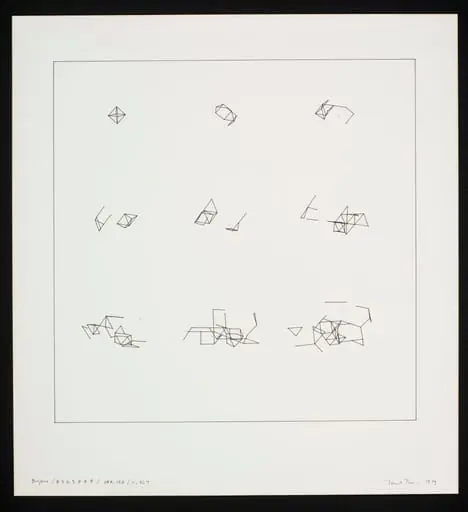
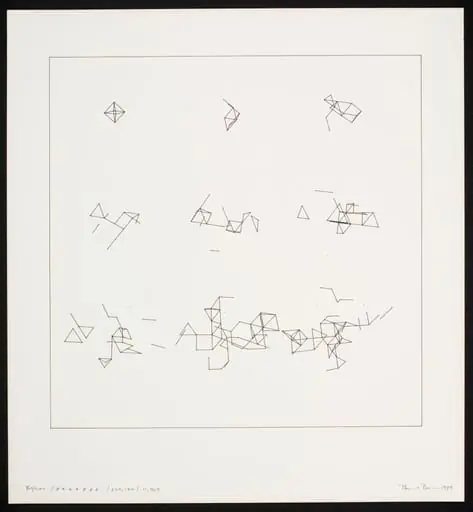
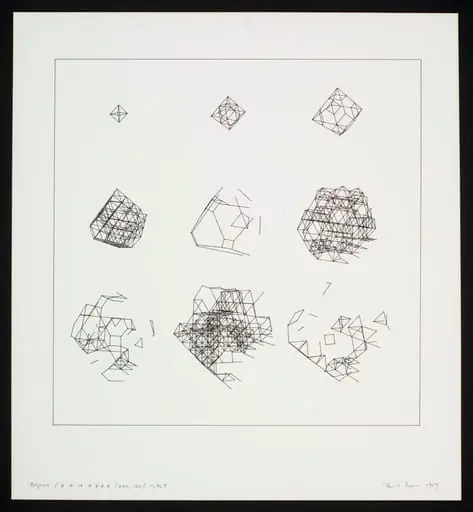
In the late 1960s, access to computing equipment was limited to large institutions. Mohr secured permission to use a computer and plotter at the Paris Institut Météorologique, where he likely produced P‑18. The work is part of a series generated from the same program; two related drawings (V&A numbers E.96‑2008 and E.200‑2008) are also held by the Victoria and Albert Museum.
Context
Mohr’s transition from expressionist painting and jazz performance to algorithmic art coincided with a broader 1960s interest in systems, geometry, and emerging digital technologies. His adoption of computer‑driven processes anticipated later developments in generative and digital art, positioning him among early practitioners who integrated precise mathematical logic into visual creation.
Legacy
P‑18 exemplifies the early use of computer algorithms to produce visual work, illustrating how artists began to harness computational power for aesthetic purposes. The drawing’s preservation in a major museum collection underscores its role in documenting the nascent intersection of art and technology during a period when such tools were scarce.
Artist & collection
Artist
Manfred Mohr’s drawings use lines, cubes and grids that feel like musical notation for invisible code.