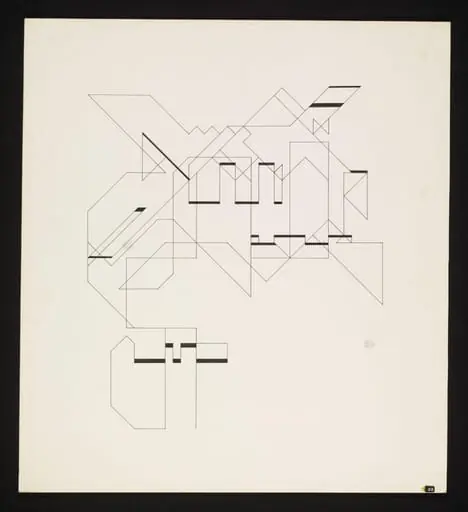
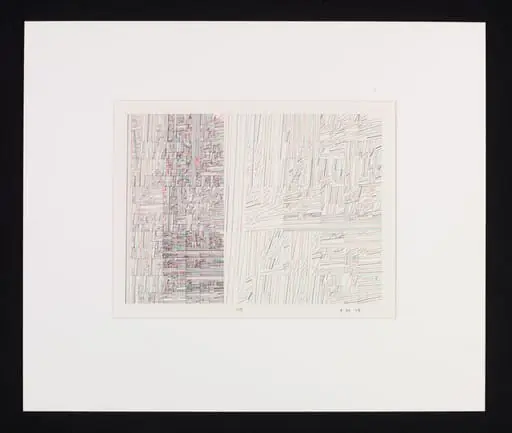
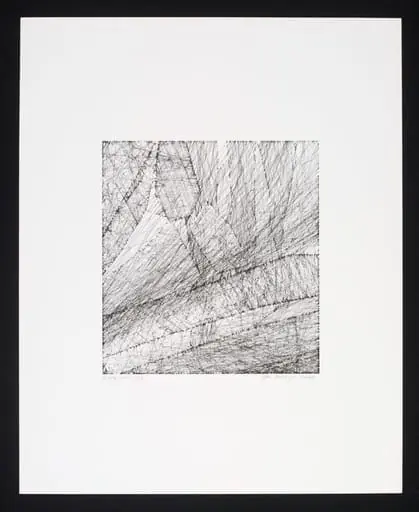
Artwork
BIGDIM
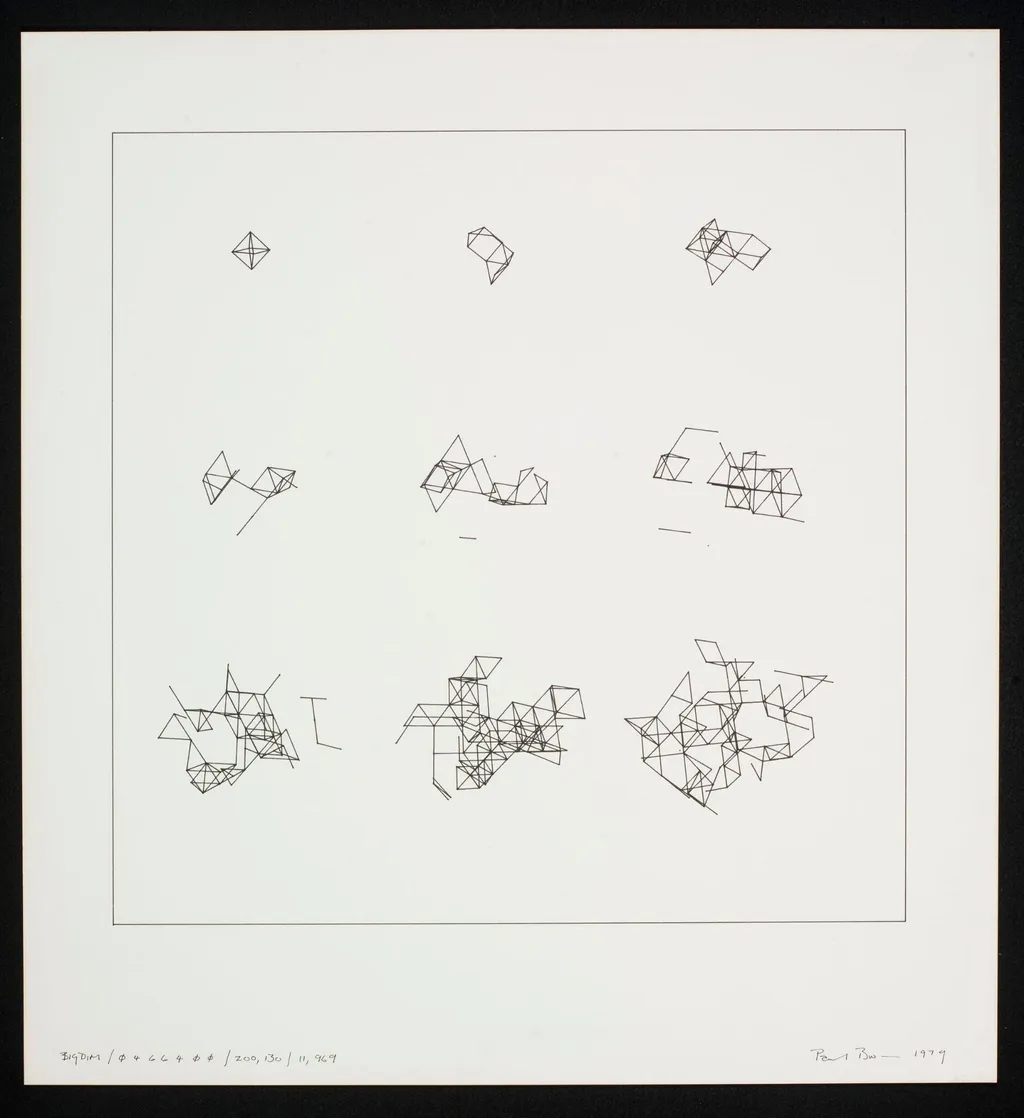
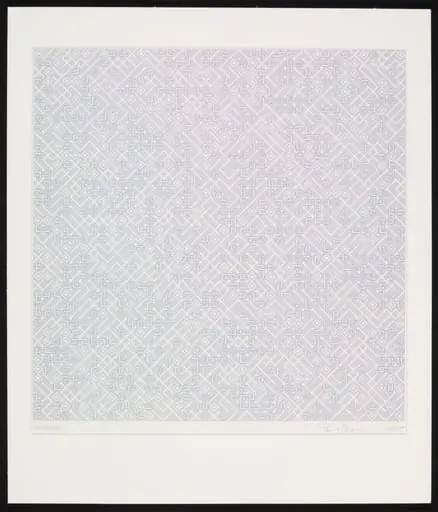
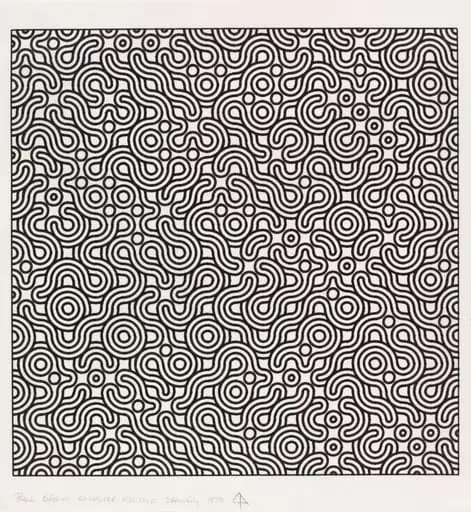
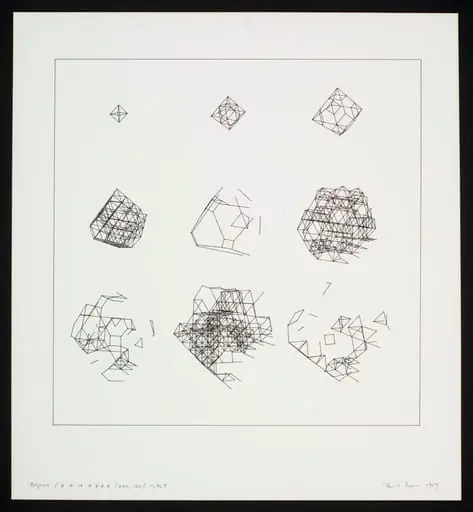
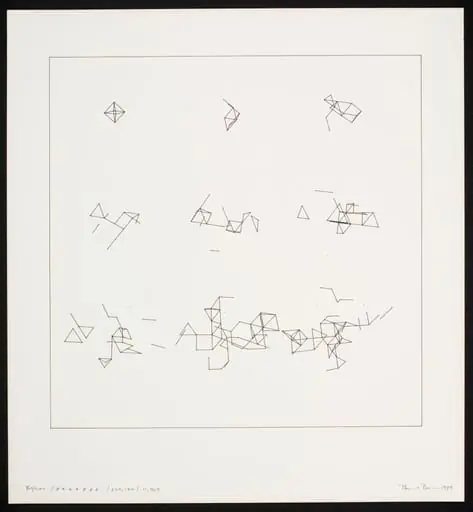
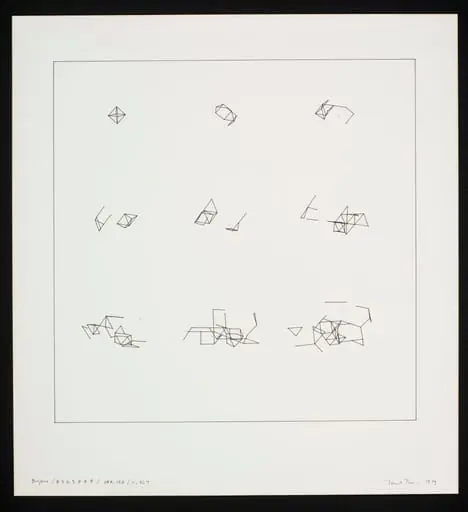
BIGDIM is a drawing by Paul Brown. It dates from 1979 and is held in the collection of the Victoria and Albert Museum.
About this work
This is a computer-generated drawing by Paul Brown from 1979. It belongs to his BIGDIM series, where numbers in the title control the design.
The drawing was made by a machine called a pen plotter. The artist wrote a program that let the computer create many versions from the same code.
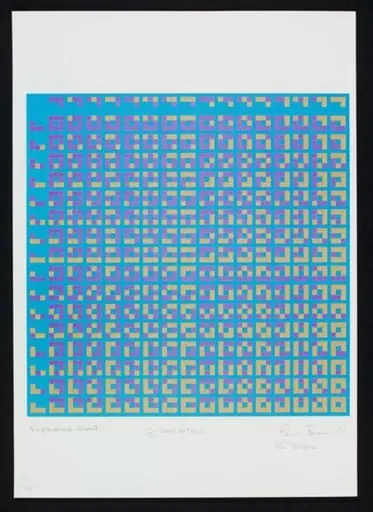
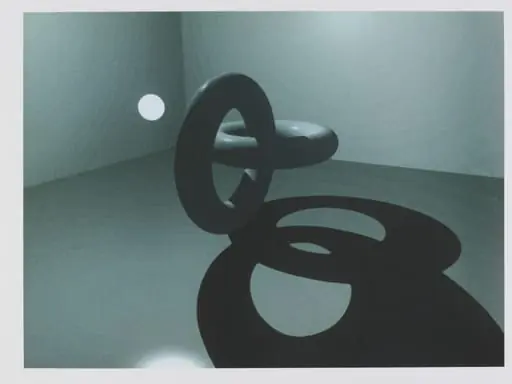
Check out the Victoria and Albert Museum to see more of Brown’s plotter drawings.
Overview
The artist’s code directed a mechanical pen across paper, producing a composition determined by algorithmic parameters rather than manual execution.
This untitled work from 1979 is a pen-plotter drawing generated by a computer program authored by Paul Brown. The artist’s code directed a mechanical pen across paper, producing a composition determined by algorithmic parameters rather than manual execution. Part of the BIGDIM series—short for 'Big Dimension'—the drawing exemplifies early experiments in computational art, where systematic rules governed visual output.
Subject & Meaning
The drawing’s structure derives from numerical data embedded in its title, which dictated the arrangement of lines and forms. Rather than depicting a recognizable subject, the work explores the relationship between code and visual result, emphasizing process over representation. Brown’s approach reflects an interest in generative systems, where predefined instructions yield unpredictable yet controlled outcomes.
Technique & Style
Executed using a pen plotter, the drawing relies on precise mechanical movement guided by Brown’s software. The machine’s incremental pen strokes create a dense, layered pattern characteristic of the BIGDIM series. The style merges geometric abstraction with computational logic, highlighting the intersection of technology and artistic production during the late 1970s.
History & Provenance
Created in 1979, the work stems from Brown’s engagement with digital tools at the Slade School of Art, where computers were incorporated into the curriculum. The Victoria and Albert Museum holds three additional drawings from the same program, underscoring the artist’s exploration of serial variation within a single algorithm. The piece remains a document of early computer-assisted art practices.
Context
Brown’s work emerged during a period when artists began adopting computers as creative instruments. The Slade’s Experimental Department, where he studied, was among the first institutions to integrate computational methods into art education. His focus on generative systems aligned with broader investigations into automation, chance, and rule-based composition in late 20th-century art.
Artist & collection

Artist
Paul Eugene Brown was an American football coach and executive in the All-America Football Conference (AAFC), the National Football League (NFL), and the American Football League (AFL).