Artwork
Architectural Fantasy of Roman Ruins with an Inscription Plaque
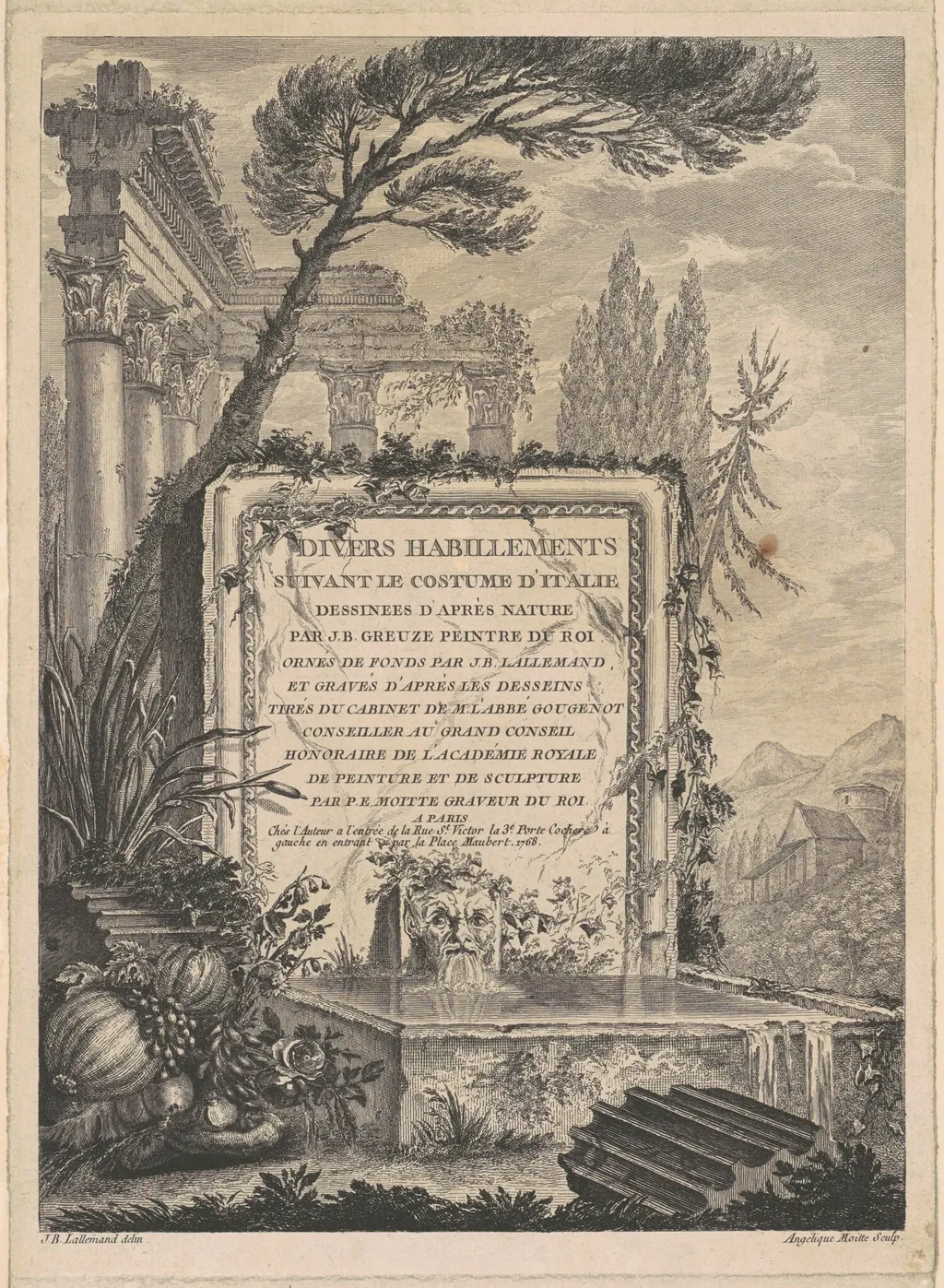
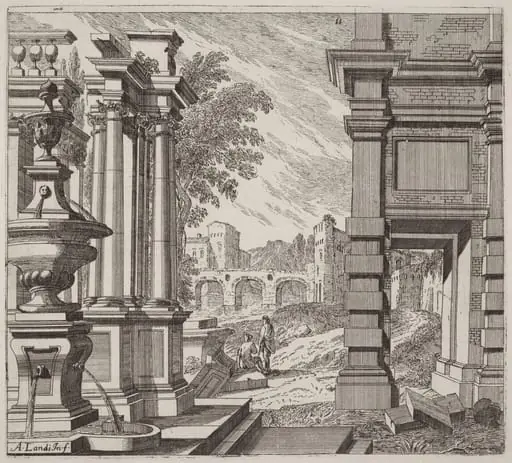
Architectural Fantasy of Roman Ruins with an Inscription Plaque is an ink print by the Romanticist artist Rose Angélique Moitte. It dates from 1768 and is held in the collection of the National Gallery of Art.
About this work
Trees with bare branches frame the scene, and a small portrait of an old man’s face peeks out below the plaque.
This print shows a fake Roman ruin—crumbling columns, broken statues, and a grand staircase leading nowhere. A framed plaque in the middle lists names and titles in French, like a fancy label for a book. Trees with bare branches frame the scene, and a small portrait of an old man’s face peeks out below the plaque.
The text calls out a painter named J.B. Greuze and a sculptor’s work, but the whole thing reads like a made-up world. The artist signed it in 1768, and the paper looks old and delicate.
Next, check out the technique: etching, drypoint, aquatint to see how prints like this were made.
Overview
Rose Angélique Moitte’s 1768 print, titled Architectural Fantasy of Roman Ruins with an Inscription Plaque, is an etched and engraved image on laid paper. The composition depicts an imagined ruin of classical architecture, complete with toppled columns, fragmented statues, and a grand, unfinished staircase. A framed inscription in French occupies the central space, while skeletal trees border the scene and a diminutive portrait of an elderly man appears beneath the plaque.
Subject & Meaning
The work presents a fabricated Roman landscape, blending architectural decay with scholarly annotation. The French plaque lists names and titles, including a reference to painter J.B. Greuze and a sculptor, suggesting a playful cataloguing of artistic achievements within an imagined antiquity. The juxtaposition of ruined stone and contemporary references creates a dialogue between past grandeur and Enlightenment-era cultural pride.
Technique & Style
Moitte employed a combination of etching, drypoint, and aquatint to achieve varied line quality and tonal depth. Etching provides the precise architectural outlines, drypoint adds rich, velvety shadows around the broken forms, and aquatint supplies subtle washes that suggest atmospheric light and the texture of weathered stone. The overall style reflects the 18th‑century fascination with antiquarian fantasy.
History & Provenance
Signed by Moitte in 1768, the print appears on delicate laid paper typical of the period. While specific ownership records are scarce, the work aligns with the broader trend of French artists producing imagined ruins for the burgeoning market of decorative prints and scholarly curiosities during the late Rococo and early Neoclassical eras.
Context
The image belongs to a tradition of architectural fantasies that catered to Enlightenment interests in classical archaeology and the picturesque. Such prints often served as visual supplements for books, salons, and collections that celebrated the rediscovery of Roman art and architecture, while also allowing artists to experiment with imagined historical scenes.
Artist & collection

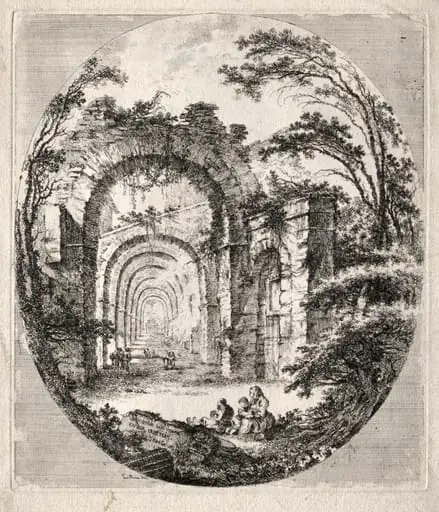 Ancient Ruins
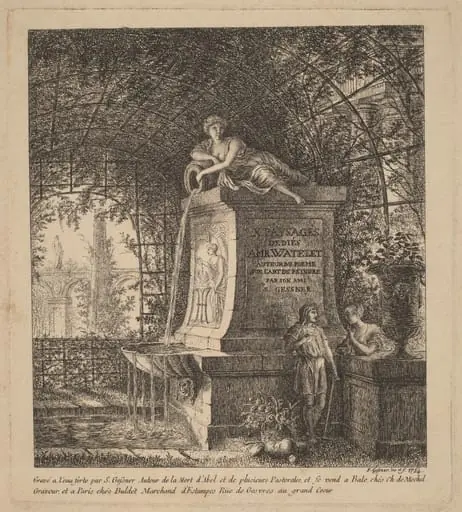 Fountain in a Summerhouse
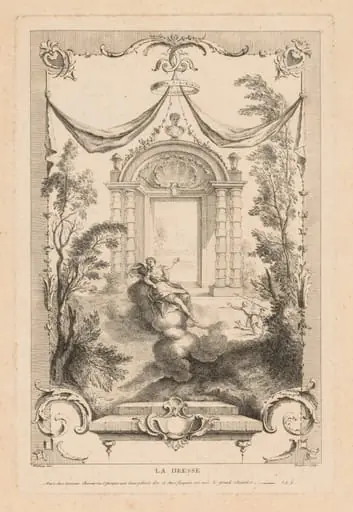 The Goddess, Diana on the Clouds
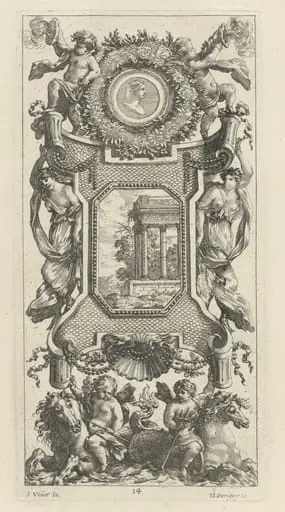 Ornamental Panel Surmounted by a Bust of a Woman and Two Putti with Flaming Trumpets
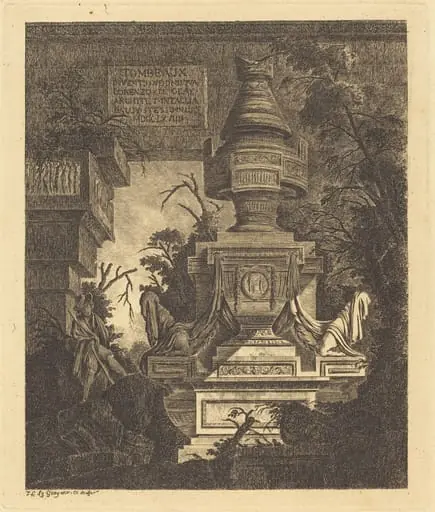 Frontispiece for "Views of Tombs"
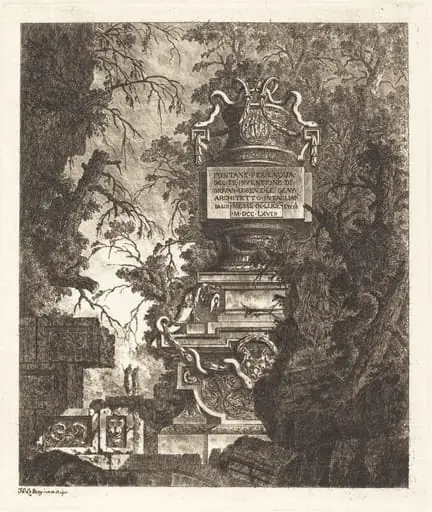 Frontispiece for "Fountains"
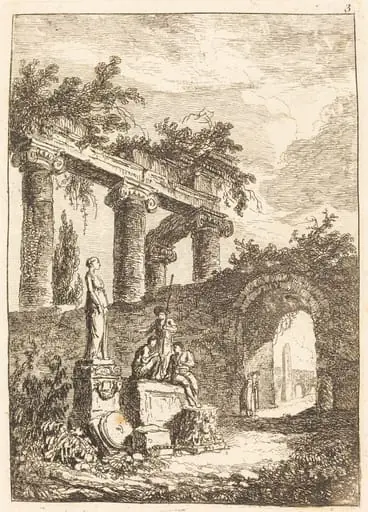 The Statue before the Ruins
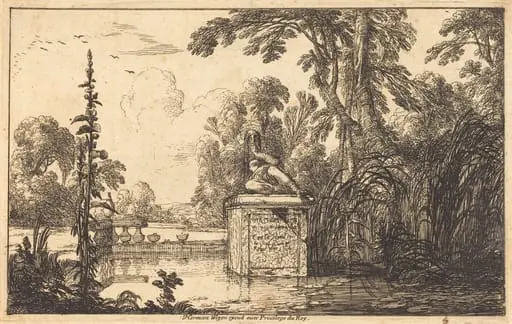 Pool in a Formal Garden
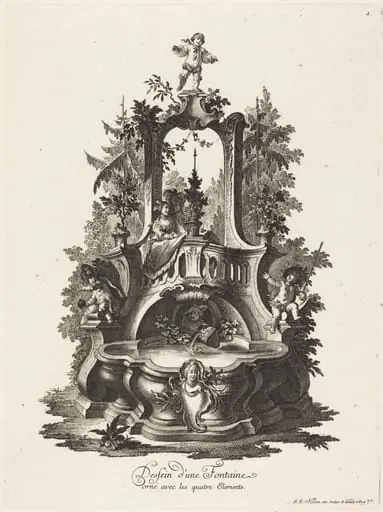 Dessein d'une Fontaine orné avec les quatre Elements (Design for a Fountain Decorated with the Four Elements)
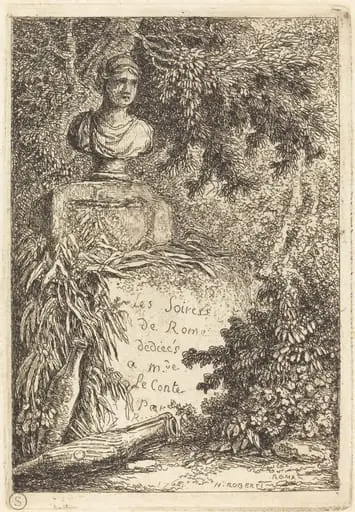 The Portrait Bust
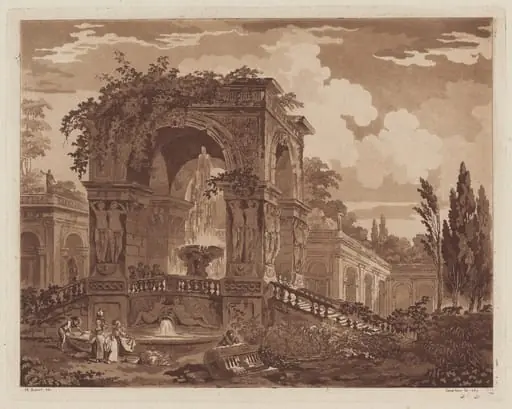 View of an Antique Fountain
 Architectural Fantasy with a Fountain, Classical Ruins, and a Bridge