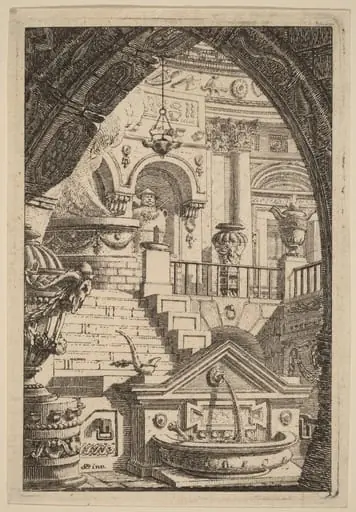
Artwork
Architectural Fantasy with a Fountain, Classical Ruins, and a Bridge
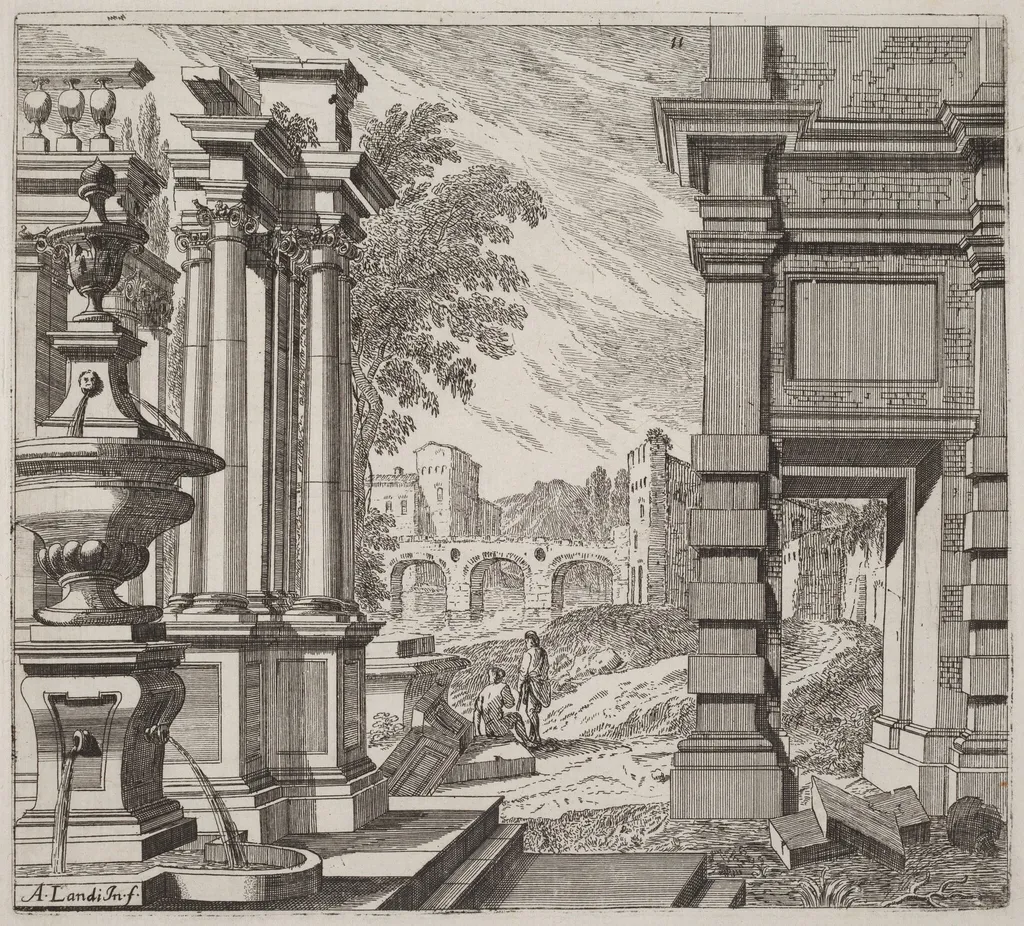
Architectural Fantasy with a Fountain, Classical Ruins, and a Bridge is an ink print by the Baroque artist Giuseppe Antonio Landi. It dates from 1753 and is held in the collection of the National Gallery of Art.
About this work
Overview
Created in 1753 by Giuseppe Antonio Landi, this print combines etching and engraving on laid paper to present an imagined landscape of classical architecture.
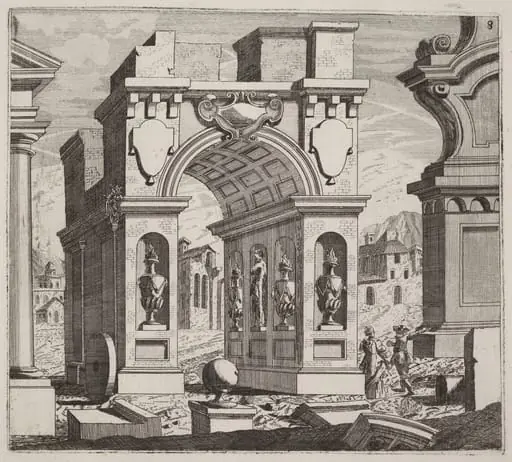
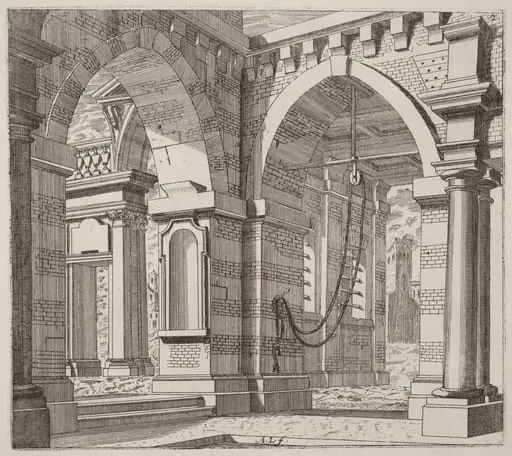
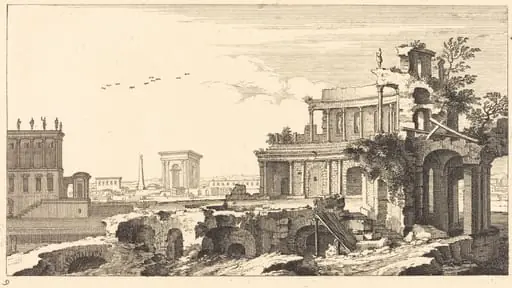
Created in 1753 by Giuseppe Antonio Landi, this print combines etching and engraving on laid paper to present an imagined landscape of classical architecture. The scene weaves together functional and decaying structures—fountains, columns, arches, and a bridge—into a cohesive, dreamlike environment. The composition invites the viewer to explore a space that exists between reality and invention, characteristic of 18th-century capricci.
Subject & Meaning
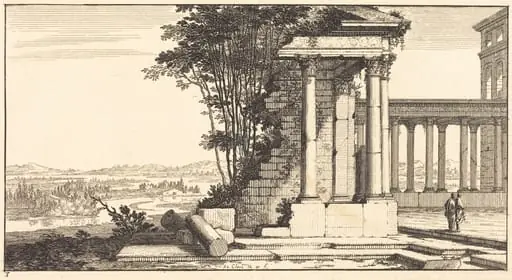
The image presents a fictional fusion of Roman ruins and idealized architectural elements, arranged to suggest a timeless, abandoned urban space. A small group of figures near a tree anchors the scene in human scale, while distant hills and a tower imply a broader, unseen world. The work evokes contemplation of decay and endurance, reflecting Enlightenment-era fascination with antiquity and the passage of time.
Technique & Style
Landi employed fine, layered lines through etching and engraving to render intricate textures—ripples in water, weathered stone, and foliage—with precision. Tiny details, such as figures beside the fountain and winding paths, enhance the illusion of depth and lived-in space. The controlled contrast between sharp architectural edges and soft atmospheric backgrounds demonstrates mastery of tonal gradation in printmaking.
History & Provenance
Landi, an Italian artist active in the mid-18th century, produced this print during his early career, likely in Rome or Florence, centers of antiquarian study. While specific early ownership records are unverified, the work aligns with the circulation of capricci prints among European collectors drawn to classical themes. Its survival in institutional collections suggests continued scholarly interest.
Context
This print emerged amid a surge in architectural fantasy prints across Europe, fueled by renewed interest in Roman ruins and Grand Tour travel. Artists like Piranesi and Vanvitelli similarly blended real and imagined structures to satisfy collectors’ fascination with antiquity. Landi’s work reflects this trend, offering a poetic interpretation rather than a topographical record.
Legacy
Though not widely known today, Landi’s print exemplifies the capriccio tradition’s influence on later landscape and architectural representation. Its detailed, immersive quality informed 19th-century views of ruins and contributed to the visual language of archaeological imagination. The work remains a quiet testament to the era’s blend of scholarly curiosity and artistic invention.
Own this work as a print
Artist & collection


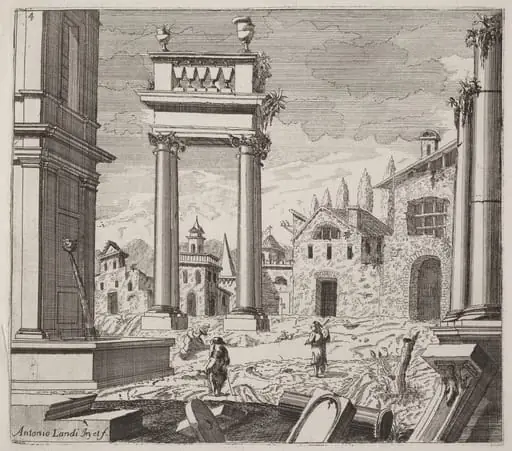 Architectural Fantasy with Classical Ruins and Vernacular Buildings
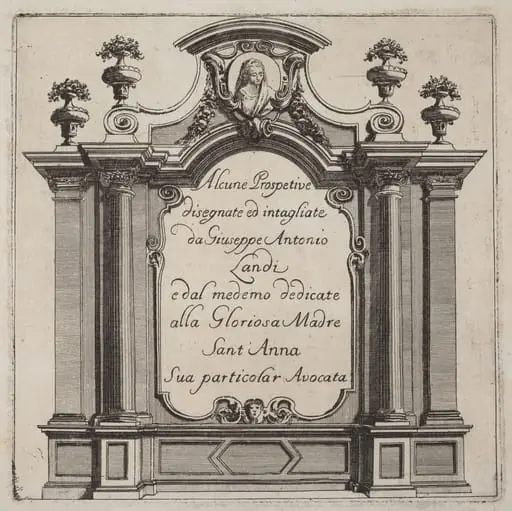 Alcune Prospettive
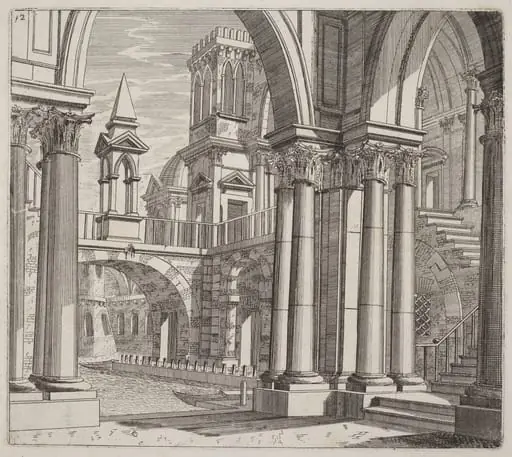 Architectural Fantasy with Buildings, Stairways, and Portals beside a Canal
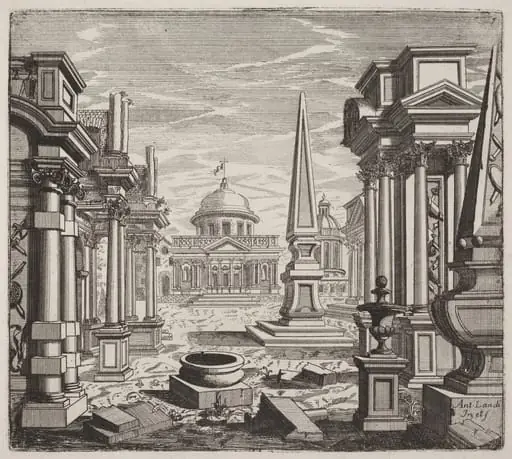 Architectural Fantasy with Obelisks, Ruins, and a Piazza
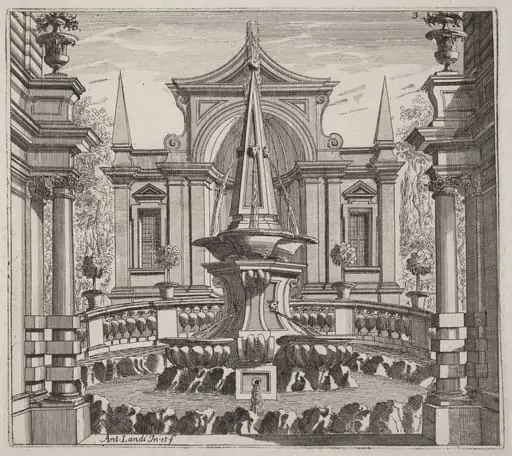 Fantastic Garden with a Fountain and a Garden Pavilion
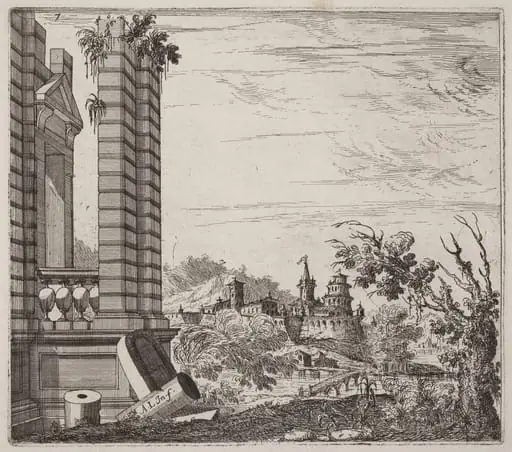 Fantastic River Landscape with Ruins and a Castle
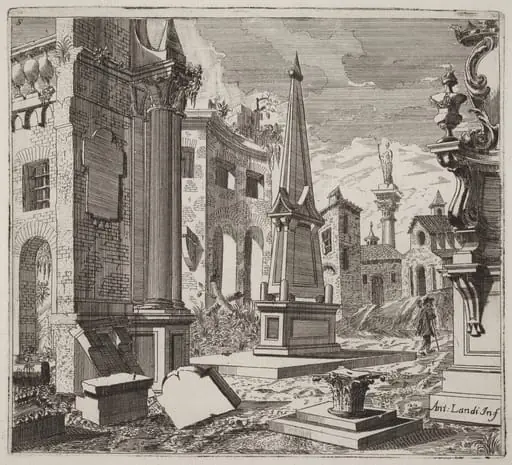 Fantastic Townscape with Ruins
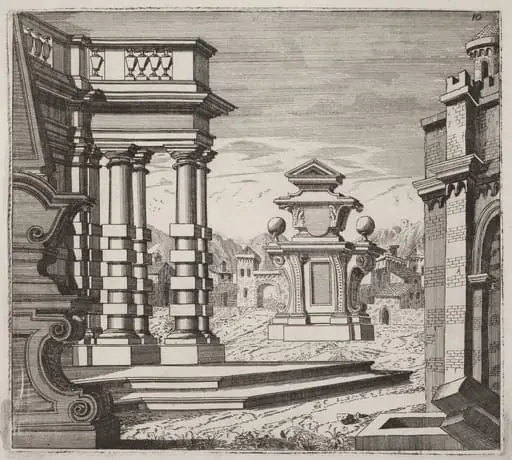 Architectural Fantasy with Portals and Monuments