Artwork
Tynemouth, Northumberland
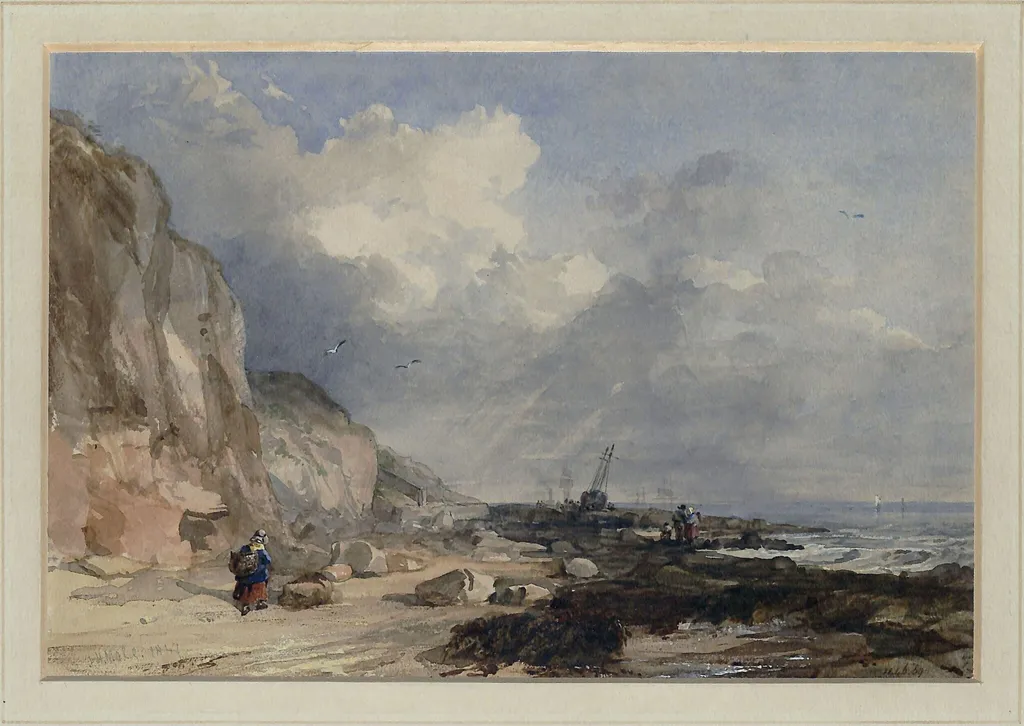
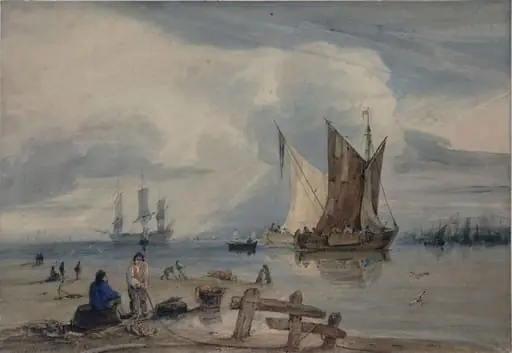
Tynemouth, Northumberland is a watercolor work on paper by the British Romanticist artist John Henry Mole. It dates from 1847 and is held in the collection of the Victoria and Albert Museum.
About this work
Overview
John Henry Mole’s 1847 watercolour presents a quiet coastal vista at Tyneshire, Northumberland. The composition balances a craggy cliff on the left with a smooth expanse of sea on the right, under a pale sky brushed with scattered clouds. A solitary figure in a blue coat and red skirt walks along the sand, carrying a bundle, adding a human scale to the landscape.
Subject & Meaning
The scene captures a moment of everyday travel along the shoreline, suggesting both the routine of coastal life and the broader allure of the sea. The lone walker, modestly dressed, conveys a sense of personal journey, while the surrounding cliffs and open water hint at the enduring power of nature that frames human activity.
Technique & Style
Mole employs delicate washes and restrained hues, allowing the watercolour medium to convey atmosphere with subtle gradations of blue and earth tones. Soft, fluid brushstrokes render the sky and sea, while finer lines define the cliff’s texture and the figure’s attire. The muted palette and gentle handling reflect a Romantic sensibility toward tranquil, natural scenes.
History & Provenance
Signed and dated by the artist, the work originates from Mole’s productive mid‑nineteenth‑century period, when he frequently depicted British coastal locales. It remains documented as part of his oeuvre from 1847, offering insight into his early career and the popularity of watercolour landscapes among Victorian audiences.
Own this work as a print
Artist & collection
Artist
John Henry Mole painted quiet, detail-rich watercolours of coastal towns in the early 1800s.

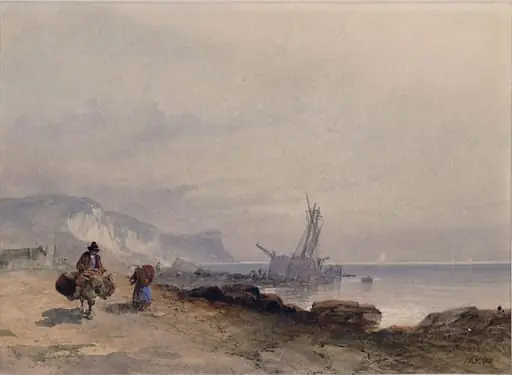 Coast scene with a vessel aground
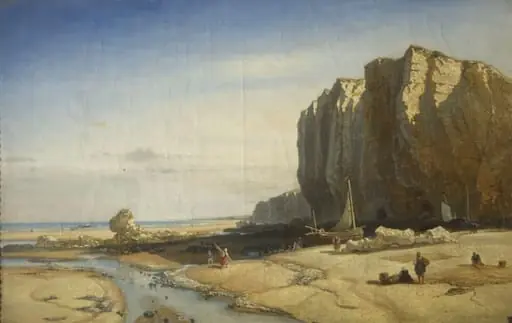 Rocky Coast with figures and boats
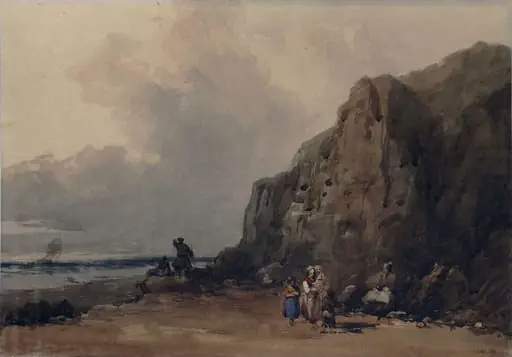 Coast scene, Isle of Wight
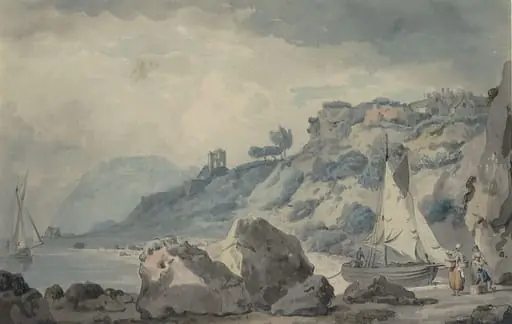 Howth, Ireland
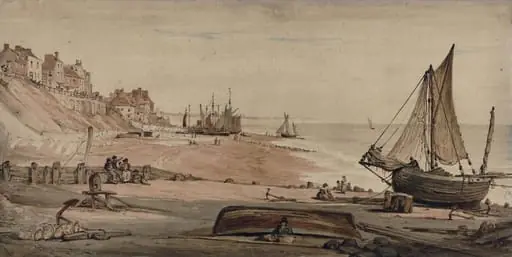 Brighton beach
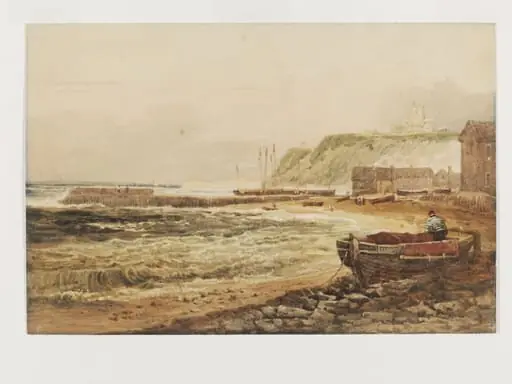 The Beach at Old Folkestone
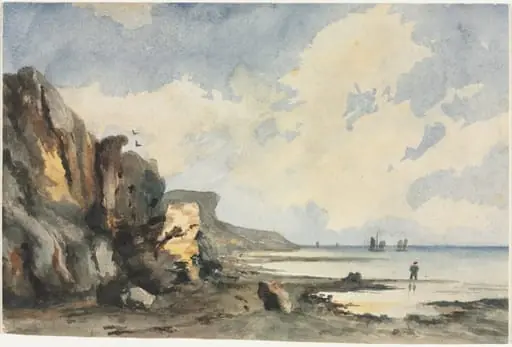 Coastal View
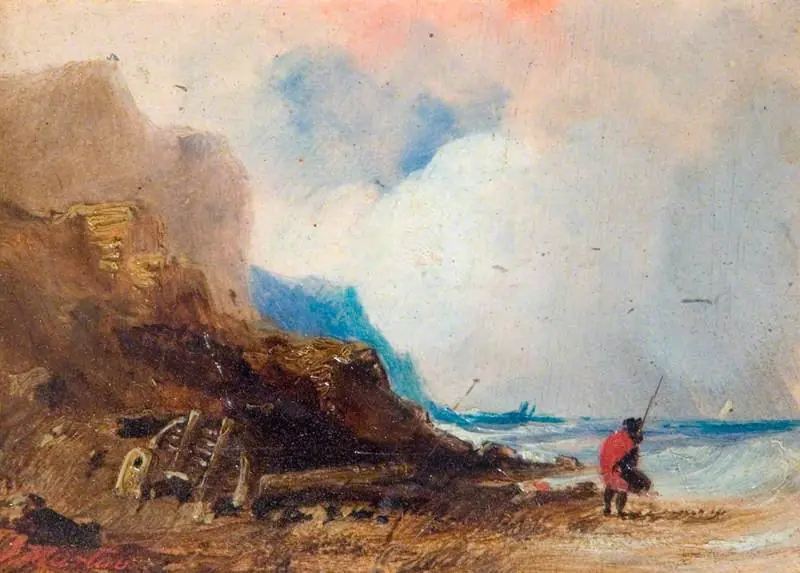 Shore Scene, Evening
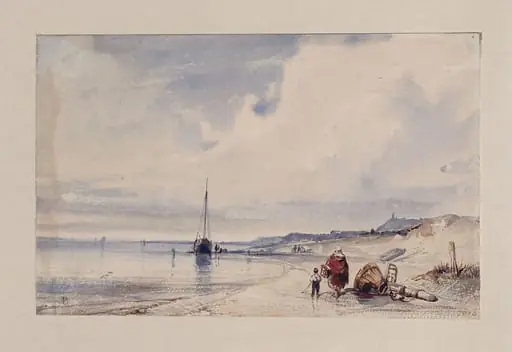 Dutch Coast Scene
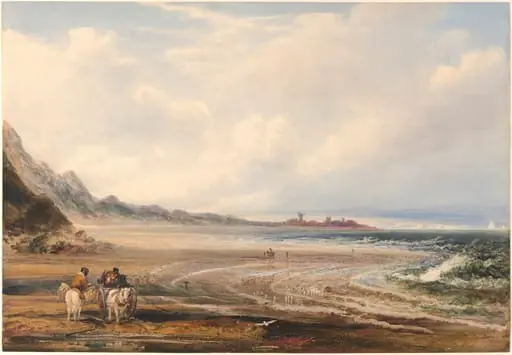 Travelers on the Sands near Redcar
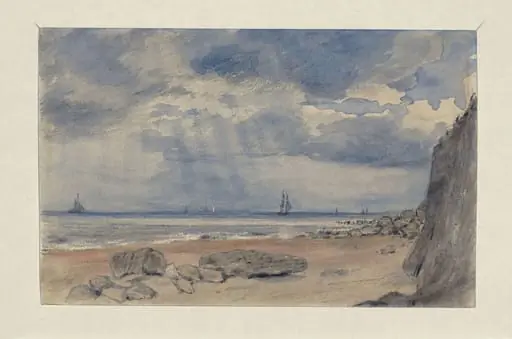 Coast Scene near Brighton
 Shipping in a calm, with fishermen on the beach