Artwork
Le baptême du Christ
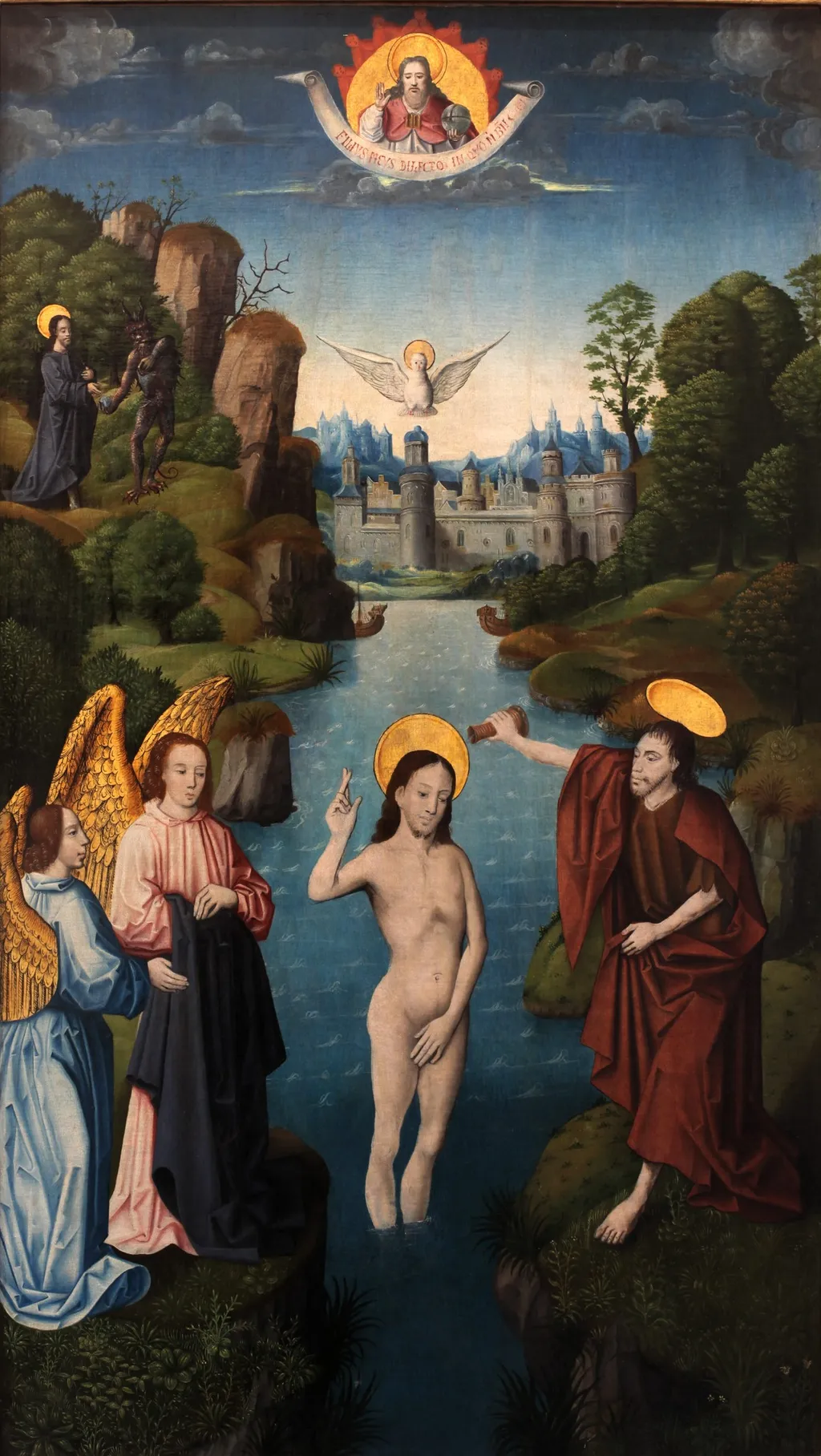
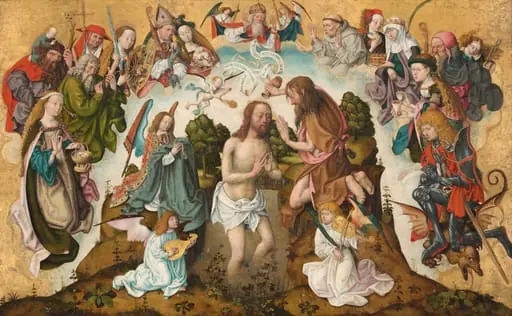
Le baptême du Christ is an oil painting by the Northern Renaissance artist Monogrammist AH. It dates from 1500 and is held in the collection of the Museum of Fine Arts of Lyon.
About this work
Overview
Le baptême du Christ, an oil painting dated to 1500 and attributed to the anonymous Monogrammist AH, portrays the biblical episode of Christ’s baptism. The work is part of the collection of the Musée des Beaux-Arts de Lyon, where it is displayed among the museum’s early‑Renaissance holdings.
Subject & Meaning
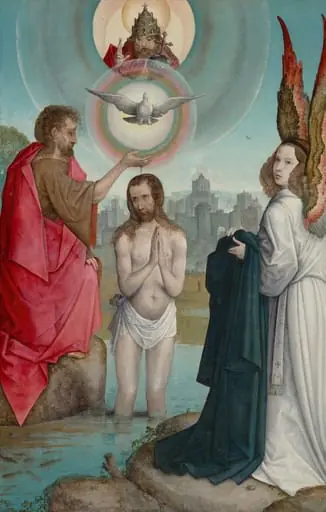
Flanking him are two angels—one winged in gold, the other in a plain robe—who gesture toward the scene, underscoring its divine significance.
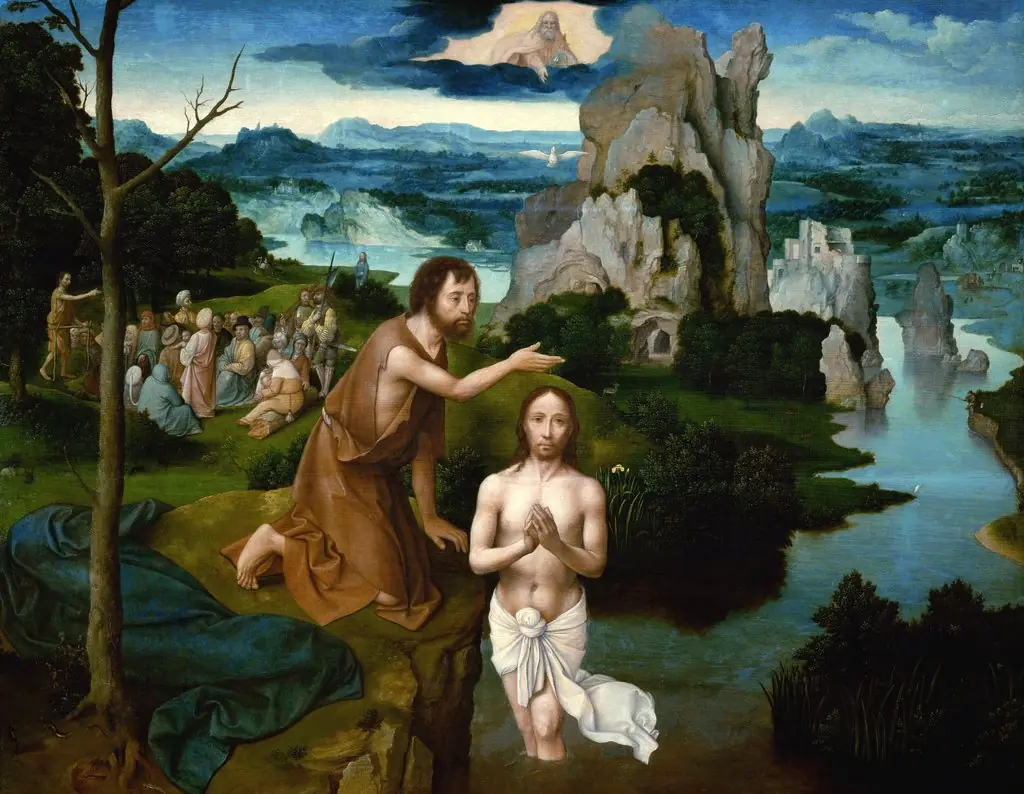
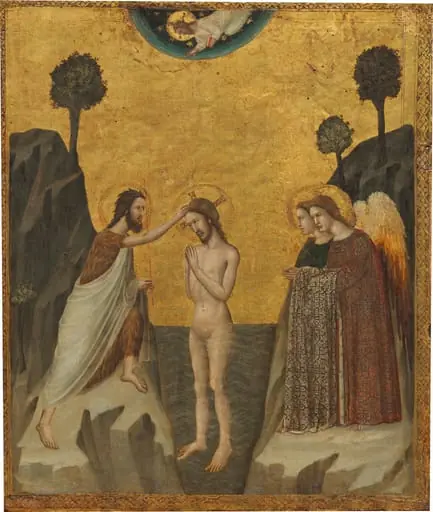
The central motif shows a nude figure standing in a river, representing Jesus at the moment of baptism. Flanking him are two angels—one winged in gold, the other in a plain robe—who gesture toward the scene, underscoring its divine significance. A man in a red garment and another in darker attire observe from the banks, while a luminous, golden‑haired figure hovers above, symbolising the Holy Spirit, accompanied by a small bird.
Technique & Style
Executed in oil on panel, the painting employs a muted palette punctuated by the bright gold of the angel’s wings and the red of the attendant’s robe. The composition balances a realistic river setting with an ethereal sky, where a radiant sunburst frames the celestial figure, creating a dream‑like atmosphere that bridges natural and spiritual realms.
History & Provenance
Created at the turn of the 16th century, the work has remained in French collections, eventually entering the Musée des Beaux‑Arts de Lyon. Its attribution to the Monogrammist AH reflects ongoing scholarly attempts to identify the anonymous artist responsible for a series of devotional images in this period.
Context
The painting reflects the devotional trends of the early Renaissance, when biblical narratives were rendered with heightened emotional immediacy. Its inclusion of angels, a luminous Holy Spirit, and a detailed landscape aligns with contemporary efforts to merge theological symbolism with a more naturalistic portrayal of sacred events.
Artist & collection
Artist
This German painter, active in the mid-1500s, left a small set of religious scenes in oil.