Artwork
Presentation of Jesus Christ at the Temple
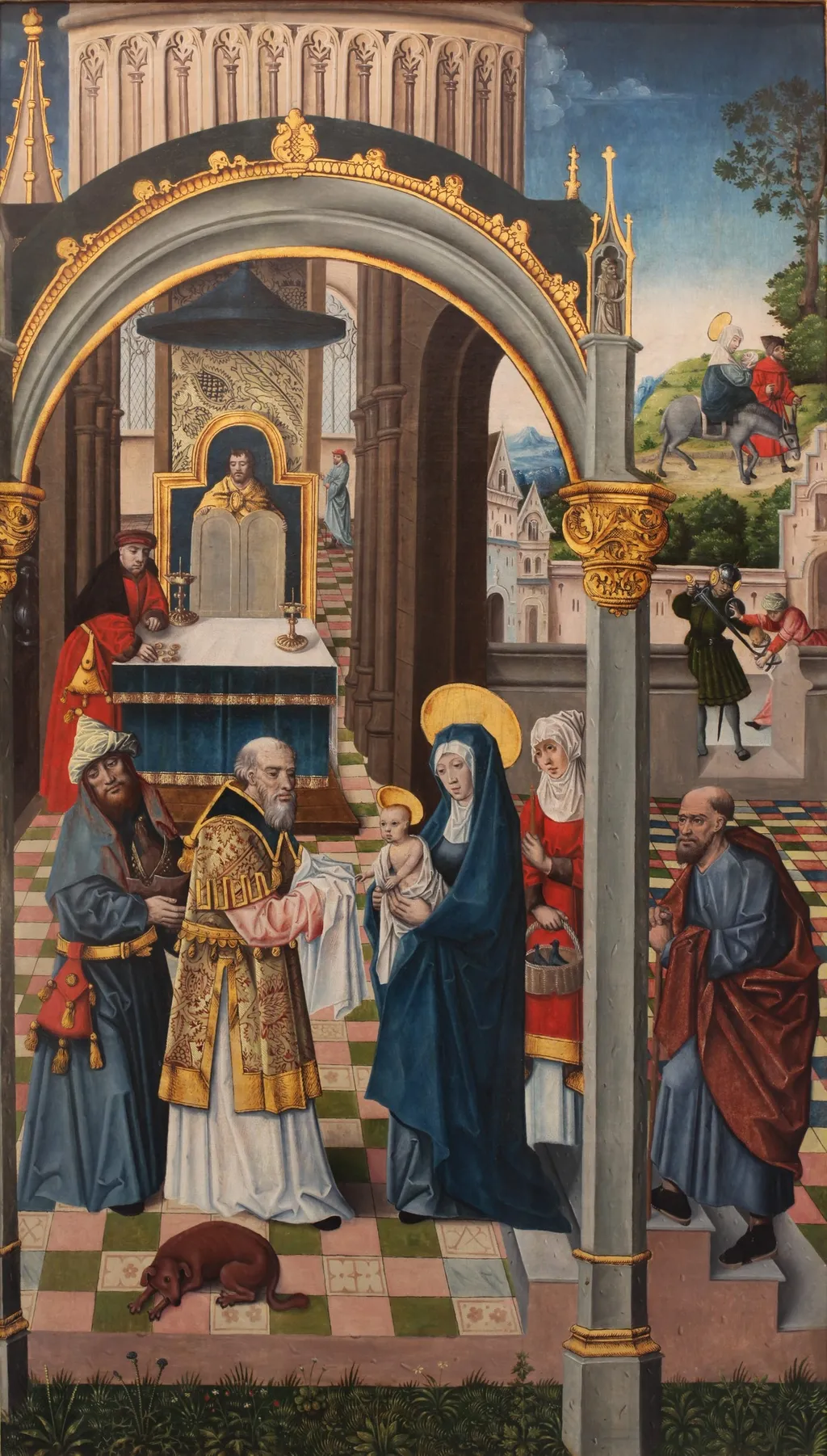
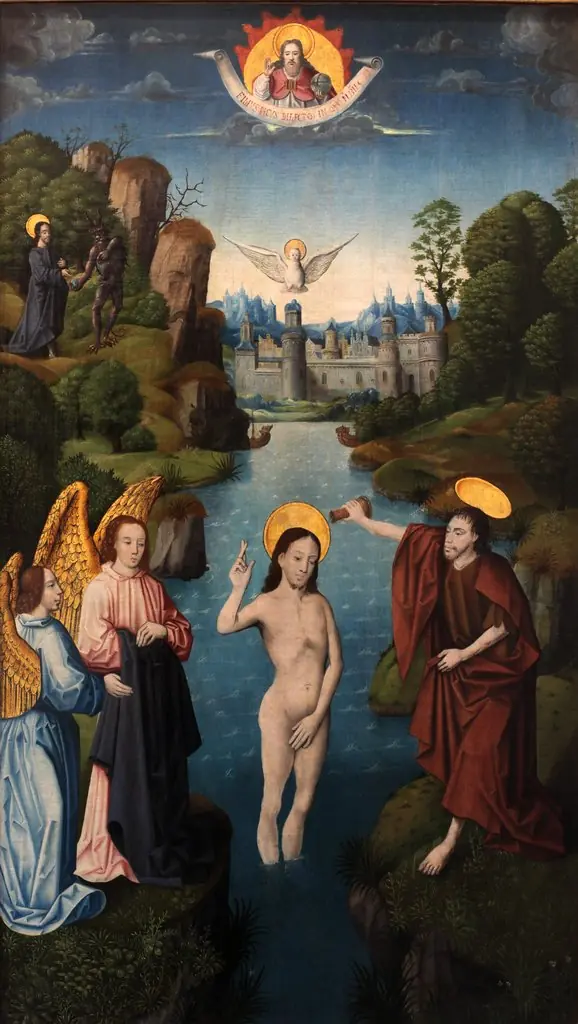
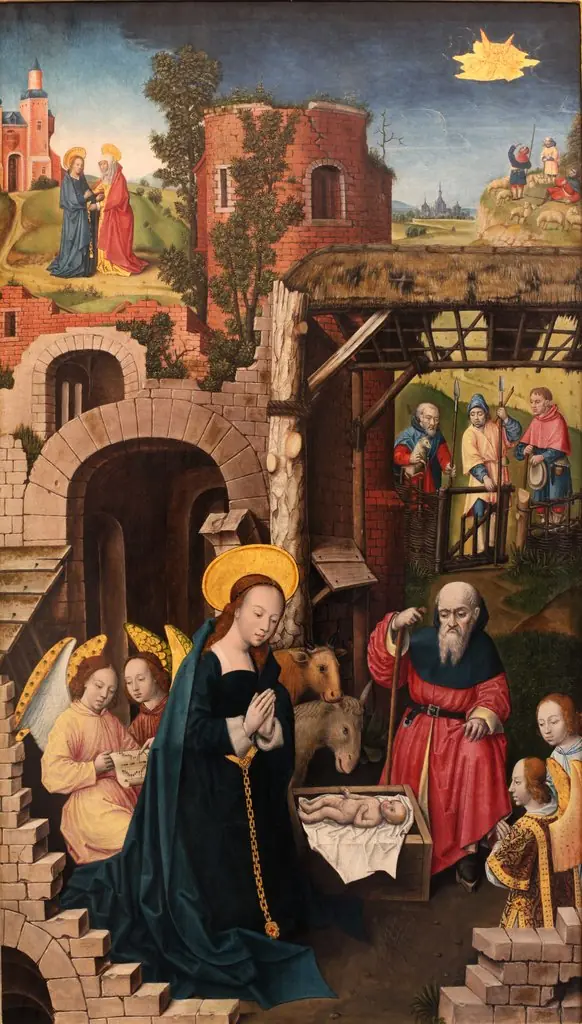
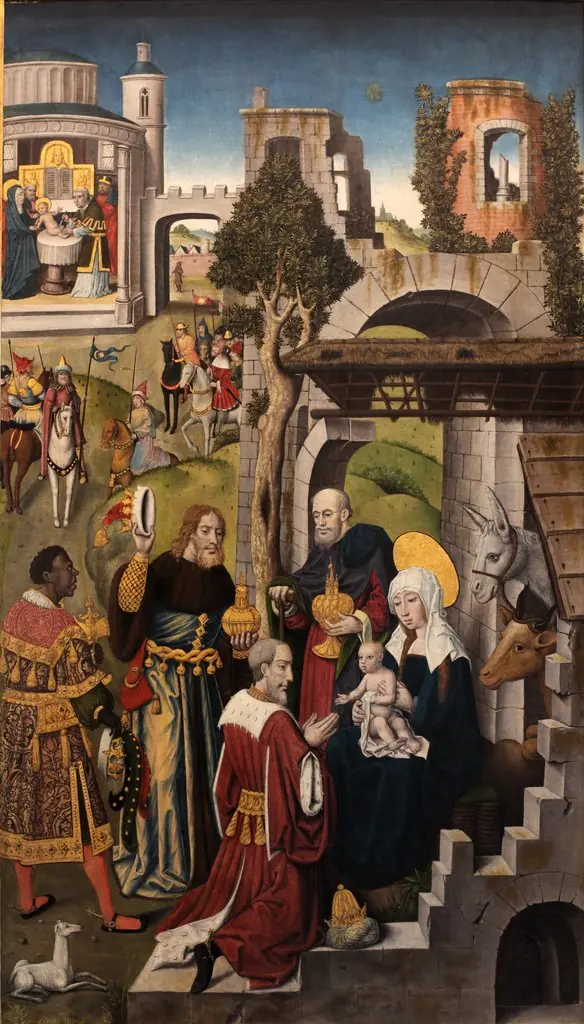
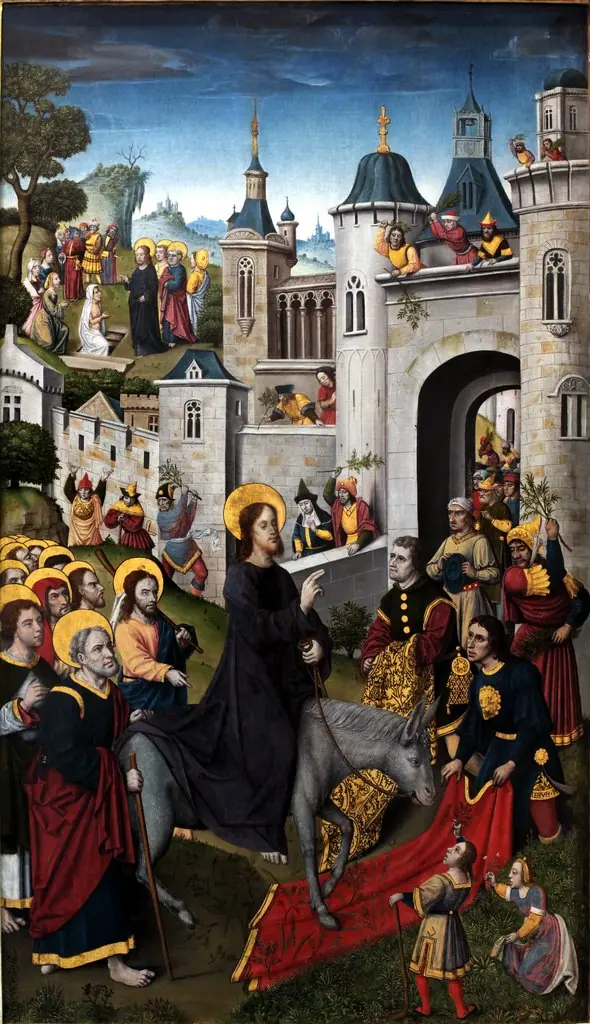
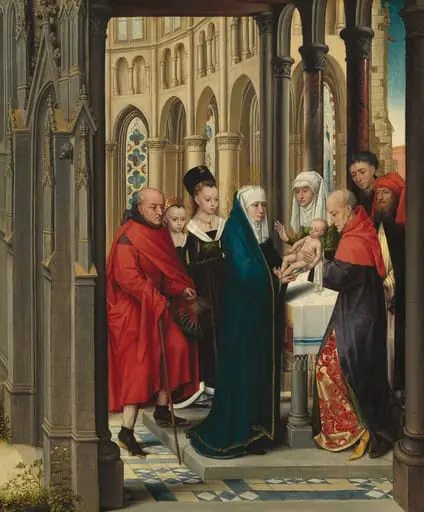
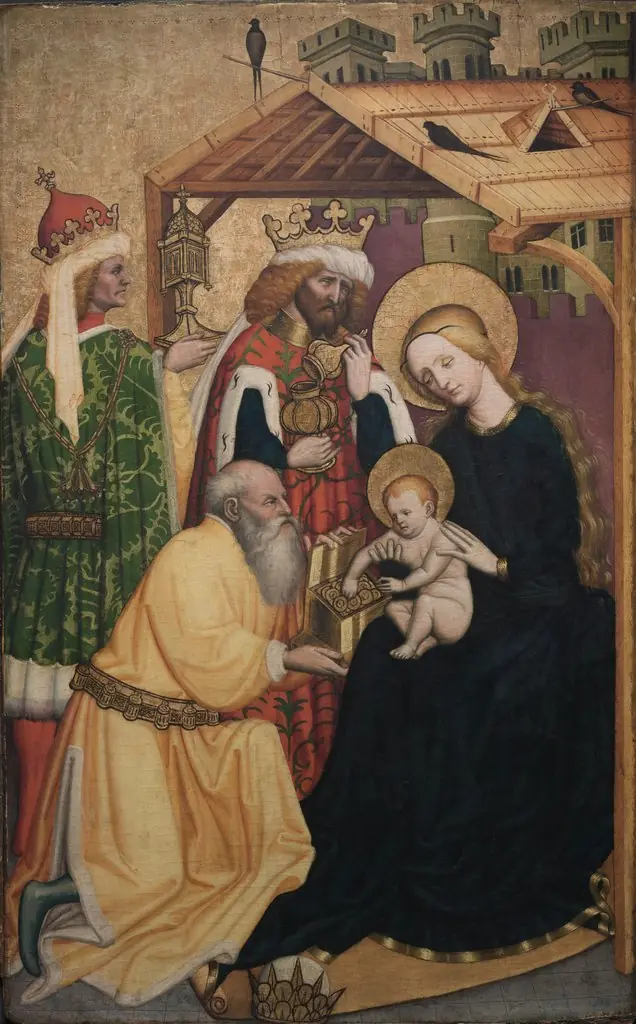
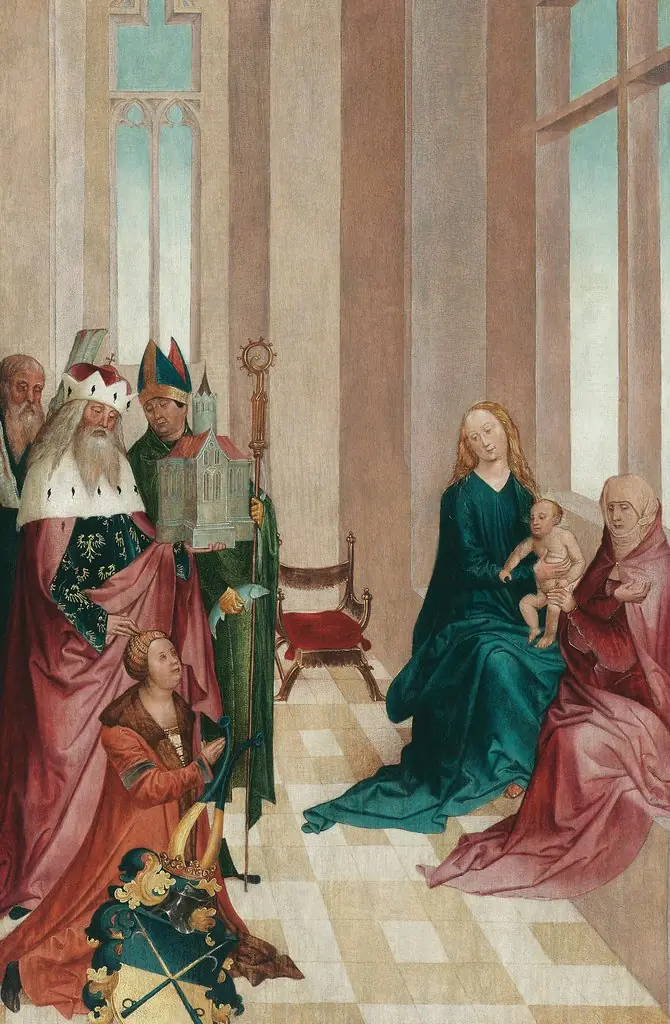
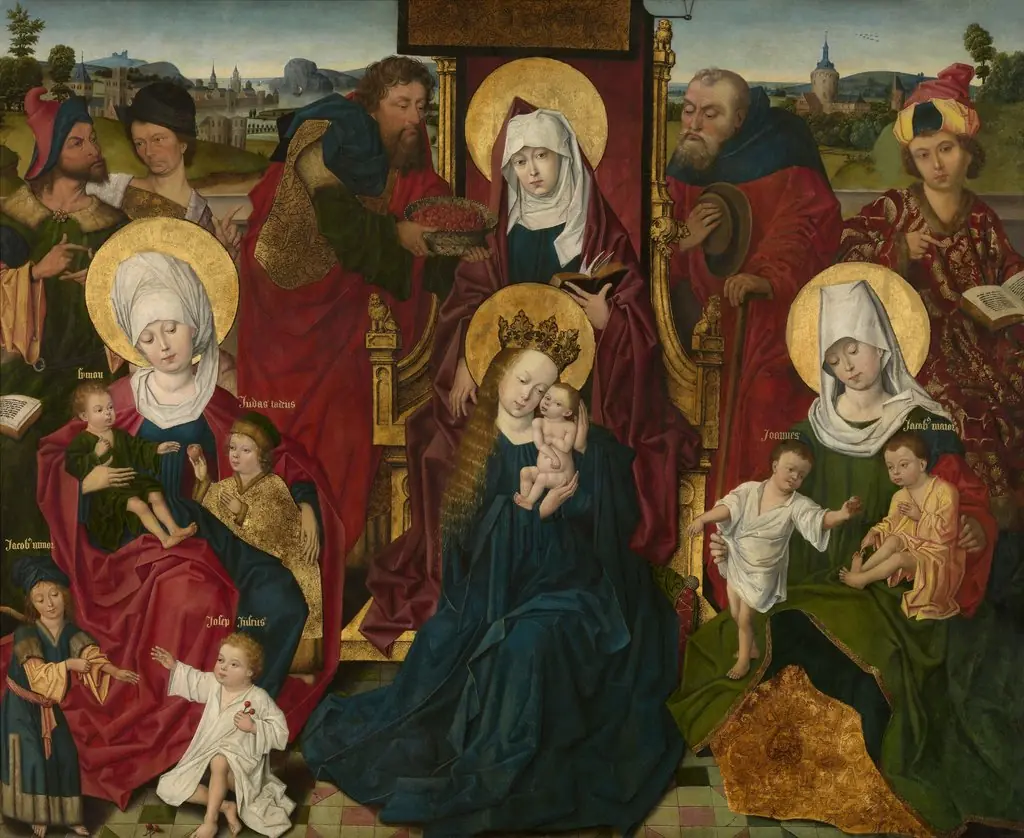
Presentation of Jesus Christ at the Temple is an oil painting by the Northern Renaissance artist Monogrammist AH. It dates from 1500 and is held in the collection of the Museum of Fine Arts of Lyon.
About this work
Overview
Created around 1500, this oil painting attributed to the anonymous figure known as Monogrammist AH portrays a biblical narrative within an architecturally defined courtyard. The work is part of the collection of the Musée des Beaux‑Arts de Lyon and measures a modest size typical of devotional panels of the period.
Subject & Meaning
The composition merges two episodes from the New Testament: the Flight into Egypt and the Presentation of the infant Jesus at the Temple. Central to the scene, a woman in a blue mantle cradles the child, while a priestly figure in white stands beside her, emphasizing the ritual of dedication and the protective journey of the Holy Family.
Technique & Style
Executed in oil on panel, the painting displays a balanced palette of blues, reds, and yellows, applied with fine brushwork that renders the patterned checkerboard floor and the stone archway with clarity. The figures are modeled with soft chiaroscuro, and the architectural backdrop is rendered with linear perspective, reflecting early Renaissance influences.
History & Provenance
The work entered the Museum of Fine Arts of Lyon in the early twentieth century, though its earlier ownership remains undocumented. Its attribution to Monogrammist AH stems from stylistic analysis linking it to other anonymous works sharing a similar monogram and compositional approach.
Context
During the turn of the sixteenth century, Northern European artists frequently combined multiple biblical scenes to convey theological continuity. This painting’s dual narrative aligns with contemporary devotional practices, offering viewers a visual meditation on both the Holy Family’s exile and their covenantal entry into Jewish worship.
Artist & collection
Artist
This German painter, active in the mid-1500s, left a small set of religious scenes in oil.