Artwork
Wooded Landscape
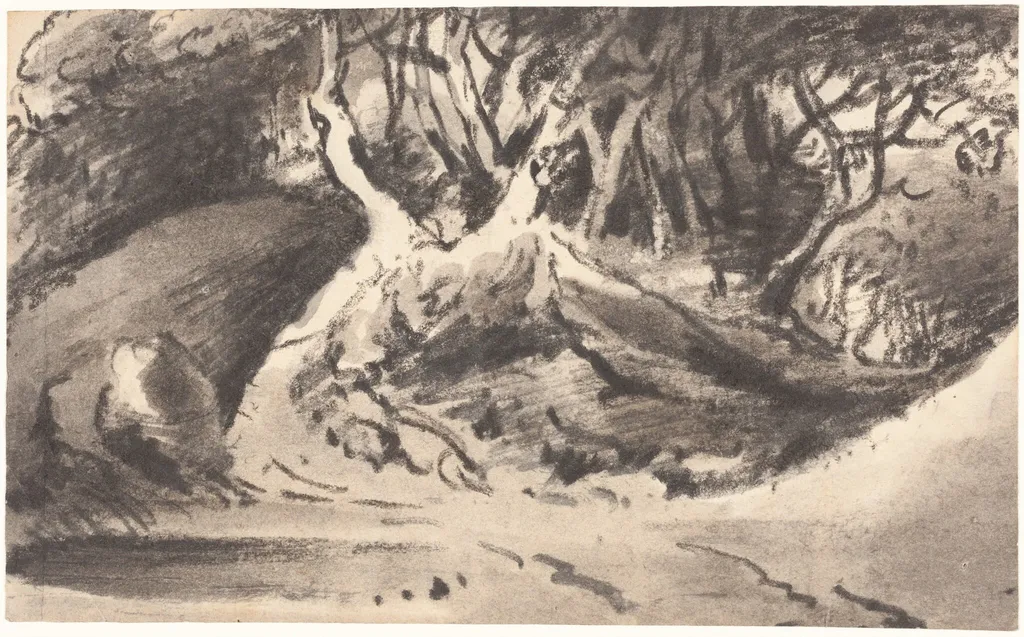
Wooded Landscape is a chalk drawing by the Romanticist artist Thomas, Dr. Monro. It dates from 1796 and is held in the collection of the National Gallery of Art. Created in 1796, this drawing by Thomas Monro depicts a quiet woodland scene rendered in black chalk and gray wash on wove paper.
About this work
Overview
Created in 1796, this drawing by Thomas Monro depicts a quiet woodland scene rendered in black chalk and gray wash on wove paper. The composition avoids human or architectural elements, focusing instead on the natural forms of trees and undergrowth. The tonal range is subdued, with dark areas dominating and subtle light filtering through the foliage, suggesting an overcast or twilight atmosphere.
Subject & Meaning
The subject is a solitary, unpopulated forest, emphasizing nature’s quiet autonomy. Without figures or structures, the scene invites contemplation of wilderness as an independent force. The absence of narrative or human presence aligns with emerging Romantic sensibilities that valued nature’s emotional and spiritual resonance over idealized or cultivated landscapes.
Technique & Style
Monro employed loose, fluid strokes of black chalk, layered with diluted gray wash to build depth and shadow. The texture is varied—hatched lines suggest foliage, while smudged washes evoke atmospheric haze. The handling is spontaneous, prioritizing mood over precision, with edges softened and forms suggested rather than defined, reflecting an expressive, almost improvisational approach.
History & Provenance
The work originates from Thomas Monro’s personal sketchbook, part of a series of landscape studies made during his travels in England. As a physician and amateur artist, Monro produced these drawings as exercises in observation and tonal experimentation. The piece remained within his family circle before entering institutional collections in the 20th century.
Context
Created during the late 18th century, the drawing reflects a shift in British art toward direct observation of nature and emotional response to landscape. Monro’s work paralleled the interests of Romantic artists who rejected formal academic conventions, favoring spontaneity and atmospheric effect. His sketches influenced younger contemporaries, including Turner, who studied under him.
Legacy
Though not widely exhibited in his lifetime, Monro’s drawings contributed to the development of British watercolor and landscape drawing traditions. His emphasis on tonal gradation and expressive mark-making helped pave the way for later 19th-century landscape artists who prioritized mood and naturalism over classical structure.
Artist & collection


 Study of Old Tree Trunk
 In the Woods (Dans les bois)
 The Reader: The Lecture under the Trees
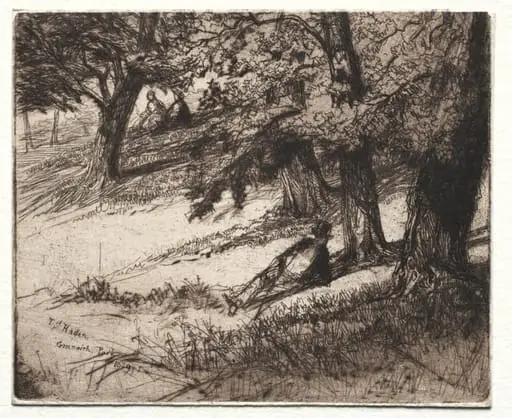 Sub Tegmine
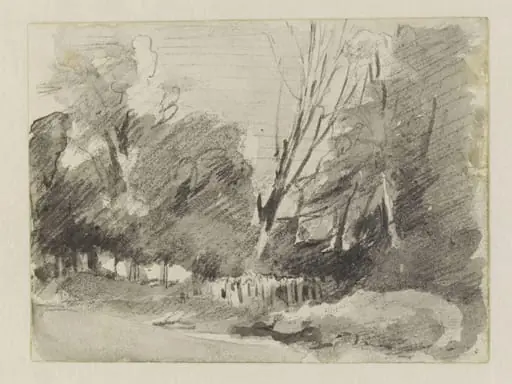 Two sketches on one sheet: a countryman walking, and a group of people beside two donkeys.
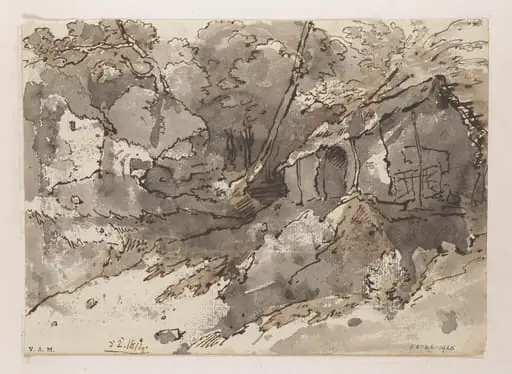 A ramshackle building amid trees and rocks, Bengal
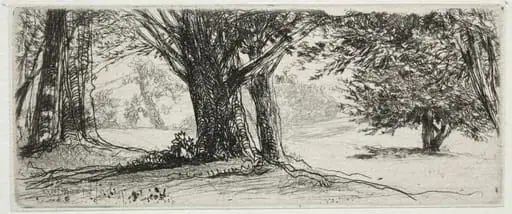 The Holly Field
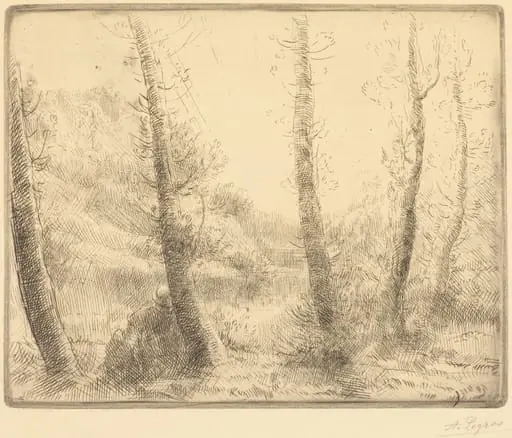 Small Lake (Le petit lac)
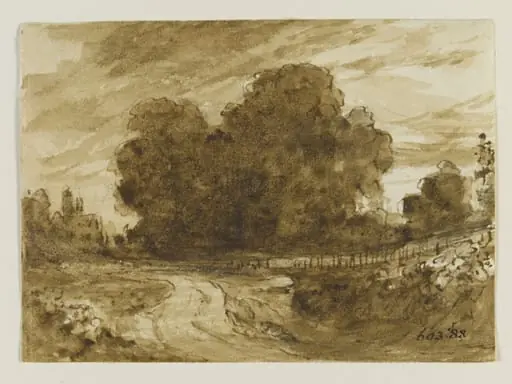 A country road with elm trees
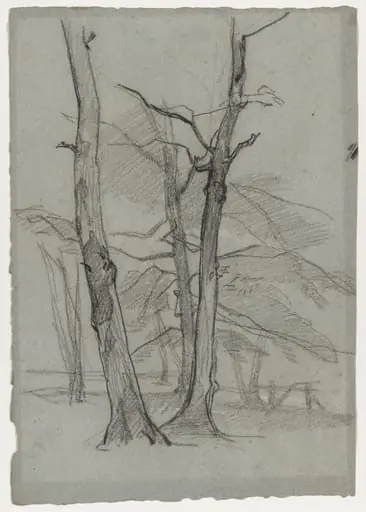 Landscape Study with Trees
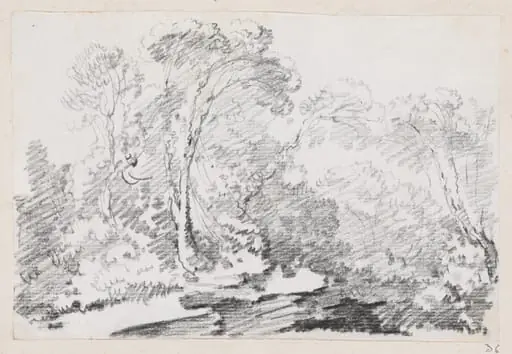 Trees
Trees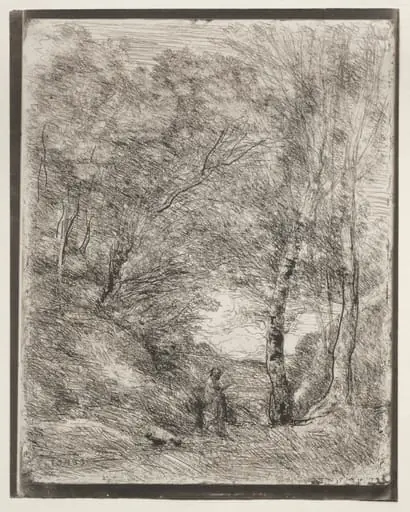 The Gardens of Horace