Artwork
A Squally Day
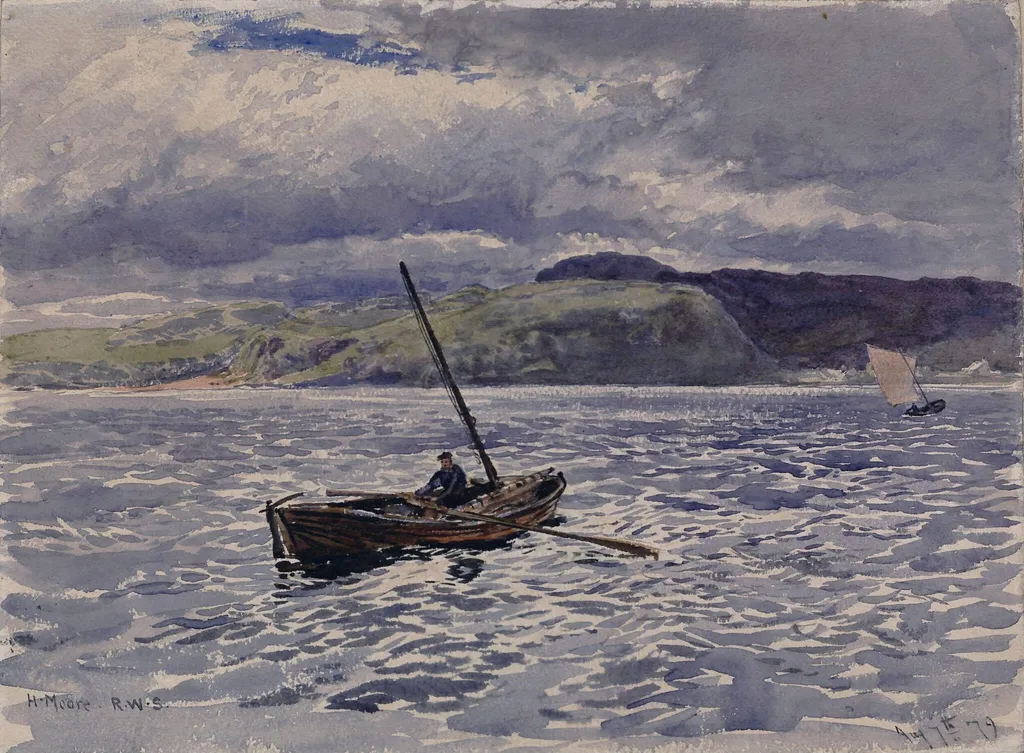
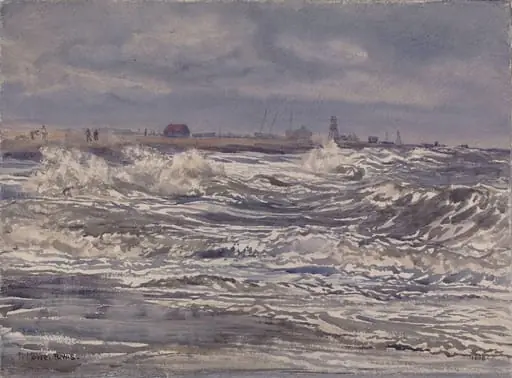
A Squally Day is a watercolor work on paper by the Impressionist artist Henry Moore. It dates from 1879 and is held in the collection of the Victoria and Albert Museum.
About this work
Overview
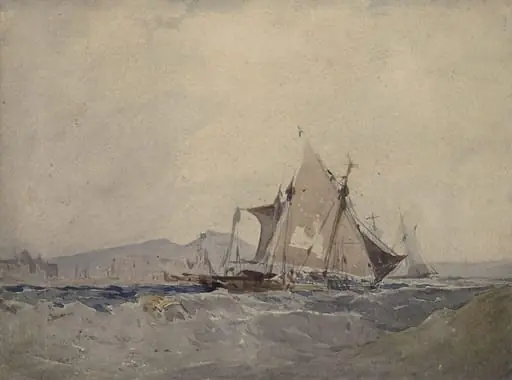
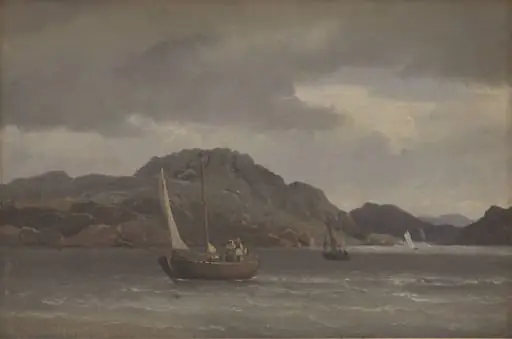
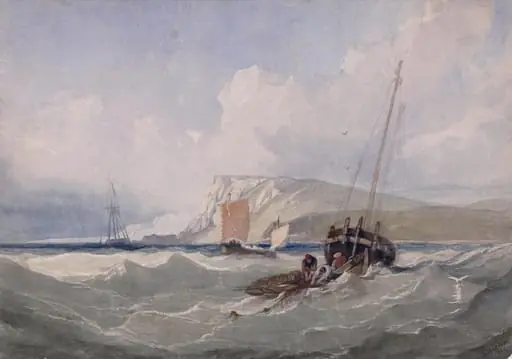
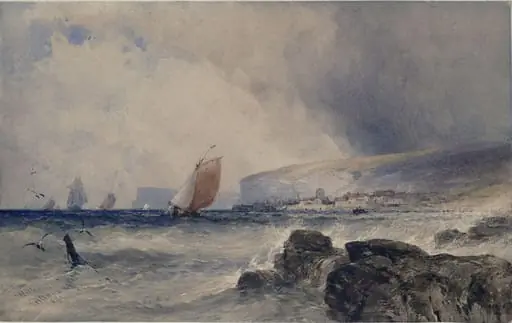
A Squally Day, a watercolour by Henry Moore, captures a moment of turmoil at sea. A small, solitary-occupied boat struggles on rough, white-capped waves, set against a dramatic, cloud-heavy sky and a distant, rocky shoreline.
Subject & Meaning
The subject is a lone figure in a boat amidst a stormy sea, conveying a sense of vulnerability and isolation. The distant shoreline and another tiny boat suggest a broader, potentially ominous, maritime context.
Technique & Style
Quick, loose brushstrokes characterize the piece, imbuing the water and sky with a sense of dynamic movement and immediacy. This approach prioritizes capturing the fleeting effects of light and motion over detailed precision.
Context
The stylistic emphasis on light and movement aligns with broader early 20th-century artistic movements, notably Impressionism, which similarly valued capturing ephemeral natural phenomena.
History & Provenance
No specific historical or provenance details are provided for 'A Squally Day' beyond its attribution to Henry Moore, highlighting a need for further research into its creation context and ownership history.
Legacy
The piece's legacy is not explicitly outlined, but its themes and style suggest it may contribute to the broader appreciation of maritime themes in 20th-century art and the evolution of watercolour techniques in capturing dynamic natural scenes.
Artist & collection

Artist
Henry Spencer Moore (30 July 1898 – 31 August 1986) was an English visual artist.