Artwork
Άτιτλο
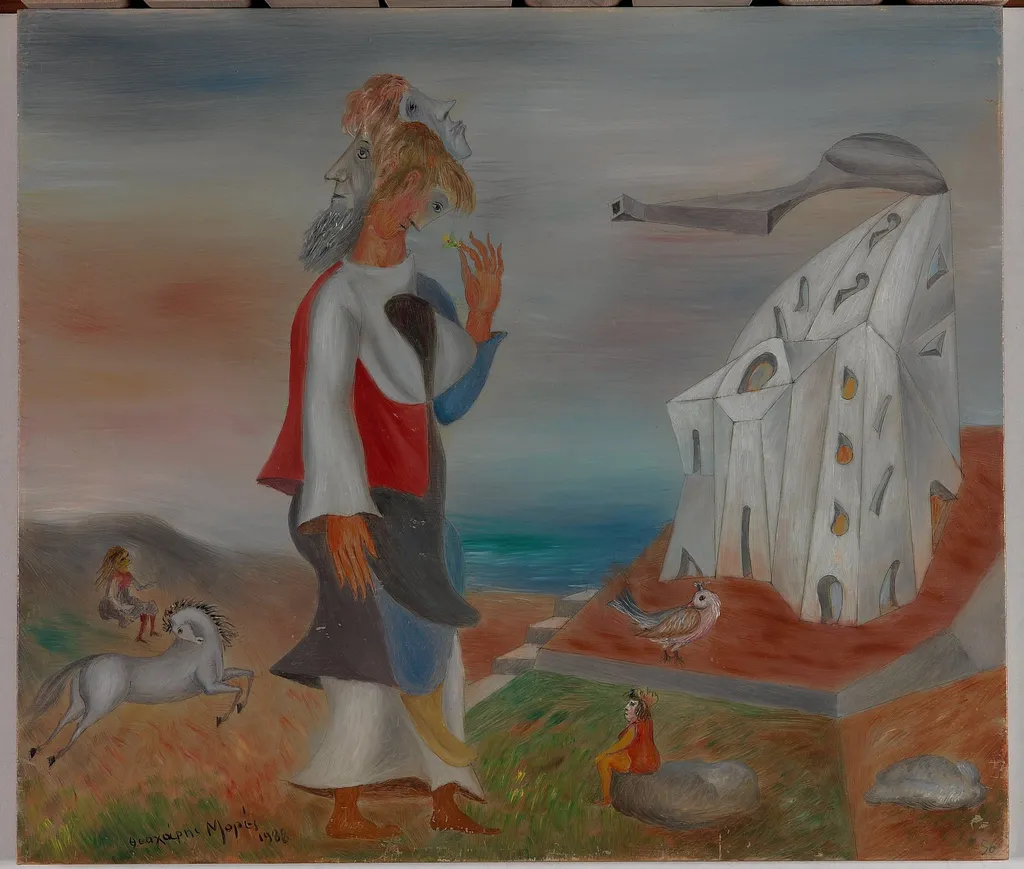
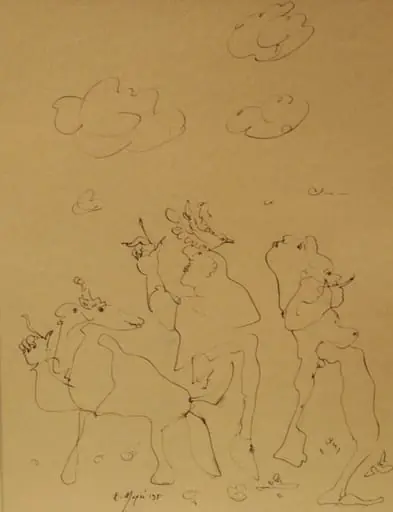
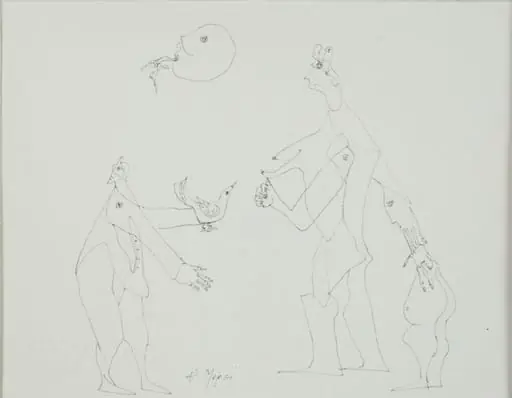
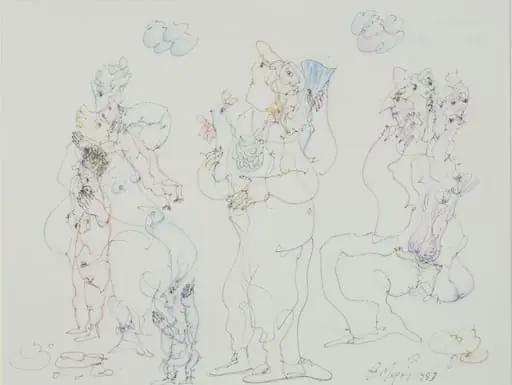
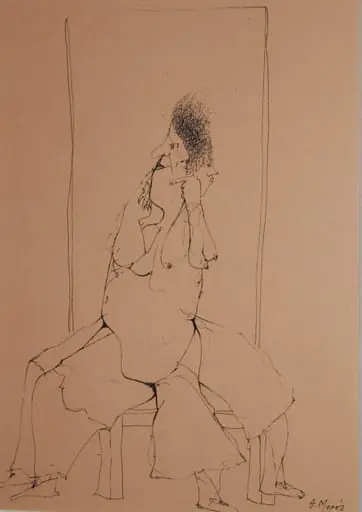
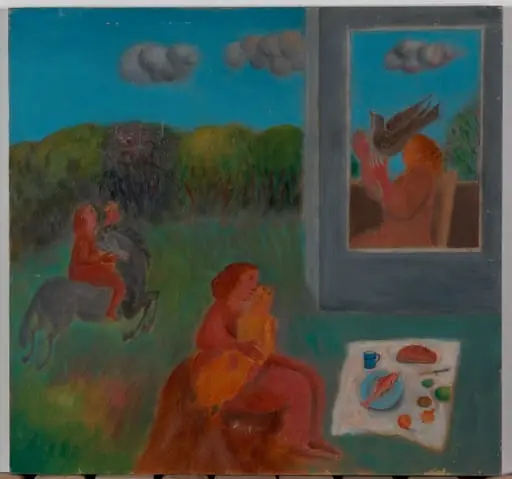
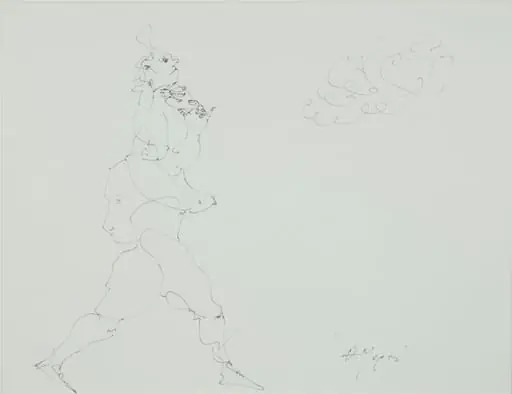
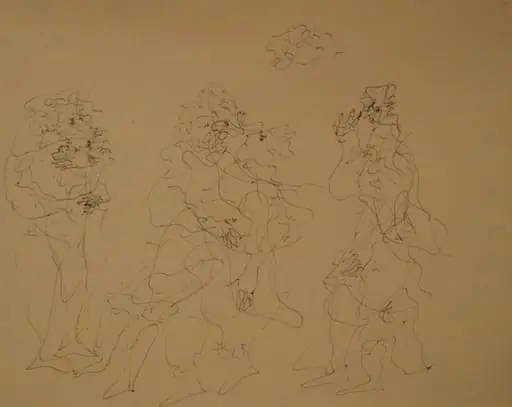
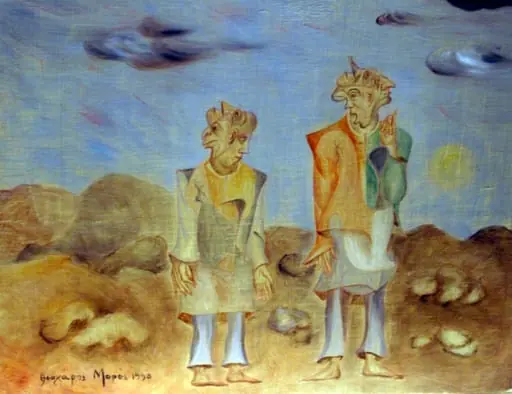
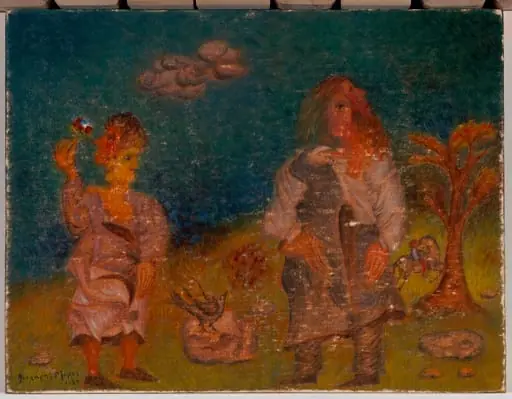
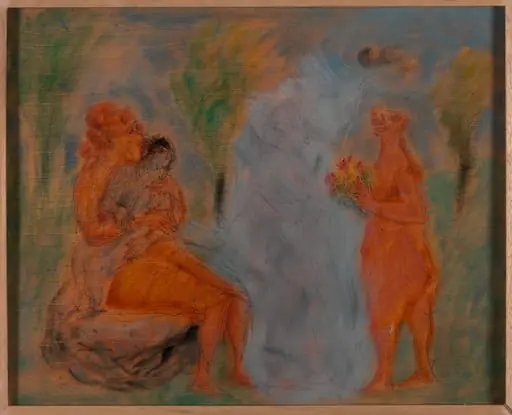
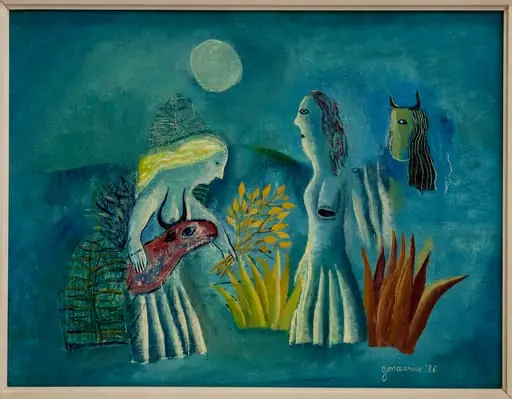
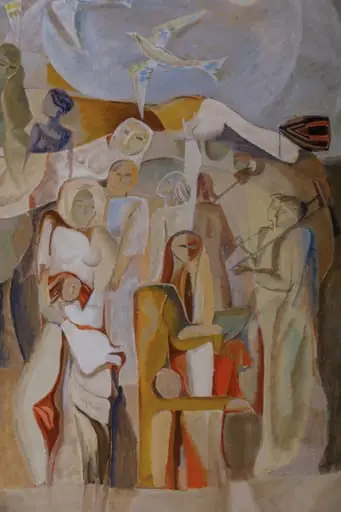
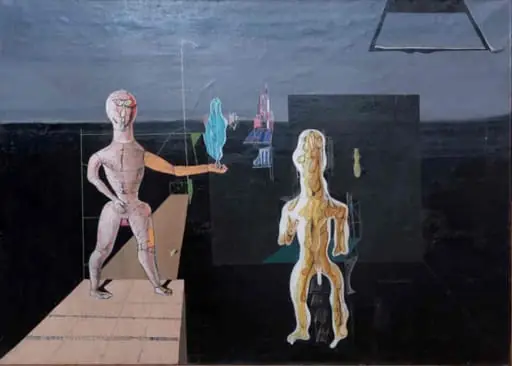
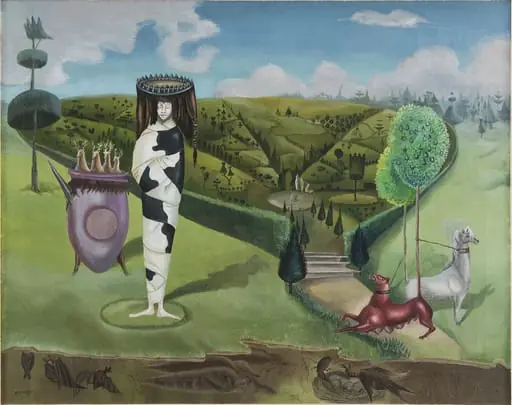
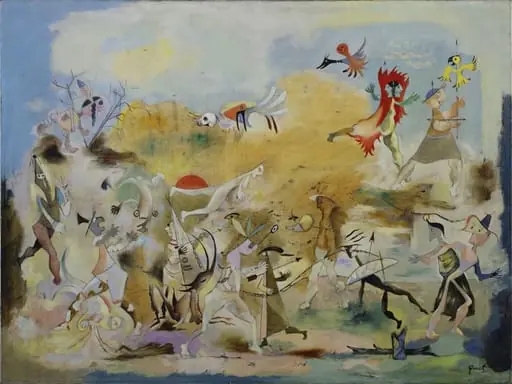
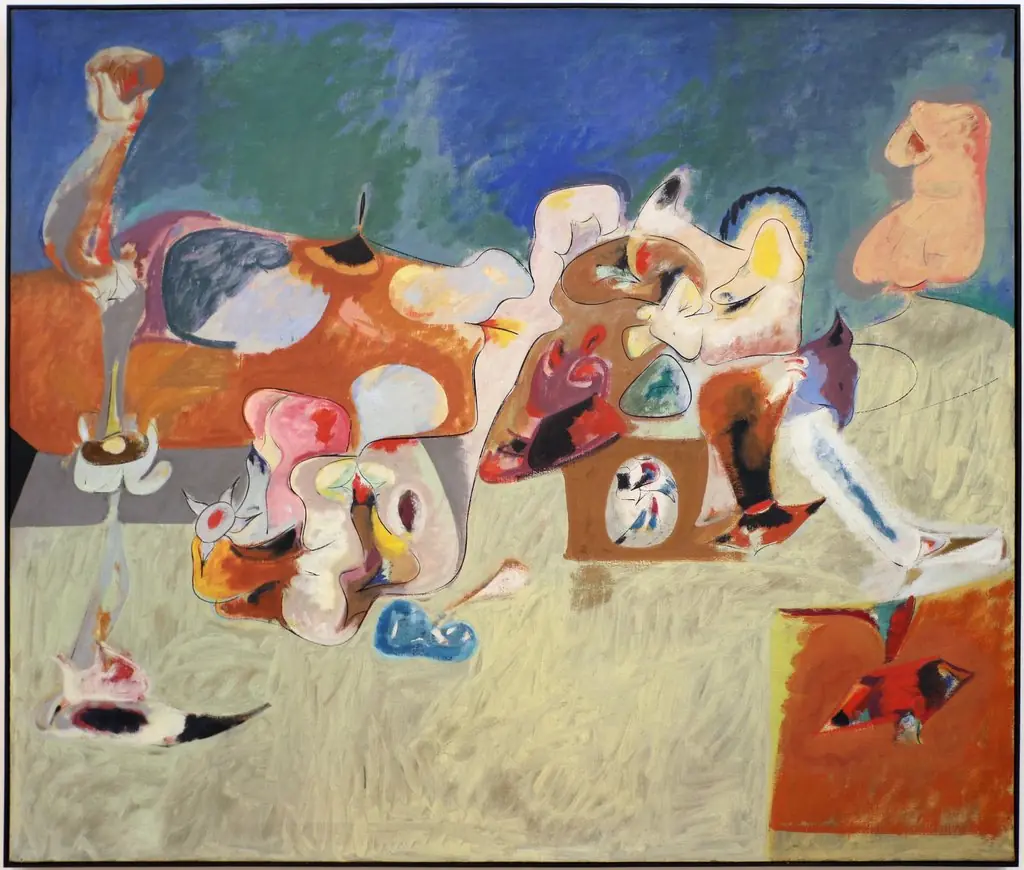
Άτιτλο is an unspecified painting by Theoharis Mores. It dates from 1975 and is held in the collection of the Metropolitan Organisation of Museums of Visual Arts of Thessaloniki – MOMus.
About this work
Overview
Created in 1975 by Theoharis Mores, this untitled painting is part of the Museum of Ethnography’s collection.
Created in 1975 by Theoharis Mores, this untitled painting is part of the Museum of Ethnography’s collection. It presents a solitary male figure in a sparse landscape, distinguished by a head with multiple faces. The composition includes symbolic elements—a white building with a pipe, a bird, a mounted horse—arranged around the central figure, suggesting layered narratives without clear resolution.
Subject & Meaning
The central figure’s multi-faced head implies internal multiplicity or fractured identity, possibly reflecting psychological or cultural dislocation. Surrounding objects—a rigid structure, a riderless horse, a bird—may symbolize isolation, movement, or observation. The absence of narrative clarity invites interpretation rooted in personal or collective memory rather than literal storytelling.
Technique & Style
Mores employs flat, unmodulated color and simplified forms to construct an ambiguous space. The gray sky and grassy ground create a muted backdrop, emphasizing the figure’s vivid white shirt and red vest. Details are rendered with precision but without realistic depth, favoring symbolic arrangement over naturalism. The style blends folk motifs with surrealist sensibilities.
History & Provenance
The work entered the Museum of Ethnography’s holdings shortly after its creation, likely through direct acquisition or donation by the artist. No public record of prior ownership exists. Its inclusion in an ethnographic institution suggests the museum viewed it as a cultural artifact reflecting contemporary Greek identity, rather than a conventional fine art piece.
Context
Produced during Greece’s post-junta cultural reawakening, the painting aligns with a broader movement of artists exploring identity, memory, and alienation. While not overtly political, its surreal imagery resonates with a society grappling with rapid modernization and historical rupture. Mores’s work shares affinities with other Greek artists who fused local symbolism with avant-garde forms.
Legacy
Though not widely exhibited beyond institutional circles, the painting remains a distinctive example of 1970s Greek figurative art. Its enigmatic imagery continues to attract scholarly attention for its fusion of personal symbolism and cultural commentary. Mores’s use of layered visual metaphors influenced a small cohort of later artists interested in psychological portraiture.
Artist & collection
Artist
This guy painted the same blank word—*Άτιτλο*, Greek for “Untitled”—over and over, as if he couldn’t be bothered to invent new titles.
Museum
Metropolitan Organisation of Museums of Visual Arts of Thessaloniki – MOMus
Continue through works from the same source collection.