Artwork
Mary Magdalene
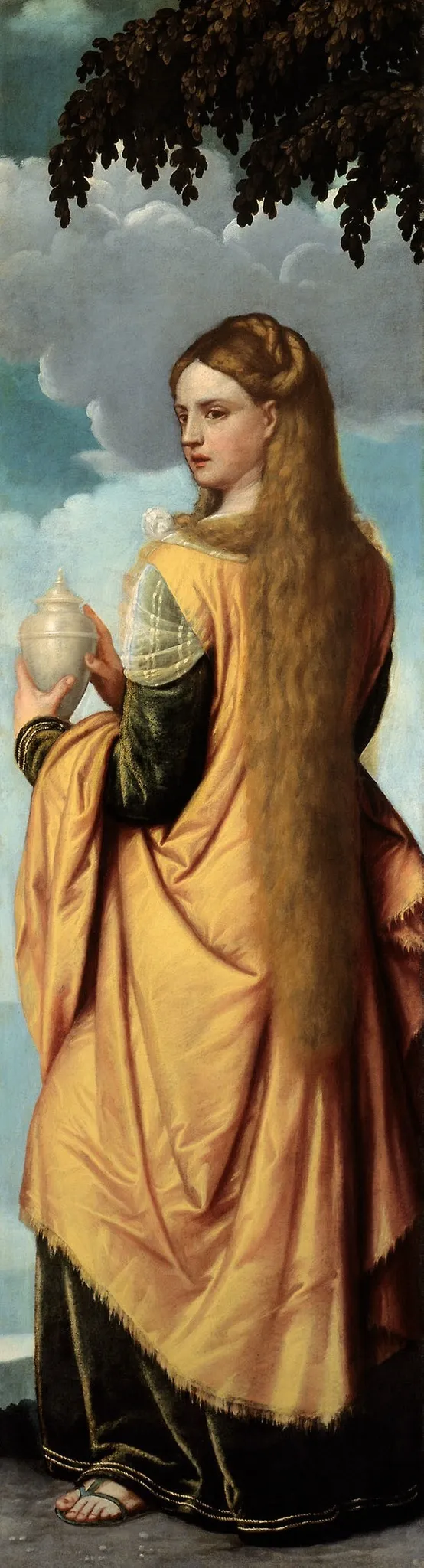
Mary Magdalene is an oil painting by the Mannerist artist Moretto da Brescia. It dates from 1545 and is held in the collection of the Art Institute of Chicago.
About this work
Overview
The composition combines a serene sky with a solitary figure, reflecting the artist’s measured approach to religious subjects.
Created in 1545, this oil on canvas portrays Mary Magdalene and is part of the collection of the Art Institute of Chicago. The work originates from the hand of Alessandro Bonvicino, better known as Moretto da Brescia, a painter whose career was centered in Brescia during the late Renaissance. The composition combines a serene sky with a solitary figure, reflecting the artist’s measured approach to religious subjects.
Subject & Meaning
The central figure is identified as Mary Magdalene, presented in a contemplative stance. She wears a yellow robe over a dark undergarment, her long brown hair flowing freely, and holds a white vase in her right hand—a possible reference to the biblical motif of anointing or penitence. The calm atmosphere and modest gestures emphasize spiritual reflection rather than dramatic narrative.
Technique & Style
Executed in oil on canvas, the painting displays hallmarks of the Mannerist period, such as elongated proportions and a refined palette. Moretto’s handling of light creates a gentle modeling of the figure against a clear blue sky dotted with white clouds. The smooth brushwork and restrained coloration align with the artist’s reputation for subdued, harmonious altarpieces.
History & Provenance
After its creation, the work remained in private or ecclesiastical hands before entering the American museum sector. It was acquired by the Art Institute of Chicago, where it now serves as a representative example of Moretto’s oeuvre outside its native Italian context. The painting’s provenance reflects the broader 19th‑20th‑century interest in Northern Italian Renaissance art.
Context
Moretto da Brescia worked primarily in the Lombard region, producing altarpieces noted for their calm dignity. This painting, while not an altarpiece, shares the same restrained aesthetic that characterizes his church commissions, many of which still occupy their original settings. The work thus illustrates how the artist applied his signature serenity to a single‑figure devotional image.
Artist & collection
Artist
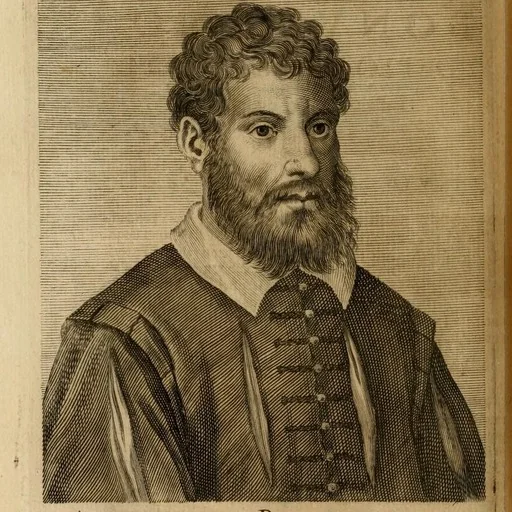
Alessandro Bonvicino (also Buonvicino) (c. 1498 – possibly 22 December 1554), more commonly known as Moretto, or in Italian Il Moretto da Brescia (the Moor of Brescia), was an Italian Renaissance painter from Brescia,…


![Saint Barbara [left wing exterior], by Master of the Starck Triptych](https://artifactworldgallery.com/img/master-of-the-starck-triptych--saint-barbara-left-wing-exterior--dc6b24dbebc95d32-w320.webp)