Artwork
Venus disarming Love
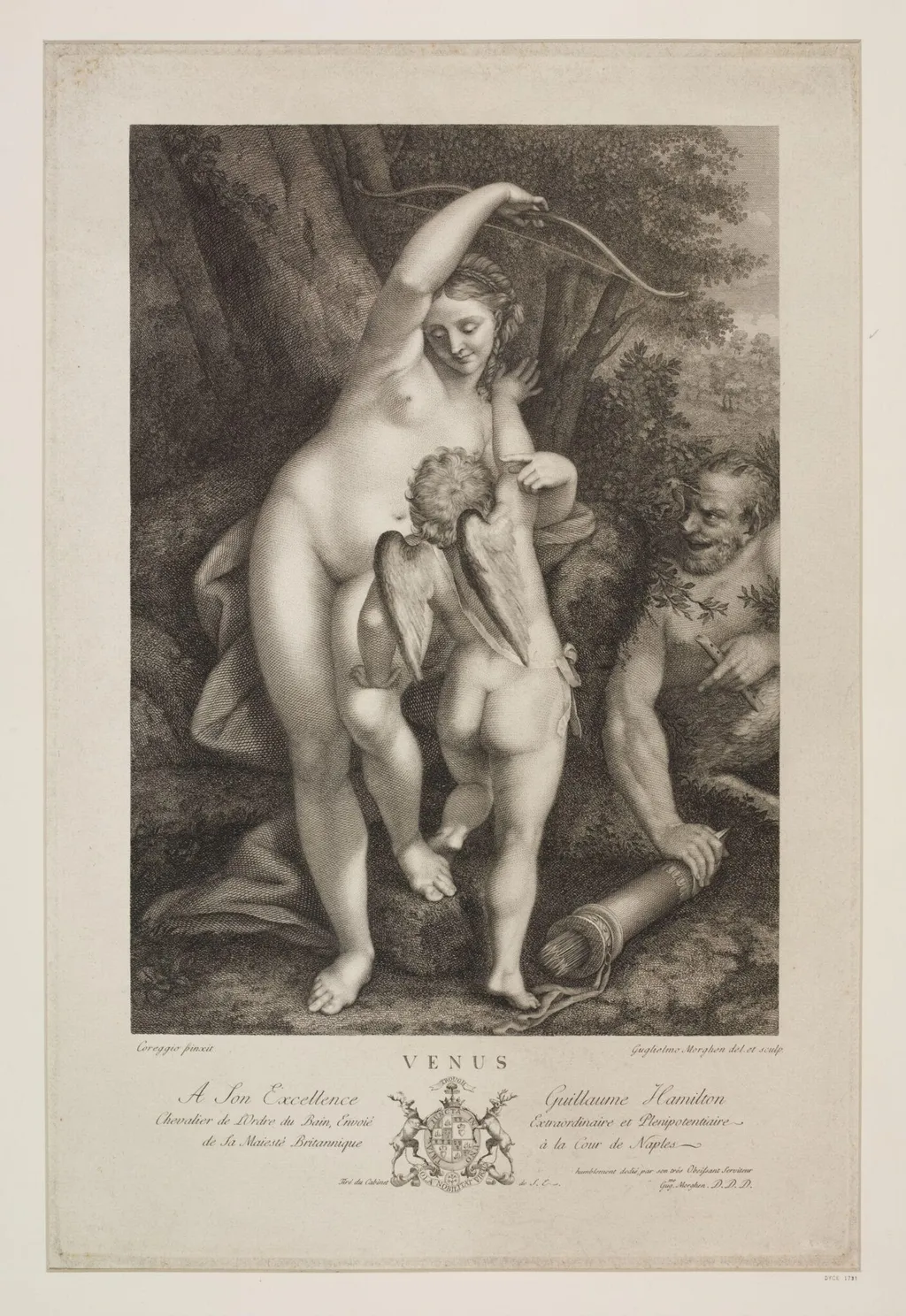
Venus disarming Love is a print by Guglielmo Morghen. It dates from 1850 and is held in the collection of the Victoria and Albert Museum.
About this work
Overview
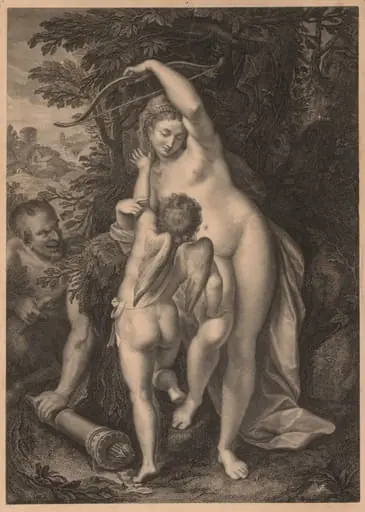
Venus disarming Love is an 1850 print by Guglielmo Morghen, based on a composition by Correggio. The work depicts a mythological scene on paper.
Subject & Meaning
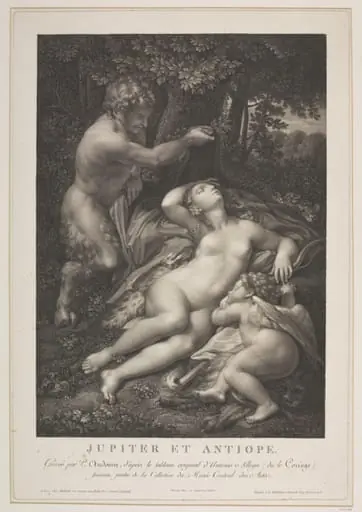
The print shows Venus (nude, with a draped cloth) removing weapons from Cupid (a small, winged, nude child with a quiver). A bearded, leaf-adorned figure (possibly a god or satyr) observes from the right. The scene conveys Venus's control over love's power.
Technique & Style
Morghen's printmaking technique faithfully interprets Correggio's original composition, with nuanced rendering of nudity, textures (leaves, cloth), and the expressive poses of the mythological figures.
History & Provenance
Produced in 1850 by Guglielmo Morghen, the print's provenance is not detailed here, but its basis in Correggio's work situates it within a tradition of artistic homage.
Context
Similar to other artworks at institutions like the Victoria and Albert Museum, this print reflects 19th-century interest in classical mythology and Renaissance inspirations.
Legacy
As a print based on Correggio's design, Venus disarming Love contributes to the dissemination of Renaissance artistic themes throughout the 19th century, though its specific impact is not elaborated here.
Artist & collection
Artist
Guglielmo Morghen made crisp black-and-white prints in the late 1700s and early 1800s.