Artwork
Flagellation
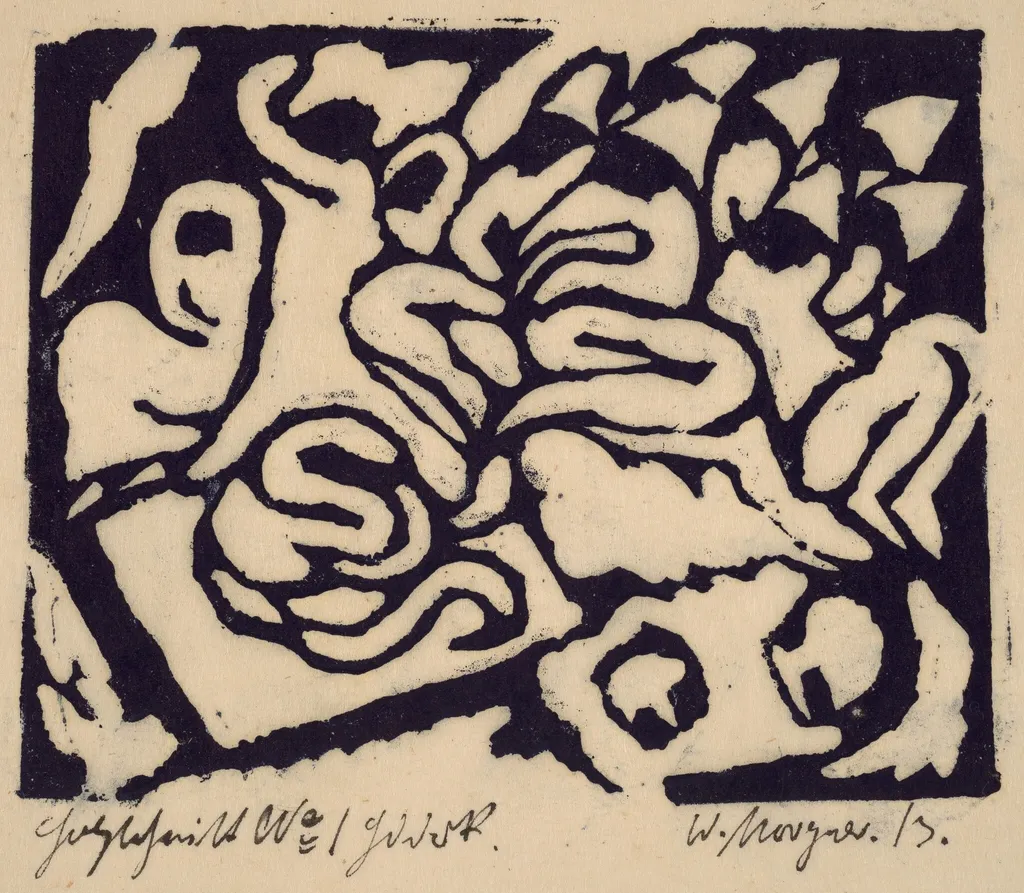
Flagellation is a print by Wilhelm Morgner. It dates from 1913 and is held in the collection of the National Gallery of Art.
About this work
Overview
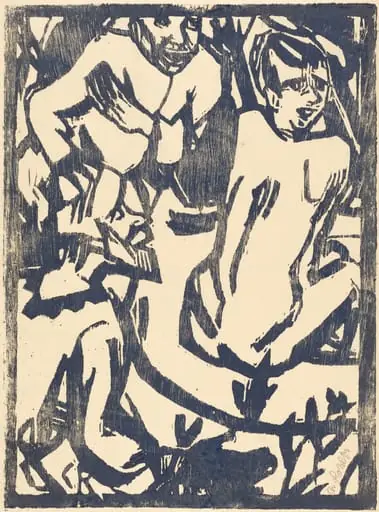
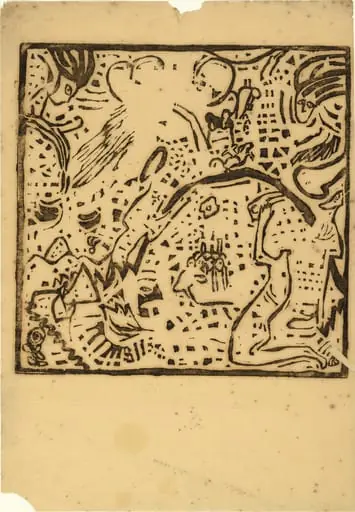
Rendered in a single shade of blue on laid tissue paper, the work presents a dense network of interlacing lines that fill the entire square format.
Flagellation, executed in 1913, is a linocut print by German modernist Wilhelm Morgner. Rendered in a single shade of blue on laid tissue paper, the work presents a dense network of interlacing lines that fill the entire square format. The composition is abstract, with the lines resembling tangled roots or vines, and the surface shows both smooth expanses and areas where the ink has bled, creating a varied texture.
Technique & Style
Morgner employed linoleum as his matrix, carving the design with simple cutting tools before rolling blue ink onto the surface. The press onto thin, laid paper produced uneven pressure, resulting in irregular ink deposits and occasional bleeding at the edges. The stark monochrome palette and the emphasis on line over form align the piece with early twentieth‑century avant‑garde experiments in printmaking, where the materiality of the process was foregrounded.
Subject & Meaning
The title suggests a reference to the medieval practice of flagellation, yet the image offers no literal depiction of bodies or instruments. Instead, the chaotic entanglement of lines may evoke the psychological intensity associated with self‑punishment or ritual, inviting viewers to contemplate abstraction as a conduit for emotional or symbolic content rather than narrative representation.
History & Provenance
Created during the brief but prolific period of Morgner’s career, Flagellation predates his conscription and untimely death in World War I. The print has circulated among private collections and museum holdings that focus on German Expressionism, though specific ownership records remain limited due to the work’s early date and the artist’s limited output.
Context
Morgner’s 1913 linocuts emerged amid a flourishing of experimental print media in Germany, where artists such as Ernst Ludwig Kirchner and Emil Nolde were also exploring bold graphic languages. The work reflects the broader shift toward abstraction and the use of industrial materials, positioning Morgner within the avant‑garde currents that sought to break from academic tradition.
Own this work as a print
Artist & collection