Artwork
Acker mit Weib (Woman in a Field)
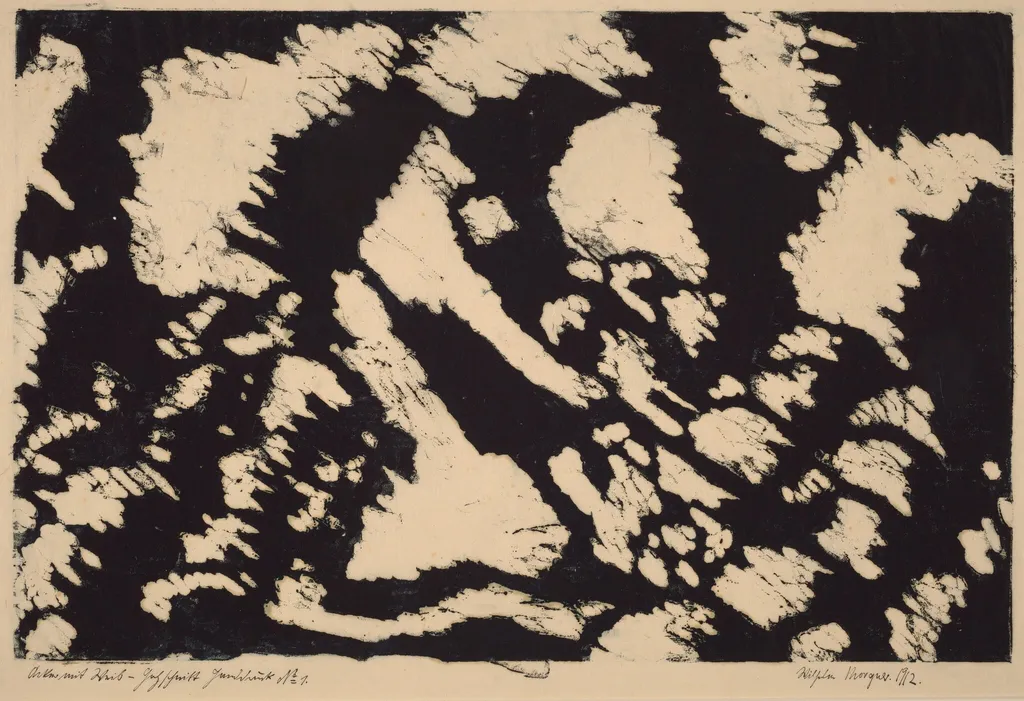
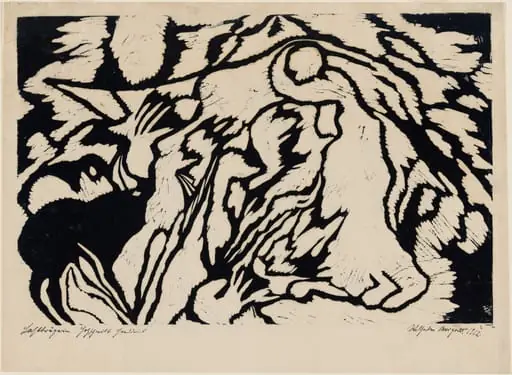
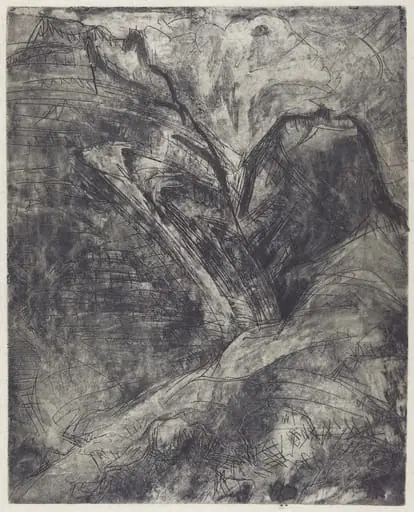
Acker mit Weib (Woman in a Field) is an ink print by Wilhelm Morgner. It dates from 1912 and is held in the collection of the National Gallery of Art.
About this work
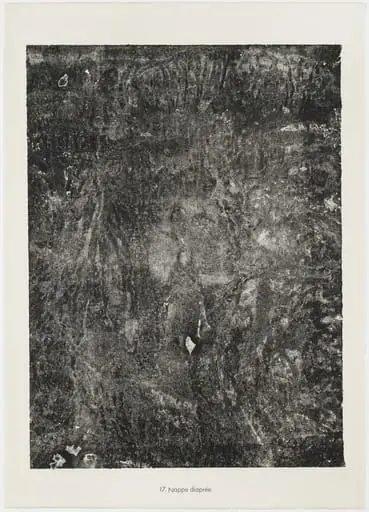
The design looks like clumps of earth or clouds, with some thin lines cutting through the middle.
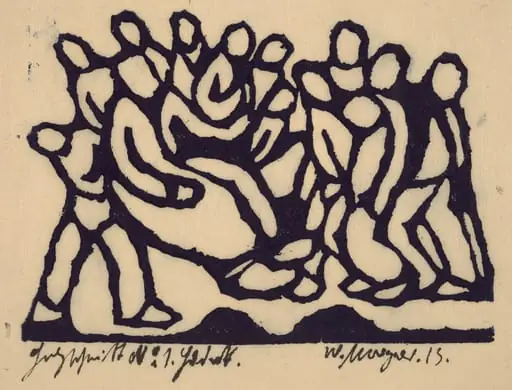
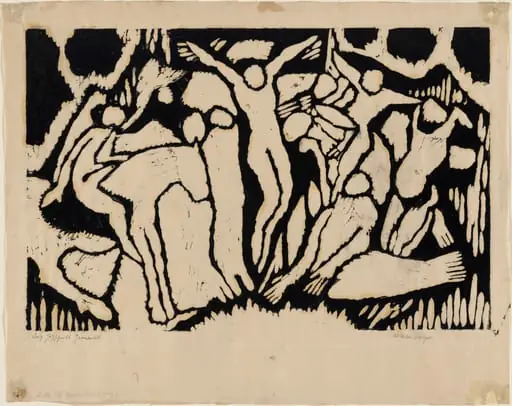
This image shows a black-and-white pattern of irregular shapes. The design looks like clumps of earth or clouds, with some thin lines cutting through the middle. The edges are uneven, and the whole piece has a rough, textured feel.
The artist used a printing method that leaves marks from the wood blocks. The small writing at the bottom names the artist and the year—1912.
Next, check out the technique: woodcut.
Overview
Wilhelm Morgner’s 1912 woodcut titled *Acker mit Weib* (Woman in a Field) is a monochrome print executed on Japan tissue. The work bears the artist’s signature and date in small lettering at the bottom, confirming its authorship and year of production.
Subject & Meaning
Although the title suggests a rural scene with a woman, the image consists of irregular, cloud‑like masses and thin intersecting lines rather than a literal depiction. The abstracted forms evoke a landscape of earth or sky, leaving the figure implied rather than rendered.
Technique & Style
The piece is created by carving a wood block and printing the incised surface onto delicate Japan paper, a process that leaves characteristic grainy impressions. The uneven edges and textured surface result from the woodcut’s tactile qualities, emphasizing line and contrast over detail.
Context
Produced during the early phase of Morgner’s career, the work reflects the broader German Expressionist interest in simplifying forms and exploring emotional resonance through bold, graphic means. The use of Japan tissue aligns with contemporary printmakers’ preference for fine, absorbent paper that captures the crispness of woodcut lines.
Artist & collection