Artwork
Untitled
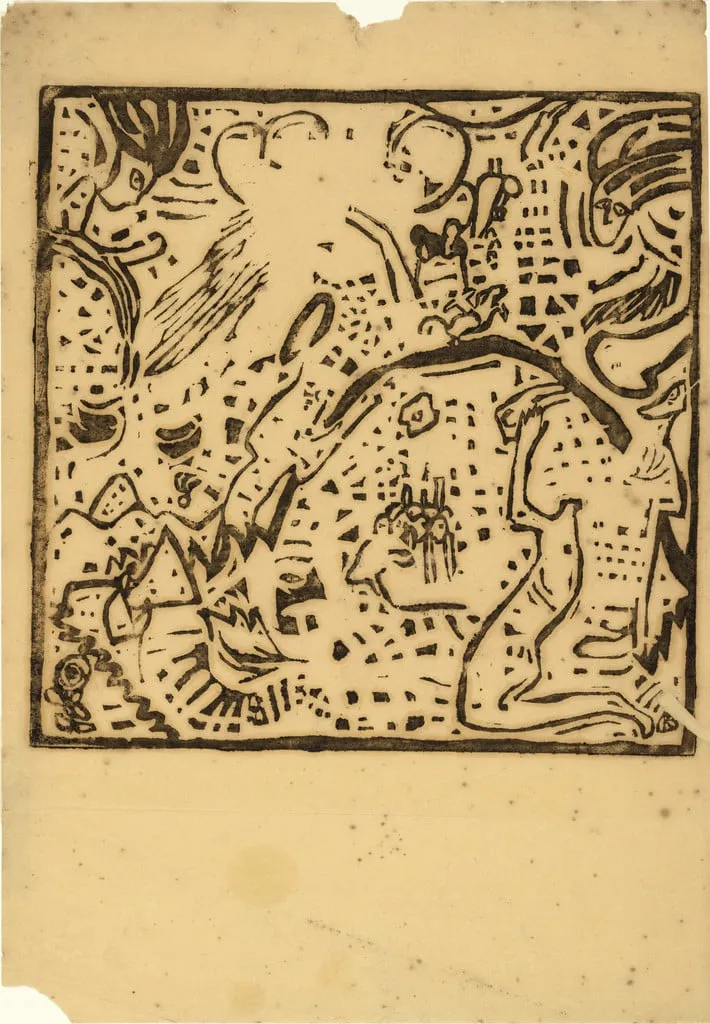
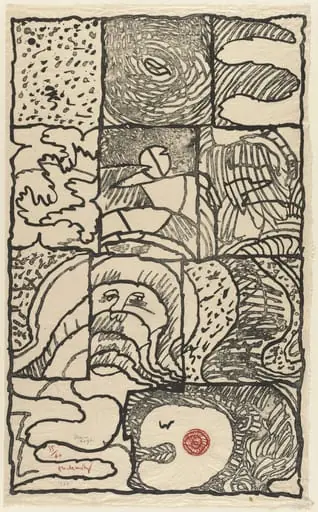
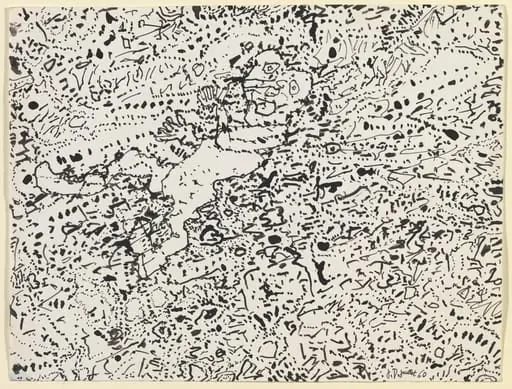
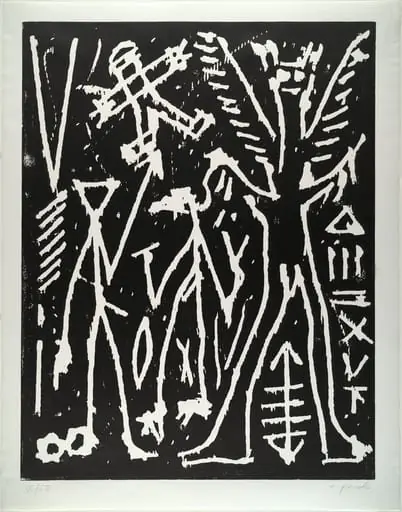
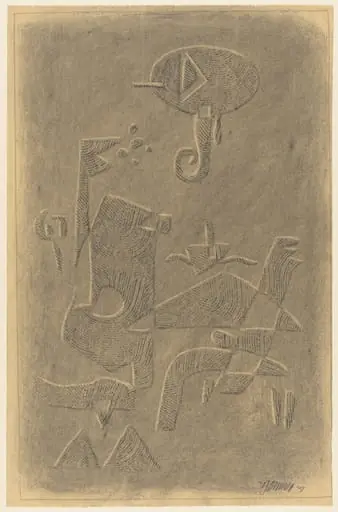
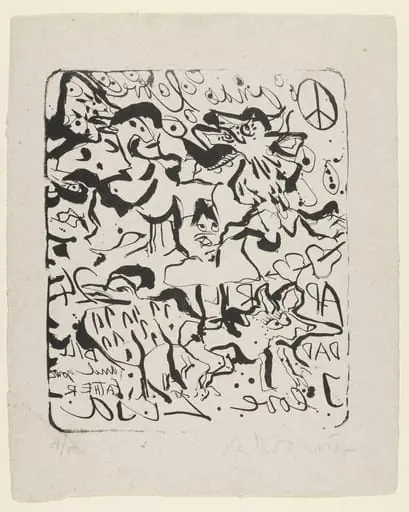
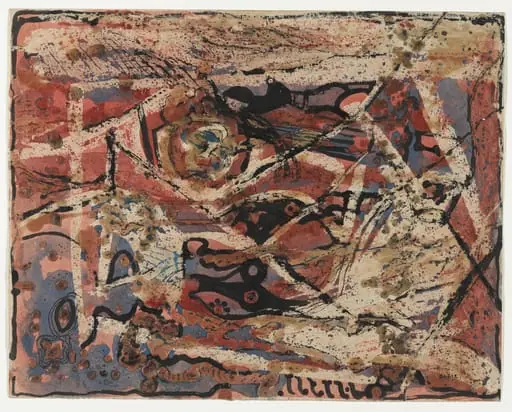
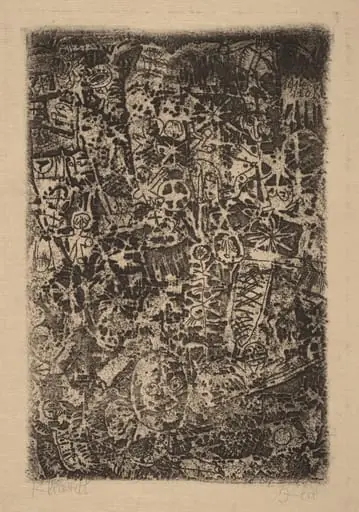
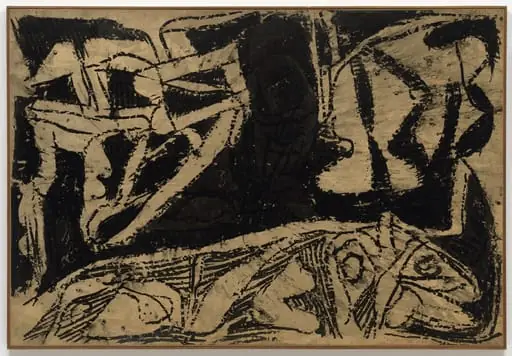
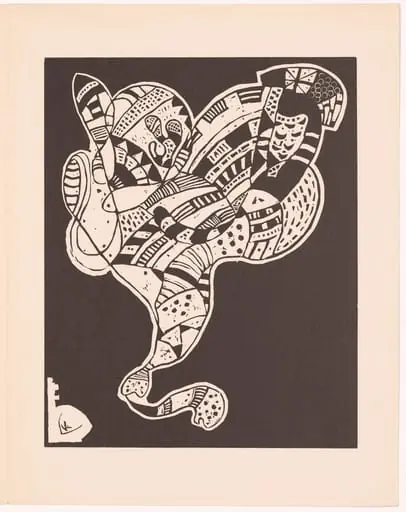
Untitled is an ink print by Wassily Kandinsky. It dates from 1911 and is held in the collection of the Museum of Modern Art. Created in 1911, this woodcut by Vasily Kandinsky is one of many experimental prints made during his formative years in Germany.
About this work
Overview
The work was produced using traditional woodcut techniques, involving carved blocks and inked impressions on paper, emphasizing the materiality of the medium.
Created in 1911, this woodcut by Vasily Kandinsky is one of many experimental prints made during his formative years in Germany. It reflects his transition from representational imagery toward abstraction, a shift aligned with his broader theoretical writings on non-objective art. The work was produced using traditional woodcut techniques, involving carved blocks and inked impressions on paper, emphasizing the materiality of the medium.
Subject & Meaning
The composition resists clear narrative identification. Interwoven black lines and dots suggest fragmented figures, organic forms, and possible animal silhouettes, but none are definitively rendered. Kandinsky intended these elements to evoke inner emotional states rather than depict external reality. The ambiguity invites contemplation, aligning with his belief that art should communicate spiritual resonance beyond literal representation.
Technique & Style
The print was made by carving into a wooden block, removing areas that would remain white, then inking and pressing the surface onto paper. Line weight varies deliberately—thick strokes anchor the composition, while fine dots and thin lines create rhythm and tension. The dense arrangement of marks balances chaos and order, demonstrating Kandinsky’s control over the medium’s inherent constraints to achieve visual harmony.
History & Provenance
Kandinsky produced this work during his time in Munich, shortly after leaving the Academy of Fine Arts and before co-founding the Blue Rider group. It belongs to a series of early abstract prints made between 1910 and 1913, when he was exploring the potential of non-representational forms. The print’s early date situates it within his critical phase of artistic evolution, preceding his more widely recognized paintings.
Context
In 1911, European art was undergoing radical transformation. Kandinsky’s woodcut emerged alongside movements like Expressionism and early Futurism, all challenging academic norms. His engagement with Theosophy and music theory informed his belief that color and form could convey spiritual truths. This print reflects his effort to synthesize these ideas into a visual language independent of traditional subject matter.
Legacy
Though less known than his paintings, Kandinsky’s woodcuts played a vital role in expanding the boundaries of printmaking as a vehicle for abstraction. This work contributed to the legitimization of non-representational forms in graphic arts, influencing later generations of printmakers and abstract artists who sought to prioritize emotional and spiritual expression over depiction.
Artist & collection
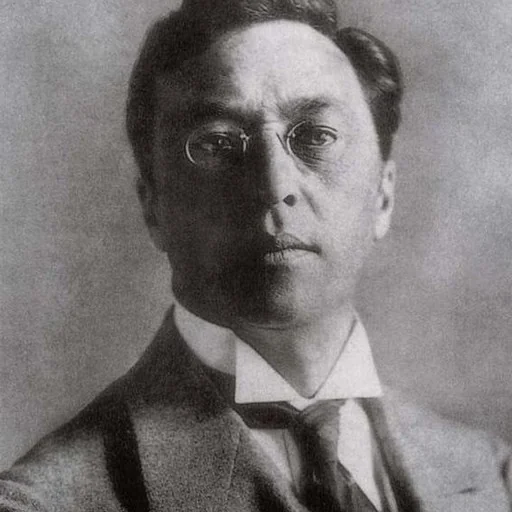
Artist
Wassily Wassilyevich Kandinsky (16 December 1866 – 13 December 1944) was a Russian painter and art theorist active in Germany during the late Belle Époque and Interwar eras.