Artwork
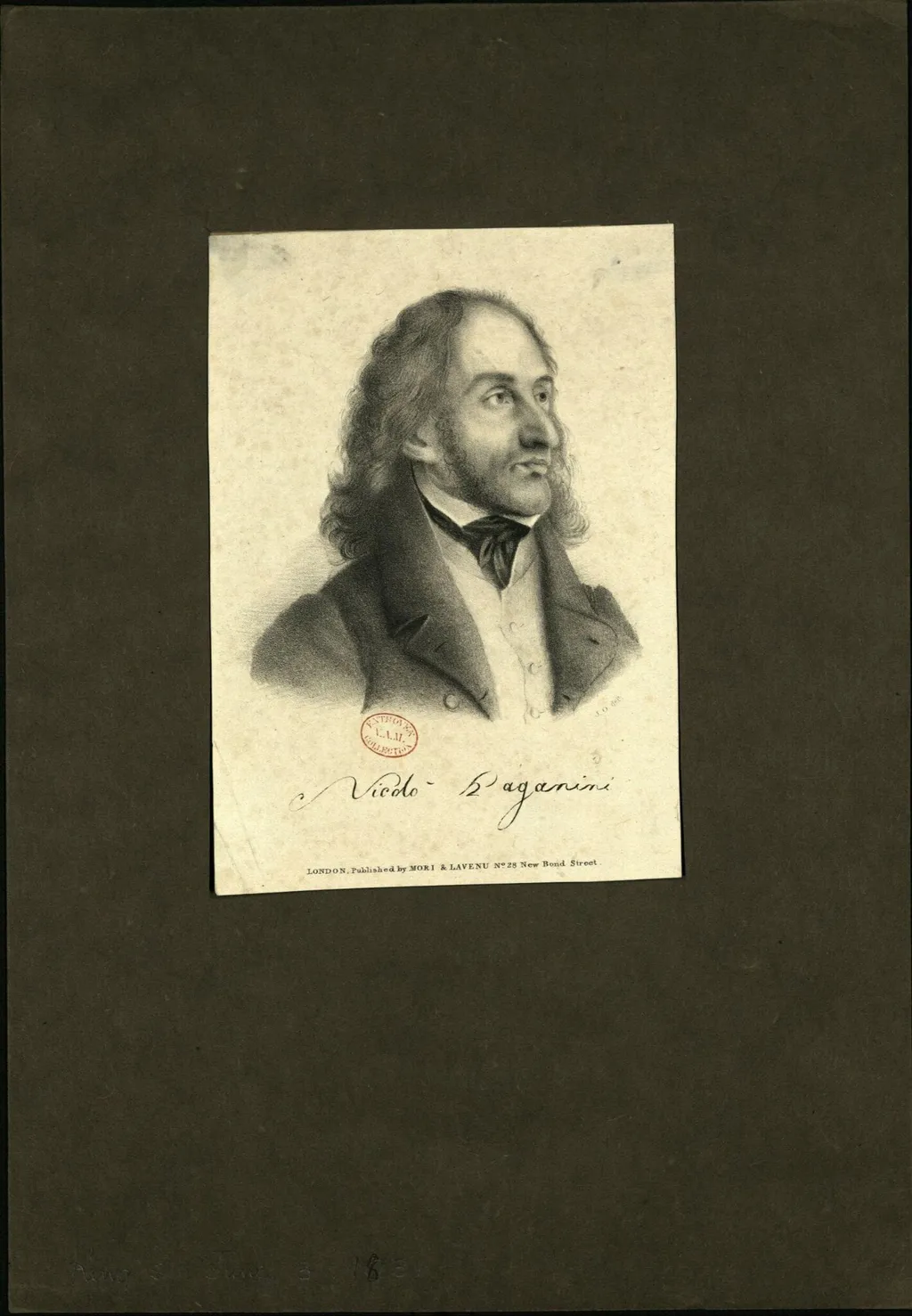
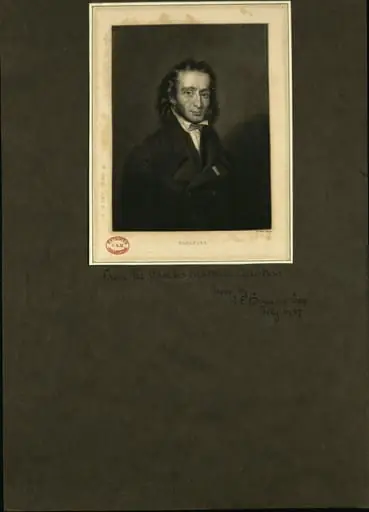
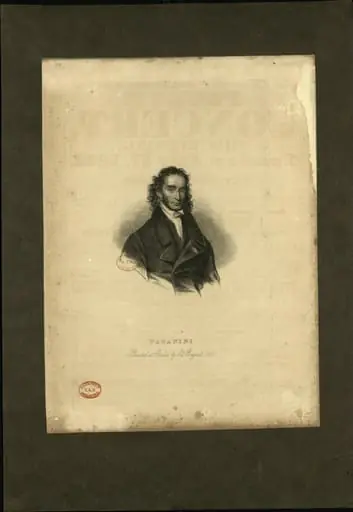
Print is a print by Mori & Lavenu. It dates from 1850 and is held in the collection of the Victoria and Albert Museum.
About this work
Critics raved about his unusual hand position and shoulder shape.
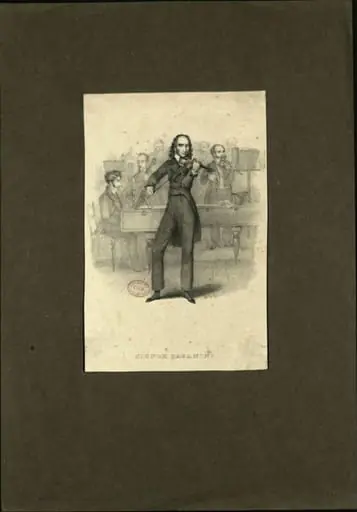
This print shows Italian violinist Nicolò Paganini. It captures his famous London debut in 1831. Critics raved about his unusual hand position and shoulder shape. His thumb could bend flat onto the back of his left hand.
The print highlights his strange but brilliant posture. His left shoulder was lower than his right. This helped him play the violin in new ways.
Check out the Victoria and Albert Museum next.
Overview
This print depicts Nicolò Paganini, the Italian violinist renowned for his technical innovations and magnetic stage presence. Created around the time of his 1831 London debut, it captures a moment when public fascination with his playing reached a peak. The image reflects contemporary interest in his physical peculiarities, which were widely discussed in press accounts and personal journals of the era.
Subject & Meaning
Paganini is portrayed not merely as a performer but as an almost anatomical curiosity—his posture, elongated fingers, and asymmetrical shoulders were seen as physical anomalies enabling his extraordinary technique. The print emphasizes these traits to underscore the belief that his genius was inseparable from his bodily form, blurring the line between artistic mastery and biological rarity.
Technique & Style
The print employs fine linear detail to render Paganini’s posture with precision, highlighting the inward twist of his arm and the flattened thumb position. The composition focuses on his upper body, minimizing background elements to direct attention to his physicality. The style is documentary in intent, aligning with 19th-century portraiture that sought to record both likeness and physiological distinction.
History & Provenance
Produced shortly after Paganini’s 1831 London performances, the print likely originated as a commercial or journalistic illustration responding to widespread media coverage. Its survival in collections such as the Victoria and Albert Museum suggests it was preserved as a cultural artifact of musical celebrity, reflecting the era’s growing intersection of art, performance, and public spectacle.
Context
In the early 1830s, Paganini’s tours ignited a wave of public fascination across Europe, fueled by rumors of supernatural abilities and his unorthodox technique. Contemporary observers documented his physical traits as if they were scientific phenomena, interpreting his posture as the key to his musical innovation. This print emerges from that climate of awe and speculation surrounding virtuosity.
Legacy
The image endures as a visual record of how physicality was mythologized in the service of artistic genius. While modern understanding attributes Paganini’s skill to rigorous training and anatomical variation, the print preserves the 19th-century tendency to conflate bodily difference with supernatural talent, offering insight into the cultural construction of musical heroism.
Artist & collection