Artwork
Branching Stump
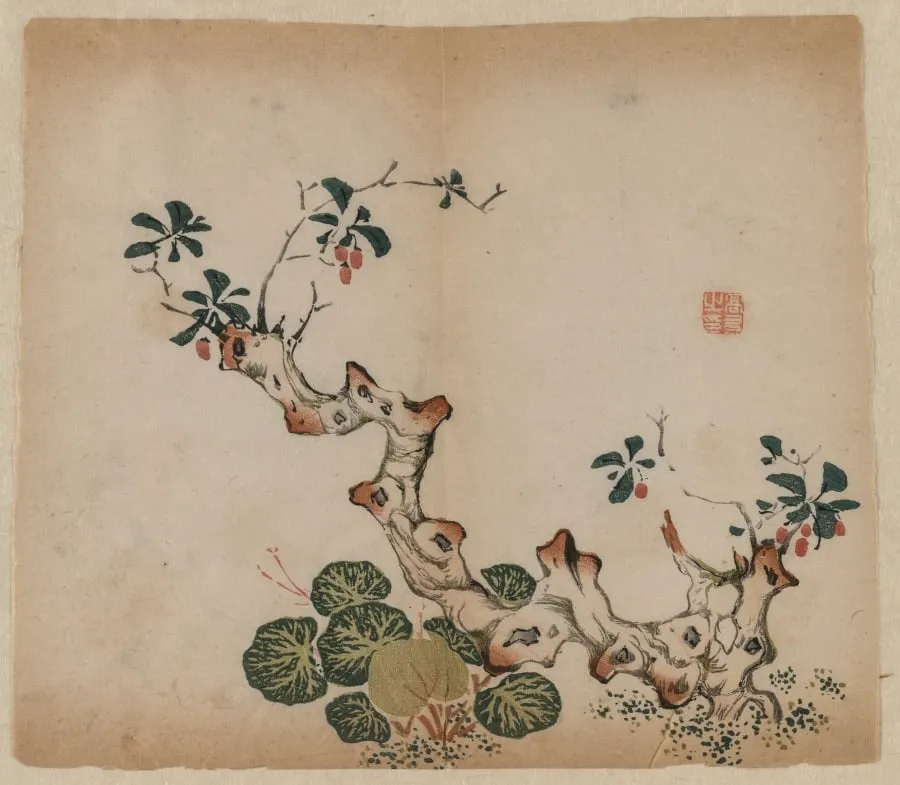
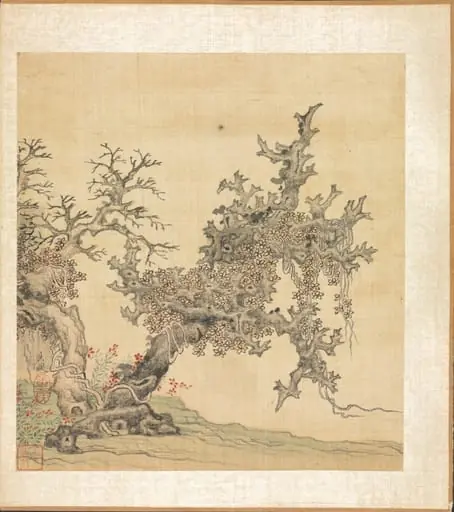
Branching Stump is a print by Unknown. It dates from 1506 and is held in the collection of the Cleveland Museum of Art. This print presents a close-up view of a tree stump, its surface textured and weathered, with a few slender branches extending upward.
About this work
Overview
This print presents a close-up view of a tree stump, its surface textured and weathered, with a few slender branches extending upward.
This print presents a close-up view of a tree stump, its surface textured and weathered, with a few slender branches extending upward. Delicate leaves and clusters of red berries adorn the branches, rendered with quiet precision. The background is a muted beige, allowing the natural tones of the wood and foliage to dominate. The composition avoids dramatic elements, focusing instead on stillness and subtle detail.
Subject & Meaning
The subject is a solitary tree stump, stripped of its full form yet still alive with seasonal growth. The presence of berries and fresh leaves suggests resilience and cyclical renewal rather than decay. There is no human presence or symbolic narrative—only the quiet persistence of plant life, inviting contemplation of nature’s quiet rhythms without overt metaphor.
Technique & Style
The print employs fine, controlled lines and tonal gradations to suggest texture in the bark and the translucency of leaves. Colors are restrained: earthy browns, muted greens, and deep reds for the berries. The foreground leaves are larger and more defined, creating a sense of spatial depth. The style is observational, favoring clarity and restraint over expressive brushwork or stylization.
History & Provenance
The work is held in the collection of the Cleveland Museum of Art, acquired as part of its broader engagement with modern prints that emphasize natural forms. Its origin as a print suggests it was produced in a limited edition, likely in the 20th century, though the artist and exact date are not specified in available records.
Context
This piece aligns with early-to-mid 20th-century artistic trends that turned to intimate natural subjects as a counterpoint to industrialization. Similar works by contemporaries focused on isolated botanical elements—stumps, roots, seed pods—as subjects worthy of quiet attention, reflecting a broader cultural interest in simplicity and the overlooked details of the natural world.
Legacy
As a quiet, unadorned study of a single tree element, the print contributes to a tradition of nature-focused printmaking that values observation over grandeur. It remains a modest but enduring example of how everyday botanical forms can hold visual and emotional weight when presented with precision and restraint.
Artist & collection

 Domestic Scene
 Giacomo and Cardinal Marco, investing Andrea, Abbot of San Zeno, with his Benefice
 The Nymph of Fontainebleau
 Portrait of a Woman
 Madonna and Child with Saints in the Enclosed Garden
 Venus and Minerva
 Family Group of Four on Sofa
 Wall painting from Room H of the Villa of P. Fannius Synistor at Boscoreale
 Flowering Magnolia and Peach Blossoms
 Flowering Prunus
 Paintings after Ancient Masters: Rock, Old Tree, and Bamboo
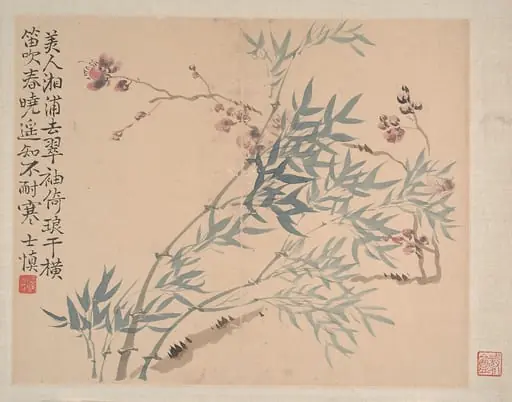 清 汪士慎 山水花卉圖 冊|Landscapes and Flowers
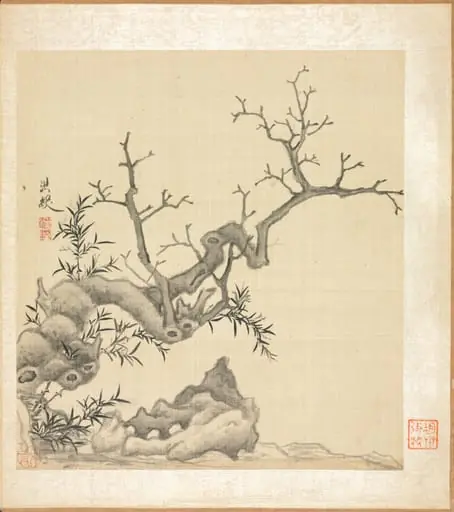 Paintings after Ancient Masters: Rock, Old Tree, and Bamboo
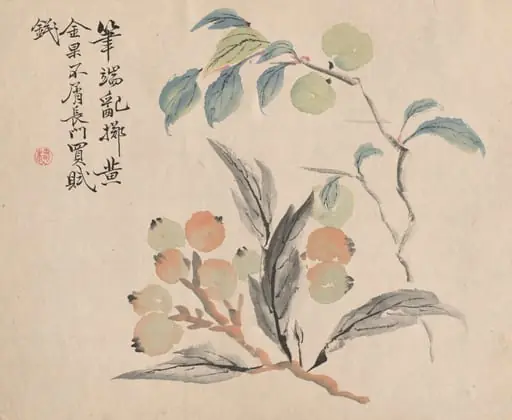 Loquat Tree of Japan
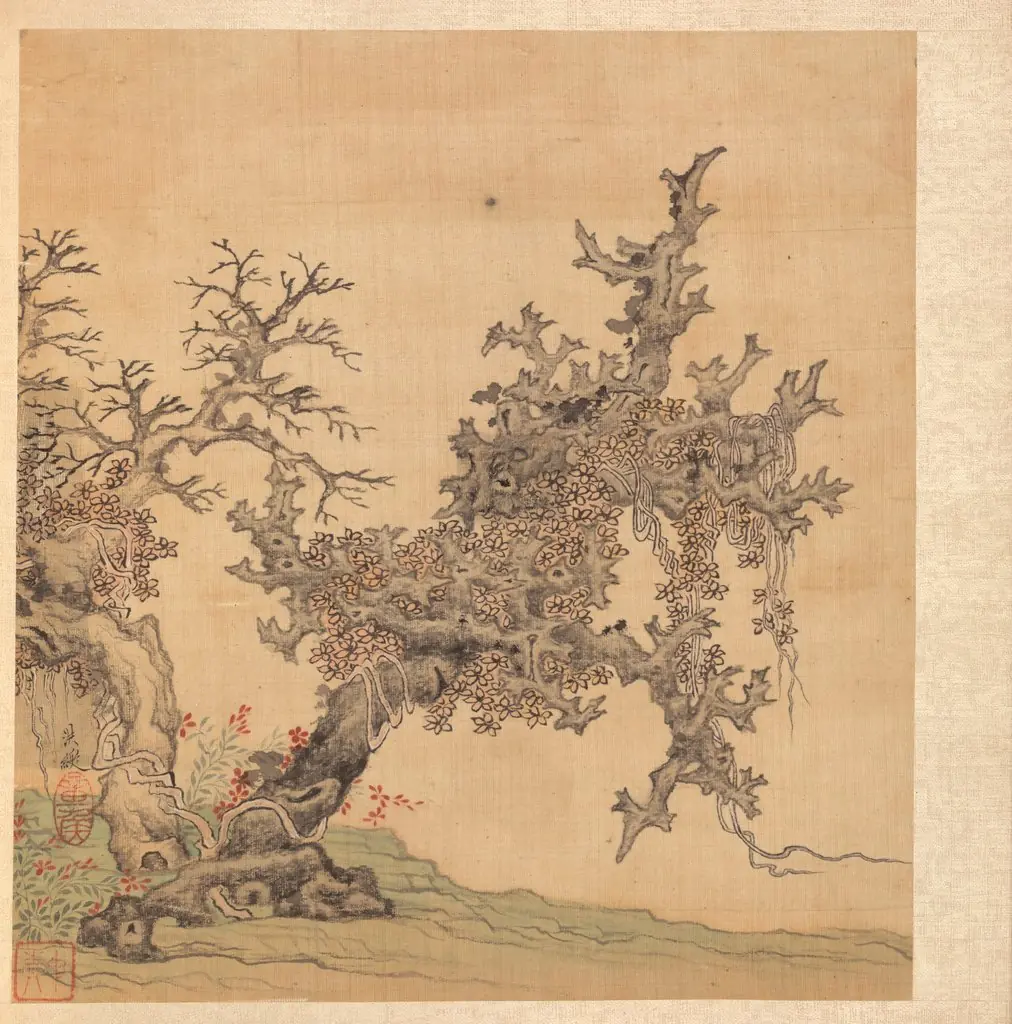 Paintings after Ancient Masters: An Ancient Tree
 Paintings after Ancient Masters: An Ancient Tree
 Untitled
 清 仿惲壽平 桂花圖 冊頁|Cassia Tree