Artwork
Trees and Meadows at Eragny
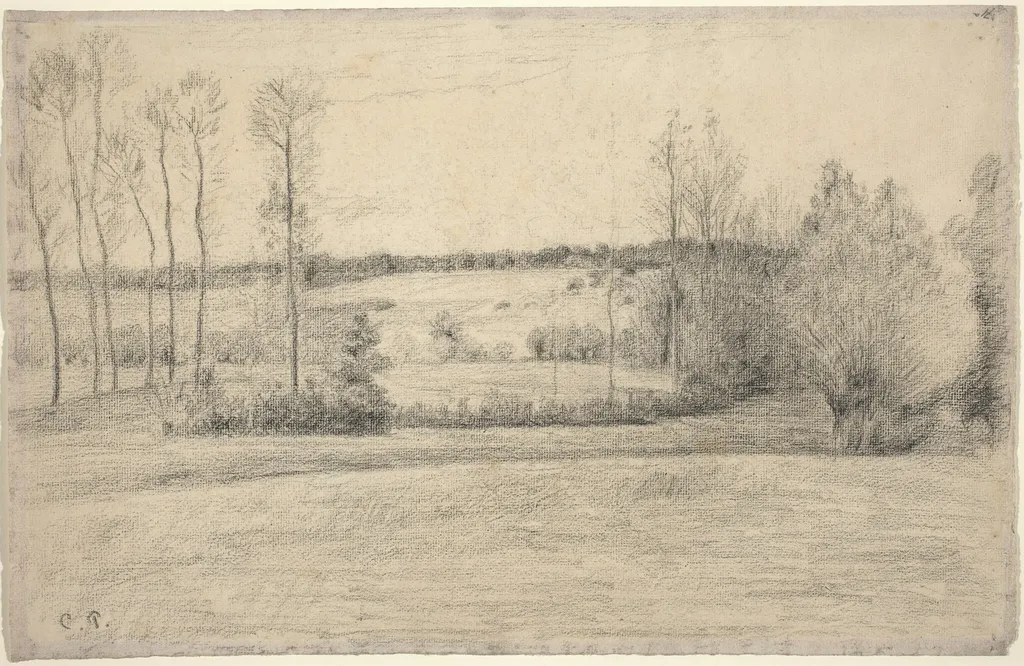
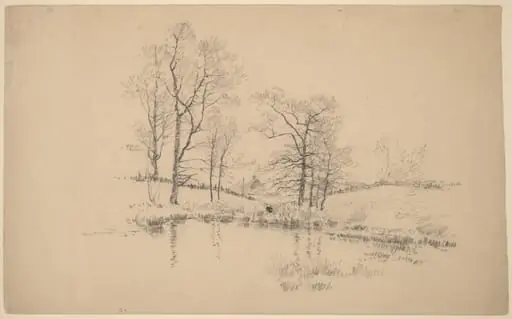
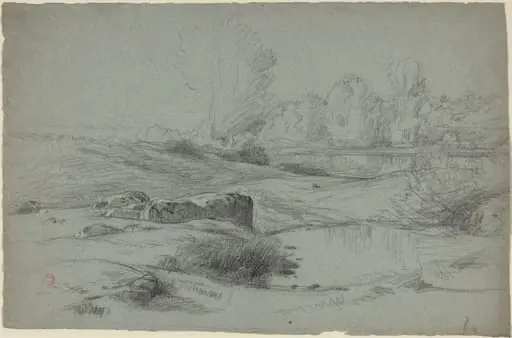
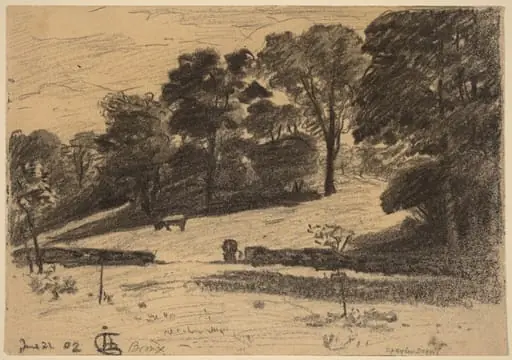
Trees and Meadows at Eragny is a chalk drawing by the Impressionist artist Camille Pissarro. It dates from 1898 and is held in the collection of the National Gallery of Art.
About this work
Overview
The paper’s warm tone subtly influences the overall atmosphere, enhancing the sense of natural light without added pigment.
Created in 1898, this drawing by Camille Pissarro captures a quiet rural scene near Eragny, where he lived. Executed in black chalk on pale pink laid paper, it reflects his sustained interest in landscape observation. The choice of medium and substrate suggests a spontaneous, intimate approach, typical of his later works. The paper’s warm tone subtly influences the overall atmosphere, enhancing the sense of natural light without added pigment.
Subject & Meaning
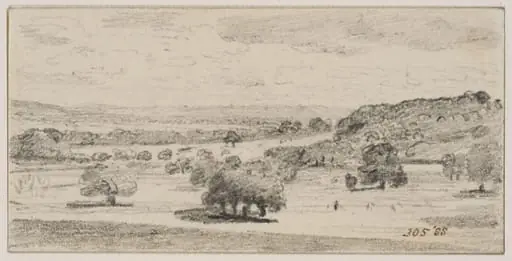
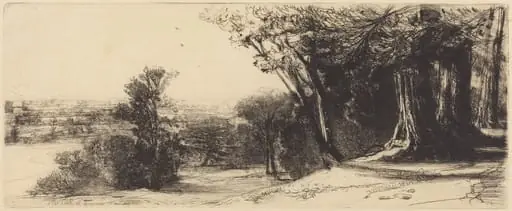
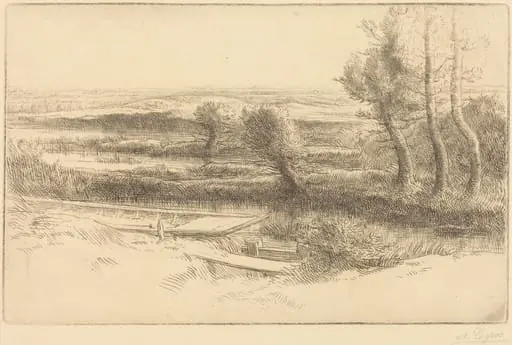
The composition presents a tranquil expanse of meadow and trees, rendered without human figures or architectural elements. The focus lies in the quiet rhythm of nature—tree trunks rising from the foreground, branches dissolving into the sky, and undulating grasses receding into the distance. The absence of narrative or symbolism emphasizes a contemplative engagement with the land, consistent with Pissarro’s lifelong reverence for rural life and seasonal change.
Technique & Style
Pissarro employed fine, varied strokes of black chalk to model form and suggest texture—delicate lines for grass, heavier pressure for tree bark, and soft smudging for atmospheric depth. The pale pink paper functions not merely as a support but as a tonal base, allowing the chalk to glow with ambient warmth. His technique avoids sharp outlines, favoring gradual transitions that mimic the soft diffusion of light across open fields.
History & Provenance
This drawing was made during Pissarro’s final years in Eragny, a period marked by prolific sketching and a return to direct observation after years of urban subjects. It likely originated as a study for larger paintings or as a standalone record of the surrounding countryside. Its survival in good condition reflects careful preservation, though its early ownership remains undocumented in public records.
Context
In the late 1890s, Pissarro increasingly turned to rural landscapes as his eyesight declined and his interest in Impressionist color theory evolved. Working outdoors with minimal materials, he favored drawings like this one to capture fleeting effects of light and season. This piece aligns with his broader commitment to depicting the French countryside without romanticization, grounded in daily observation rather than idealization.
Legacy
Though less known than his paintings, Pissarro’s drawings from this period reveal the discipline and sensitivity underlying his mature style. Trees and Meadows at Eragny exemplifies how he translated the subtleties of nature into quiet, resonant compositions. These works influenced later generations of landscape artists who valued directness and material honesty over finished polish.
Own this work as a print
Artist & collection