Artwork
Walk in the Boulogne Wood
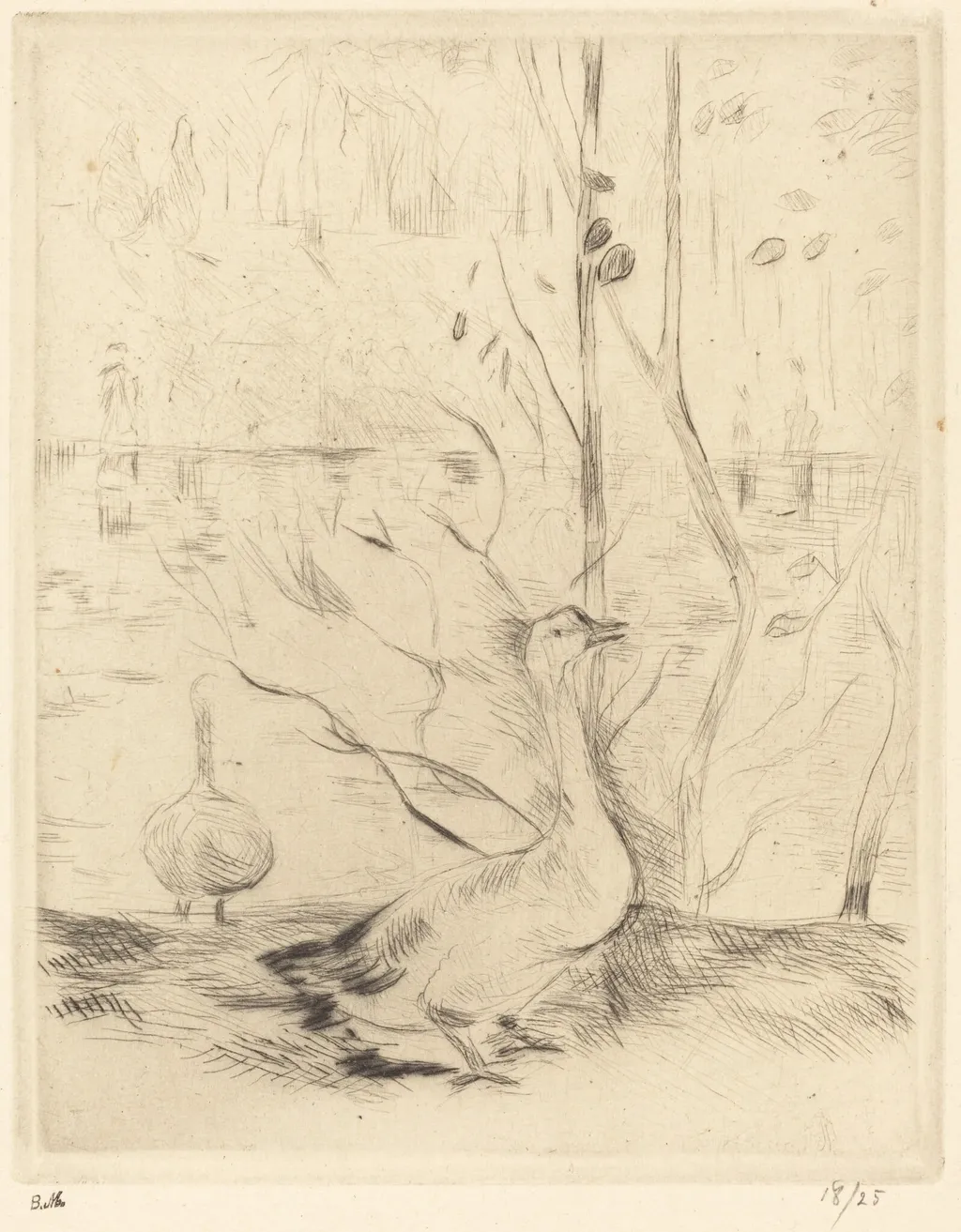
Walk in the Boulogne Wood is an ink print by the Impressionist artist Berthe Morisot. It dates from 1889 and is held in the collection of the National Gallery of Art.
About this work
Overview
Though drawn in 1889, the print was produced posthumously, reflecting late interest in her graphic work rather than immediate circulation during her lifetime.
Created in 1889, *Walk in the Boulogne Wood* is a drypoint print by Berthe Morisot, one of the few women to exhibit regularly with the Impressionists. Unlike her paintings, this work is a print made by scratching lines into a metal plate, then transferring ink to paper. Though drawn in 1889, the print was produced posthumously, reflecting late interest in her graphic work rather than immediate circulation during her lifetime.
Subject & Meaning
The scene captures a quiet moment in the Bois de Boulogne, a popular Parisian park. A woman in a pale dress walks a small dog on a short leash, her figure softened by dappled light filtering through tall trees. The intimacy of the gesture—woman, animal, and woodland—suggests a private rhythm of daily life, typical of Morisot’s focus on domestic and leisurely female experiences within urban nature.
Technique & Style
Drypoint allowed Morisot to create delicate, expressive lines by incising the plate directly. The resulting print shows soft, slightly blurred edges and rich tonal gradations, contrasting with the sharper lines of etching. Her hand is loose and immediate, emphasizing atmosphere over detail. The texture of the laid paper enhances the tactile quality, grounding the image in the materiality of printmaking.
History & Provenance
The plate was etched in 1889, but the print was pulled after Morisot’s death in 1895, likely by family or estate executors seeking to preserve her legacy. Few impressions were made, and the work remained relatively obscure until later 20th-century reassessments of women printmakers. Its survival reflects posthumous efforts to document her contributions beyond painting.
Context
Morisot’s engagement with printmaking was uncommon among her Impressionist peers, who favored painting. Her drypoints, like this one, align with contemporaries such as Mary Cassatt, who also explored intimate domestic scenes in print. Yet Morisot’s approach was more gestural and less polished, reflecting her broader stylistic preference for spontaneity over finish.
Legacy
Though not widely exhibited in her lifetime, *Walk in the Boulogne Wood* now stands as a quiet testament to Morisot’s sensitivity to light, movement, and private moments. It contributes to a broader recognition of her role in expanding the possibilities of printmaking within Impressionism, particularly through the lens of everyday female experience.
Artist & collection

Artist
Berthe Marie Pauline Morisot (French: ; 14 January 1841 – 2 March 1895) was a French painter, printmaker and a member of the circle of painters in Paris who became known as the Impressionists.

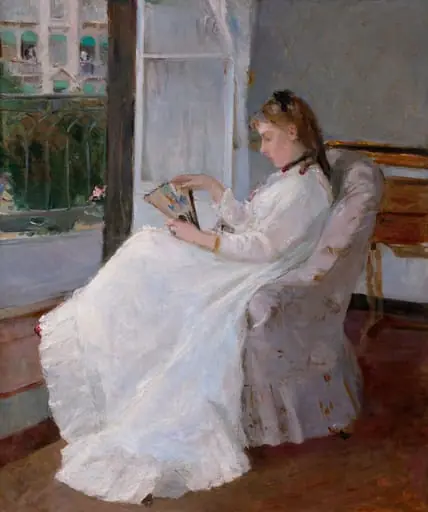
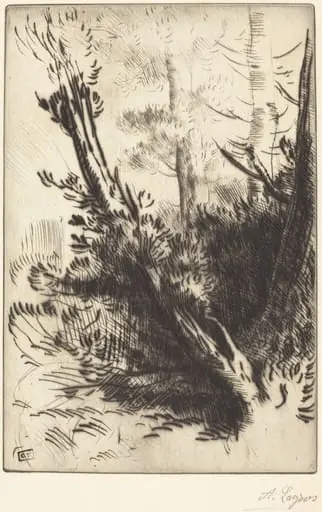 In the Woods (Dans les bois)
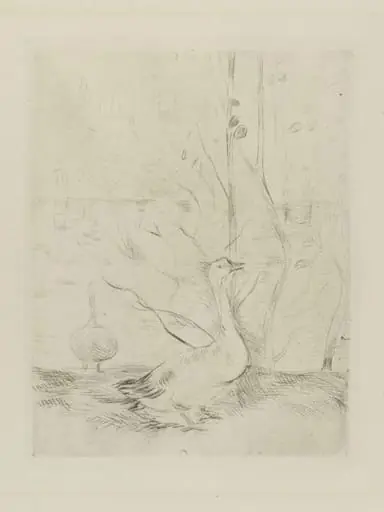 L'Oie
L'Oie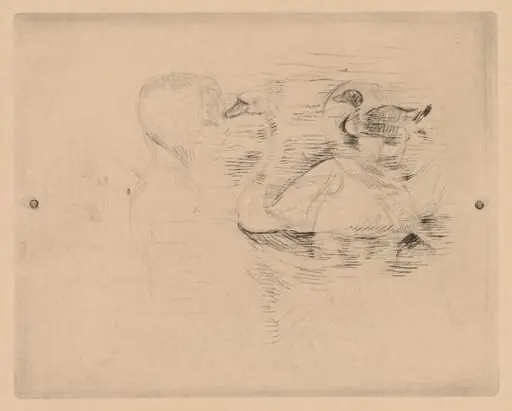 Swan and Duck, with portraits of Julie (Cygne et canard, avec portraits de Julie, or Cygne et canard, essai)
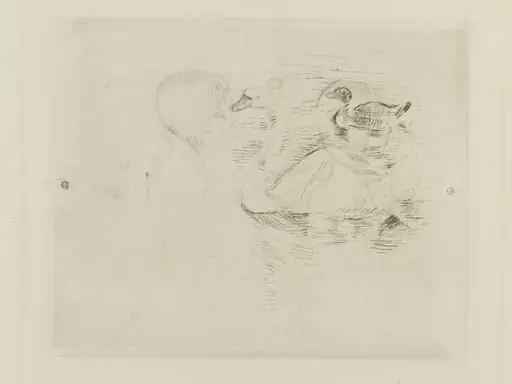 Swan and Duck
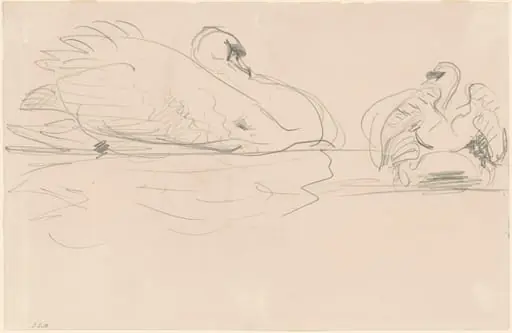 Swans in the Water
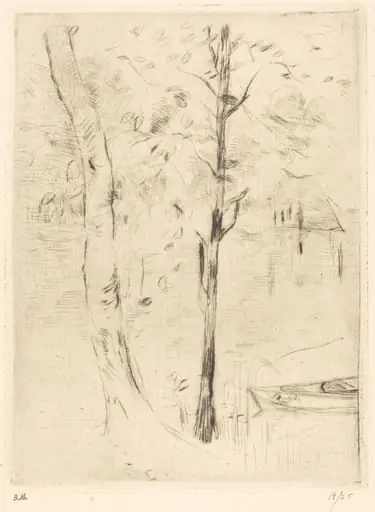 Lake with Rowboat
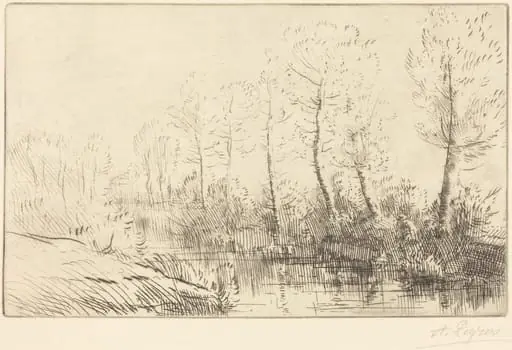 Birch Trees: Water's Edge Seen in Morning Light (Les bouleaux: Bord de l'eau, effet du matin
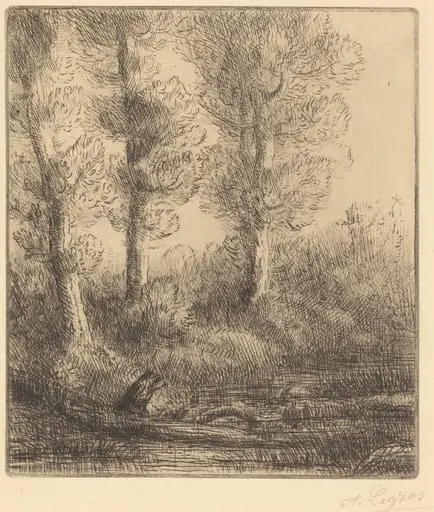 Banks of the Saint-Pre (Rive du Saint-Pre)
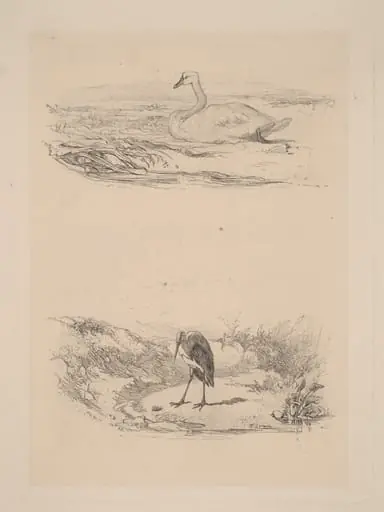 Cygne, heron