Artwork
Cygne, heron
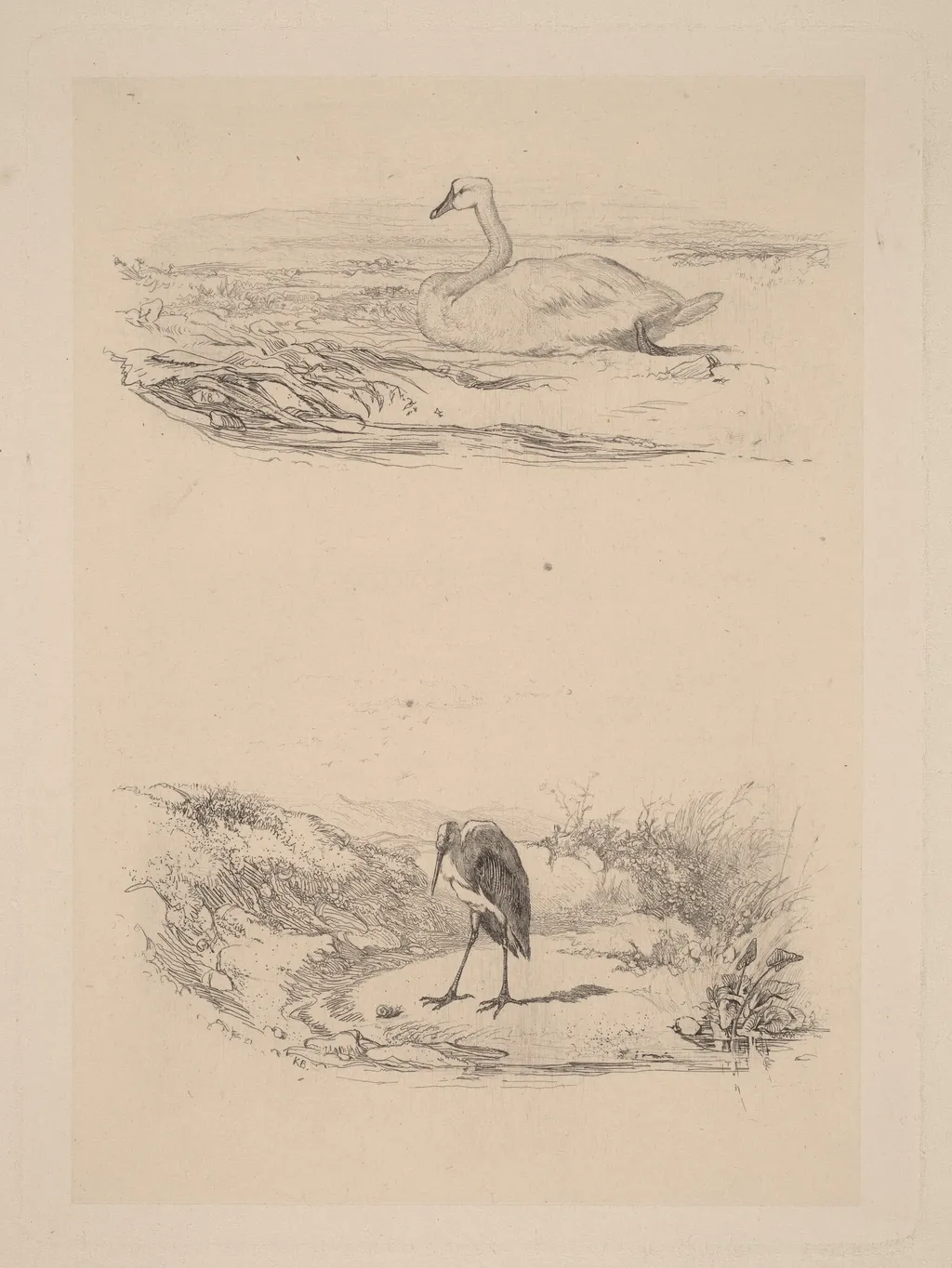
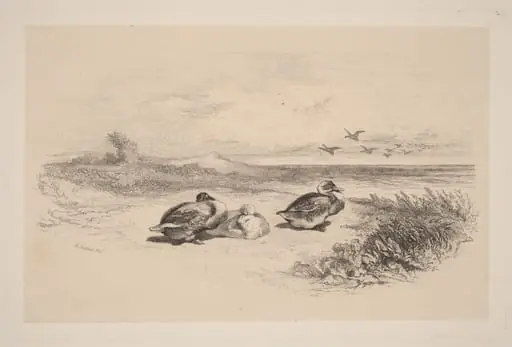
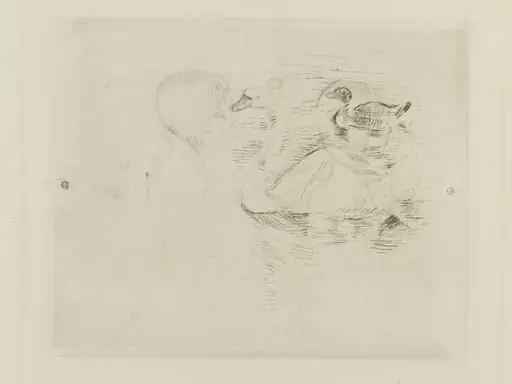
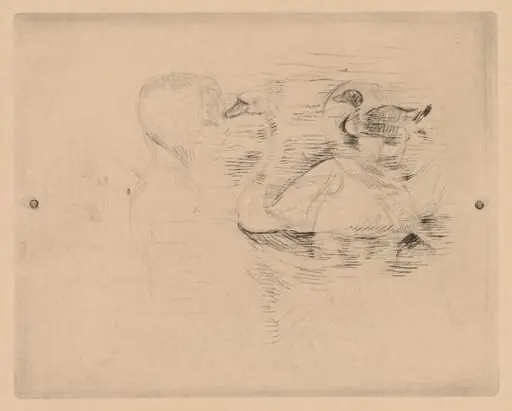
Cygne, heron is an ink print by the Romanticist artist Karl Bodmer. It dates from 1851 and is held in the collection of the National Gallery of Art.
About this work
Overview
A Swiss-French artist trained in illustration, Bodmer frequently turned to etching and lithography to capture wildlife and landscapes.
Karl Bodmer produced the etching *Cygne, heron* in 1851, part of his broader engagement with natural subjects through printmaking. A Swiss-French artist trained in illustration, Bodmer frequently turned to etching and lithography to capture wildlife and landscapes. This work reflects his interest in precise observation of animals in their habitats, a theme consistent with his travels and documentation of European river ecosystems.
Subject & Meaning
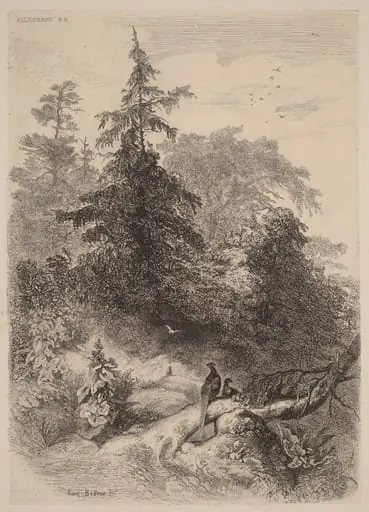
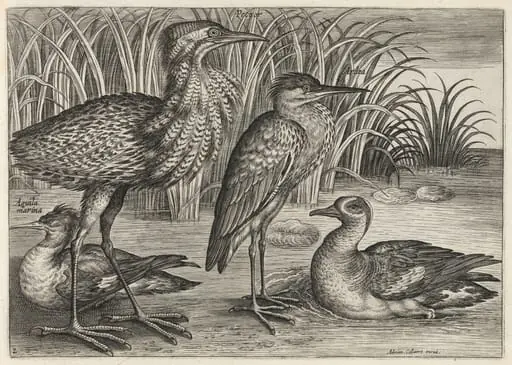
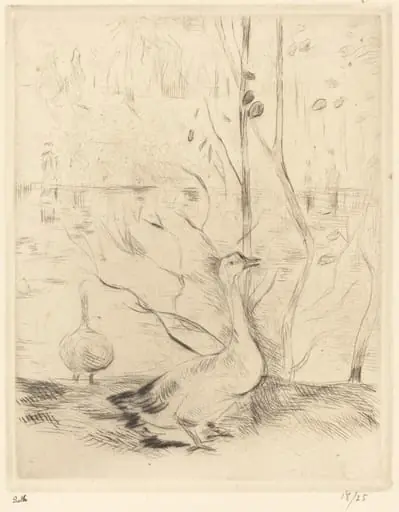
The print depicts a swan and a heron in a marshland setting, each rendered with quiet stillness. The swan floats with its neck arched among reeds, while the heron stands poised on one leg, partially submerged. Neither bird is anthropomorphized; their presence suggests a documentary intent, emphasizing natural behavior over symbolic meaning. The composition invites contemplation of quiet, unobserved moments in the wild.
Technique & Style
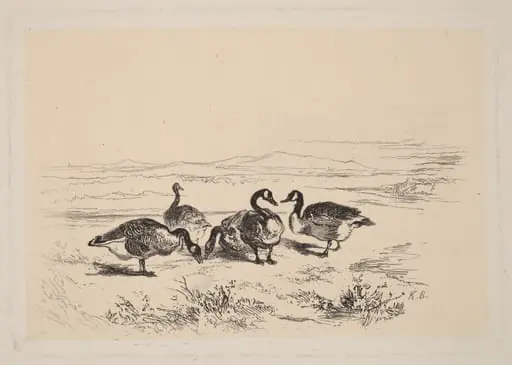
Bodmer employed fine, controlled etching lines to define feather textures and the wet sheen of plumage. The surrounding vegetation and water are rendered with looser, slightly blurred strokes, suggesting movement and atmospheric softness. The contrast between detailed birds and hazy surroundings creates depth and focus, characteristic of his method: precise rendering of subjects against suggestive, less defined environments.
History & Provenance
Created in 1851, the etching emerged during Bodmer’s later career, after his expeditions to North America and his return to Europe. While not part of a major published series, it aligns with his private studies of fauna. The work likely circulated among collectors of natural history prints, though its early ownership remains undocumented. It survives today as a representative example of his independent graphic work.
Context
In mid-19th-century Europe, scientific illustration and natural history imagery gained popularity among educated audiences. Bodmer’s etchings contributed to this trend, blending artistic skill with observational accuracy. His focus on waterfowl reflects broader interest in wetland ecology and the aesthetic value of native species, paralleling contemporaneous efforts by naturalists to catalog and preserve visual records of wildlife.
Legacy
Though less known than his North American illustrations, *Cygne, heron* exemplifies Bodmer’s enduring commitment to capturing nature with technical precision and restrained elegance. The work remains a quiet testament to his ability to convey biological detail through printmaking, influencing later generations of naturalist artists who valued accuracy over romanticism in depicting the animal world.
Artist & collection
Artist
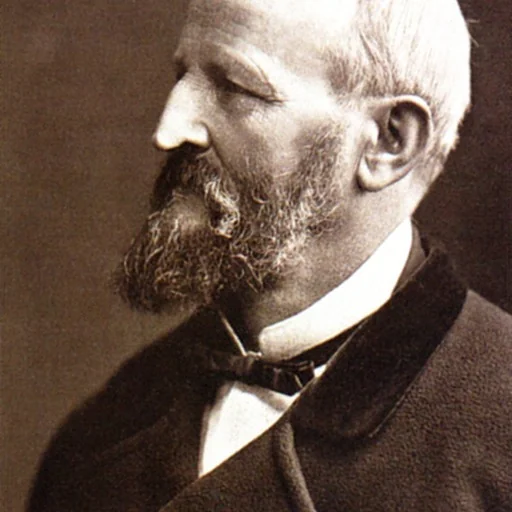
Johann Carl Bodmer (11 February 1809 – 30 October 1893) was a Swiss-French printmaker, etcher, lithographer, zinc engraver, draughtsman, painter, illustrator, and hunter.