Artwork
Le paysan mecontent
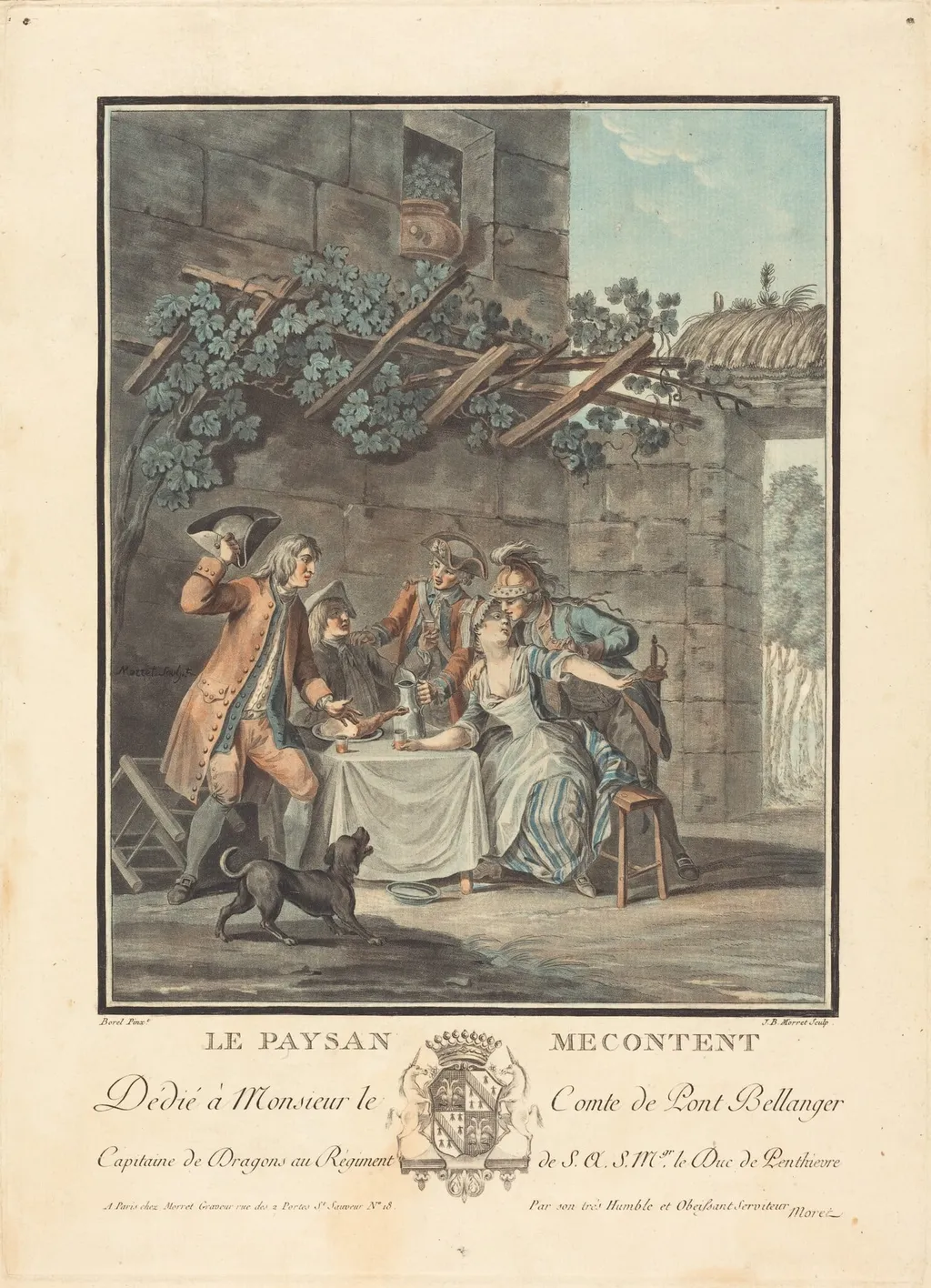
Le paysan mecontent is an ink print by the Baroque artist Jean-Baptiste Morret. It dates from 1795 and is held in the collection of the National Gallery of Art. Jean‑Baptiste Morret’s print *Le paysan mécontent* was produced in 1795 using a combination of color aquatint and etching.
About this work
Overview
Jean‑Baptiste Morret’s print *Le paysan mécontent* was produced in 1795 using a combination of color aquatint and etching. Executed on paper, the work measures a modest size typical of the period’s prints and bears the artist’s signature in the lower right. The title, translating to “The Discontented Peasant,” frames the scene depicted within a rural setting.
Subject & Meaning
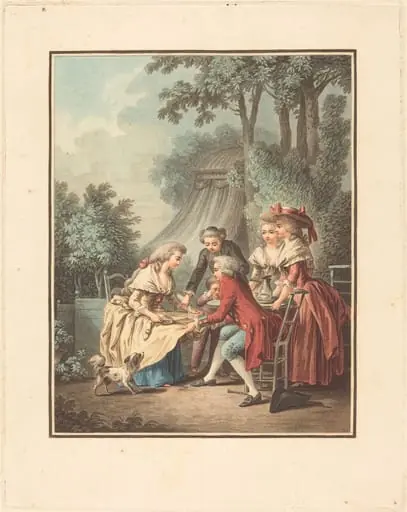
A man in a brown coat holds his hat, while a woman in a blue‑striped dress sits at a table laden with a pitcher and plates, accompanied by a dog at her feet.
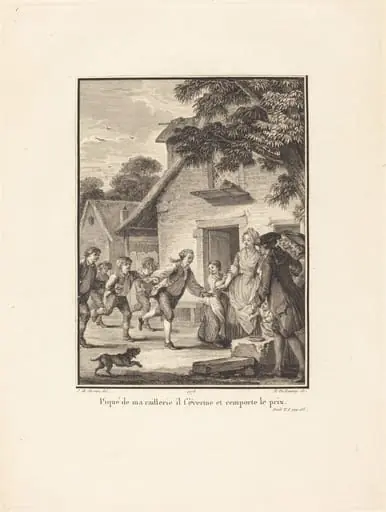
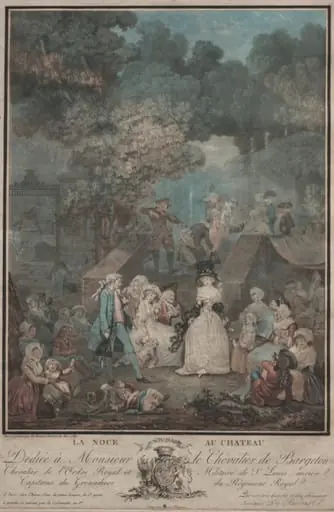
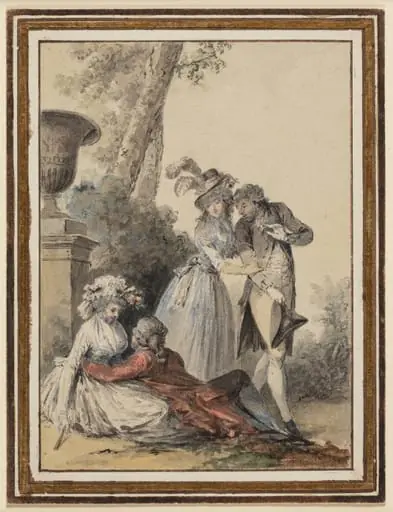
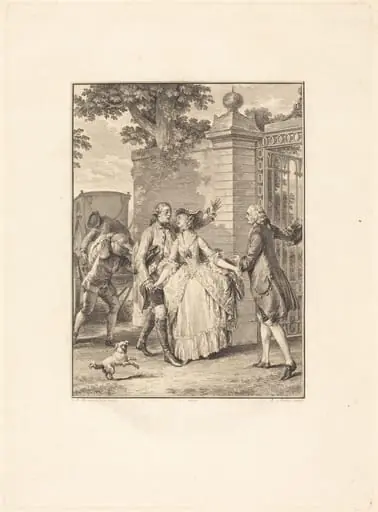
The composition presents a small outdoor gathering beside a stone wall. A man in a brown coat holds his hat, while a woman in a blue‑striped dress sits at a table laden with a pitcher and plates, accompanied by a dog at her feet. Another figure leans on the table, gazing downward. The surrounding thatched roof and vine‑covered, dilapidated structure suggest a modest village environment, inviting speculation about the figures’ emotional state.
Technique & Style
Morret employed fine line work and tonal shading characteristic of etching, enhanced by the color aquatint process to achieve subtle washes of hue. The delicate incisions created with a needle and the controlled use of acid allow for intricate detail in the figures’ clothing and the surrounding architecture, while the aquatint provides a muted atmospheric background.
History & Provenance
Created shortly after the French Revolution, the print reflects the era’s interest in rural life and social conditions. It bears Morret’s signature, confirming authorship, and has been documented in several 19th‑century catalogues of French prints. The work has passed through private collections before entering public holdings, where it is referenced in studies of post‑revolutionary French printmaking.
Context
The late 18th century saw a surge in genre scenes that highlighted everyday people, often with an undercurrent of social commentary. Morret’s choice of a seemingly dissatisfied peasant aligns with contemporary artistic trends that examined the hardships of the lower classes, while the tranquil yet ambiguous mood reflects the transitional atmosphere of post‑revolutionary France.
Artist & collection