Artwork
Piqué de ma raillerie, il s'évertue et remporte le prix
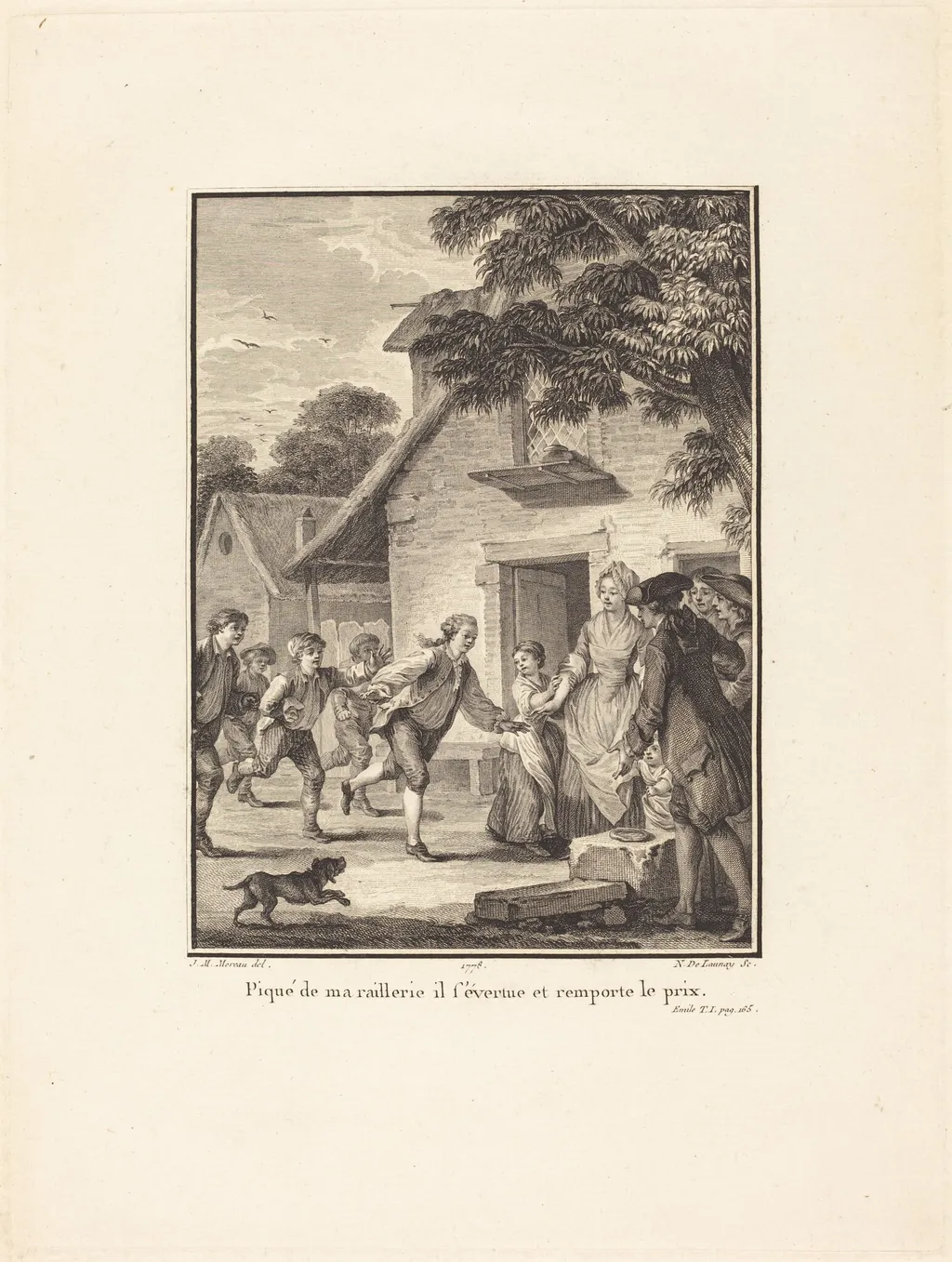
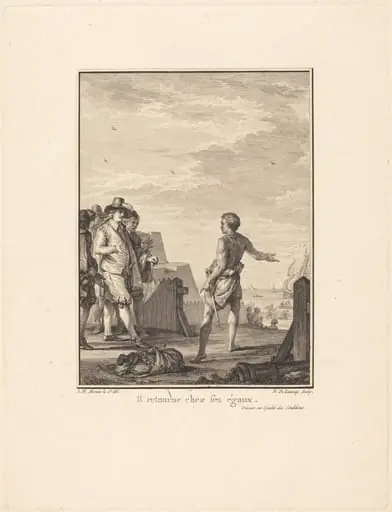
Piqué de ma raillerie, il s'évertue et remporte le prix is an ink print by the Romanticist artist Nicolas Delaunay. It dates from 1778 and is held in the collection of the Widener Collection.
About this work
Overview
The composition conveys a moment of everyday life, rendered with fine linear detail and subtle tonal contrasts typical of the period’s printmaking traditions.
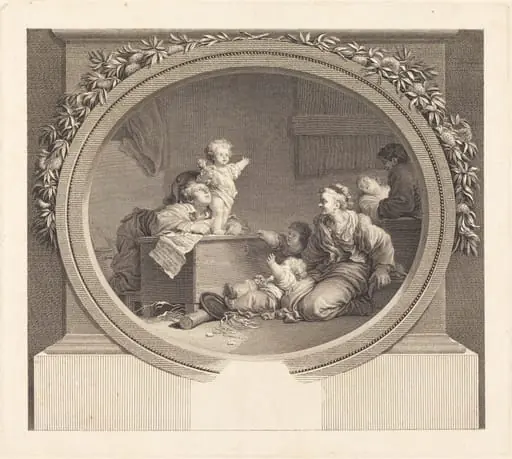
Created in 1778 by Nicolas Delaunay, this print is an etching and engraving depicting a quiet street scene in late 18th-century France. The image captures a man in ornate attire walking with a child, surrounded by onlookers and a small dog, beneath a lantern-lit doorway. The composition conveys a moment of everyday life, rendered with fine linear detail and subtle tonal contrasts typical of the period’s printmaking traditions.
Subject & Meaning
The scene illustrates a man, possibly a figure of some social standing, engaged in a lighthearted exchange with a child, while neighbors observe. The title, translating to 'Stung by my mockery, he strives and wins the prize,' suggests a playful wager or social jest. The image does not depict grand drama but rather the subtle humor and social rituals of ordinary life, where reputation and wit held quiet currency.
Technique & Style
Delaunay employed fine etched lines and engraved details to define textures and movement: the folds of fabric, the flicker of lantern light, and the scattering of figures. The contrast between dense shadow and open space enhances the sense of depth and immediacy. The hand-drawn quality of the lines gives the scene a spontaneous rhythm, characteristic of French printmakers who valued narrative clarity over ornamental excess.
History & Provenance
The print was produced during a period when satirical and genre scenes were widely circulated in France, often as standalone sheets or in collections. While specific early ownership records are sparse, its survival in institutional collections suggests it was valued for its social observation. It reflects the growing market for prints that captured everyday life, distinct from religious or mythological subjects.
Context
In the decades before the French Revolution, prints like this offered a window into the manners and hierarchies of urban and rural communities. The presence of a child, a dog, and a modest home points to a middle or lower gentry setting, where social performance was both observed and mocked. Such imagery aligned with broader Enlightenment interests in human behavior and domestic realism.
Legacy
Delaunay’s work contributed to a tradition of French printmaking that prioritized narrative and social nuance over spectacle. Though not widely known today, his prints remain examples of how artists used etching and engraving to document the quiet rhythms of daily life. The piece continues to be studied for its technical precision and its unembellished portrayal of human interaction.
Artist & collection
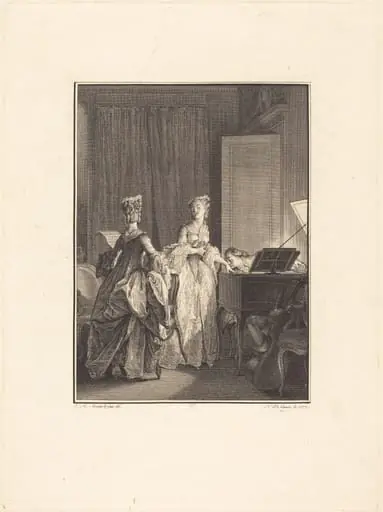
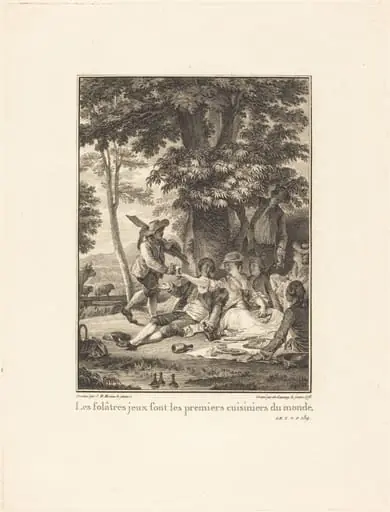 Les folâtres jeux sont les premiers cuisiniers du monde
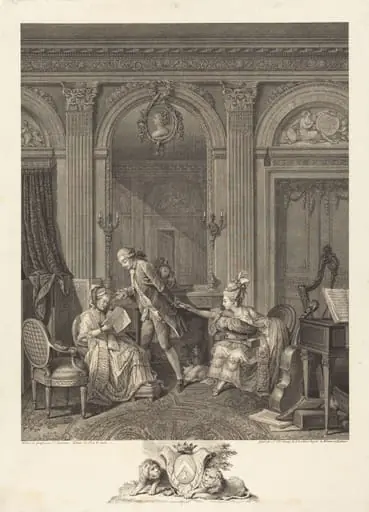
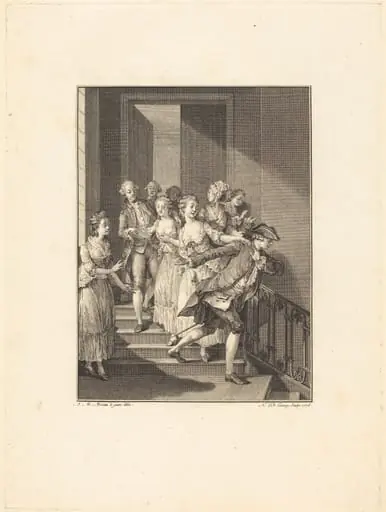 Saint-Preux sort de chez des femmes du monde
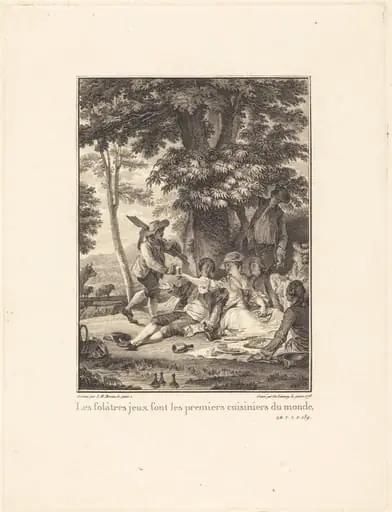 Les folâtres jeux sont les premiers cuisiniers du monde
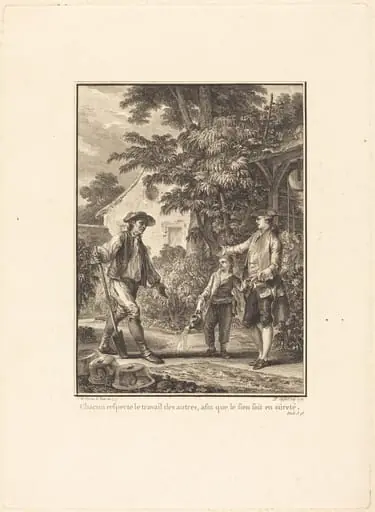 Chacun respecte le travail des autres, afin que le sien soit en sûreté
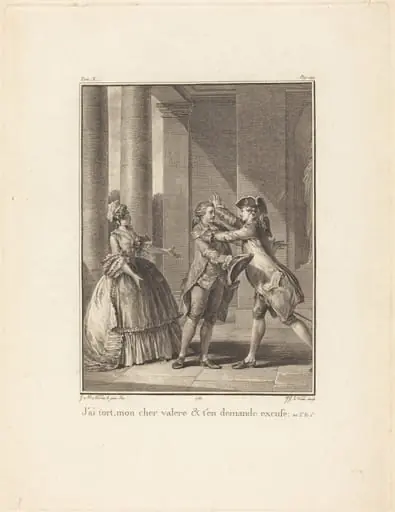 J'ai tort, mon cher Valère, et t'en demande excuse
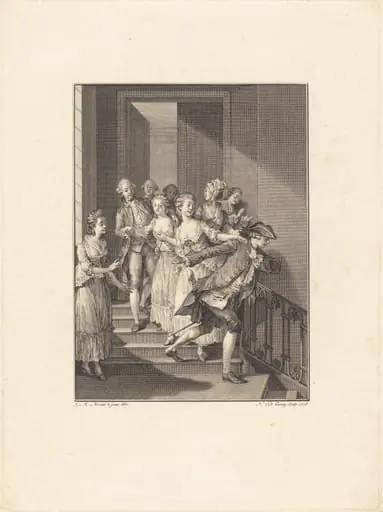 Saint-Preux sort de chez des femmes du monde
 Discours sur l'égalité des conditions: Il retourne chez ses égaux