Artwork
Caffeé des Patriotes - A Patriot's Coffée House
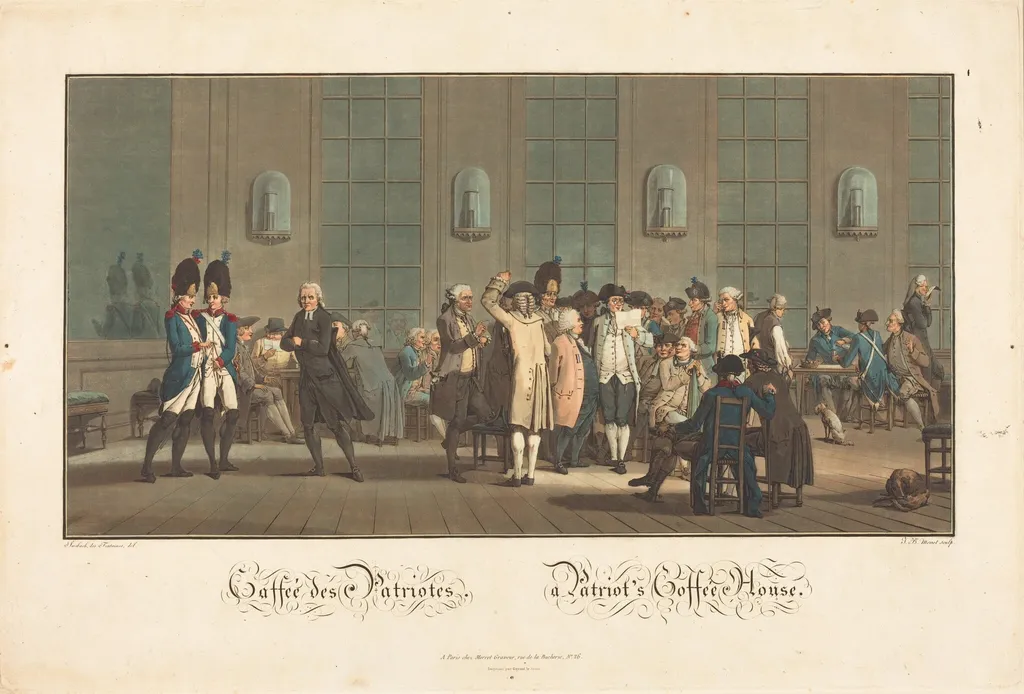
Caffeé des Patriotes - A Patriot's Coffée House is an ink print by the Romanticist artist Jean-Baptiste Morret. It dates from 1792 and is held in the collection of the National Gallery of Art.
About this work
Overview
Jean‑Baptiste Morret’s 1792 print, titled *Café des Patriotes – A Patriot’s Coffee House*, depicts an interior scene of a bustling gathering place.
Jean‑Baptiste Morret’s 1792 print, titled *Café des Patriotes – A Patriot’s Coffee House*, depicts an interior scene of a bustling gathering place. Executed as a color etching with wash, the work combines blue, red, yellow and black inks on laid paper, presenting a lively tableau of men engaged in conversation within a spacious room marked by tall windows, a high ceiling and a prominent wall mirror.
Subject & Meaning
The composition centers on a group of men in contemporary eighteenth‑century attire—hats, coats and breeches—some seated around a table, others standing and gesturing. Several hold papers, suggesting the exchange of political pamphlets or news, while the overall atmosphere conveys animated debate among citizens, reflecting the public discourse characteristic of the revolutionary period.
Technique & Style
Morret employed a multi‑color etching process, layering ink washes to achieve tonal variation across the scene. The use of blue, red, yellow and black creates a restrained palette that emphasizes architectural details and the figures’ gestures. The print’s emphasis on everyday life and emotional intensity aligns it with early Romantic tendencies toward depicting contemporary social moments.
History & Provenance
Created in 1792, the work emerges from the turbulent years of the French Revolution, when coffee houses served as hubs for political discussion. While specific ownership records are limited, the print has been catalogued among Morret’s oeuvre of socially engaged prints and is held in several public collections that document revolutionary-era visual culture.
Artist & collection


 H Beard Print Collection
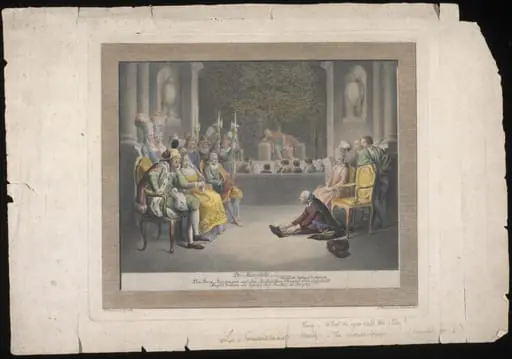 H Beard Print Collection
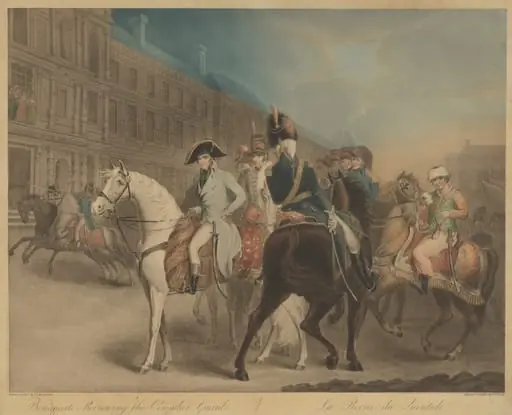 Bonaparte Reviewing the Consular Guard (La Revue du Quintidi)
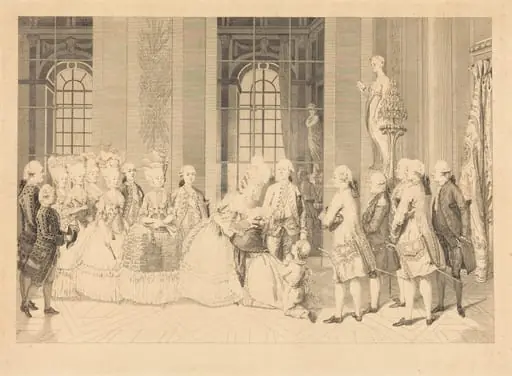 La Reine annonçant à Mme Bellegarde, des Juges, et la liberté de son mari en mai 1777
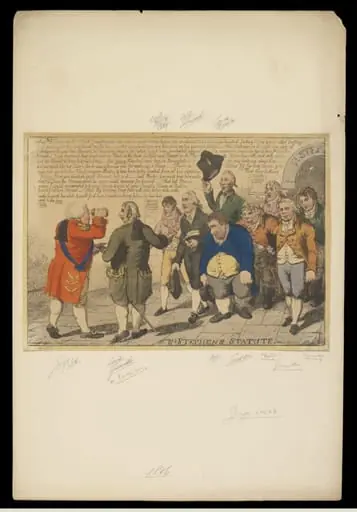 H Beard Print Collection
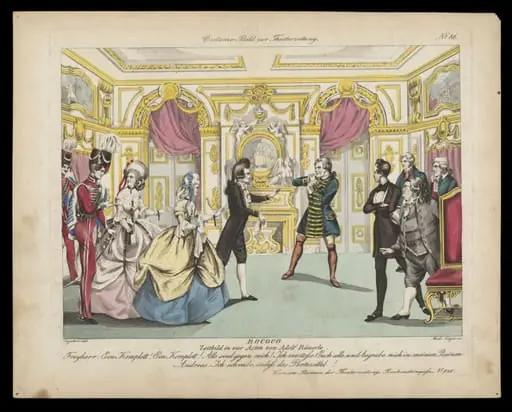 H Beard Print Collection
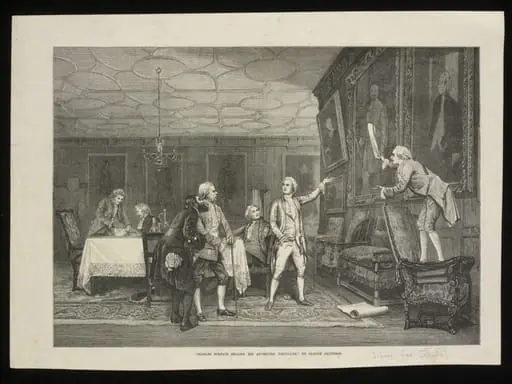 H Beard Print Collection
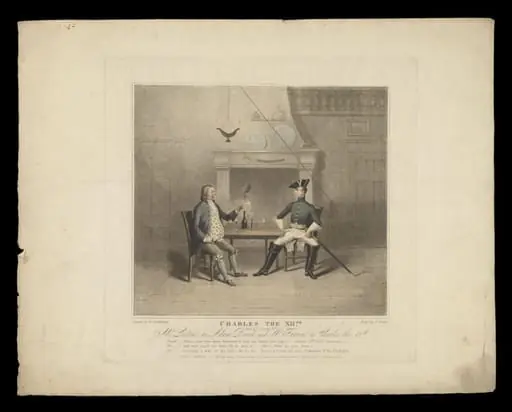 H Beard Print Collection
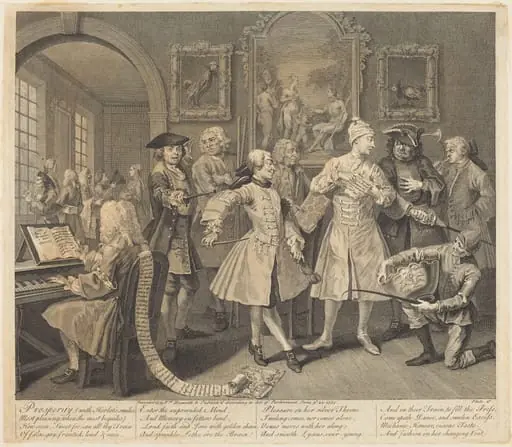 A Rake's Progress: pl.2
 H Beard Print Collection
 The Rights of Kings, or Loyal Odes to Disloyal Academicans
 H Beard Print Collection