Artwork
Guy Little Theatrical Photograph
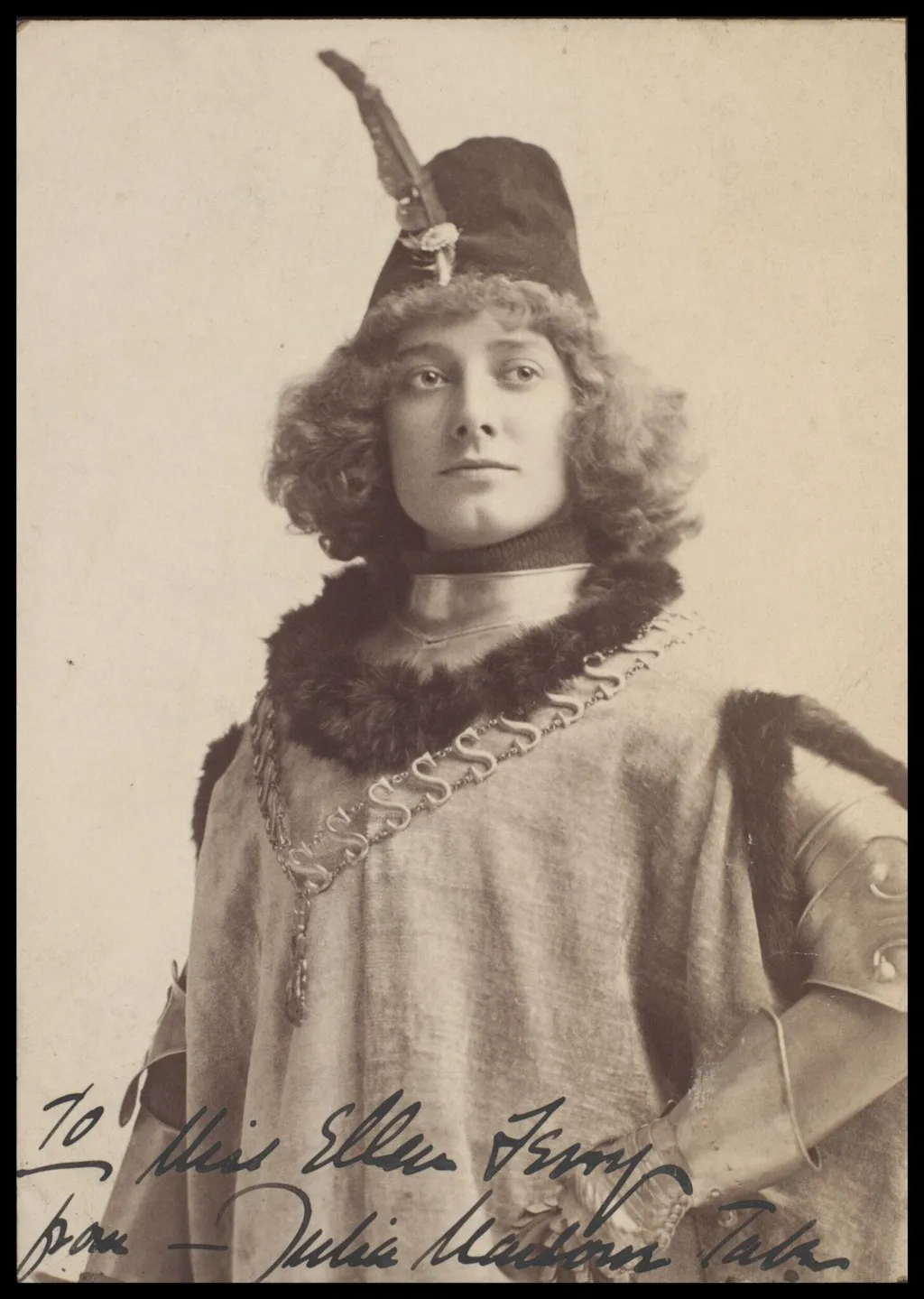
Guy Little Theatrical Photograph is a photographic photography by the Impressionist artist Morrison. It dates from 1896 and is held in the collection of the Victoria and Albert Museum.
About this work
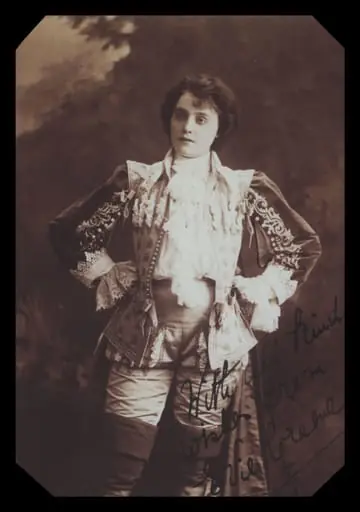
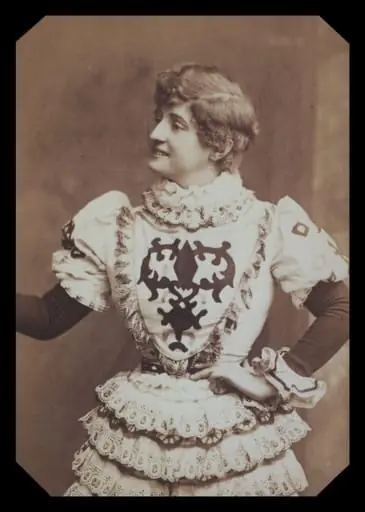
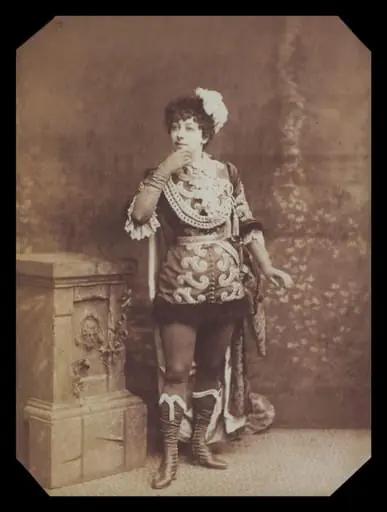
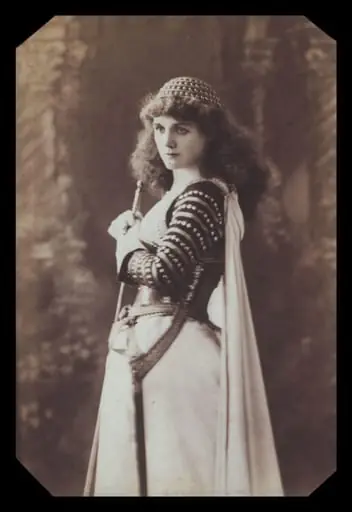
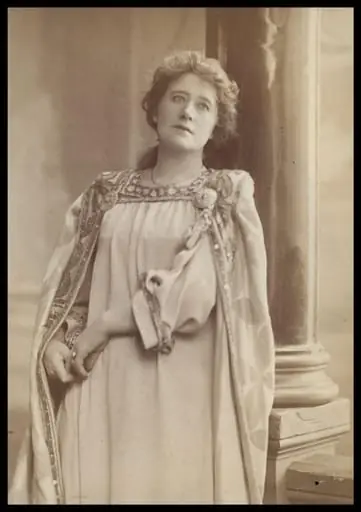
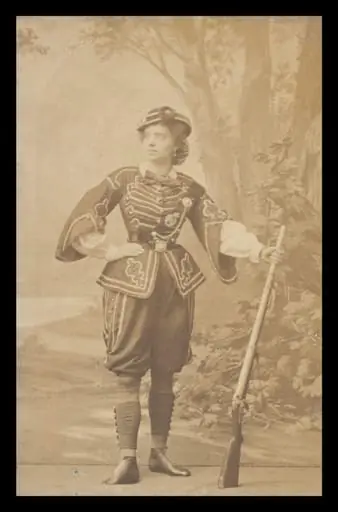
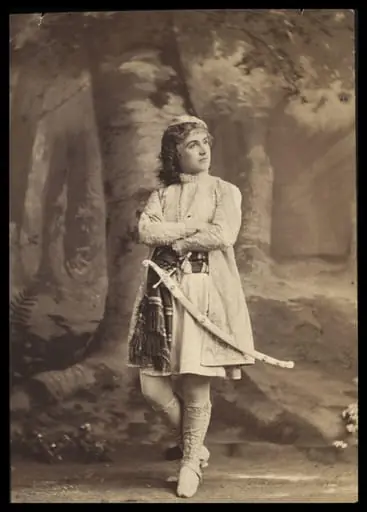
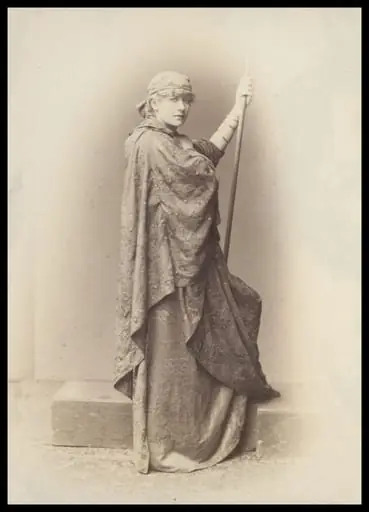
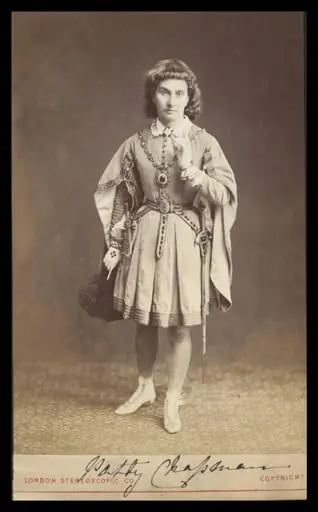
This photo freezes Julia Marlowe as Prince Hal in *Henry IV, Part 2* on stage in 1896.
This photo freezes Julia Marlowe as Prince Hal in *Henry IV, Part 2* on stage in 1896. Morrison took it in London at Palmer’s Theatre. Photographs like this were brand-new back then.
Victorian stars posed for two kinds of prints. Small “cartes de visite” came first. Later came sturdier “cabinet cards.” Both were made from glass negatives and pasted on thick card.
Check out Morrison’s other work at the Victoria and Albert Museum.
Overview
This photograph captures Julia Marlowe in character as Prince Hal from Shakespeare’s Henry IV, Part 2, performed at London’s Palmer’s Theatre in 1896. Taken by photographer William Morrison, it is one of many theatrical portraits collected by Guy Tristram Little, a solicitor and avid archivist of performance ephemera. The image was originally produced as a cabinet card—a larger, more durable format than the earlier carte de visite—mounted on stiff cardstock bearing the photographer’s imprint.
Subject & Meaning
Julia Marlowe’s portrayal of Prince Hal reflects a late-Victorian fascination with Shakespearean roles performed by women, particularly in male parts. Her depiction, caught mid-performance, emphasizes the character’s transition from wayward youth to future king. The photograph preserves a moment of theatrical authenticity, documenting how actors embodied classical roles on stage rather than in studio poses, offering insight into the physicality and presence demanded by the role.
Technique & Style
The image was produced using the albumen printing process from a glass negative, a standard method in late 19th-century photography. The composition is formal, with Marlowe posed against a theatrical backdrop, illuminated to highlight costume and gesture. The sharp detail and tonal range reflect Morrison’s technical proficiency. Unlike studio portraits, this image was taken during a live performance, capturing the immediacy of the stage without artificial staging.
History & Provenance
The photograph belonged to Guy Tristram Little, who assembled a vast collection of theatrical photographs, removing them from their original mounts and organizing them into personal albums. After his death in 1953, the collection was bequeathed to the Victoria and Albert Museum. Little also served as executor for Gabrielle Enthoven, whose theatrical holdings formed the core of the V&A’s Theatre Collections, making this image part of a foundational archive of British stage history.
Context
By the 1890s, cabinet cards had largely replaced cartes de visite as the preferred format for theatrical portraits, offering greater detail and durability. Theatrical photography was no longer a novelty but a routine practice, used for promotion and personal keepsakes. Marlowe’s performance coincided with a broader revival of Shakespeare on the British stage, where actors like her helped shape modern interpretations of classical roles through nuanced, psychologically grounded portrayals.
Legacy
This photograph survives as a material trace of a performance now lost to time, preserving the visual language of late Victorian theatre. It contributes to the V&A’s extensive archive of stage history, offering researchers a direct link to the physicality of performance and the cultural practices of collecting. Little’s careful curation ensured its preservation, anchoring it within a broader narrative of how theatre was documented, remembered, and valued in the modern era.
Artist & collection
Artist
This guy Morrison snapped pics of actors from the 1800s like he was the paparazzi of the stage.