Artwork
Bacchanal
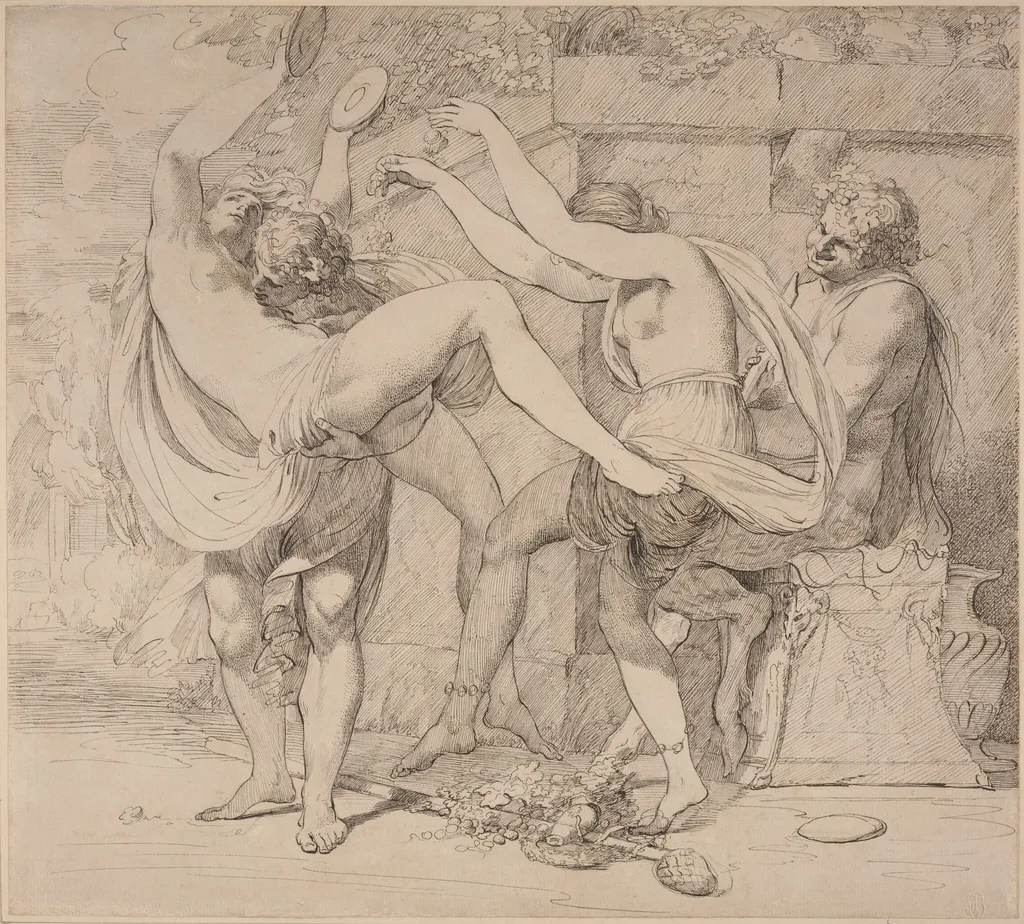
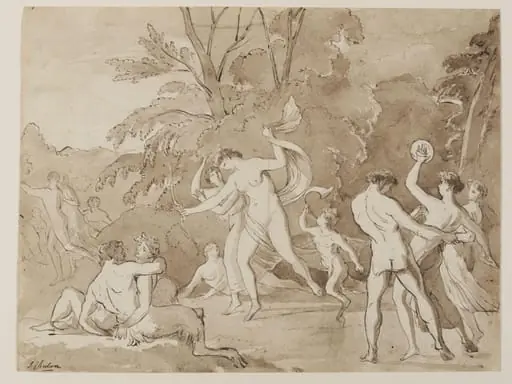
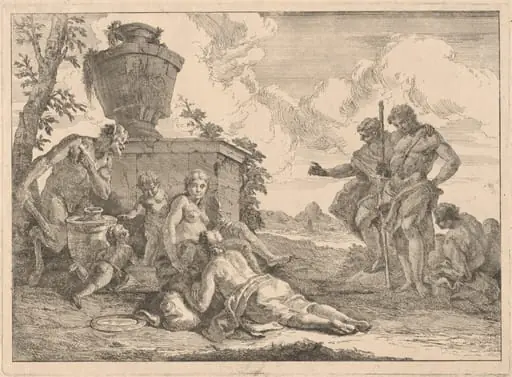
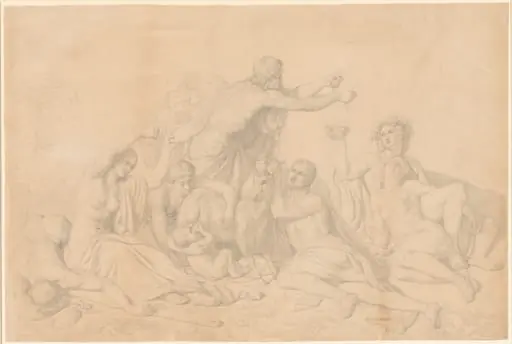
Bacchanal is an ink drawing by the Romanticist artist John Hamilton Mortimer. It dates from 1772 and is held in the collection of the National Gallery of Art.
About this work
Overview
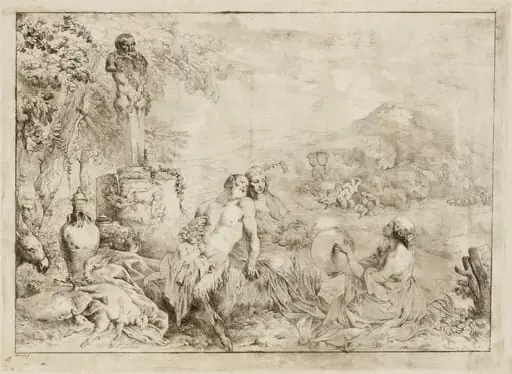
Created in 1772, *Bacchanal* is a pen and black‑ink drawing executed over a graphite underdrawing on laid paper. The work depicts three male figures in classical attire amidst foliage and stone architecture, captured in a moment of exuberant celebration.
Subject & Meaning
The composition presents a festive scene reminiscent of ancient Greek or Roman revelry. One figure lifts a circular object overhead, another leans back with arms spread, while the third sits on a stone bench observing the others, together conveying a sense of joyous abandon.
Technique & Style
Mortimer employed a confident line economy, using ink to define form and graphite to establish tonal modeling. The visible hatching and cross‑hatching create depth and texture, while the laid‑paper surface adds a subtle grain that enhances the drawing’s atmospheric quality.
History & Provenance
British painter and printmaker John Hamilton Mortimer, noted for his romanticized Italianate subjects, produced the drawing shortly before his premature death in 1779 at age thirty‑nine. He later served as President of the Society of Artists in 1774, though the work’s subsequent ownership record remains undocumented.
Context
*Bacchanal* reflects Mortimer’s fascination with dramatic, mythological themes, echoing the theatricality of Salvator Rosa’s landscapes. The piece aligns with the 18th‑century British interest in classical antiquity and the idealized portrayal of ancient festivities.
Artist & collection

Artist
John Hamilton Mortimer (17 September 1740 – 4 February 1779) was a British figure and landscape painter and printmaker, known for romantic paintings set in Italy, works depicting conversations, and works drawn in the…

![Mucius Scaevola [recto], by John Hamilton Mortimer](https://artifactworldgallery.com/img/john-hamilton-mortimer--mucius-scaevola-recto--0de678fa443f7962-w320.webp)