Artwork
A View From Al-Matn
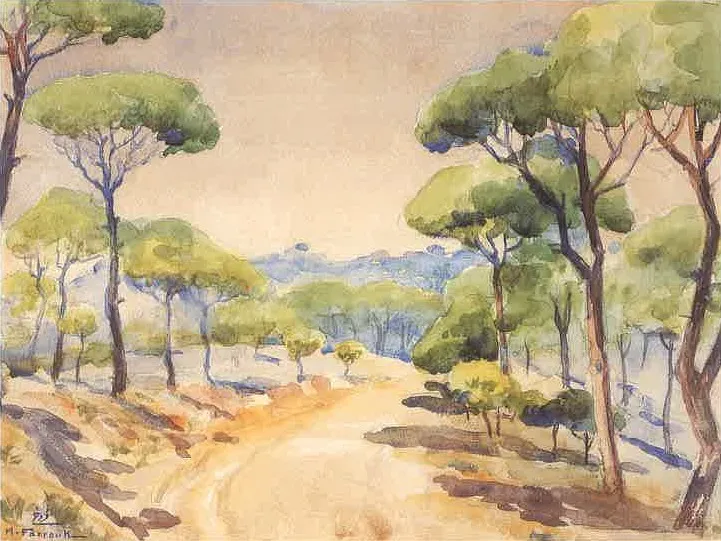
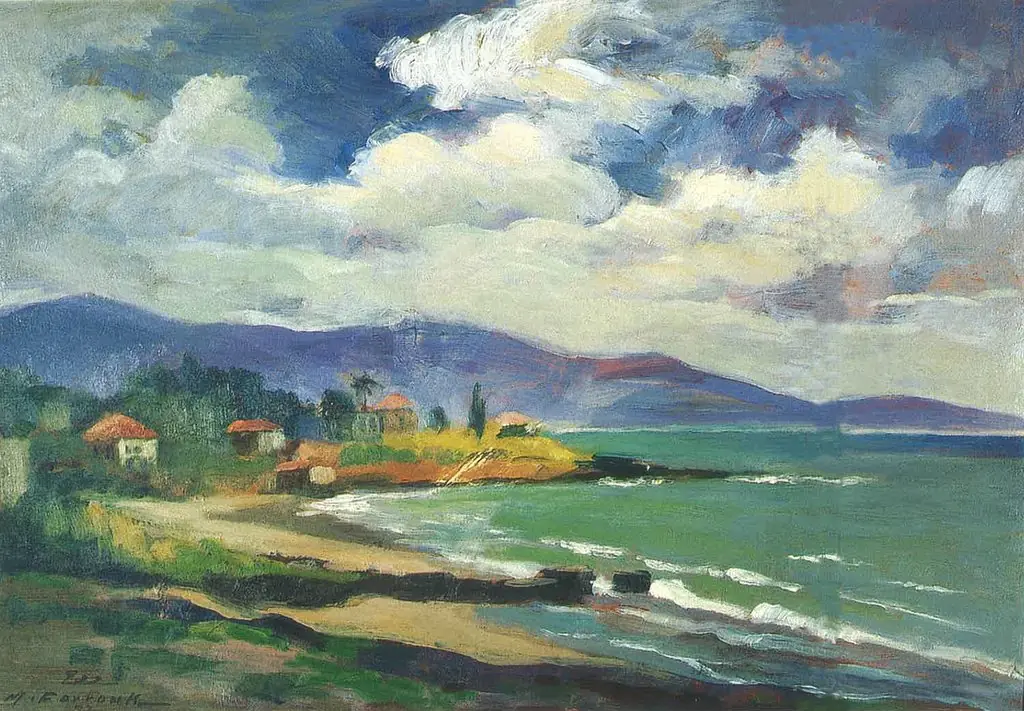
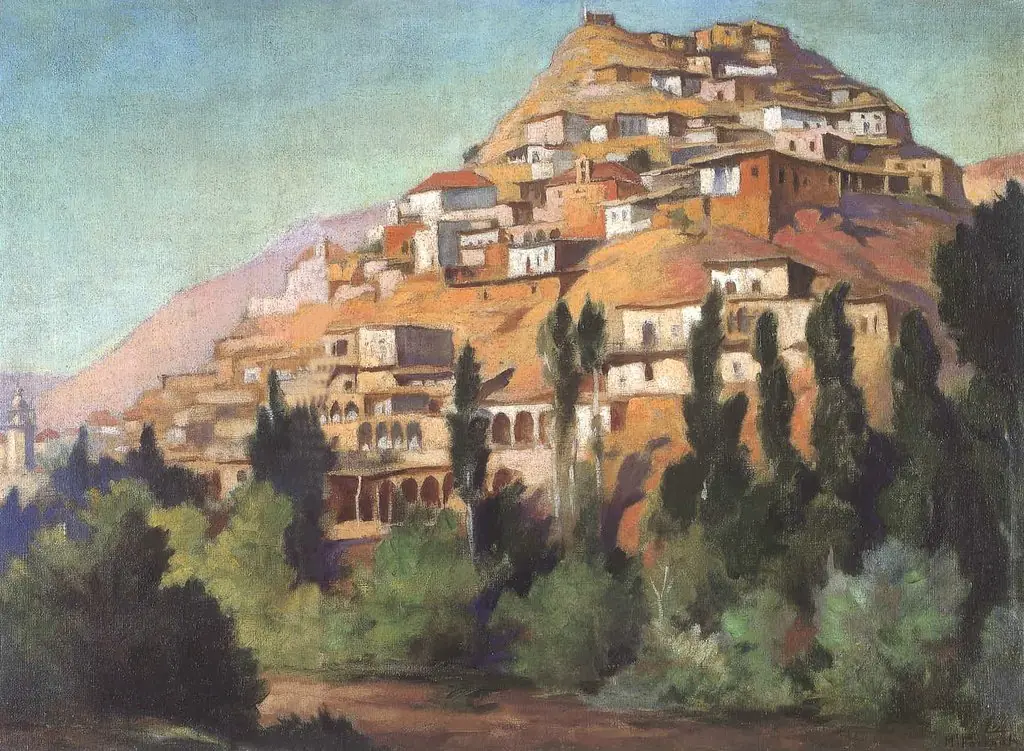
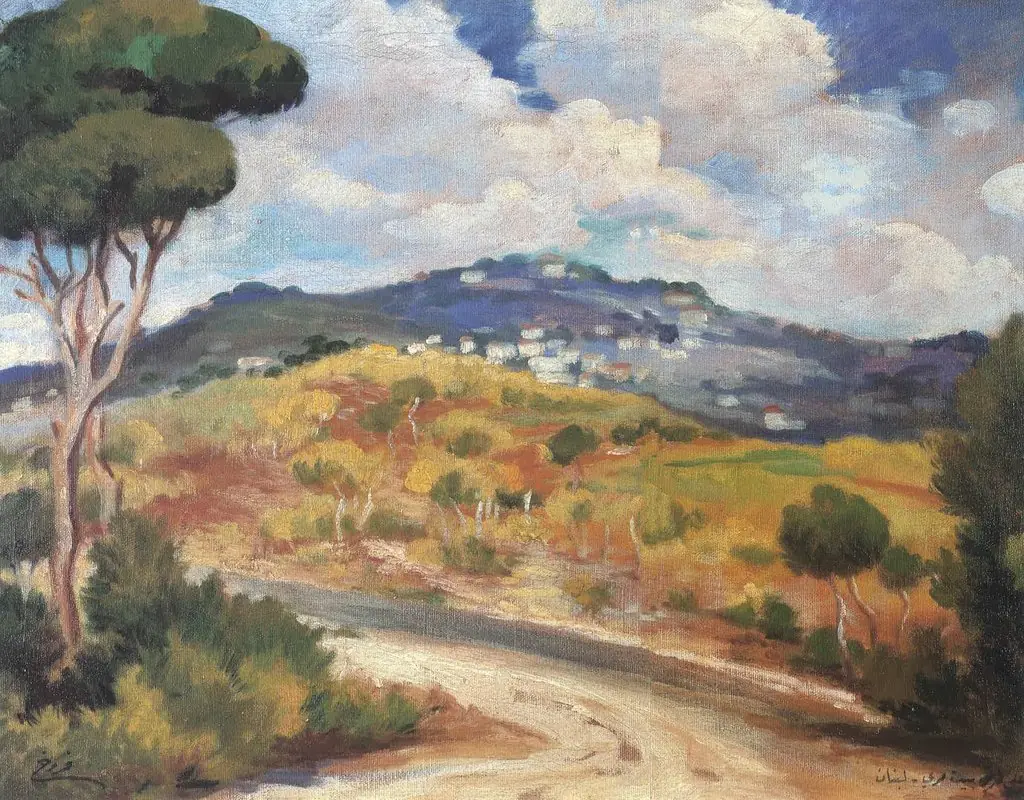
A View From Al-Matn is a watercolor painting by Moustafa Farroukh. It dates from 1939 and is held in the collection of the Sursock Museum.
About this work
Overview
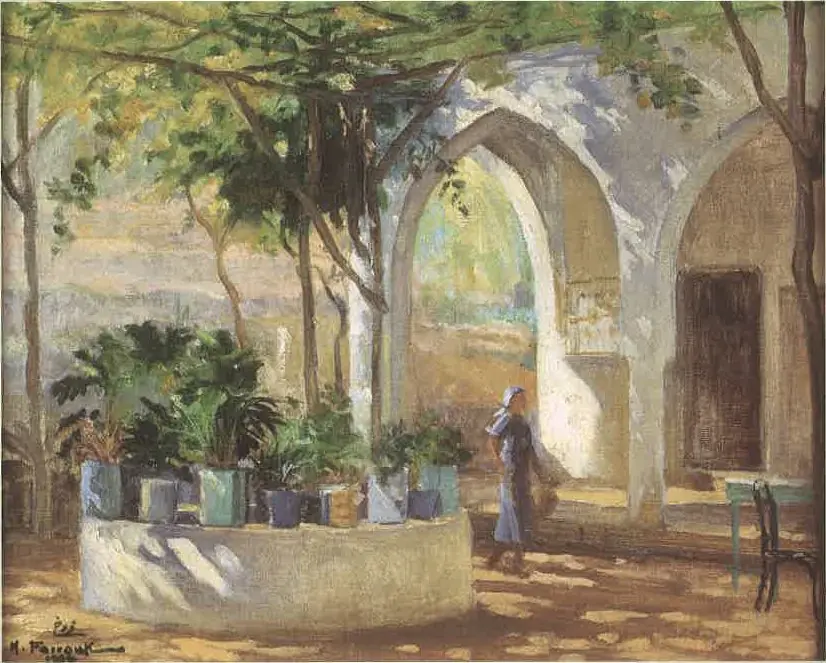
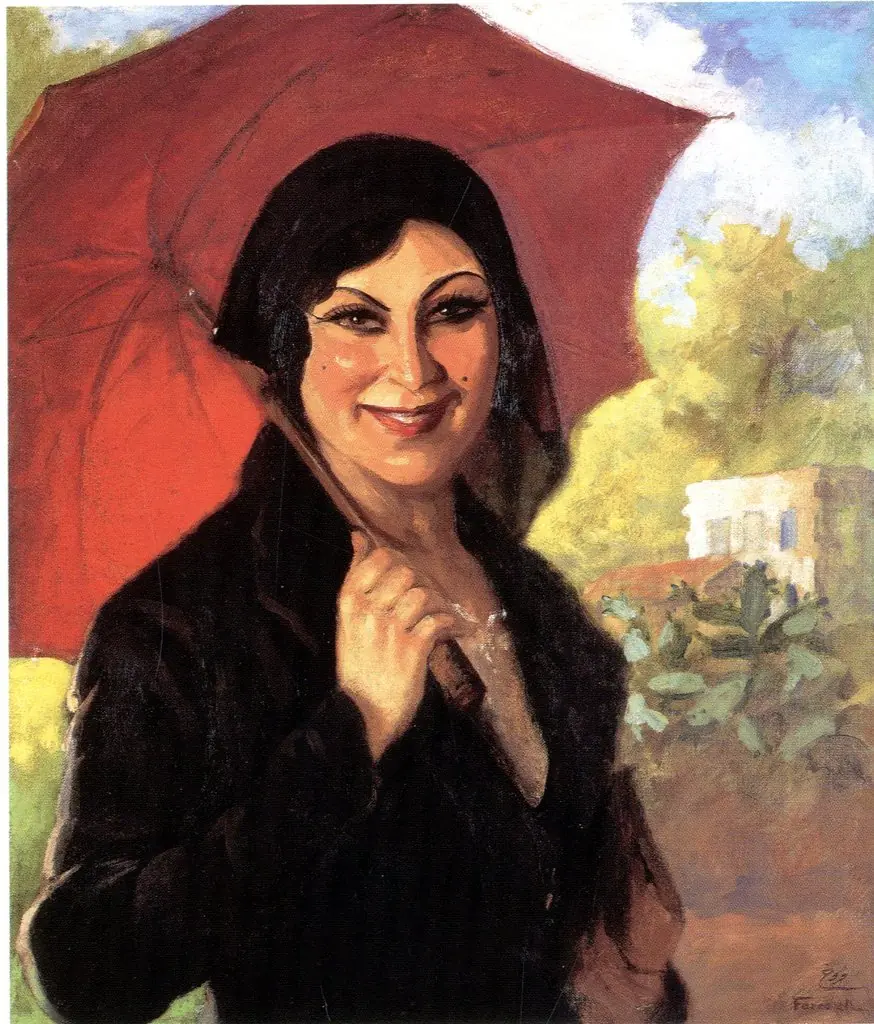
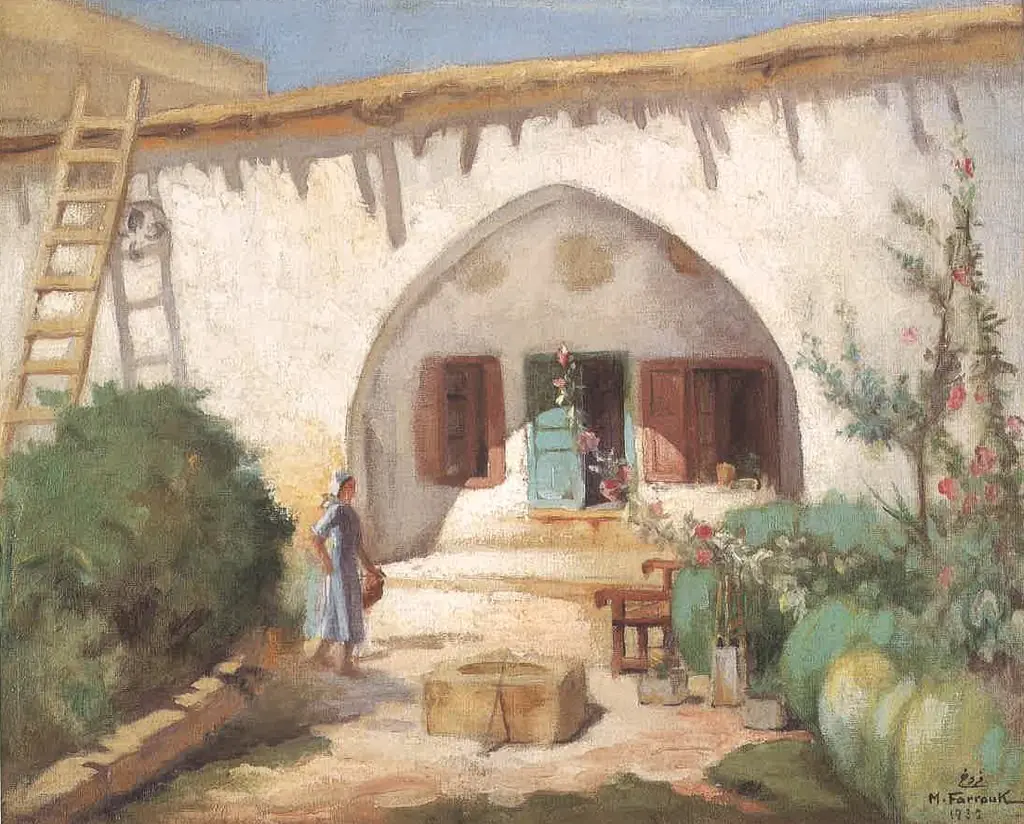
Farroukh, who produced over two thousand works during his career, often turned to local topography as subject matter.
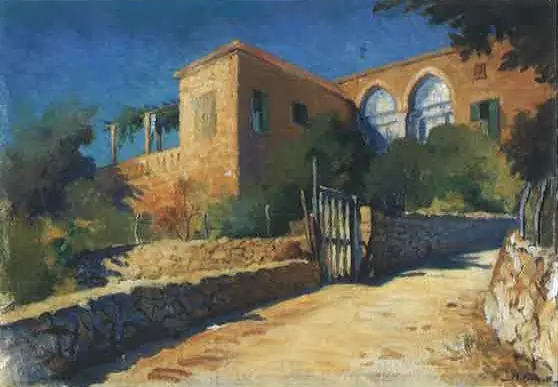
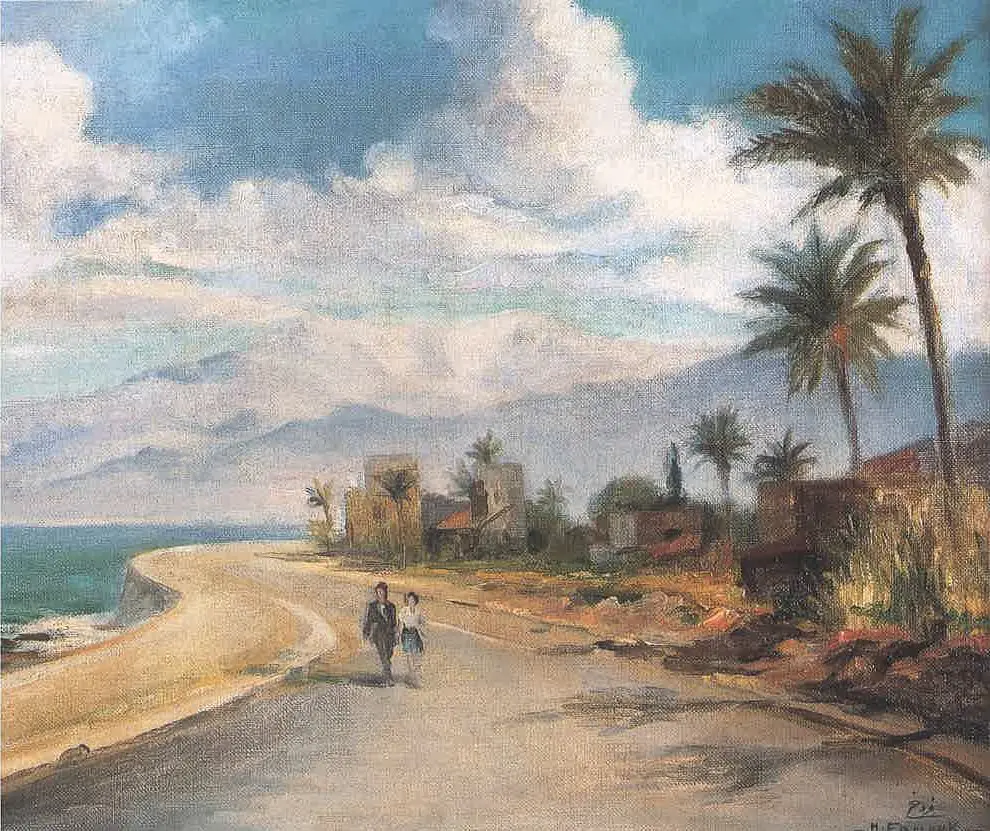
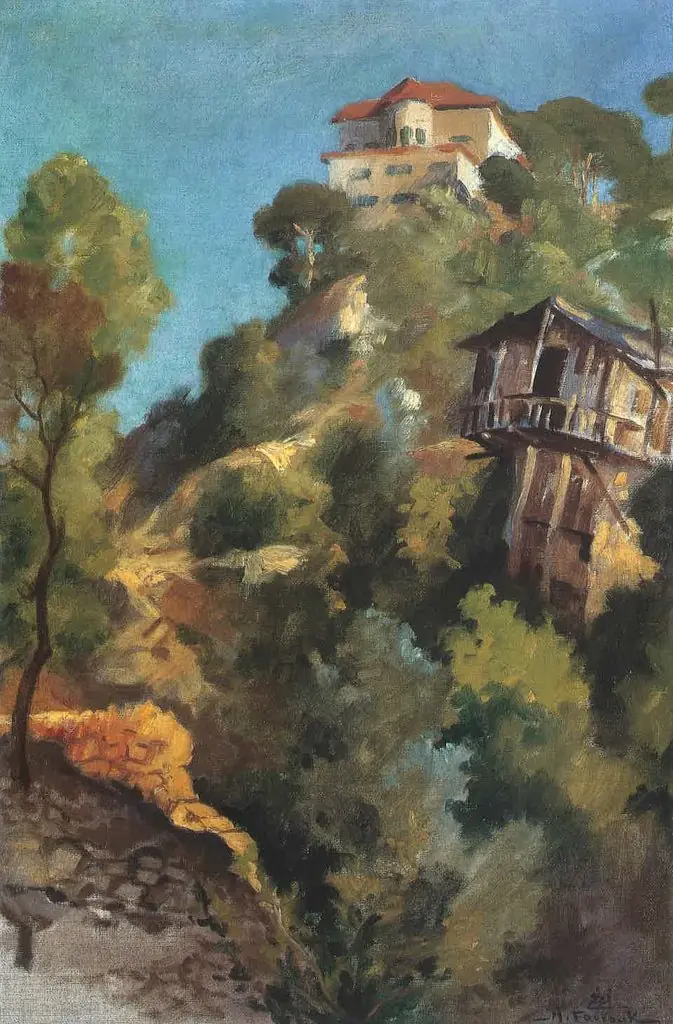
Created around 1939, *A View From Al-Matn* is a watercolor landscape by Lebanese artist Moustafa Farroukh. It captures a quiet rural scene in the Mount Lebanon region, rendered with delicate brushwork and layered glazes. Farroukh, who produced over two thousand works during his career, often turned to local topography as subject matter. This piece is part of the Sursock Museum’s permanent collection, reflecting its significance in modern Lebanese art.
Subject & Meaning
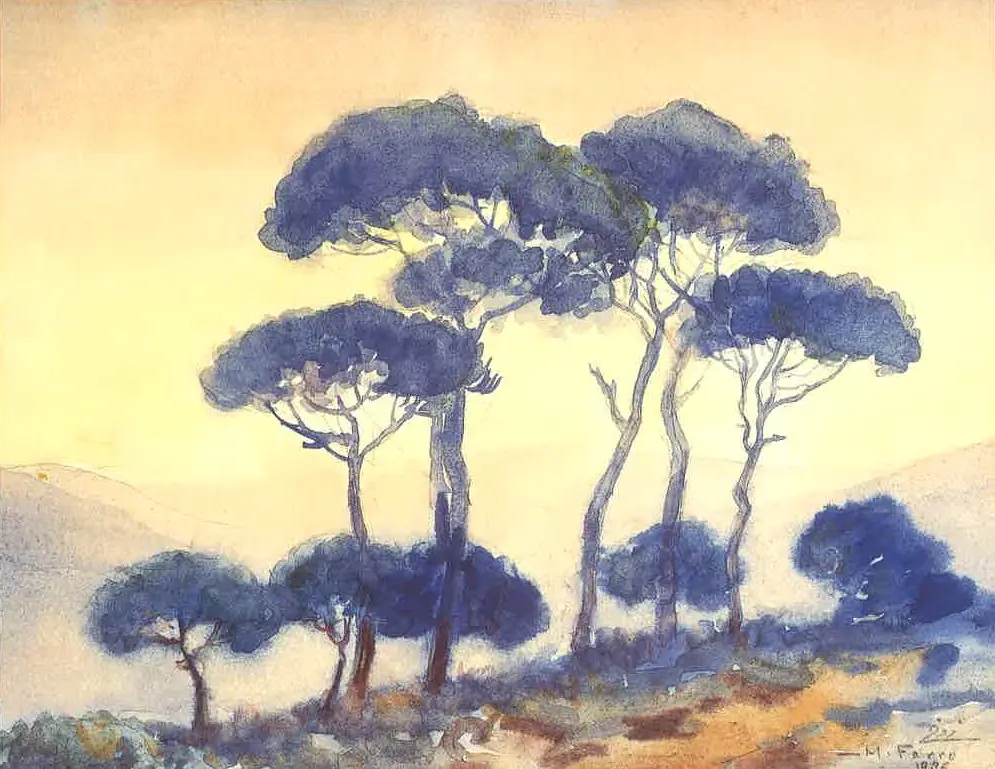
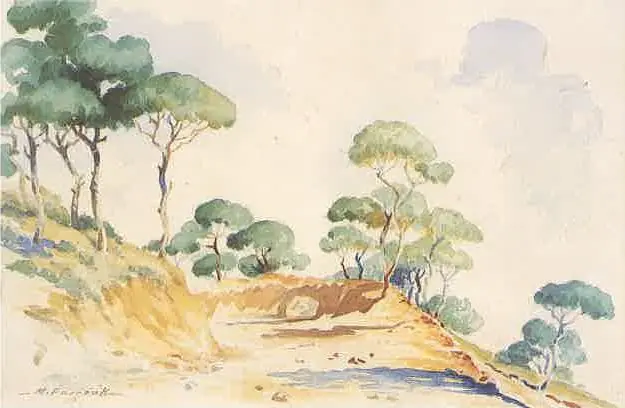
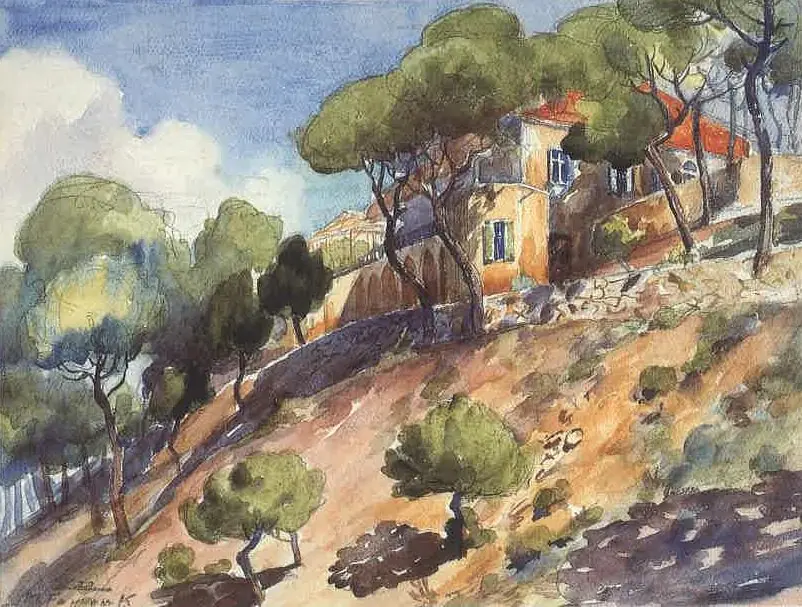
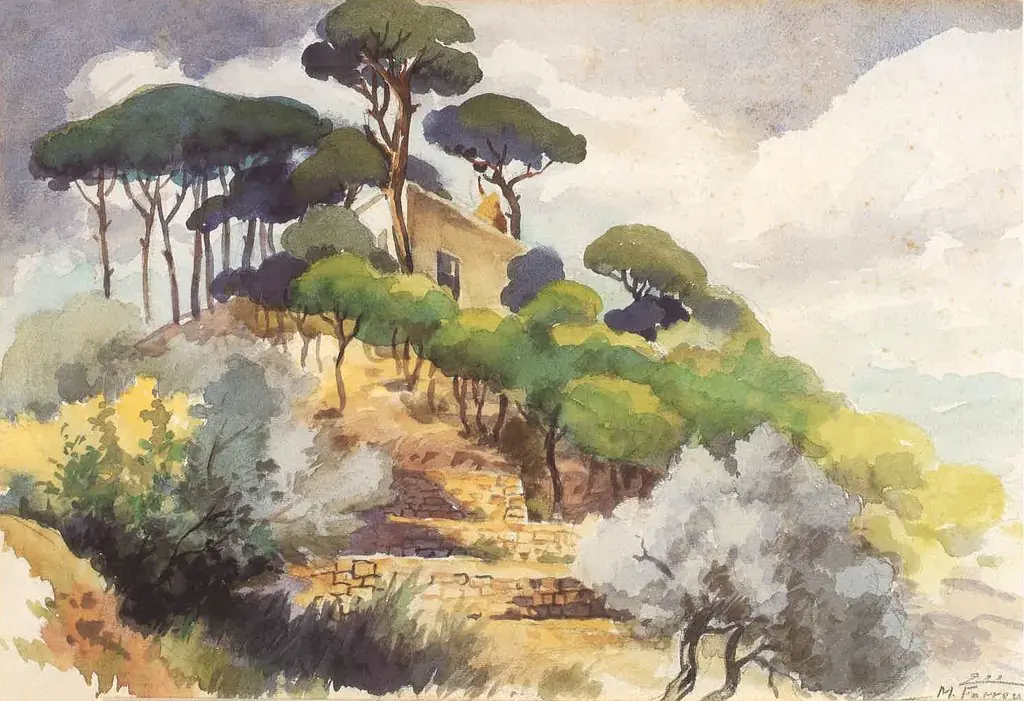
The painting presents a winding path through a grove of stone pines, leading the eye toward a hazy horizon. The road, faintly defined in warm beige, suggests movement and quiet solitude. Trees and underbrush in varying greens frame the composition, while the pale sky implies late afternoon light. There is no human presence, emphasizing the serenity and timelessness of the Lebanese countryside as a personal, contemplative space.
Technique & Style
Farroukh employed watercolor glazing to build subtle tonal transitions and atmospheric depth. Soft, layered strokes create a luminous effect, with colors bleeding gently into one another. The brushwork avoids sharp definition, favoring a hazy, almost ethereal quality. This technique enhances the sense of distance and stillness, aligning with his broader approach to landscape as emotional rather than topographically precise.
History & Provenance
The painting was completed during a period when Farroukh was deeply engaged with documenting Lebanon’s natural and cultural landscapes. It entered the Sursock Museum’s collection in the mid-20th century, where it remains today. The museum, established in Beirut in 1961, holds one of the most comprehensive archives of modern Lebanese art, and this work is among its early acquisitions reflecting national artistic identity.
Context
In the late 1930s, Lebanon was under French mandate, and a growing cultural movement sought to define a distinct national identity through art. Farroukh, alongside contemporaries, turned away from European academic traditions to depict local scenery with sensitivity. *A View From Al-Matn* exemplifies this shift, offering a quiet, personal vision of the land that resonated with emerging ideas of Lebanese heritage.
Legacy
Farroukh’s watercolors, including this work, helped establish landscape painting as a legitimate genre in modern Lebanese art. His focus on indigenous terrain influenced later generations of artists to explore local environments with intimacy rather than idealization. Though less known internationally, his body of work remains foundational in Lebanon’s art historical narrative.
Artist & collection
Artist
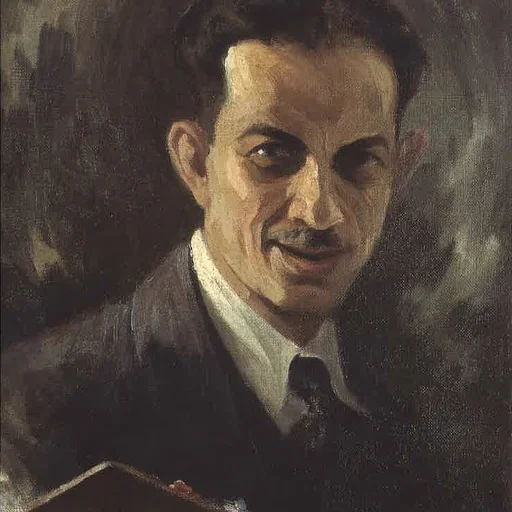
Moustafa Farroukh (Arabic: مصطفى فروخ; 1901 – 1957) was one of Lebanon's most prominent painters of the 20th century.