Artwork
A Village House
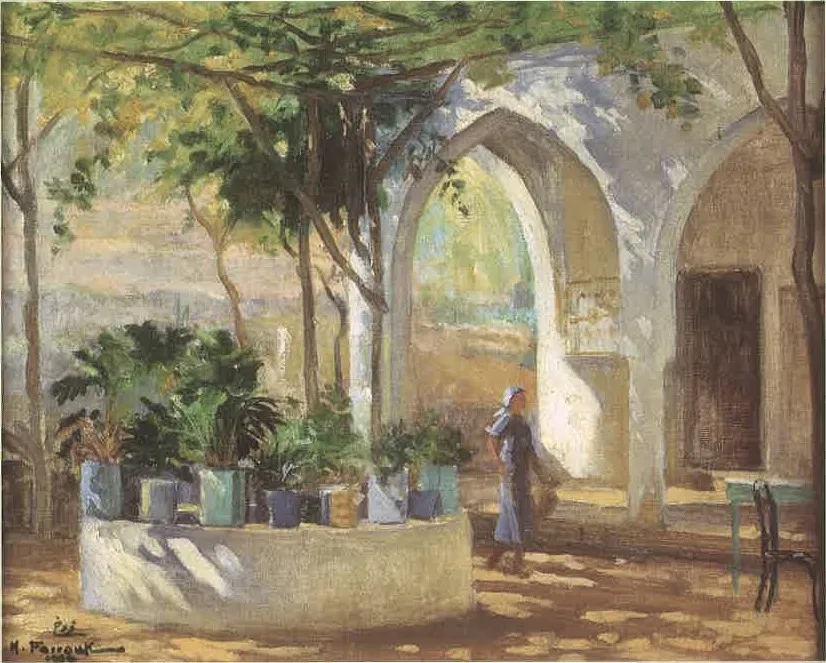
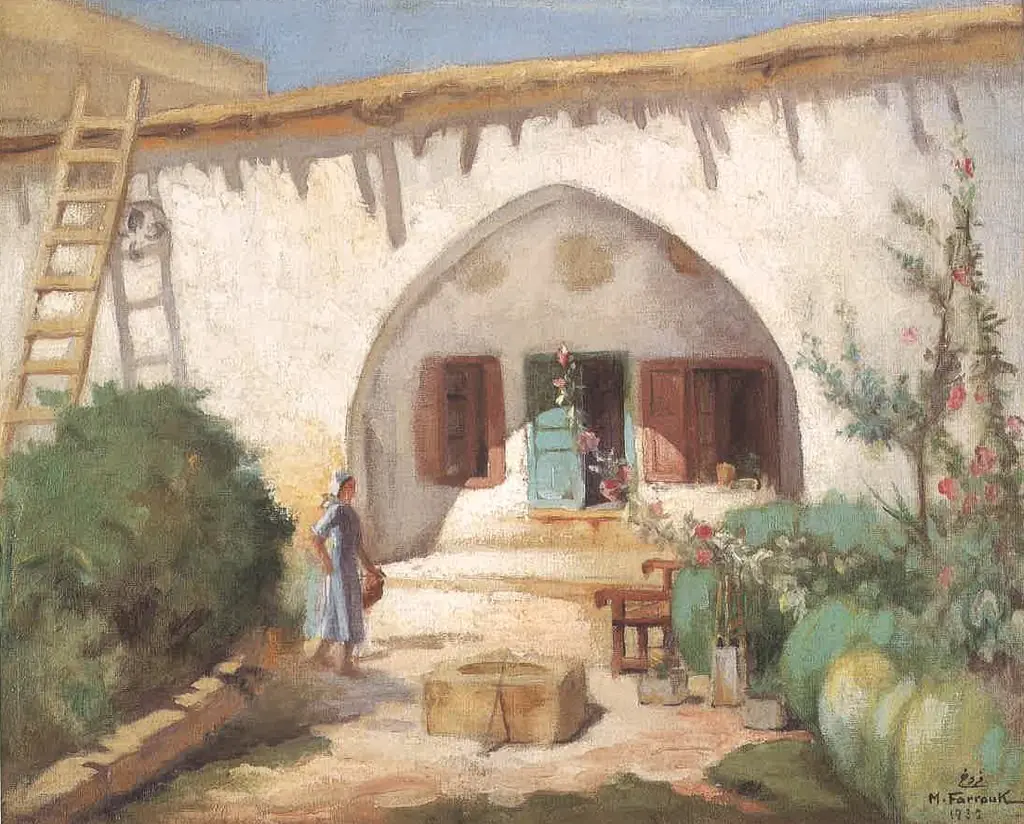
A Village House is an oil painting by Moustafa Farroukh. It dates from 1939 and is held in the collection of the Sursock Museum.
About this work
Overview
Created around 1939 by Lebanese artist Moustafa Farroukh, *A Village House* is a painted composition executed on plywood.
Created around 1939 by Lebanese artist Moustafa Farroukh, *A Village House* is a painted composition executed on plywood. It presents a quiet domestic scene set within a courtyard, blending architectural elements with natural forms. Farroukh, known for his extensive body of work and literary contributions, often drew from everyday Lebanese life, capturing moments of stillness with deliberate composition and restrained color.
Subject & Meaning
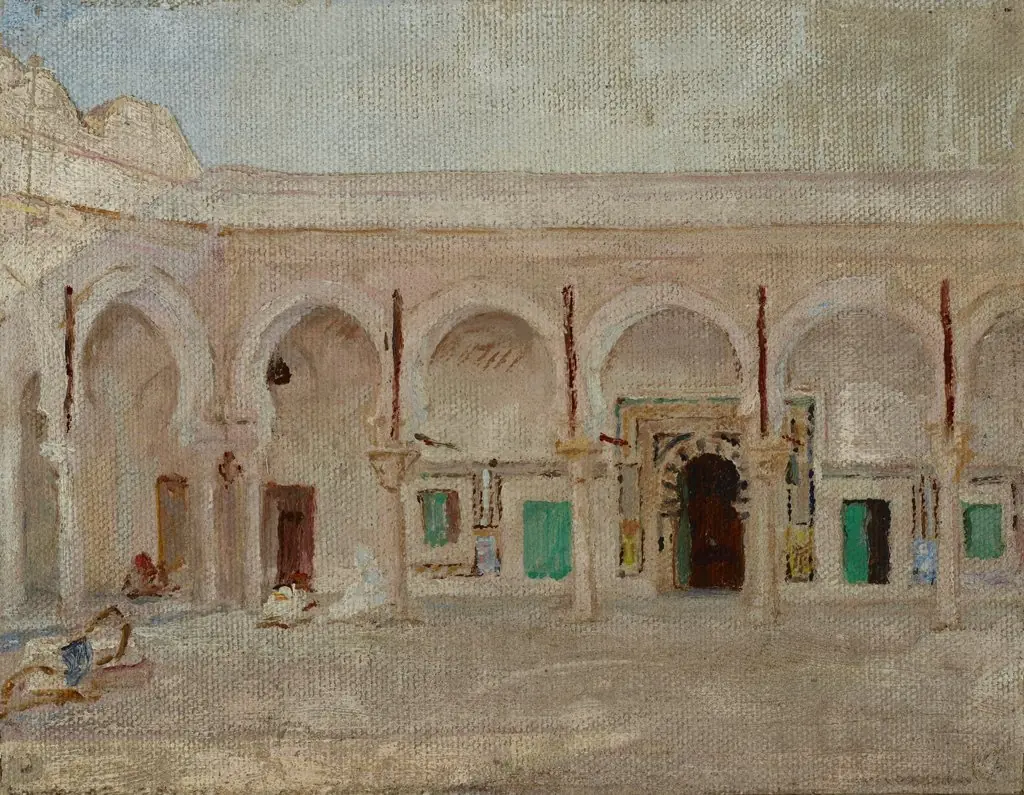
The painting depicts a woman in a blue dress and headscarf walking through a shaded courtyard, carrying a basket toward a doorway. Surrounding her are arched structures, potted plants, and trees, suggesting a private, lived-in space. The figure’s movement implies routine, not ceremony, grounding the scene in the rhythms of rural or small-town life. The absence of overt narrative invites contemplation of solitude and domestic continuity.
Technique & Style
Farroukh employed muted tones of brown and green to unify the composition, emphasizing texture over vibrancy. Light and shadow are carefully modulated to model forms and suggest depth, particularly in the arches and foliage. The use of chiaroscuro enhances the spatial recession of the courtyard, while the plywood support adds a subtle grain that subtly interacts with the paint surface, reinforcing the work’s tactile, grounded quality.
History & Provenance
The painting has been part of the Sursock Museum’s collection since its creation, reflecting its early recognition within Lebanon’s modern art circles. Farroukh’s reputation as a prolific and influential figure ensured his works were systematically preserved by cultural institutions. *A Village House* remains one of many pieces documenting his engagement with local environments and domestic life during the late 1930s.
Context
Painted during a period of growing cultural self-awareness in Lebanon, the work reflects a broader interest among artists in depicting indigenous scenes rather than imported European motifs. Farroukh’s focus on vernacular architecture and daily routines aligned with a regional movement to define a distinct visual identity, rooted in local experience rather than colonial aesthetics.
Legacy
Farroukh’s body of work, including *A Village House*, contributed to the foundation of modern Lebanese painting. His integration of everyday subjects with refined technique influenced subsequent generations of artists seeking to portray national life with dignity and subtlety. The painting endures as a quiet testament to the aesthetic value found in ordinary moments and materials.
Artist & collection
Artist
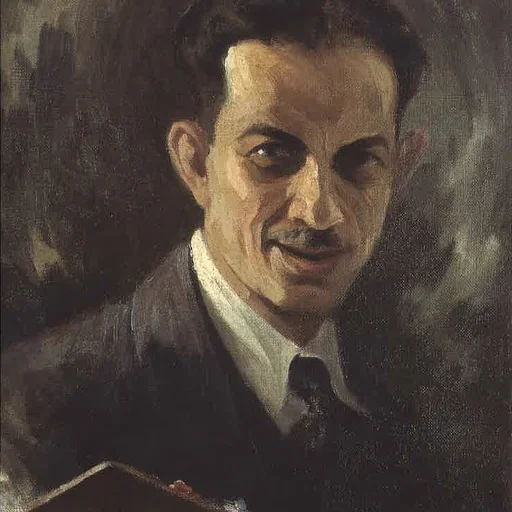
Moustafa Farroukh (Arabic: مصطفى فروخ; 1901 – 1957) was one of Lebanon's most prominent painters of the 20th century.

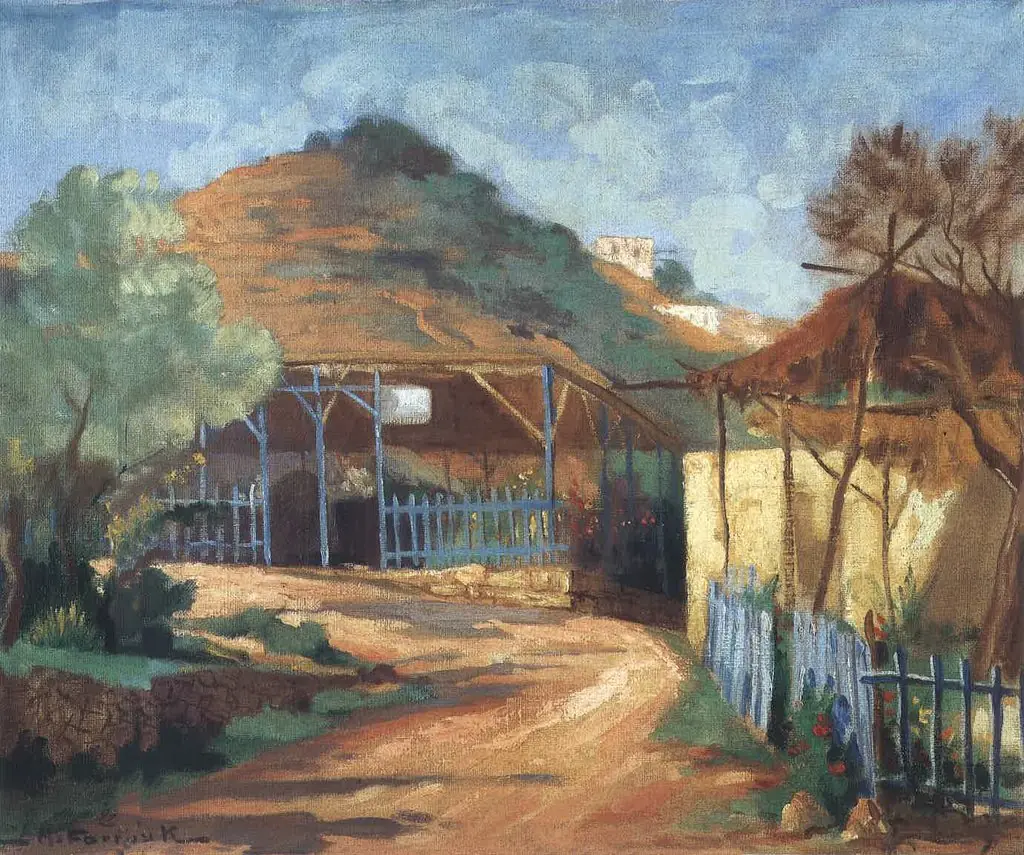 A Coffee House at Chemlane
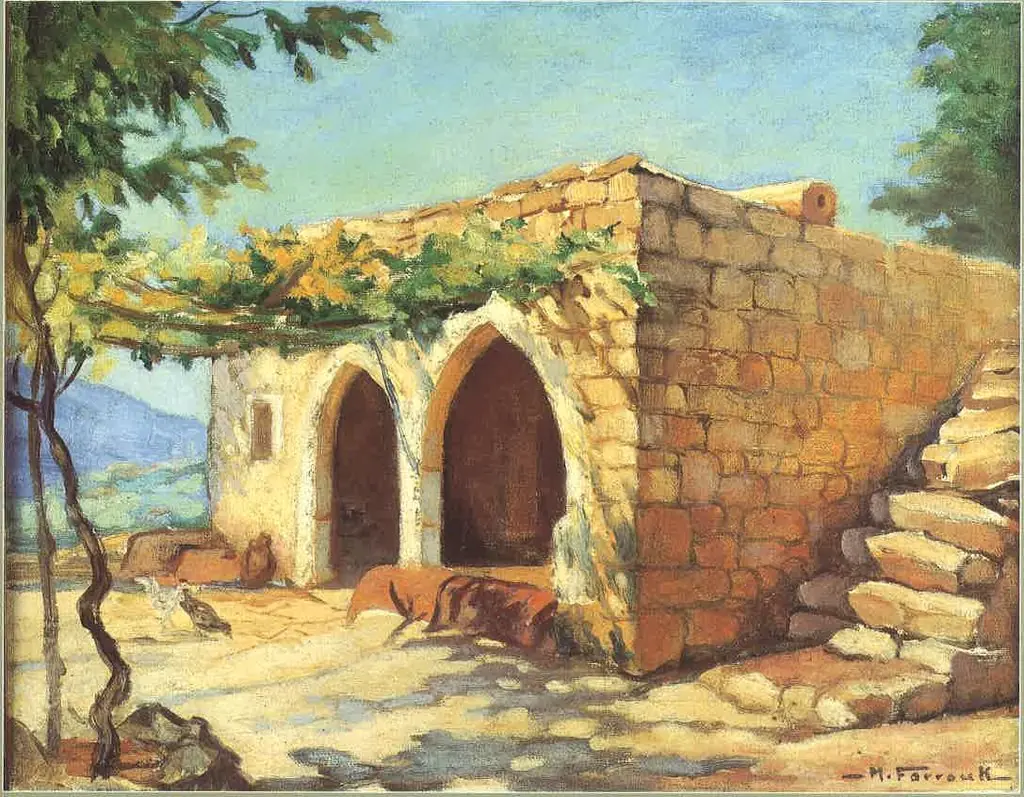 A House at Al-Hadath
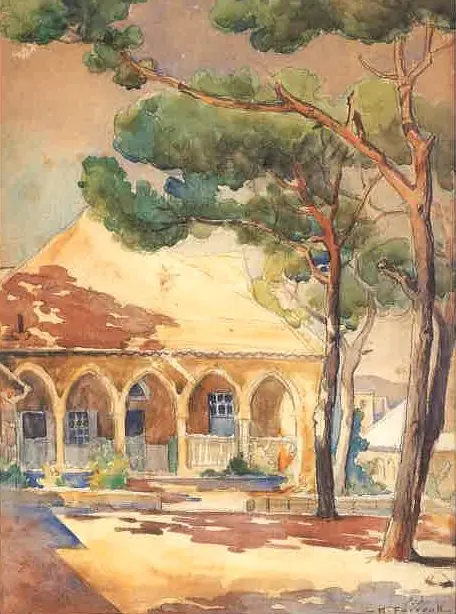 Bhamdoun Al-Mahatta: A House With A Garden
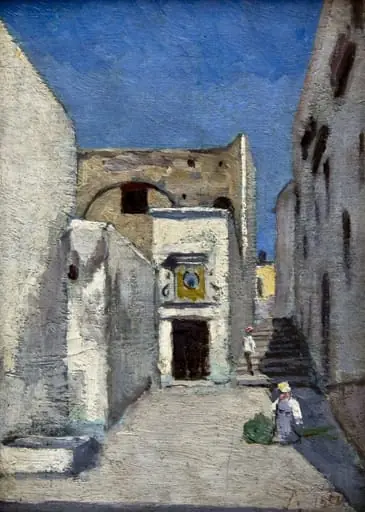 Peisaj din sudul Franței
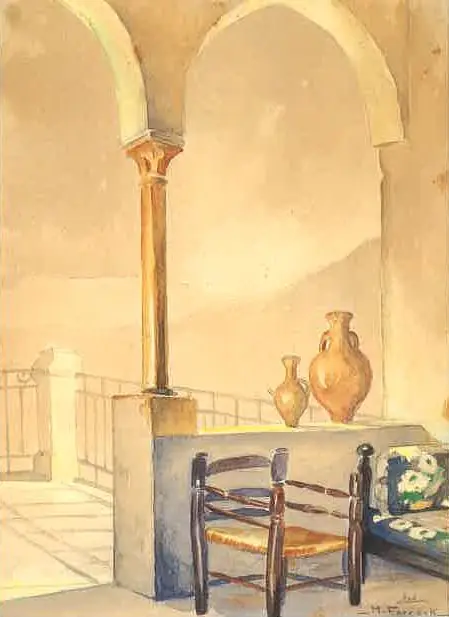 View from Boulos Khauli's House in Bhamdoun Al-Mahatta
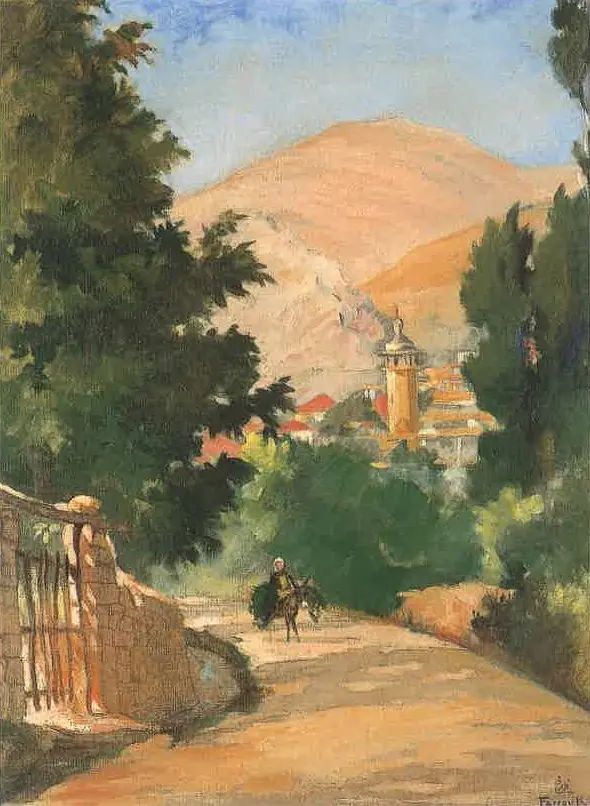 Qab Elias
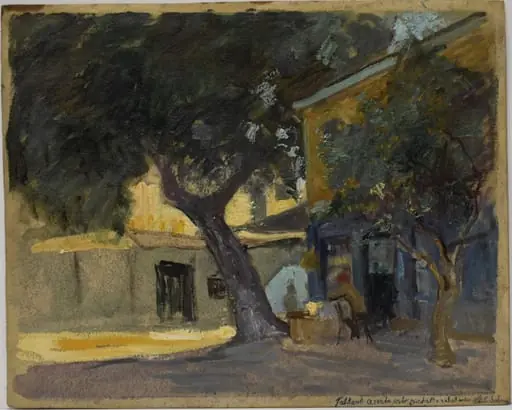 Stradă din Dobrogea (Cafenea la Balcic)
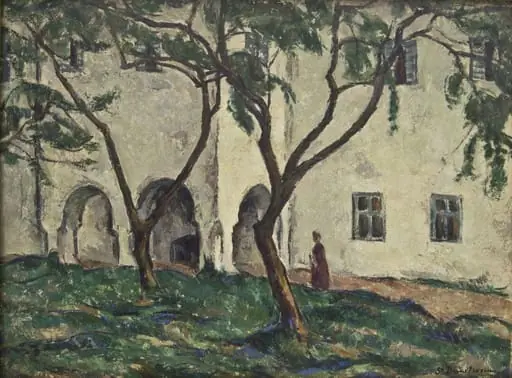 Castelul Brâncoveanu din Sâmbăta de Sus
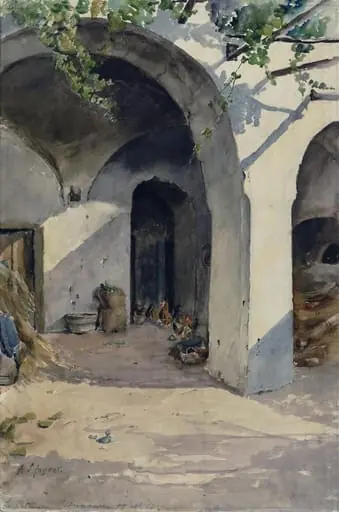 A Courtyard at Anacapri
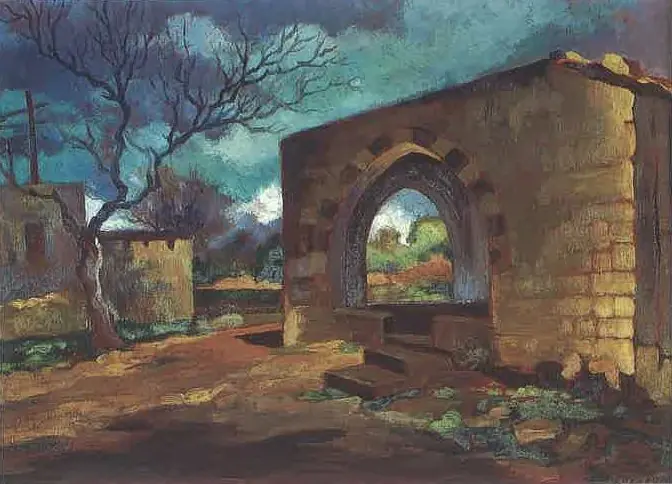 Al-Mrejeh
 Kairouan (Courtyard in the Mosque of the Sword)