Artwork
Beirut and Sannine from Tallet Al-Khayyat
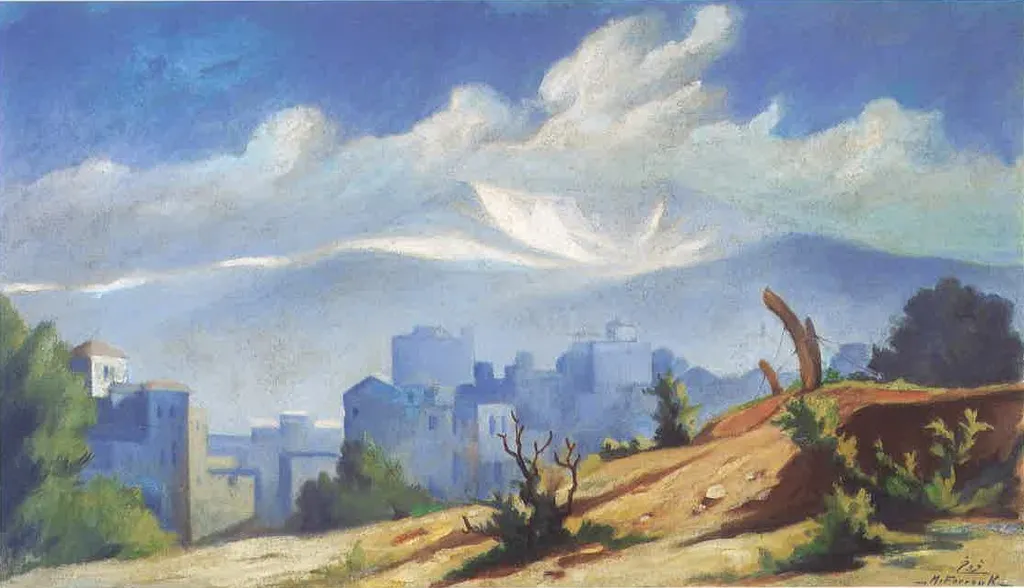
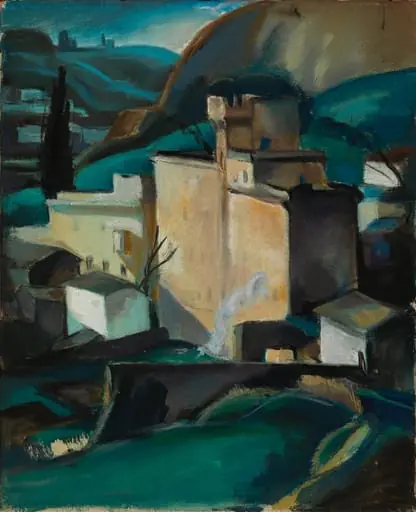
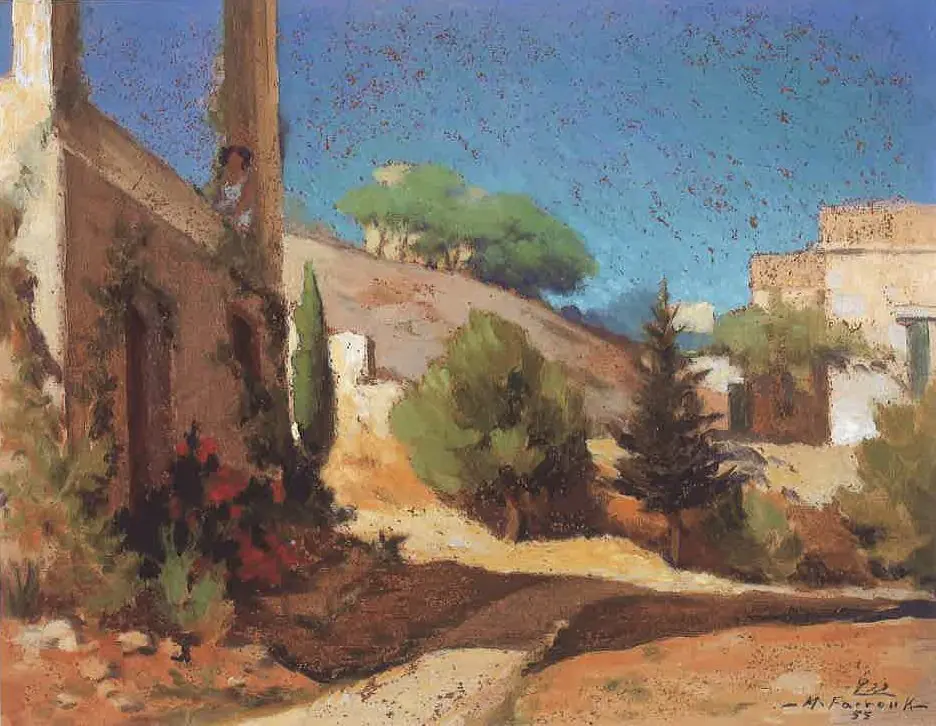
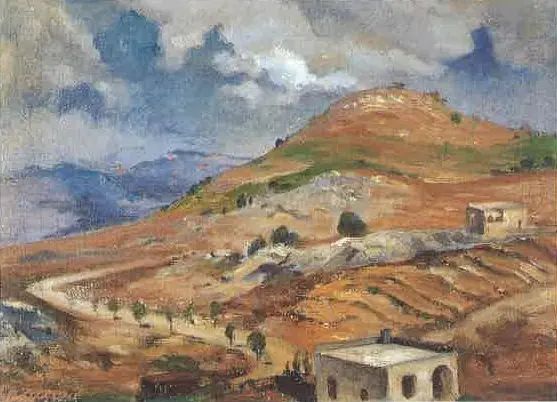
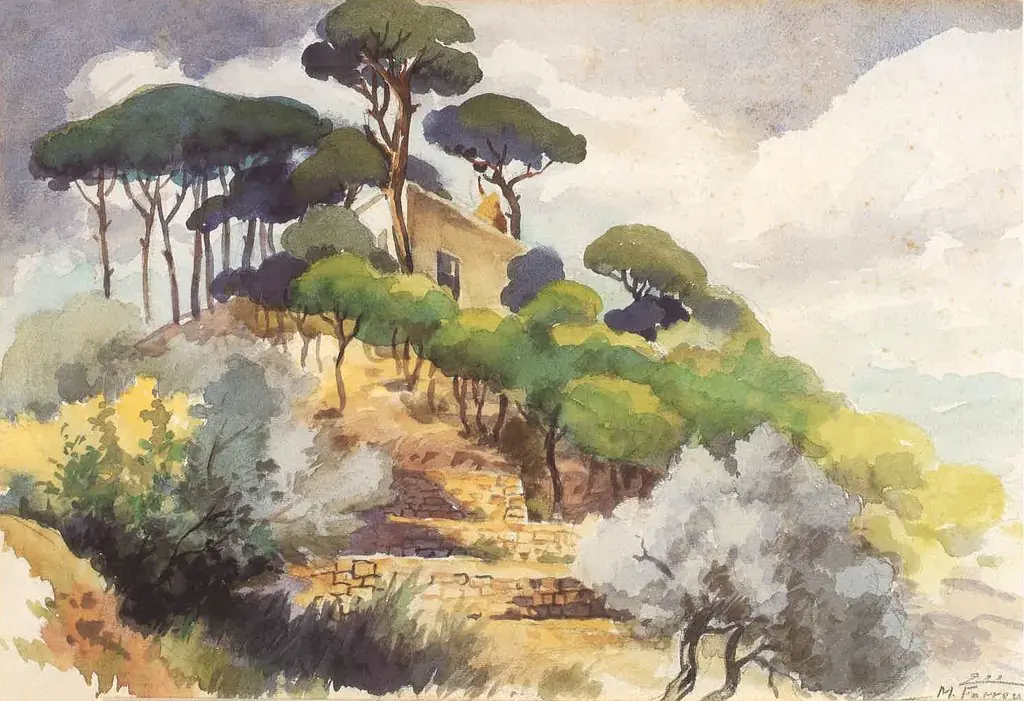
Beirut and Sannine from Tallet Al-Khayyat is an oil painting by Moustafa Farroukh. It dates from 1939 and is held in the collection of the Sursock Museum.
About this work
Overview
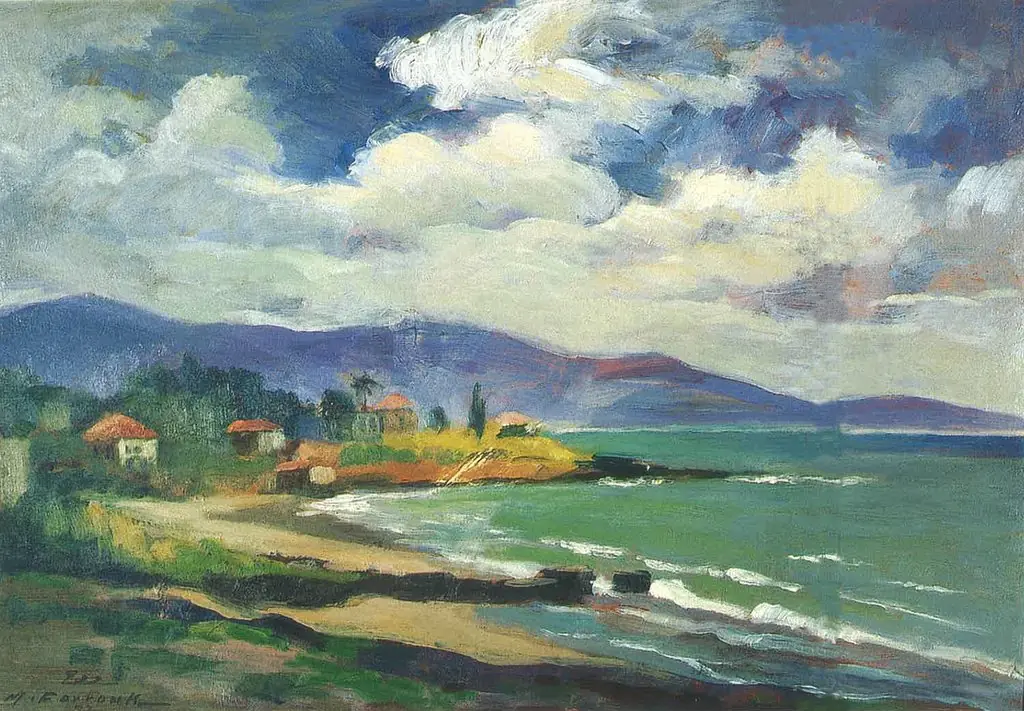
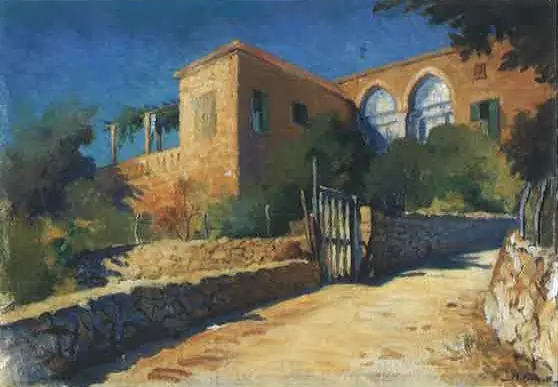
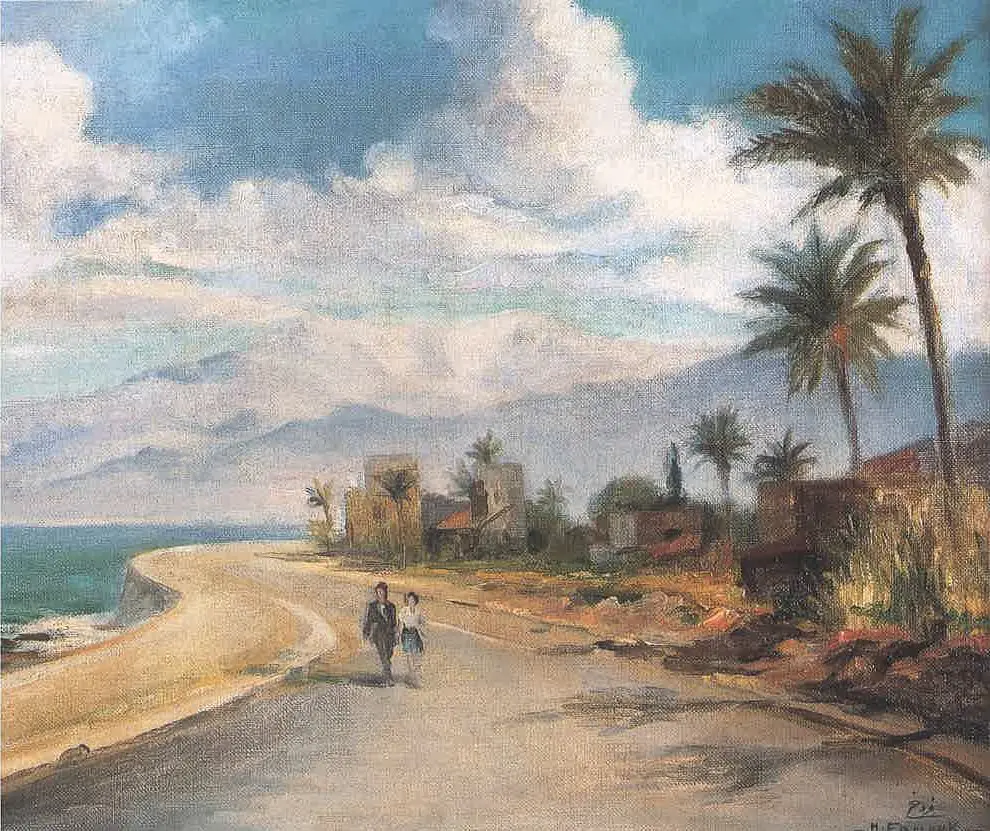
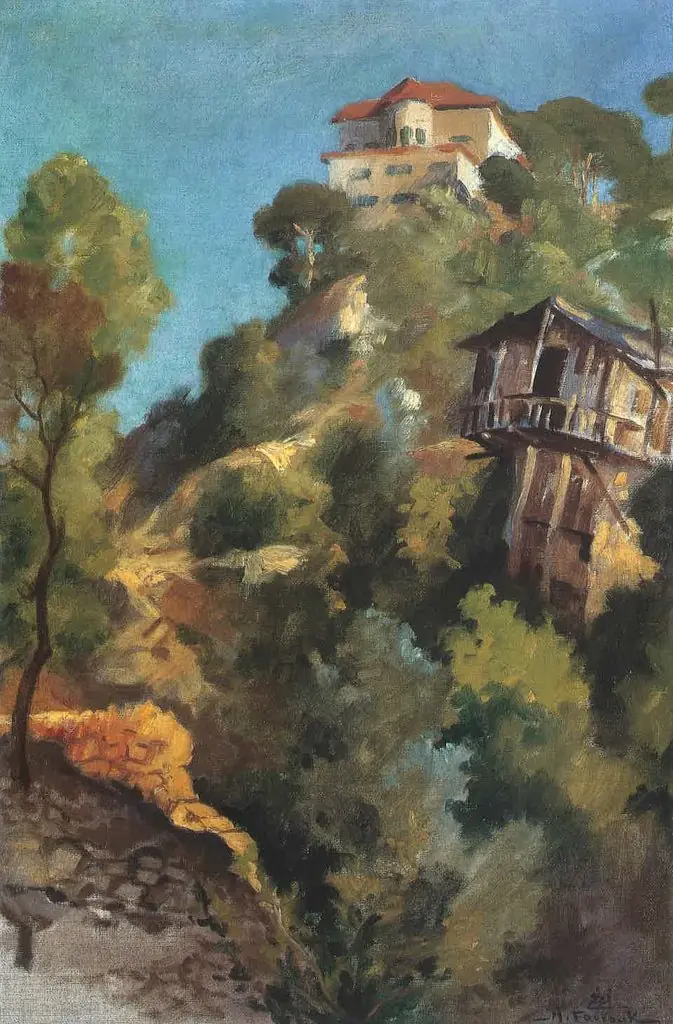
Painted around 1939, *Beirut and Sannine from Tallet Al-Khayyat* is an oil-on-canvas landscape by Moustafa Farroukh, a central figure in modern Lebanese art.
Painted around 1939, *Beirut and Sannine from Tallet Al-Khayyat* is an oil-on-canvas landscape by Moustafa Farroukh, a central figure in modern Lebanese art. The work captures a view from the Tallet Al-Khayyat ridge, looking toward Beirut’s developing urban fabric and the distant peak of Mount Sannine. Its composition balances the quiet density of the city with the elevated stillness of the mountain, framed by a muted, overcast sky.
Subject & Meaning
The painting presents Beirut not as a grand metropolis but as a modest, evolving settlement nestled against the natural grandeur of Mount Sannine. The contrast between the cool, subdued tones of the urban area and the warmer, sunlit slopes of the mountain suggests a quiet harmony between human habitation and the enduring Lebanese landscape. It reflects a contemplative relationship with place, common in Farroukh’s work.
Technique & Style
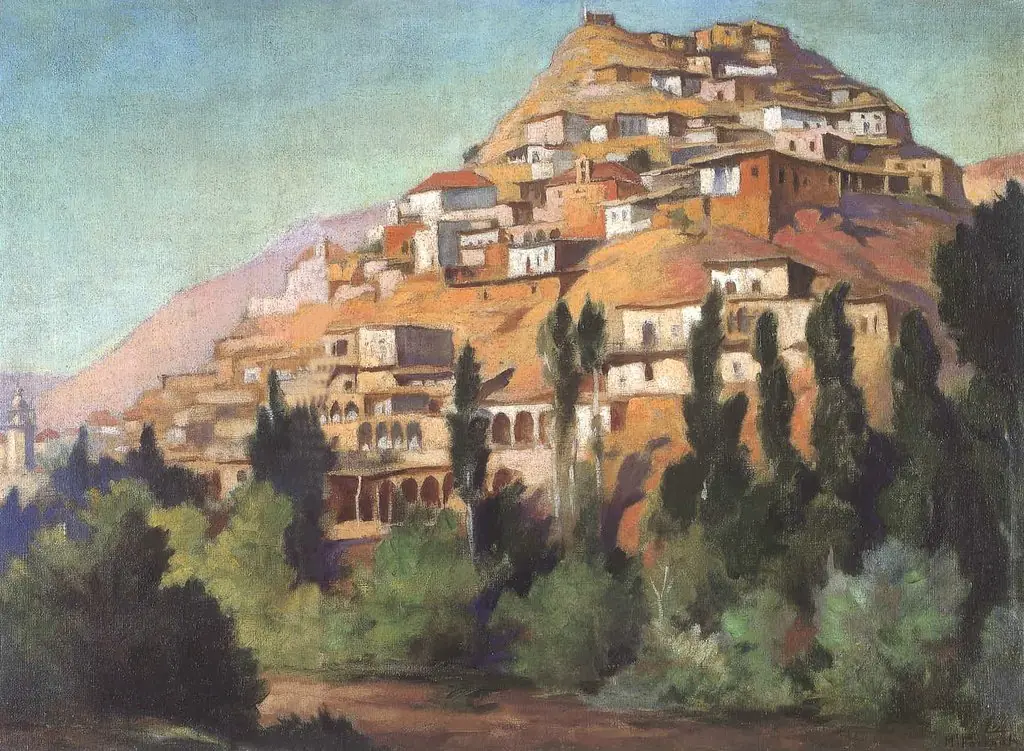
Farroukh employed loose, expressive brushwork to convey atmosphere rather than precise detail. The city is rendered in soft blues and grays, with patches of green suggesting vegetation, while the mountain glows with subtle ochres and creams under diffuse light. The sky, lightly brushed with clouds, unifies the scene without dominating it. His approach prioritizes mood and spatial rhythm over topographical accuracy.
History & Provenance
The painting has remained in the collection of the Sursock Museum in Beirut since its creation, a testament to its early recognition within Lebanon’s artistic community. Farroukh, who produced over two thousand works and authored five books, was deeply engaged with national identity through art. This piece entered the museum’s holdings during a period when local collectors were actively preserving emerging Lebanese modernism.
Context
Created in the late 1930s, the painting emerged during a time of cultural awakening in Lebanon, as artists sought to define a visual language rooted in local experience. Urban expansion was reshaping Beirut, while Mount Sannine remained a symbolic anchor of the region’s geography and heritage. Farroukh’s depiction reflects this tension without overt commentary, favoring quiet observation.
Legacy
As one of Farroukh’s many landscape studies, the work contributes to a broader archive of Lebanese visual identity formed in the early 20th century. It exemplifies his role in shifting focus from European academic traditions toward intimate, locally grounded scenes. Today, it remains a reference point for understanding how Lebanese artists engaged with their environment during a formative era of national self-definition.
Artist & collection
Artist
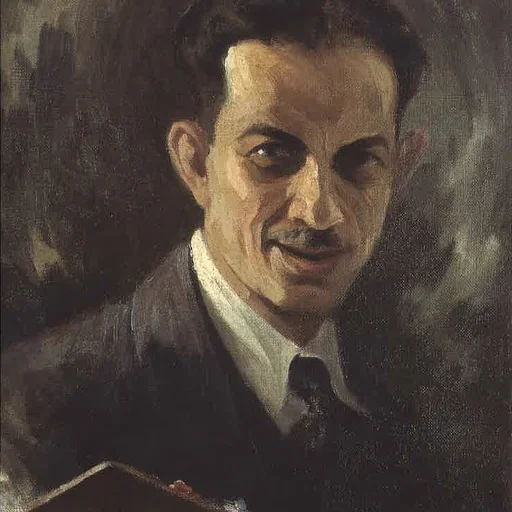
Moustafa Farroukh (Arabic: مصطفى فروخ; 1901 – 1957) was one of Lebanon's most prominent painters of the 20th century.