Artwork
Granada, Alhambra: Lindaraja's Balcony
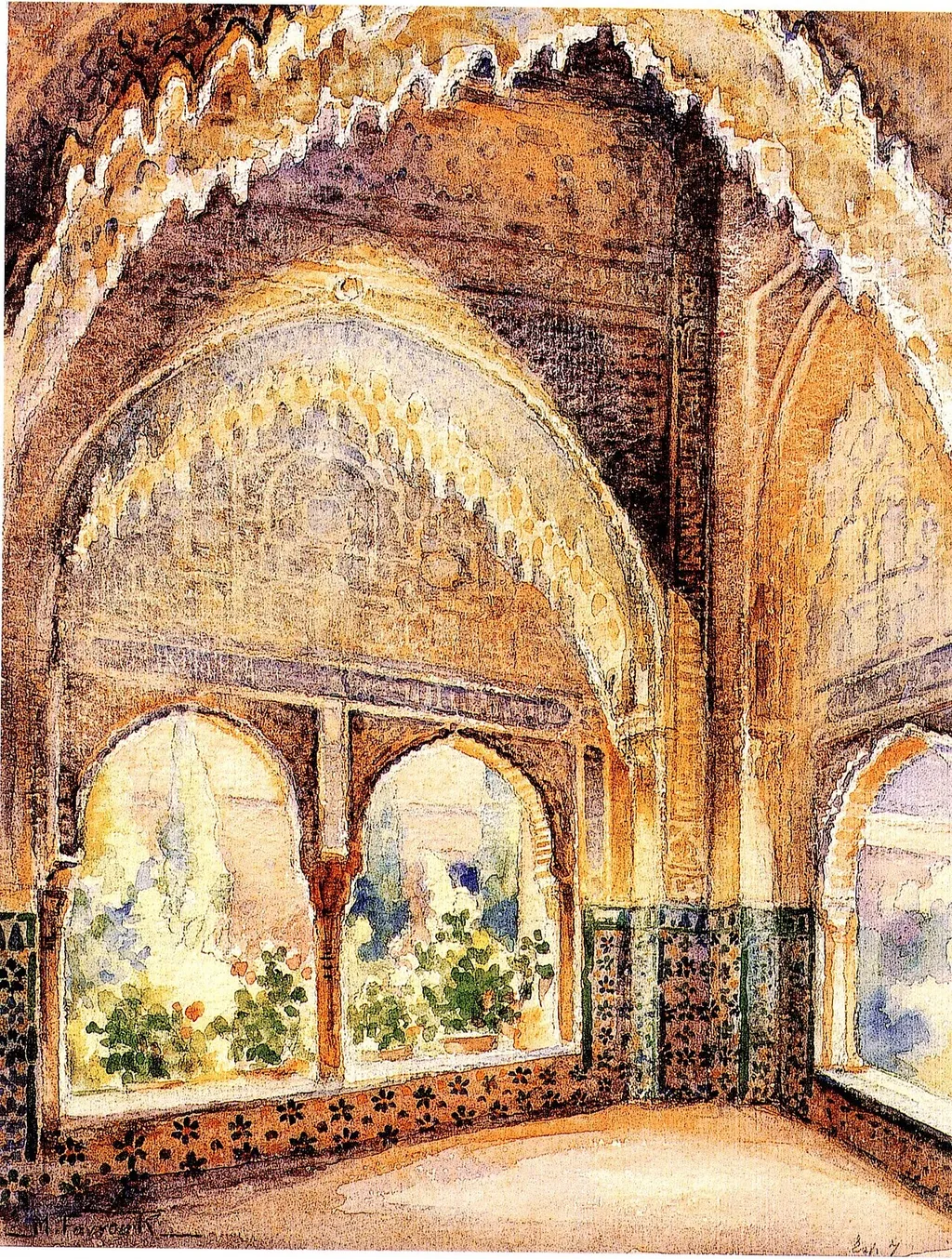
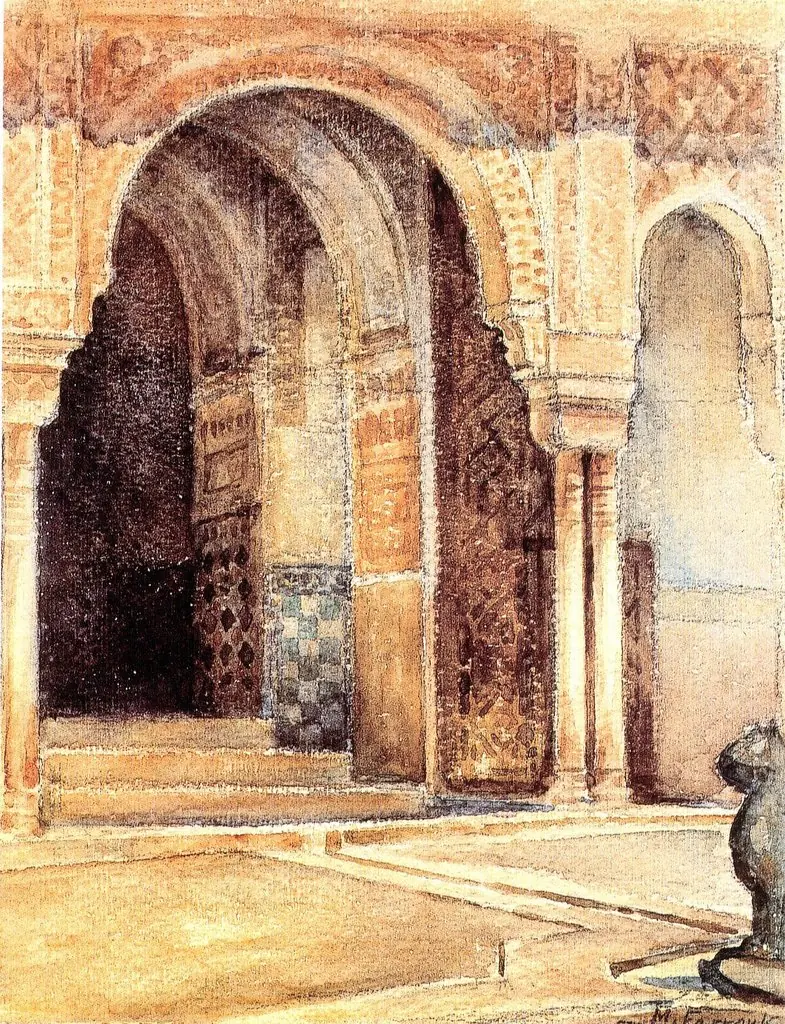
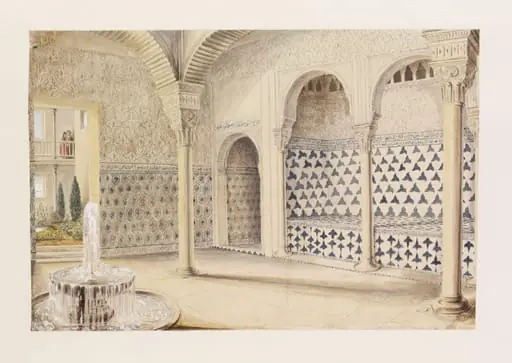
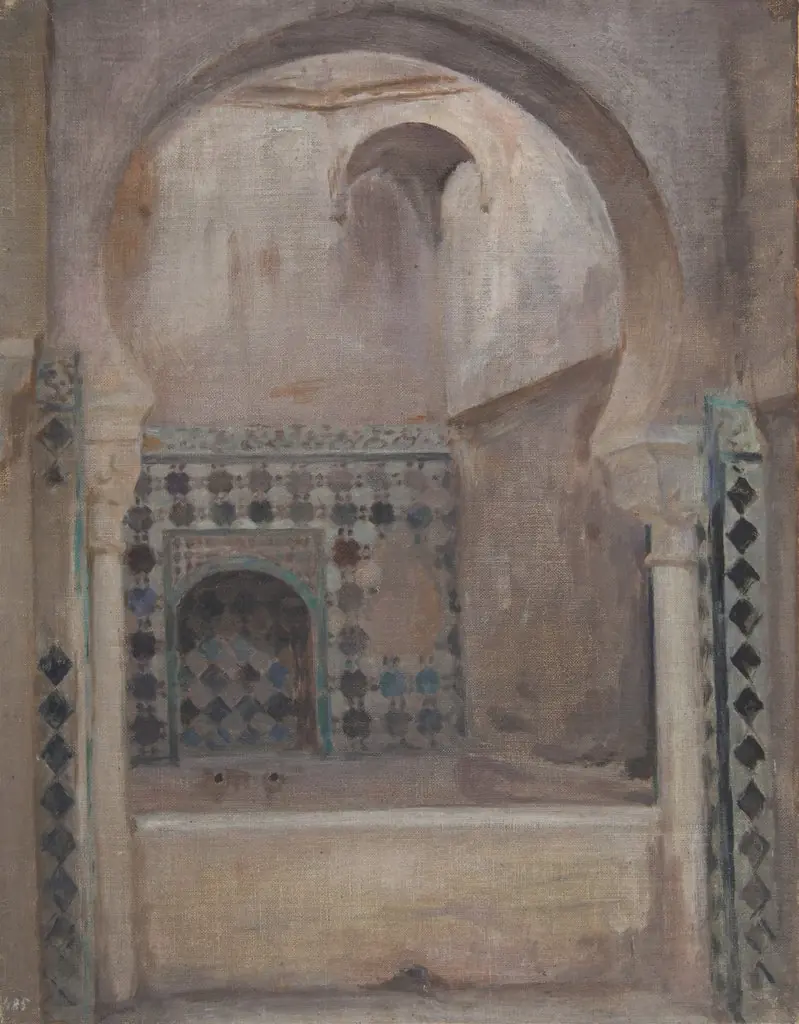
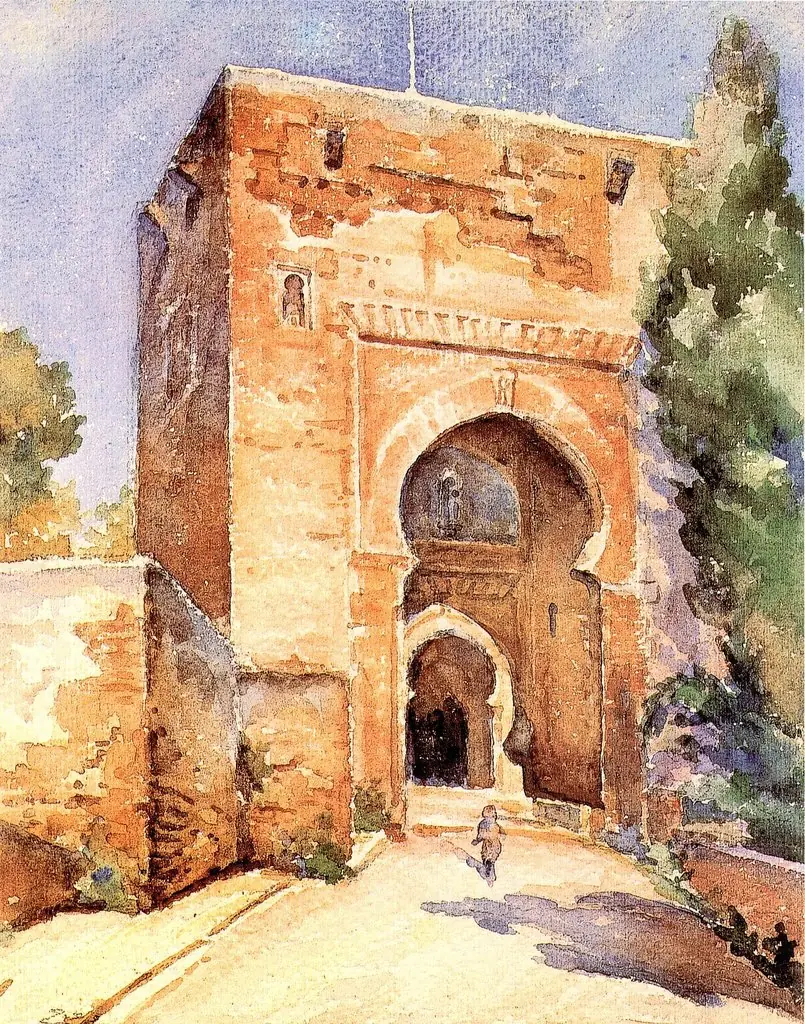
Granada, Alhambra: Lindaraja's Balcony is a watercolor painting by Moustafa Farroukh. It dates from 1939 and is held in the collection of the Sursock Museum.
About this work
Overview
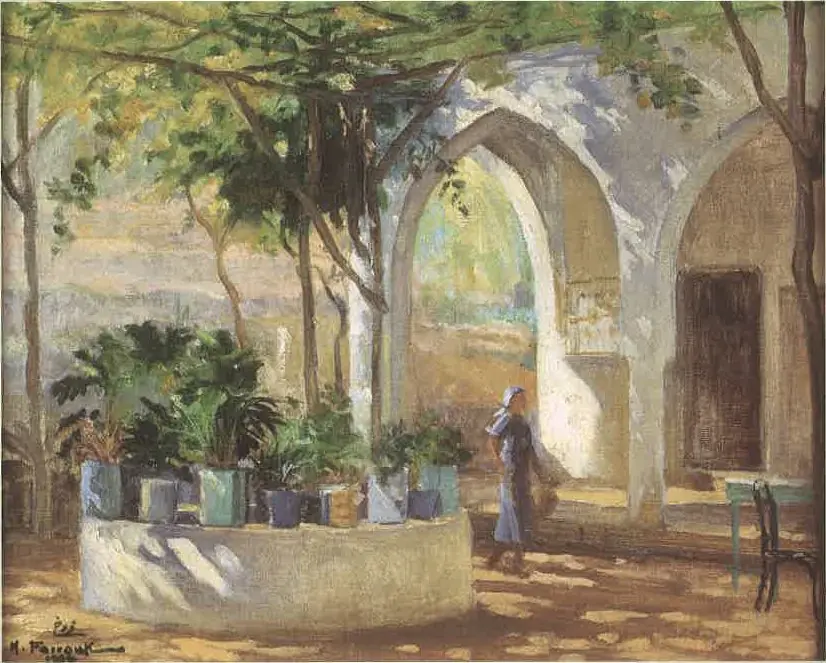
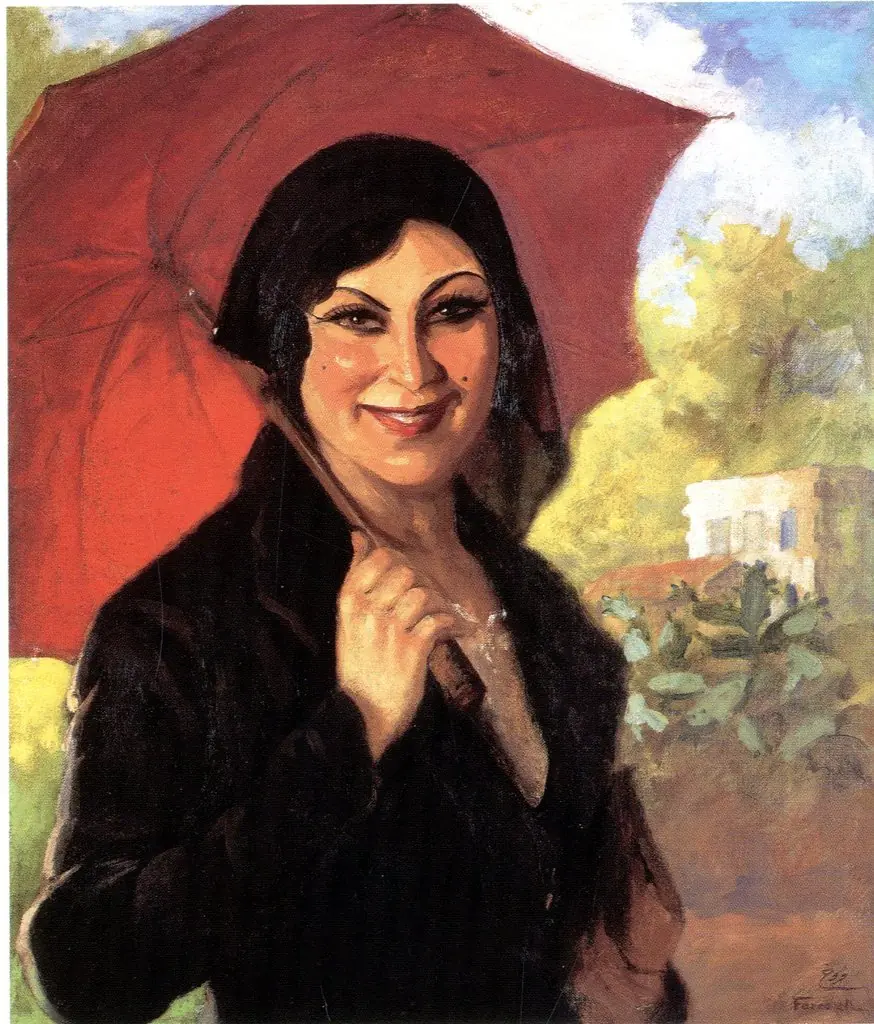
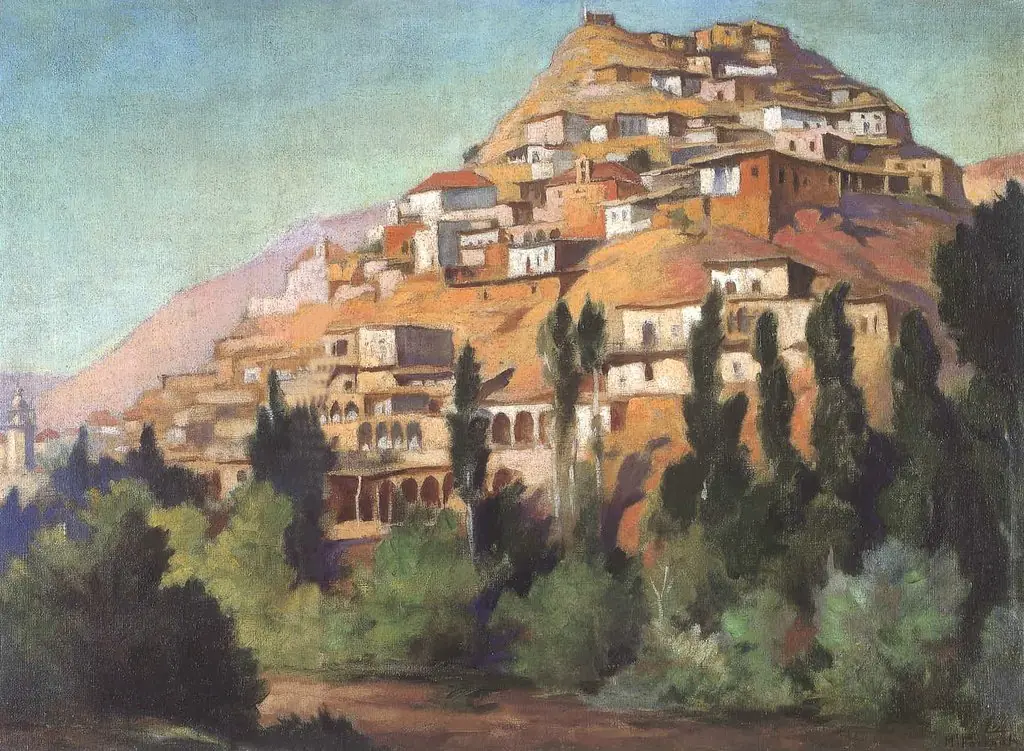
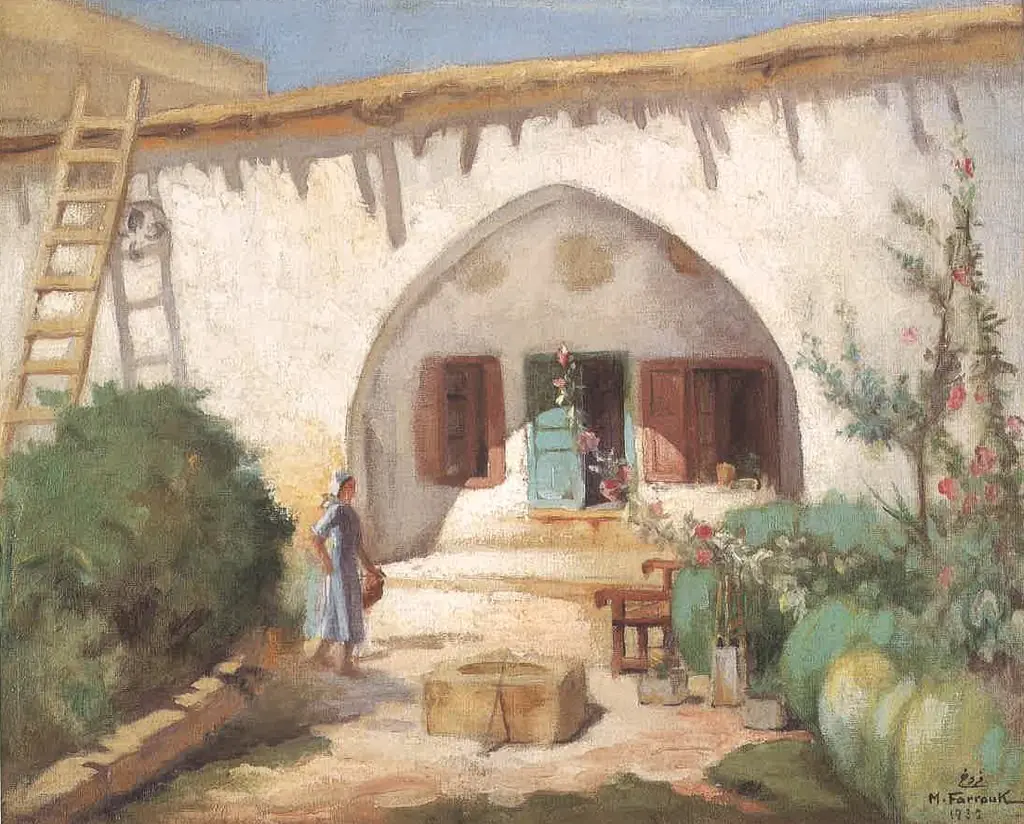
It belongs to a body of over two thousand works he produced during his career, many inspired by his travels across the Mediterranean and Middle East.
Painted around 1939 by Lebanese artist Moustafa Farroukh, this watercolor captures a view from Lindaraja’s Balcony within the Alhambra palace. Executed in loose, expressive brushwork, the piece reflects Farroukh’s interest in architectural detail and natural light. It belongs to a body of over two thousand works he produced during his career, many inspired by his travels across the Mediterranean and Middle East.
Subject & Meaning
The scene portrays a vaulted balcony with an ornate railing, overlooking a terraced garden filled with dense vegetation and a winding path leading toward a distant structure. The composition emphasizes spatial depth and the interplay between built and natural forms. Rather than documenting architecture literally, Farroukh evokes the atmosphere of the Alhambra—its quiet serenity and layered cultural history—through selective focus and atmospheric color.
Technique & Style
Farroukh employed watercolor with fluid, spontaneous strokes, allowing pigment to bleed and blend naturally. Warm browns and muted greens dominate the foreground, contrasted by cooler blues in the sky and distant architecture. The technique avoids rigid definition, favoring suggestion over precision. This approach reflects both the medium’s inherent transparency and Farroukh’s affinity for capturing transient light and mood.
History & Provenance
The painting entered the collection of the Sursock Museum in Beirut, where it remains today. Farroukh created it during a period of heightened interest in regional heritage among Arab artists, following his travels in Spain. Its presence in the museum underscores the institution’s commitment to documenting modern Arab artistic responses to historical sites beyond the Levant.
Context
In the late 1930s, many Arab artists turned to historical Islamic architecture as a source of cultural identity amid colonial pressures. Farroukh’s depiction of the Alhambra aligns with this trend, though he avoided romanticized Orientalism. His focus on everyday spatial relationships—gardens, pathways, vaults—reflects a personal, observational approach rather than a political or exoticizing one.
Legacy
Farroukh’s watercolor contributes to a broader 20th-century Arab artistic dialogue centered on heritage and place. While not widely exhibited outside Lebanon, the work exemplifies how regional artists engaged with Islamic architecture not as monuments, but as lived environments. Its preservation in the Sursock Museum ensures its role in shaping narratives of modern Arab visual culture.
Artist & collection
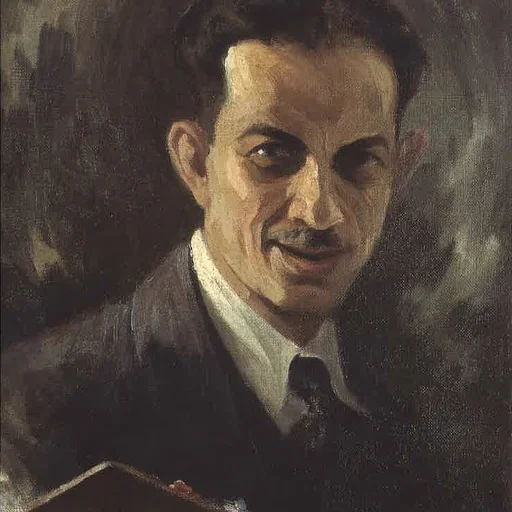
Artist
Moustafa Farroukh (Arabic: مصطفى فروخ; 1901 – 1957) was one of Lebanon's most prominent painters of the 20th century.