Artwork
The Angel Appearing to the Shepherds
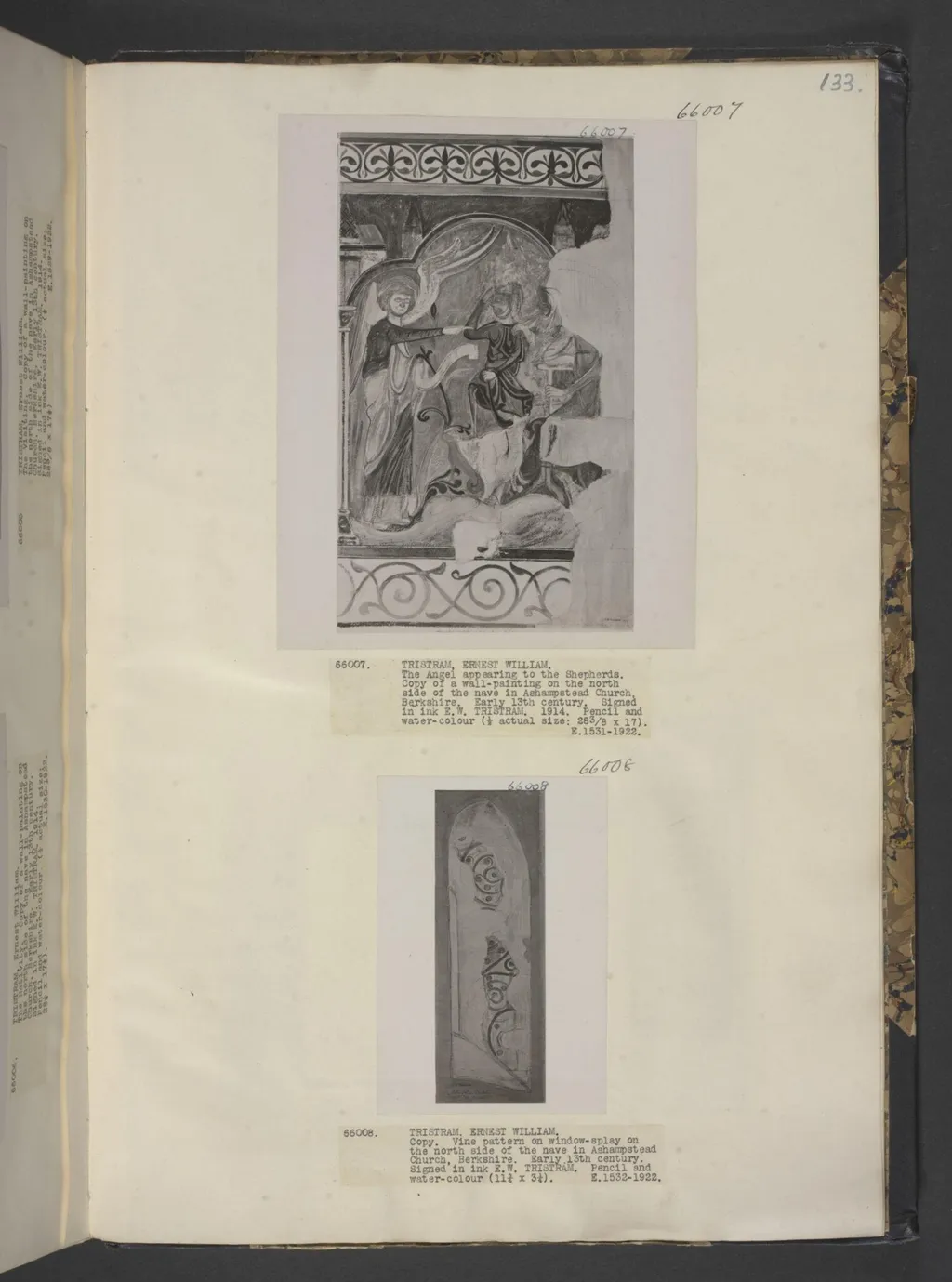
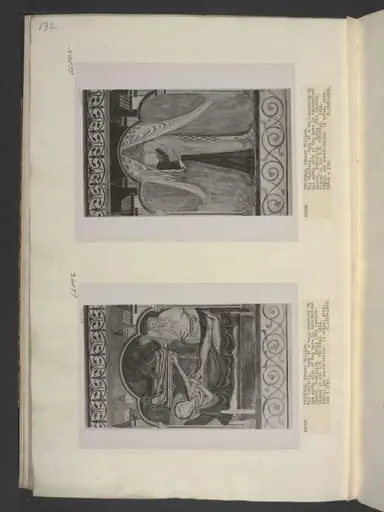
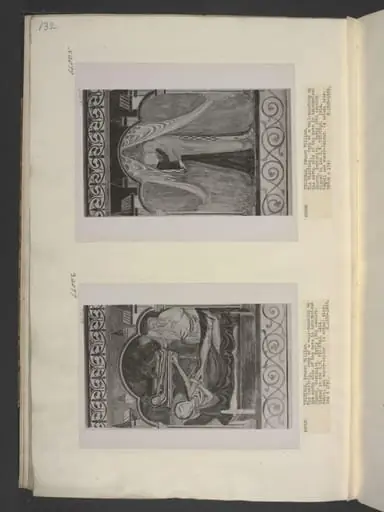
The Angel Appearing to the Shepherds is a watercolor work on paper by the Art Nouveau artist Ernest William Tristram. It dates from 1914 and is held in the collection of the Victoria and Albert Museum.
About this work
The angel is tall and pointed, with a long robe that looks like it’s made of flowing cloth.
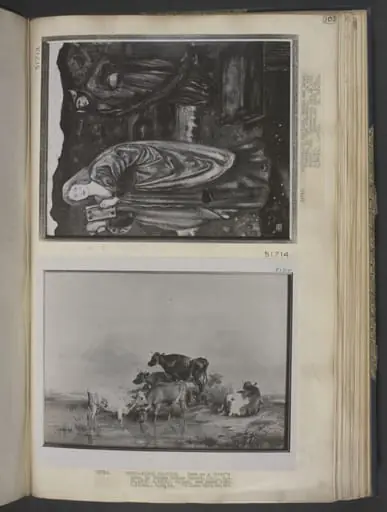
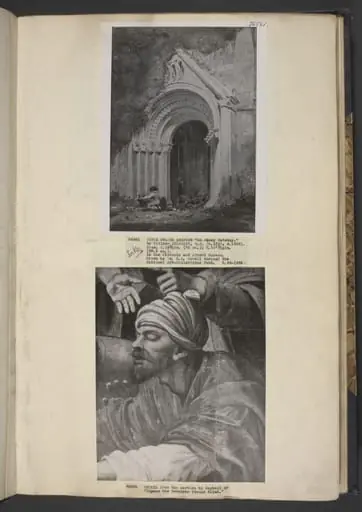
This drawing shows an angel standing in front of three shepherds. The angel is tall and pointed, with a long robe that looks like it’s made of flowing cloth. The shepherds are small, huddled together, and their faces are turned up toward the angel. The background is plain, but there’s a fancy border around the top and bottom of the scene.
The artist copied this from a real church wall painting. The original was from the early 1300s, but this version was made in 1914.
Look up Victoria and Albert Museum to see more of their collection.
Overview
Ernest William Tristram’s watercolor, dated 1914, depicts a biblical scene in which an angel addresses a group of shepherds. The composition is framed by decorative borders at the top and bottom, while the central area remains uncluttered, focusing attention on the interaction between the celestial figure and the human witnesses.
Subject & Meaning
The work illustrates the moment from the Nativity narrative when an angel announces the birth of Christ to shepherds tending their flocks. The shepherds, rendered small and clustered, look upward in reverence, emphasizing themes of divine revelation and humility before a heavenly messenger.
Technique & Style
Executed in watercolor, Tristram employs a limited palette and fluid brushwork to suggest the angel’s flowing robe and the soft contours of the figures. The medium allows for delicate washes that convey a sense of ethereality, while the ornamental borders echo medieval manuscript decoration.
History & Provenance
Tristram’s piece is a faithful reproduction of a wall painting originally created in the early fourteenth century. By translating the medieval fresco into a portable watercolor, he preserved the iconography for contemporary audiences. The work entered the collection of the Victoria and Albert Museum, where it remains on display.
Context
The early 1900s saw renewed scholarly interest in medieval art, prompting artists like Tristram to document and reinterpret historic works. This watercolor reflects that trend, serving both as a study of medieval technique and as a visual record of a specific ecclesiastical decoration that might otherwise have been lost.
Artist & collection

Artist
Ernest William Tristram (1882–1952) was a British art historian, artist and conservator, and Professor of Design at the Royal College of Art (1926–1948).