Artwork
Sfinții 40 de mucenici
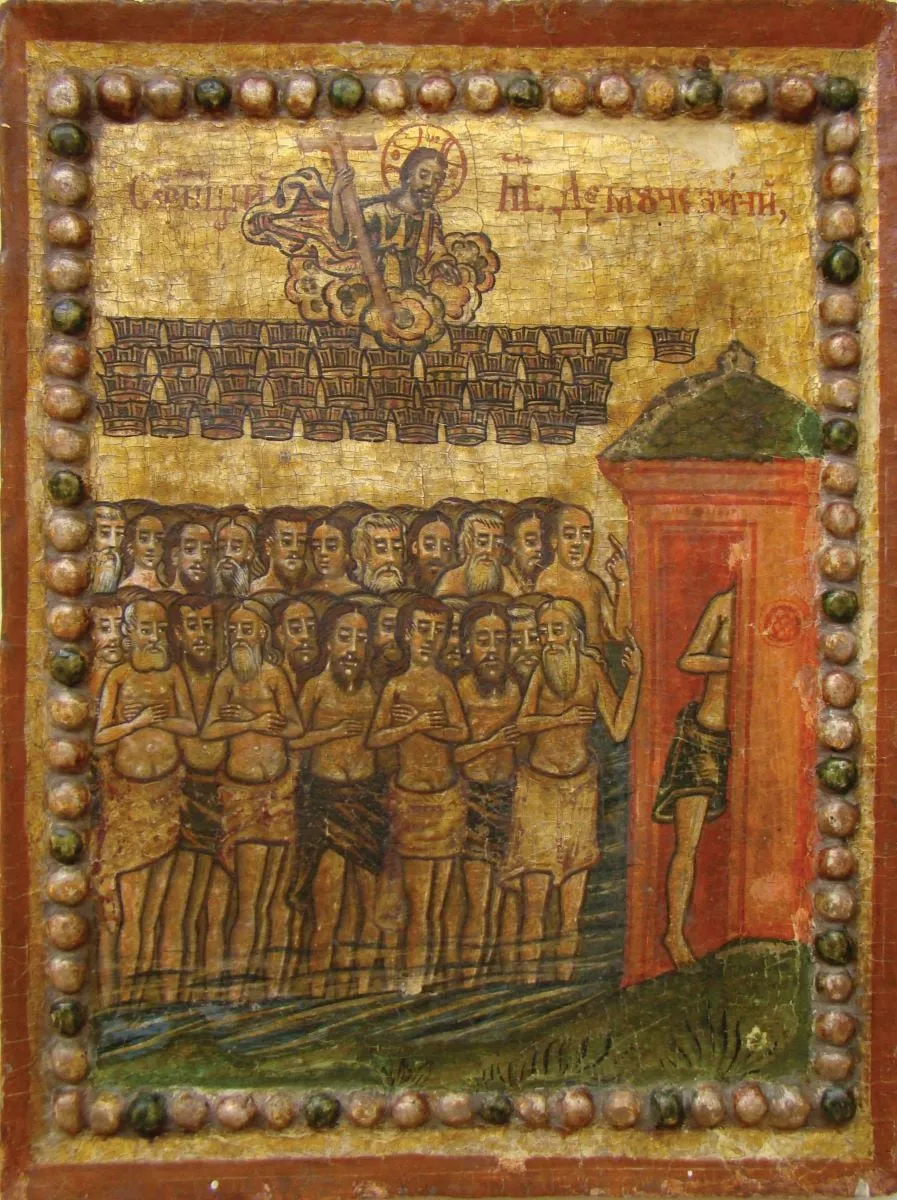
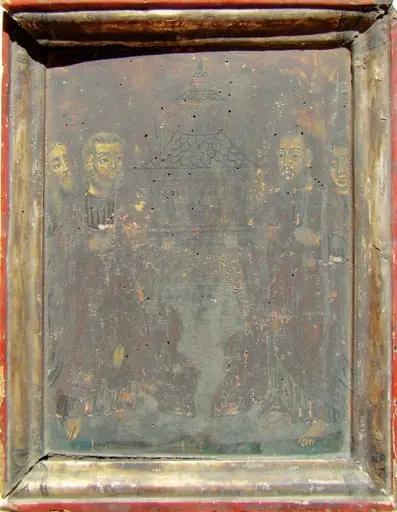
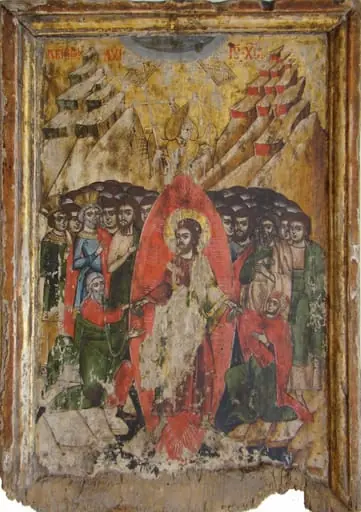
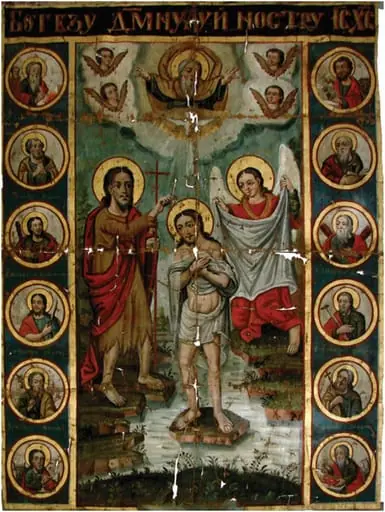
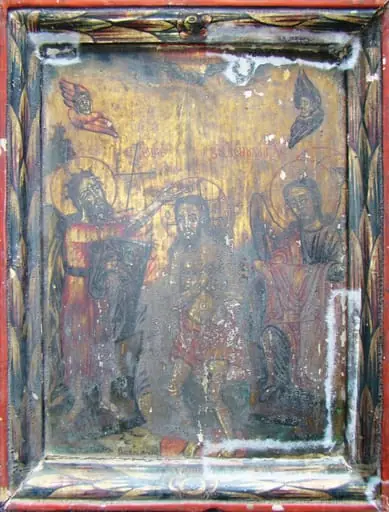
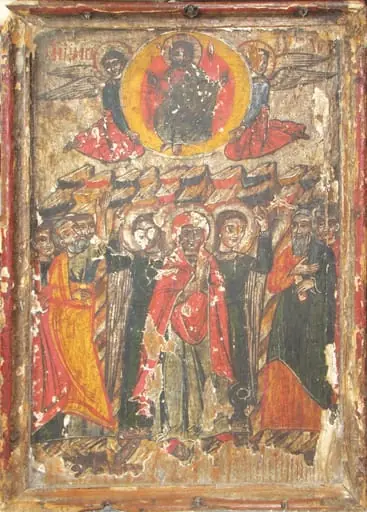
Sfinții 40 de mucenici is a drawing by Vasile Munteanu. It is held in the collection of the Alba Iulia Orthodox Archdiocese. This image depicts the Forty Martyrs of Sebaste, Christian soldiers martyred for their faith in the early fourth century.
About this work
Overview
Rendered in a rigid, frontal style, the figures are arranged in a single row, their hands crossed over their chests in a gesture of devotion.
This image depicts the Forty Martyrs of Sebaste, Christian soldiers martyred for their faith in the early fourth century. Rendered in a rigid, frontal style, the figures are arranged in a single row, their hands crossed over their chests in a gesture of devotion. Above them, a celestial figure hovers in a golden robe, suggesting divine approval. The composition is symmetrical and hierarchical, emphasizing spiritual order over naturalistic movement.
Subject & Meaning
The Forty Martyrs were Roman soldiers who chose death over renouncing Christianity. Their unified posture and shared gaze convey collective resolve and sanctity. The figure above, likely Christ or an angel, holds a scroll symbolizing divine judgment or reward. The scene affirms the triumph of faith over persecution, presenting martyrdom not as tragedy but as ascension to eternal life.
Technique & Style
The figures are rendered with flat, stylized forms and strong outlines, typical of Byzantine iconography. Colors are bold and symbolic: gold for divinity, red for sacrifice, and earthy tones for humanity. The background includes a simplified architectural element and a single red pillar, anchoring the scene without depth. The beaded border frames the image as a sacred object, separating the holy from the mundane.
History & Provenance
This image likely originated in the Byzantine tradition, possibly from a church wall, panel, or manuscript illumination produced between the 9th and 12th centuries. Its formal conventions align with Eastern Orthodox devotional practices. While its exact origin is unrecorded, similar depictions were widespread across the Byzantine Empire and its cultural sphere, used for veneration and instruction.
Context
Depictions of the Forty Martyrs were common in Eastern Christian communities, especially during Lent, when their story was commemorated. The image served both liturgical and didactic purposes, reinforcing communal identity and spiritual endurance. Its lack of perspective and emotional expression reflects theological priorities: the eternal over the temporal, the sacred over the natural.
Legacy
The image exemplifies a persistent visual language in Orthodox Christianity, where iconography prioritizes spiritual presence over realism. Its stylistic choices influenced later religious art in the Balkans and Russia. Though removed from its original devotional context, it remains a clear example of how medieval artists encoded faith through form, color, and composition.
Artist & collection
Artist
Vasile Munteanu kept a pocket notebook in his fishing village on the Siret River, sketching faces he met on the ferry.