Artwork
Înălțarea lui Iisus
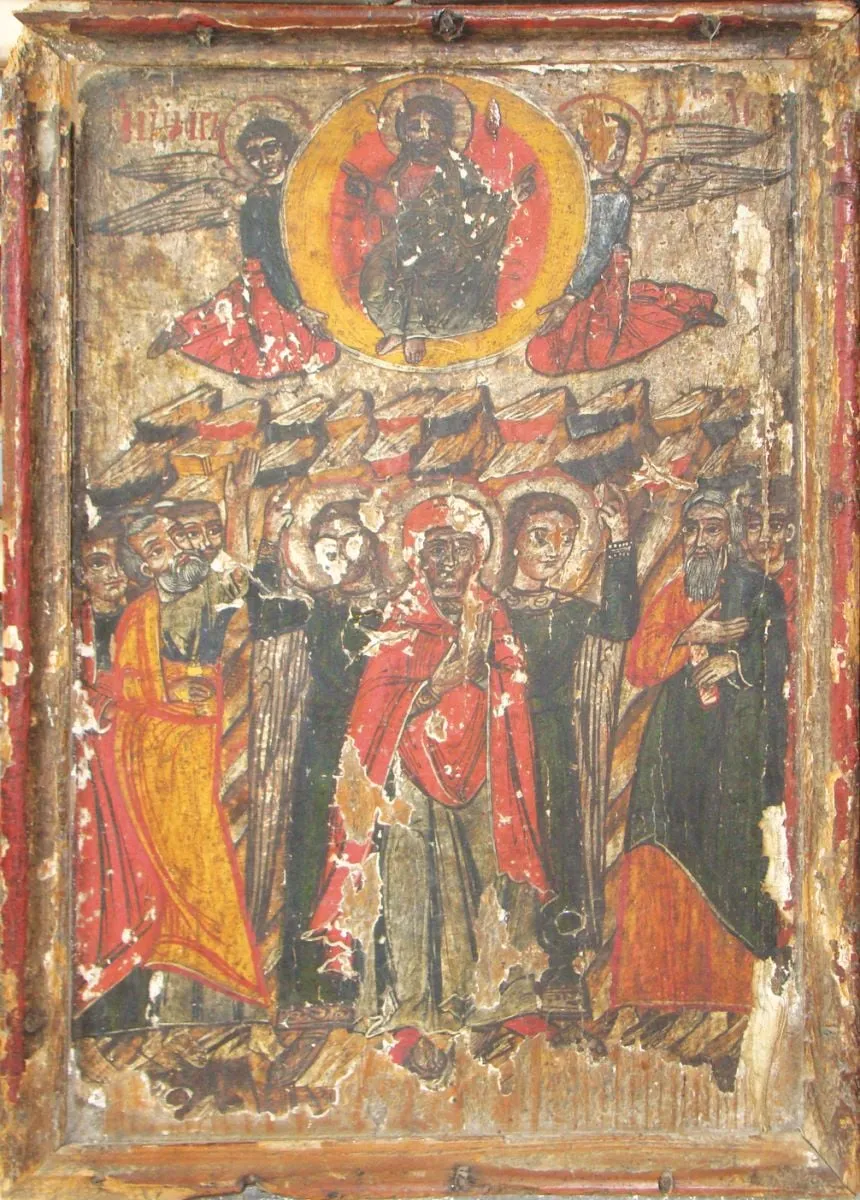
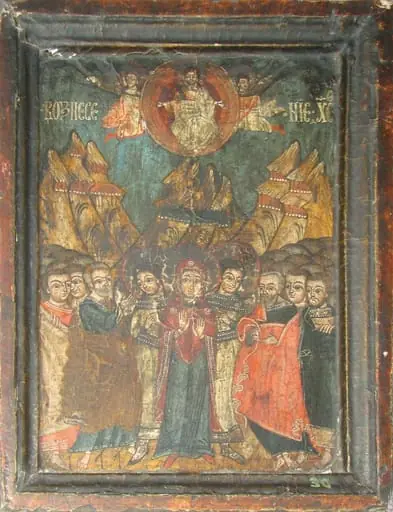
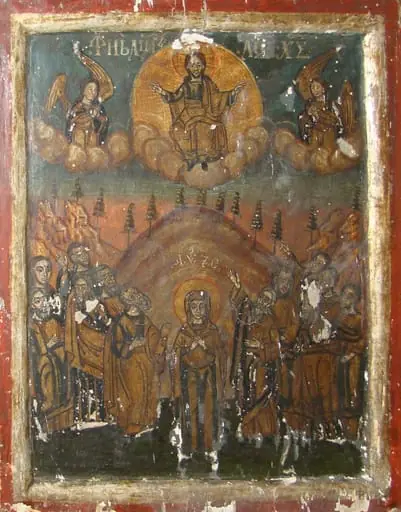
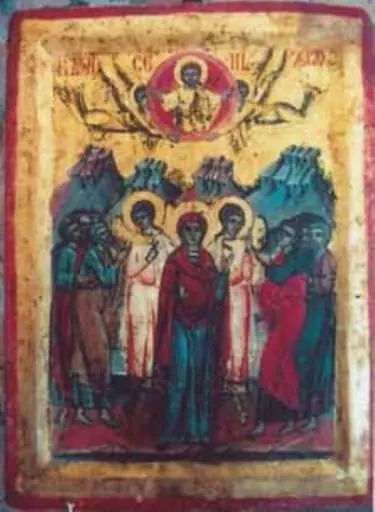
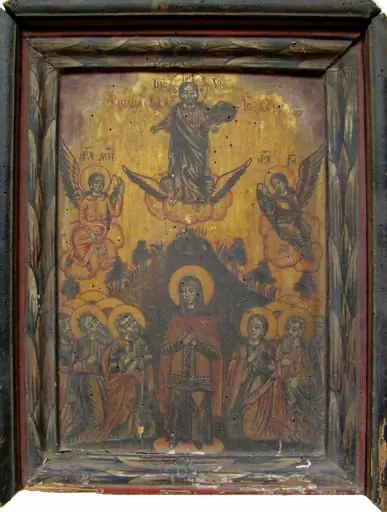
Înălțarea lui Iisus is a drawing by Gheorghe Tobias din Abrud. It is held in the collection of the Alba Iulia Unification National Museum. This painting illustrates the Ascension of Jesus, a key event in Christian theology.
About this work
Overview
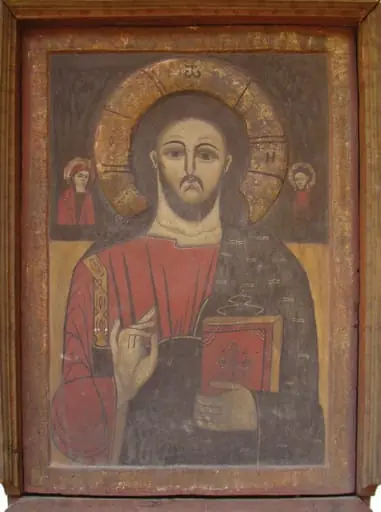
The central figure rises vertically against a soft sky, enveloped in a halo and clad in a red garment, arms extended as if in blessing.
This painting illustrates the Ascension of Jesus, a key event in Christian theology. The central figure rises vertically against a soft sky, enveloped in a halo and clad in a red garment, arms extended as if in blessing. Below, a group of figures observes in quiet reverence. The composition is deliberately simplified, with minimal detail and a restrained color palette dominated by earth tones and muted reds, reflecting a devotional rather than dramatic intent.
Subject & Meaning
The scene captures Jesus’s ascent into heaven after his resurrection, as described in the New Testament. His elevated position and outstretched arms signify divine authority and benediction. The onlookers below, rendered with uniform posture and expression, represent the apostles and early followers witnessing the moment. The absence of elaborate symbolism or narrative elements focuses attention on the spiritual significance of the event itself.
Technique & Style
The work employs flat, bold outlines and limited shading, characteristic of folk or provincial religious painting traditions. Pigments are applied in thin, even layers, with no attempt at perspective or naturalistic depth. The sky and clouds are suggested through soft washes of beige and gray, while the figures are rendered with schematic precision. This stylistic simplicity aligns with local devotional practices rather than academic conventions.
History & Provenance
Attributed to Gheorghe Tobias din Abrud, a 19th-century Romanian painter active in Transylvania, the work likely originated as an ecclesiastical commission for a local church or private chapel. Its modest scale and materials suggest it was intended for regional use rather than urban display. No documented exhibition history exists, and its survival reflects its continued role in devotional contexts within rural communities.
Context
Created during a period when religious imagery in Transylvania was shaped by Orthodox and Greek Catholic traditions, the painting reflects a blend of Byzantine iconography and local folk aesthetics. Artists like Tobias often worked without formal training, relying on printed models and oral traditions. This piece exemplifies how sacred narratives were adapted for communities with limited access to metropolitan art schools.
Legacy
Though not widely known outside regional collections, the painting contributes to the understanding of vernacular religious art in 19th-century Romania. It preserves a visual language that prioritized spiritual clarity over artistic innovation, offering insight into how faith was expressed through accessible, locally produced imagery. Its endurance in private or ecclesiastical hands underscores its enduring function as an object of contemplation.
Artist & collection
Artist
Gheorghe Tobias din Abrud was a Transylvanian monk who doodled saints in the margins of his prayer books.
Museum
Alba Iulia Unification National Museum
Continue through works from the same source collection.