Artwork
Soborul Sfinților Apostoli
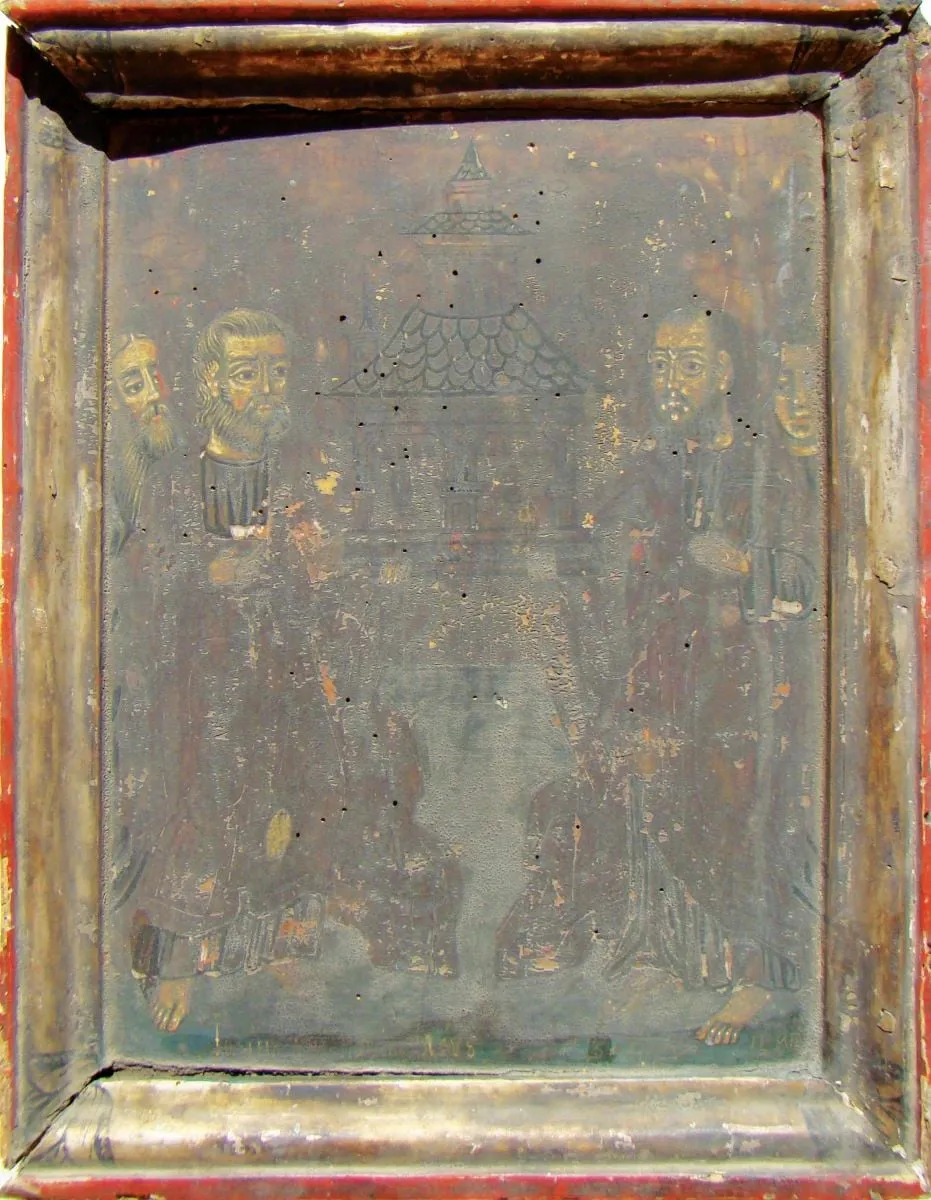
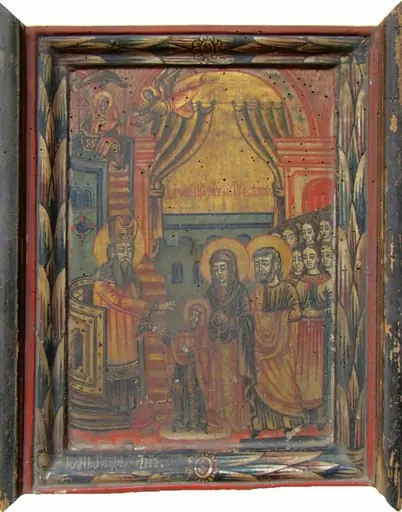
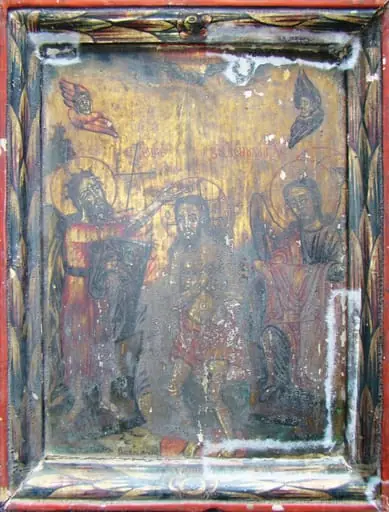
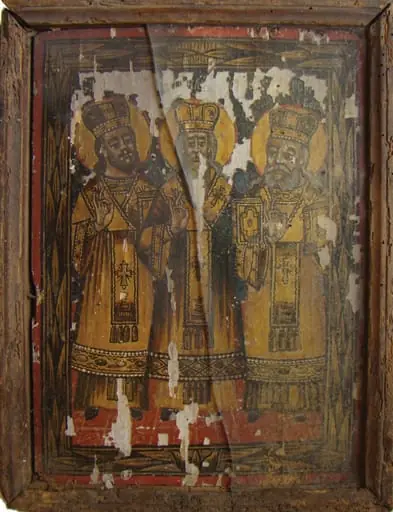
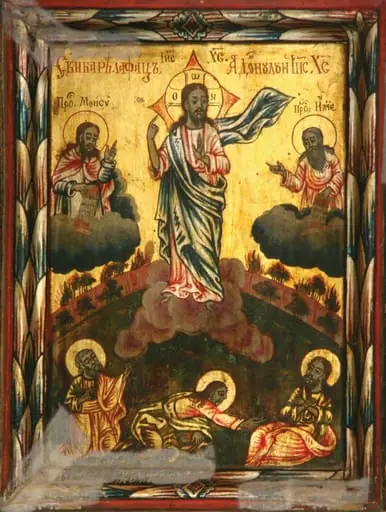
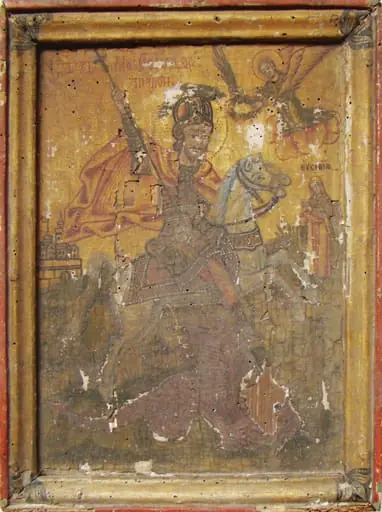
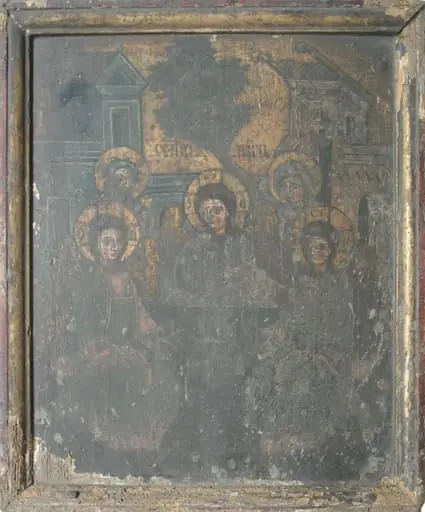
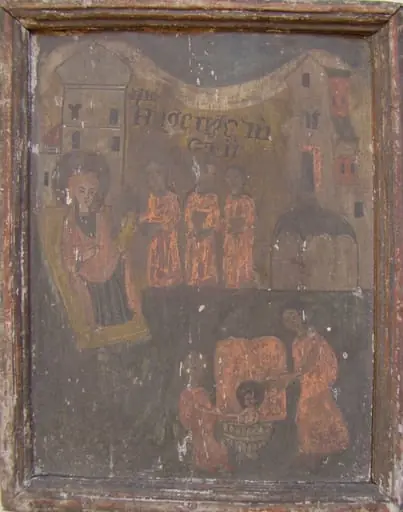
Soborul Sfinților Apostoli is a drawing by Vasile Munteanu din Săliște. It is held in the collection of the Alba Iulia Orthodox Archdiocese. This painted image depicts four bearded men in long robes, standing before a structure with a pointed roof.
About this work
Overview
This painted image depicts four bearded men in long robes, standing before a structure with a pointed roof.
This painted image depicts four bearded men in long robes, standing before a structure with a pointed roof. The surface is heavily worn, with fading and numerous small perforations. The figures are rendered without shading or intricate detail, and the background is uniformly flat. The composition emphasizes simplicity, avoiding decorative elements or spatial depth, suggesting a functional or devotional purpose rather than ornamental intent.
Subject & Meaning
The four figures, distinguished by their long hair and beards, are likely apostles or holy men, given their arrangement and the architectural setting, which may represent a sacred space. Their uniform posture and lack of individualizing features suggest a symbolic rather than portrait-oriented intent. The image appears designed for veneration or instruction, prioritizing recognition over individual expression, consistent with early religious iconography.
Technique & Style
The painting employs a reductive visual language: flat colors, minimal contours, and no modeling of form. There is no use of chiaroscuro or perspective, and textures are absent. The absence of cross-hatching—despite the suggestion in the visual note—supports a method rooted in direct application, possibly tempera or distemper, suited to durability over aesthetic refinement. The style reflects an early, non-naturalistic tradition focused on clarity and spiritual presence.
History & Provenance
The condition of the work—faded pigments and widespread perforations—indicates prolonged exposure to environmental elements or ritual use. The damage suggests it was once mounted in a location subject to humidity, handling, or fire. Its origin is undocumented, but the style and subject align with medieval or early Byzantine devotional panels, possibly from a regional church or monastery where resources were limited and preservation secondary to function.
Context
This image belongs to a broader tradition of early Christian and Byzantine religious art, where figures were rendered symbolically to convey theological truths rather than physical realism. Simplicity in form was intentional, aligning with ascetic values and the belief that divine presence transcended material representation. Such works were often part of liturgical settings, serving as aids to prayer or teaching for communities with limited literacy.
Legacy
Though not widely known or studied, this work exemplifies the enduring practice of devotional imagery in pre-modern religious communities. Its survival, despite deterioration, underscores the cultural value placed on sacred representation even under material constraints. It contributes to understanding how spiritual meaning was communicated through restraint, influencing later regional iconographic traditions that prioritized symbolic clarity over naturalism.
Artist & collection
Artist
This painter from Săliște in the late 1700s made religious scenes on wood and paper.