Artwork
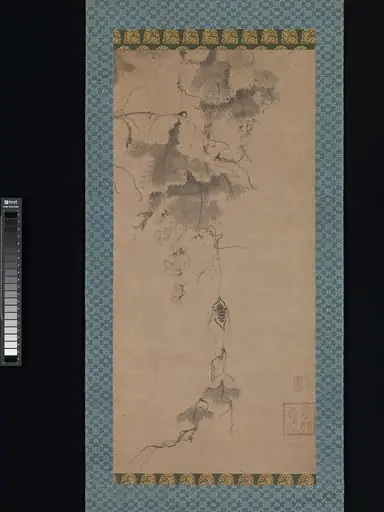
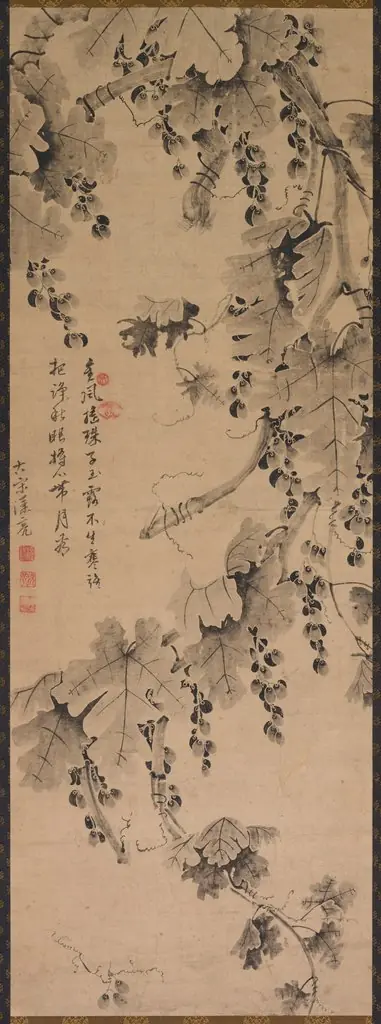
伊藤若冲筆 無染浄善 (丹崖) 賛 豌豆豆図|Bean Vine
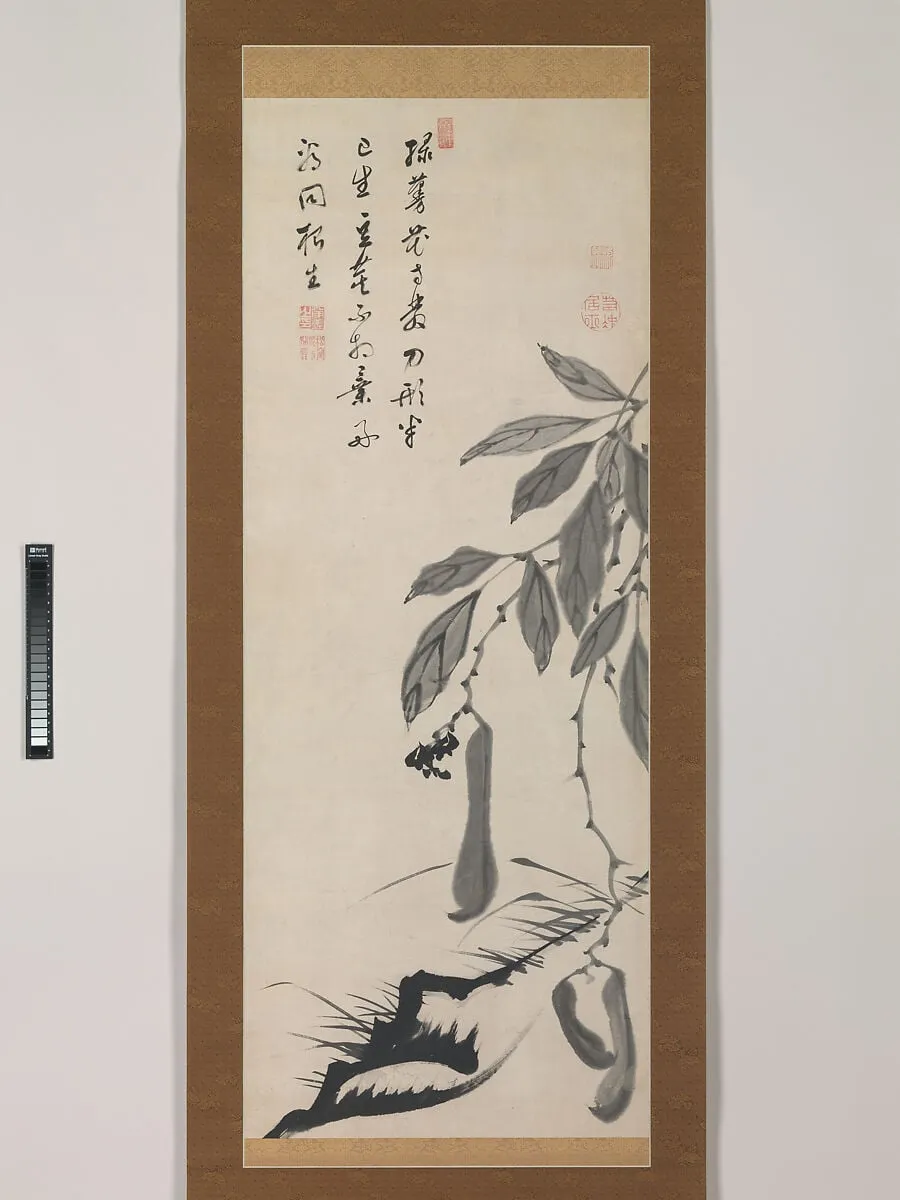
伊藤若冲筆 無染浄善 (丹崖) 賛 豌豆豆図|Bean Vine is an ink painting by the Baroque artist Musen Jōzen|Itō Jakuchū. It dates from 1750 and is held in the collection of the Metropolitan Museum of Art. Created around 1750, this hanging scroll is an ink drawing on paper attributed to the Edo‑period painter Ito Jakuchu.
About this work
Overview
Created around 1750, this hanging scroll is an ink drawing on paper attributed to the Edo‑period painter Ito Jakuchu. The work presents a solitary vine rendered in monochrome, its slender stems, leaves, and pea pods extending across a largely empty surface.
Subject & Meaning
The composition focuses on a single bean‑vine, its tendrils curling and its small pea blossoms hanging like delicate bells. By isolating the plant, the image invites contemplation of natural growth and the quiet vitality of a solitary organism.
Technique & Style
Jakuchu employs swift, calligraphic brushstrokes and fine cross‑hatching to suggest texture and volume. The sparse use of ink and the generous blank space create a sense of immediacy, as if the vine were captured in a moment of spontaneous observation.
History & Provenance
The scroll dates to the mid‑18th century, a period when many Japanese artists filled their surfaces with elaborate patterns. Its minimalist approach marks a departure from contemporary conventions, reflecting Jakuchu’s experimental phase during his later years.
Context
During the Edo era, ink drawings often served as studies or decorative objects. This piece aligns with a broader interest in botanical subjects, yet its restrained composition distinguishes it from the more densely populated works typical of the time.
Artist & collection